Tag: mentorship

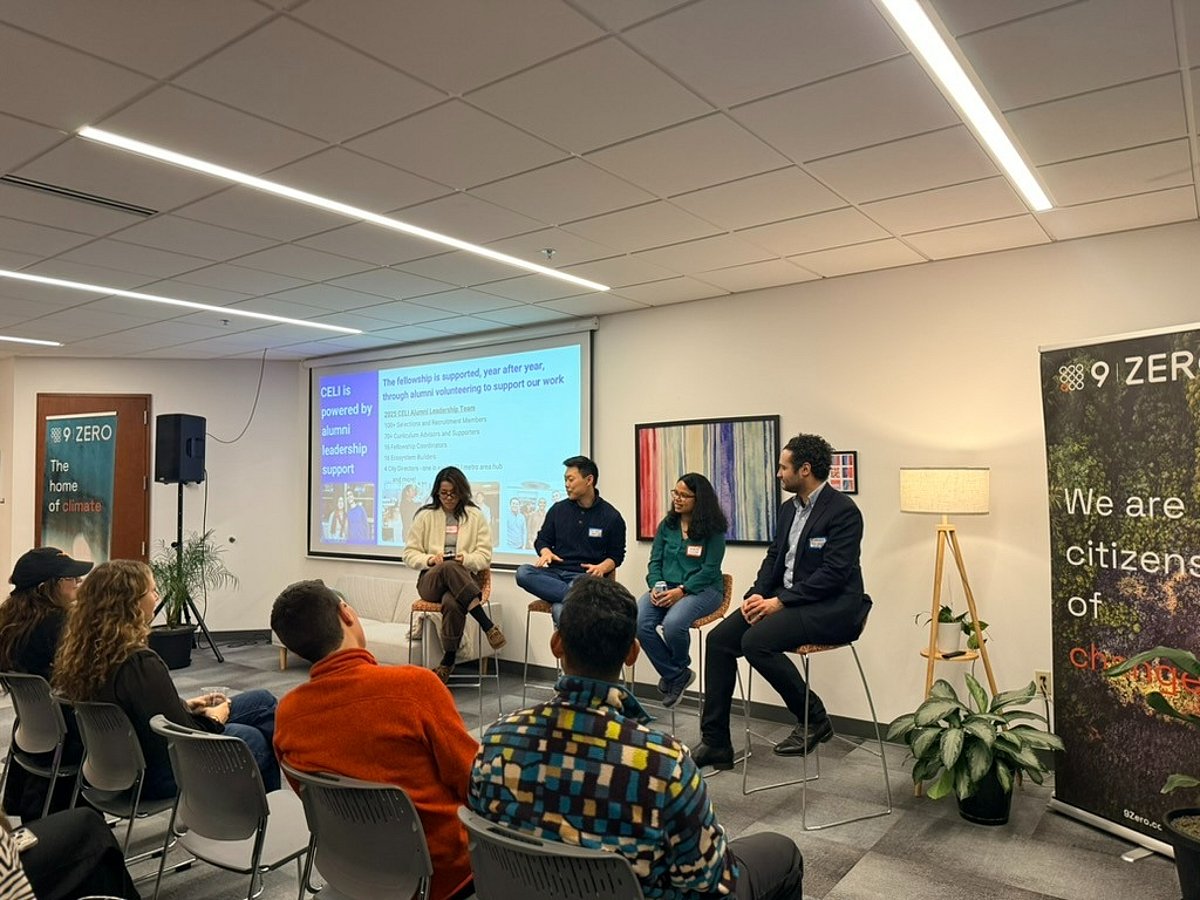
  • From Nanomaterials to Commercialization: How Dr. Shruti Sharma Identifies Innovation Early

    From Nanomaterials to Commercialization: How Dr. Shruti Sharma Identifies Innovation Early

    Dr. Shruti Sharma, a materials scientist and innovation ecosystem builder, has built a career around recognizing potential long before it becomes obvious to others. Her journey from nanomaterials research to technology commercialization offers a unique perspective on how to evaluate and support early-stage technologies.

    Sharma’s training in materials science taught her to look below the surface. In the lab, she studied how materials behave at the nanoscale—how structures change, particles interact, and properties emerge. That habit of close observation now shapes her work with startups, commercialization programs, and innovation ecosystems.

    After research stints at Brookhaven National Laboratory, Sharma moved into applied research and venture development. She has mentored more than 100 startups across clean energy, life sciences, advanced materials, and AI-enabled technologies. Her focus is on helping deep tech teams navigate the gap between scientific promise and real-world impact.

    Sharma emphasizes that early technologies need more than encouragement—they need rigorous questioning. What has been proven? What assumptions remain untested? What would make a customer or partner take the technology seriously? By asking these questions, she helps founders build credible paths to market.

    Her work at the Long Island High Technology Incubator included designing venture development programs that systematically reviewed emerging technologies. In the first months, more than two dozen technologies and startups were assessed. For Sharma, the value lay in creating a process that forced serious ideas to confront the right questions early.

    She has also contributed to Department of Energy-funded commercialization efforts focused on clean energy innovation and technology transfer. Her role often involves partnership-building, program design, and evaluation metrics—the structural elements that determine whether a breakthrough becomes usable.

    Sharma’s commitment to mentorship extends beyond formal programs. She co-founded Vigyanshaala, a grassroots STEM outreach initiative in India that has reached thousands of students. She also mentors women and underrepresented students through university and national laboratory programs.

    Science communication is another pillar of her work. She believes that complex ideas need pathways to people—that making science accessible doesn’t mean making it shallow. It means giving audiences a way to understand why the work matters and what could happen next.

    Looking ahead, Sharma plans to continue as an independent expert and innovation leader, supporting startups and strengthening incubation ecosystems in the United States and internationally. Her focus remains on energy, sustainability, economic growth, and deep tech commercialization.

    From nanomaterials to commercialization, the thread is consistent: careful attention to what is not yet obvious. Sharma’s career shows that the most important potential is often easy to miss—and that the right questions, asked at the right time, can turn promise into impact.

  • Google Selects 20 AI-First Startups for India Accelerator 2026 Cohort

    Google Selects 20 AI-First Startups for India Accelerator 2026 Cohort

    Google has chosen 20 homegrown AI-first startups for the 2026 cohort of its Google for Startups Accelerator: India program. The tech giant selected these companies from more than 2,500 applications, highlighting the growing depth of India’s AI startup ecosystem.

    The selected startups recently completed an in-person bootcamp at Google’s Bengaluru campus. Over the next three months, Google will provide mentorship, AI tools, cloud resources, and technical guidance to help founders refine their products, strengthen infrastructure, and scale globally.

    A Cohort Built Around Applied AI Infrastructure

    This year’s selections lean heavily toward startups building AI infrastructure and vertical-specific tools rather than consumer apps. Several are tackling embedded and industrial AI: CraftifAI and H2Loop AI automate embedded software and firmware development for robotics, automotive, and semiconductor hardware, while Jidoka applies computer vision to manufacturing quality inspection.

    Others focus on enterprise workflows: Binocs automates financial due diligence, OnFinanceAI builds compliance and risk tools for banks and insurers, and TartanHQ handles identity verification and onboarding through AI-powered APIs. Healthtech and climate tech also feature prominently, with Aikenist building AI-accelerated radiology tools, FlexifyMe offering AI-guided chronic pain therapy, and Aurassure and Fitsol tackling environmental monitoring and carbon emissions tracking respectively.

    Notable Names and Their Backers

    A few startups in the cohort have already built visible track records. Adalat AI, incubated at MIT, applies speech transcription and workflow automation to reduce courtroom case backlogs. Dodo Payments, backed by Antler and 100Unicorns, is building global payment infrastructure for SaaS and AI companies across more than 150 countries. Pipeshift, which came out of Y Combinator’s Summer 2024 batch, focuses on low-latency inference infrastructure for open-source AI models, while Soundverse AI, featured on Shark Tank India, offers a generative AI music platform for prompt-based composition. Several others, including CraftifAI, H2Loop AI, and Binocs, have already raised institutional funding from investors such as Accel, Ankur Capital, and IvyCap Ventures.

    What the Accelerator Offers Founders

    Google India vice president and country manager Preeti Lobana said the program is designed to equip founders with Google’s full AI stack and deep technical mentorship. She framed it as a way to accelerate their path to enterprise scale while strengthening the technical capabilities that support the broader India AI Mission. Google first launched the accelerator in April 2024, and its 2025 cohort included companies such as Apptile, Knit, MyWonder, Phot.AI, and SparkyAI.

    What Comes Next for the Cohort

    Beyond mentorship, Google’s accelerator model typically emphasizes technical depth over generic startup coaching. Founders will stress-test their architecture and prepare for scaled, enterprise-grade deployment rather than simply polishing a pitch deck. With this cohort skewing heavily toward infrastructure-level AI tools serving manufacturing, financial services, and healthcare, the selections suggest Google is positioning the program as a pipeline for startups building the underlying technical layers of India’s AI economy, rather than consumer-facing AI products alone.

  • How Leading Companies Are Redefining Leadership Development in 2026

    How Leading Companies Are Redefining Leadership Development in 2026

    The definition of corporate leadership is rapidly evolving. By 2026, organizations are no longer grooming executives simply to deliver quarterly results. Instead, they are cultivating leaders who can drive digital transformation, navigate uncertainty, harness artificial intelligence, and build resilient teams. As technology reshapes every industry, leadership development now revolves around lifelong learning, mentorship, global exposure, and data-driven decision-making.

    Companies that excel in this arena create work environments that encourage experimentation, collaboration, and strategic thinking. Below, we explore how nine of the world’s most influential organizations are setting the benchmark for next-generation leadership.

    Leadership Development Moves Beyond Traditional Training

    The era of classroom-only leadership training is over. Today’s best employers embed learning into daily operations through AI-powered learning platforms, executive coaching, cross-functional projects, and international assignments. Employees gain hands-on experience solving real business problems rather than working through theoretical case studies. Equally important is the renewed emphasis on soft skills: emotional intelligence, adaptability, communication, ethical judgment, and resilience are now as critical as technical expertise.

    Companies Setting the Benchmark

    Microsoft

    Microsoft continues to position itself as a leadership powerhouse by fostering an AI-first workplace culture. Employees have access to advanced learning resources, leadership coaching, and opportunities to collaborate with global teams. The company’s relentless focus on innovation allows individuals to deepen their technical skills while sharpening strategic thinking.

    Amazon

    Amazon’s famous Leadership Principles remain central to employee development. Team members are expected to take ownership, think long term, and make customer-centric decisions. Internal mobility and challenging business assignments help professionals gain the experience needed before stepping into senior leadership roles.

    Alphabet

    Alphabet encourages leadership growth by giving employees autonomy to innovate, experiment, and learn from outcomes. A collaborative culture sparks creative thinking and cross-functional teamwork, even when projects are complex. Exposure to cutting-edge tools and technologies prepares emerging leaders to tackle tough business problems with confidence.

    NVIDIA

    With the rapid rise of AI, NVIDIA has become a hub for technological innovation. Employees work in a fast-paced environment where agility, technical rigor, and continuous learning are paramount. This exposure helps future leaders build strategic decision-making skills in highly competitive markets.

    JPMorgan Chase

    As banking embraces AI and digital modernization, JPMorgan Chase has broadened its leadership development beyond traditional finance. Employees now lead technology-driven initiatives while reinforcing strong risk controls, innovative thinking, and customer-centric judgment.

    Deloitte

    Deloitte’s consulting ecosystem offers professionals ongoing exposure to diverse industries, clients, and real-world business challenges. This breadth sharpens strategic thinking, communication, and problem-solving abilities, making employees well-suited for leadership roles in a changing sector.

    PwC

    PwC invests heavily in structured learning tracks focusing on digital skills, sustainability, and responsible leadership. Employees receive mentoring, certifications, and team-based projects that build the ability to lead transformation efforts effectively.

    EY

    EY emphasizes inclusive leadership and future-ready capabilities. Employees participate in leadership academies, global mobility programs, and innovation-driven assignments, equipping them to manage diverse teams and navigate shifting business environments.

    IBM

    IBM remains a strong supporter of technology leaders. Combining decades of enterprise expertise with ongoing investment in AI, cloud computing, and digital skills, IBM enables employees to develop leadership strengths alongside technical excellence.

    Common Traits Behind Their Success

    Despite operating in different industries, these organizations share several characteristics: a commitment to continuous learning, mentorship, cross-functional collaboration, and real-world problem-solving. They prioritize emotional intelligence and adaptability as much as technical prowess.

    Why This Matters

    For professionals planning long-term careers, choosing the right employer is akin to choosing the right learning environment. Organizations that invest in leadership development offer smoother career progression, stronger mentoring relationships, and more opportunities to lead high-impact initiatives. As AI continues to reshape industries, leadership will depend less on hierarchy and more on adaptability, shared thinking, and a commitment to growth.

    By building these strengths now, companies are not only preparing their teams for the future—they are shaping the next generation of executives who will define the global business landscape.

  • Gautam Adani Launches Vande Bharatam Initiative to Empower Entrepreneurs Across India

    Gautam Adani Launches Vande Bharatam Initiative to Empower Entrepreneurs Across India

    Adani Group Chairman Unveils National Program to Discover and Support Innovators

    Gautam Adani, Chairman of the Adani Group, has launched the Vande Bharatam initiative, a national effort to identify and nurture entrepreneurs, innovators, and problem-solvers from all corners of India. The program, announced on Adani‘s 64th birthday (June 25, 2026), aims to democratize access to mentorship, investor connections, and growth opportunities.

    “When I began my journey, I had nothing. Everything I am and everything I have achieved was given to me by the soil of Bharat. There is no shortage of talent in our nation, but opportunity has not always reached every corner of the country,” Adani said in a statement.

    What is the Vande Bharatam Initiative?

    The initiative is open to anyone with an idea, innovation, or entrepreneurial ambition—regardless of age, profession, education, or stage of development. Participants can apply with a concept, prototype, early-stage venture, or even an established business. A registered startup is not required.

    “India has built one of the world‘s largest startup ecosystems, yet most founders still emerge from a handful of cities. Vande Bharatam is our effort to discover the innovators, problem-solvers, and entrepreneurs whose ideas deserve recognition, support, and a larger platform,” Adani noted.

    How Will It Support Entrepreneurs?

    The program will span all 36 states and union territories, covering over 800 districts and multiple languages. Applications opened on June 24 at vandebharatam.org. A structured evaluation process will assess innovation, entrepreneurial potential, impact, and scalability. Detailed criteria, jury composition, and selection stages will be announced later.

    Entries are invited from sectors including technology, manufacturing, sustainability, agriculture, traditional crafts, and community-led solutions. Dedicated pathways will encourage participation from women entrepreneurs, tribal entrepreneurs, rural innovators, Divyang (differently-abled) entrepreneurs, and community-based innovators.

    From Regional Evaluation to Grand Finale

    After state and regional evaluations, 75 finalists will be invited to Ahmedabad for an intensive program featuring mentorship, industry interactions, and engagement with investors and business leaders. The Grand Finale is scheduled around India‘s Independence Day and will mark the start of an ongoing engagement platform connecting participants with mentors, investors, industry leaders, and fellow innovators.

    “If I can do it, any Indian can do it. All they need is an opportunity and a stage,” Gautam Adani said.

    What This Means for the Startup Ecosystem

    The Vande Bharatam program promises to open fresh avenues for emerging entrepreneurs by expanding access to mentorship, networks, and capital. As India’s startup ecosystem continues to grow, such initiatives can provide a much-needed boost for innovation and confidence.

  • MIT Political Science Department: Pioneering Research on Democracy, AI, and Global Affairs

    MIT Political Science Department: Pioneering Research on Democracy, AI, and Global Affairs

    MIT’s Department of Political Science continues to produce groundbreaking research at the intersection of politics, technology, and society. From the impact of architecture on political participation in Ghana to the ethical implications of artificial intelligence, MIT scholars are addressing critical questions facing democracies worldwide.

    How Architecture Influences Political Activity

    New research shows that semi-communal “compound houses” in Ghana significantly affect voting and political engagement. (June 25, 2026)

    Exploring the Societal Impacts of AI

    Leading MIT researchers examined AI’s influence on employment and democracy during the AI and Society Forum. (June 23, 2026)

    The Crucial Human Component in Computing and AI

    The MIT Ethics of Computing Research Symposium highlighted ethical and social impacts in technology. (June 5, 2026)

    Democracies and Safe Drinking Water

    Researchers find that while developing economies provide public water, safety lags due to low visibility. (May 21, 2026)

    Committed to Caring: Professor Daniel Hidalgo Honored

    Associate Professor Daniel Hidalgo, a political scientist studying Latin American elections, receives recognition for graduate student mentorship. (May 13, 2026)

    MIT Affiliates Awarded Guggenheim Fellowships

    Afreen Siddiqi, Kathleen Thelen, and Vinod Vaikuntanathan, along with alumna Kate Manne, are appointed 2026 Guggenheim Fellows. (May 1, 2026)

    Built to Fly: Brian Robinson’s Intersection of Aviation, Politics, and Technology

    MIT senior and master’s candidate Brian Robinson works at the nexus of aviation, politics, and technology. (April 15, 2026)

    Why Does Wealth Inequality Matter?

    An MIT Stone Center event examined origins, mechanisms, and political consequences of high inequality. (April 3, 2026)

    Fostering MIT’s Japan Connection

    MISTI Japan managing director Christine Pilcavage supports students and faculty exploring Japanese culture with a STEM focus. (January 15, 2026)

    Eighteen MIT Faculty Honored as “Committed to Caring”

    The program recognizes outstanding mentorship of graduate students for 2025-27. (January 8, 2026)

    How Drones Are Altering Contemporary Warfare

    A new book by Erik Lin-Greenberg examines evolving dynamics of military and state action centered around drones. (November 13, 2025)

    Q&A: How MITHIC Is Fostering Collaboration at MIT

    The MIT Human Insight Collaborative supports new interdisciplinary initiatives across the Institute. (October 30, 2025)

    Studying War in the New Nuclear Age

    MIT political scientist Caitlin Talmadge scrutinizes military postures and international dynamics to understand escalation risks. (October 28, 2025)

    MIT Schwarzman College of Computing Welcomes 11 New Faculty

    New faculty bring varied backgrounds and expertise to the MIT community. (October 17, 2025)

    Meet the 2025 Tenured Professors in SHASS

    Faculty members granted tenure in Linguistics and Philosophy, Music and Theater Arts, and Political Science. (September 18, 2025)

    These stories reflect the breadth and depth of research at MIT’s Political Science Department, where scholars are shaping our understanding of governance, technology, and global affairs.