Tag: merger

  • Paramount Skydance and Warner Bros. Discovery Clear Major Hurdle with 12-State Settlement

    Paramount Skydance and Warner Bros. Discovery Clear Major Hurdle with 12-State Settlement

    Paramount Skydance has reached a settlement with California and 11 other states that had sued to block its proposed $110 billion acquisition of Warner Bros. Discovery, removing a significant antitrust obstacle in the United States. The deal, which could reshape Hollywood, still faces other legal challenges.

    Key Settlement Terms

    According to a source familiar with the matter, the settlement includes the establishment of independent editorial boards for CNN and CBS. Additionally, Paramount would face a $30 million penalty for each film shortfall against its commitment to release 30 movies annually. The agreement also helps Paramount avoid a $7 million daily fee owed to Warner Bros. shareholders for every day the transaction remains unfinished after September 30.

    Background of the Lawsuit

    A coalition of 12 state attorneys general, led by California Attorney General Rob Bonta, filed a lawsuit in July to block the transaction. The states argued that the merger could reduce competition and create a media company with greater power to raise prices across movies and television. The settlement resolves these concerns for the involved states, but the Writers Guild of America has separately sued to stop the deal, citing potential pay cuts and worsened working conditions for writers.

    Global Regulatory Status

    Antitrust regulators in the European Union and Britain have already cleared the acquisition. With the 12-state settlement, Paramount Skydance has cleared a major U.S. legal hurdle as it moves toward completing the merger. The proposed combination would bring together two of Hollywood’s biggest entertainment businesses amid ongoing industry transformation in film, television, and streaming.

    Neither Paramount Skydance nor Warner Bros. Discovery immediately responded to requests for comment on the settlement.
  • Elon Musk Fuels Tesla-SpaceX Merger Speculation in Q2 Earnings Call – What Investors Should Know

    Elon Musk Fuels Tesla-SpaceX Merger Speculation in Q2 Earnings Call – What Investors Should Know

    Elon Musk reignited speculation about a potential merger between Tesla and SpaceX during Tesla’s second-quarter earnings call, declining to rule out a future deal. The comments came as the two companies already share projects across batteries, artificial intelligence, and advanced manufacturing.

    “We can’t talk about combining companies on an earnings call,” Musk said, adding that any merger discussion would require a formal corporate process. Tesla General Counsel Brandon Ehrhart described SpaceX as an important business partner, noting several mutually beneficial transactions, but did not confirm any active review of a merger.

    Musk’s Comments Renew Merger Debate

    Musk acknowledged growing operational overlap between Tesla and SpaceX during the call. Investors have long debated the merits of combining the two companies. Gene Munster of Deepwater Asset Management said the remarks increased his confidence in a future combination, possibly within several years.

    JPMorgan analysts pointed to shared talent, AI infrastructure, and manufacturing knowledge, suggesting those links could reduce some operational barriers. SpaceX President Gwynne Shotwell said in June that combining Musk’s companies could simplify management.

    Existing Collaborations and Synergies

    Tesla and SpaceX already cooperate on batteries, engineering, AI, and advanced manufacturing. They are jointly developing Terafab, a semiconductor facility aimed at producing chips for AI systems. Both companies rely on large computing networks and specialized engineering teams, with Musk leading strategy across both entities.

    Some Tesla investors envision a broader technology group encompassing vehicles, robotics, energy, satellites, and AI. However, no timeline, valuation, or transaction structure has been announced.

    Tesla Q2 Earnings Mixed; Focus Shifts to Spending

    The merger discussion followed Tesla’s mixed second-quarter results. Revenue reached $28.24 billion, beating the $26.32 billion estimate. Adjusted earnings of $0.33 per share missed analyst expectations of $0.50. Tesla shares fell about 6% in premarket trading.

    Vehicle deliveries rose 25% year-over-year to 480,126 units. Energy storage deployments hit 13.5 GWh, up from 8.8 GWh in the prior quarter. Capital spending is expected to exceed $25 billion this year, funding Robotaxi, Optimus, Cybercab, and AI data centers. Free cash flow was negative $1.09 billion, better than the expected negative $3.64 billion.

    Regulatory and Governance Hurdles Remain

    Any Tesla-SpaceX merger would face intense regulatory scrutiny in the U.S. and other major markets, especially China. SpaceX’s close ties with the U.S. government and defense agencies could raise national security concerns during foreign reviews. Governance is also a key issue: Musk controls a larger voting stake in private SpaceX than in public Tesla, potentially raising questions about valuation and minority shareholder treatment. Independent directors and shareholder approval would be critical.

    For now, neither company has announced a merger process. Musk’s comments only left the possibility open while cooperation continues.

  • Galaxy Gaming and Evolution’s $85M Merger Hits Regulatory Roadblock After July 17 Deadline Passes

    Galaxy Gaming’s planned $85 million merger with Evolution has hit a significant snag after the companies failed to secure all required gaming regulatory approvals before the July 17 outside date set in their merger agreement. The deal’s future now remains uncertain as both parties assess their next steps.

    On July 20, 2026, Galaxy Gaming confirmed that the merger with Evolution Malta Holding Limited remains pending after the outside date passed without satisfaction or waiver of the two remaining gaming regulatory approvals. Until regulators clear the deal, it cannot close, and if the process drags on, the closing date may be pushed back again.

    Under the merger agreement, either party can now walk away. Neither has terminated the agreement yet, and Galaxy is weighing its options, including seeking a further extension of the outside date or ending the deal altogether.

    Both Companies Still Want the Deal to Happen

    Evolution announced plans to buy Galaxy Gaming to expand its footprint in the online casino market. Galaxy Gaming is known for creating table games, side bets, and casino content for operators in many countries.

    After the July 17 deadline passed, Galaxy Gaming stated it is still working closely with Evolution to complete the deal. The CEO noted that over the past two years, the company has continued to expand its table games portfolio, enter new markets, and build recurring revenues. Regardless of the merger’s outcome, Galaxy Gaming plans to maintain strategic momentum and its relationship with Evolution.

    Evolution has also reiterated that it still wants to complete the acquisition. So far, neither company has shared a new timeline, but both have confirmed their commitment to the agreement.

    A Deal That Could Benefit Both Sides

    Although the delay has slowed things down, the deal is still seen as strategically important. Galaxy Gaming has built a strong collection of table games and side bets that many casinos already use. Integrating those games into Evolution’s platform could help it provide more options for players and strengthen its live casino portfolio, especially in more regulated markets. For Galaxy Gaming, the deal could mean access to a larger global network and more customers.

    As of now, all eyes are on whether the companies can secure the necessary regulatory approvals to revive what many see as a mutually beneficial transaction.

  • Uber to Acquire Delivery Hero in $14.8 Billion Deal to Expand Global Food Delivery Network

    Uber to Acquire Delivery Hero in $14.8 Billion Deal to Expand Global Food Delivery Network

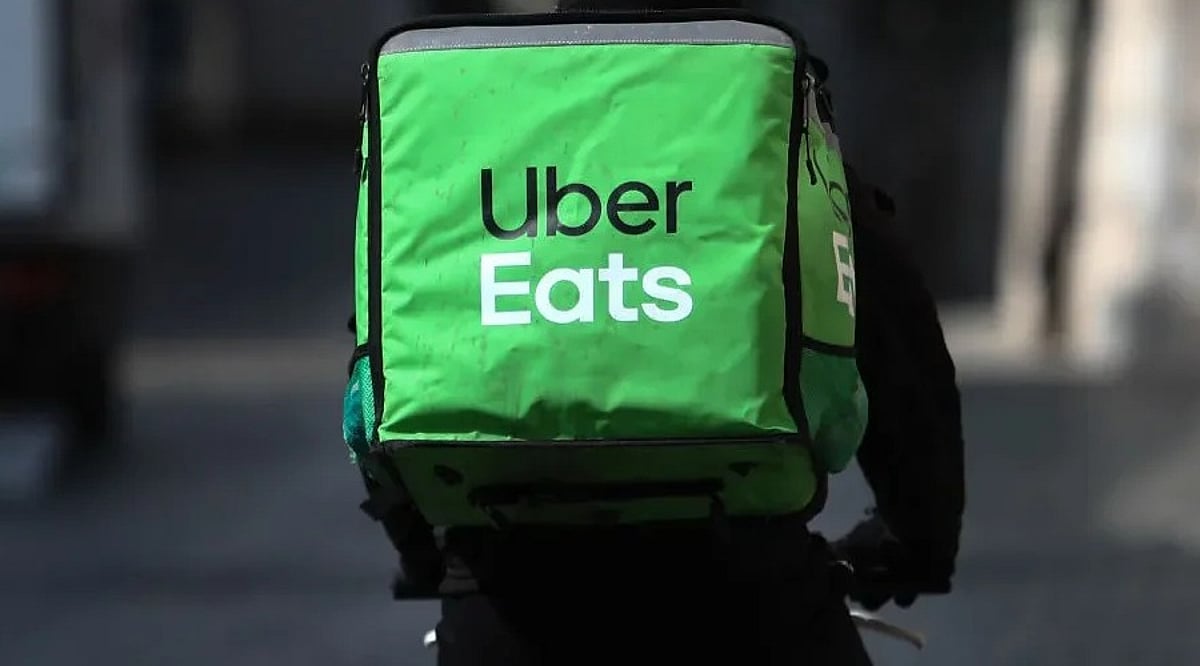
    Uber is making a major play in the food delivery market. The company announced it will acquire Delivery Hero’s food delivery business in a deal valued at $14.8 billion. Under the terms, Uber will pay Delivery Hero shareholders €41.50 per share in cash.

    Dara Khosrowshahi, CEO of Uber, said, “By bringing our platforms together, Uber will extend affordable, reliable delivery to many millions more people in some of the world’s most dynamic economies, while creating more opportunities for merchants and couriers.”

    The acquisition will be financed through a mix of cash and shares. Once completed, Uber will gain a stronger foothold in markets where Delivery Hero already has a large customer base. This is one of the largest deals in the food delivery industry in recent years.

    Additionally, Uber has committed to investing €2 billion in Germany through 2031, focusing on developing its local corporate workforce and expanding its nationwide business. Niklas Östberg, Co-Founder and CEO of Delivery Hero, commented, “This acquisition and Uber’s planned investment in Germany demonstrate the attractiveness of the European tech ecosystem, and we intend to keep contributing to its growth.”

    For consumers, the deal could mean faster deliveries and more choices. A larger delivery network typically leads to more delivery partners and better coverage, potentially reducing wait times, especially in busy urban areas.

  • Stripe and Advent’s $53 Billion Bid Lifts PayPal Stock Higher

    Stripe and Advent’s $53 Billion Bid Lifts PayPal Stock Higher

    Shares of PayPal moved higher after reports surfaced that payments giant Stripe and private equity firm Advent International have jointly submitted a takeover proposal worth more than $53 billion. The consortium reportedly offered $60.50 per share—about 28% above PayPal’s recent closing price—and has secured around $50 billion in bank commitments to support the deal.

    Stripe and Advent Await PayPal’s Response

    According to sources familiar with the matter, Stripe and Advent submitted the latest proposal earlier this month, following an initial approach in early April. PayPal’s board has not yet responded, but the two firms hope to move discussions forward in the coming weeks. Under the proposed structure, Stripe and Advent would each hold a 50% stake and keep PayPal intact rather than splitting its operations. The acquisition would give Stripe access to PayPal’s broad consumer network, including Venmo and Braintree.

    PayPal’s Strong First-Quarter Results

    The takeover interest follows stronger-than-expected first-quarter earnings from PayPal. Revenue rose 7% year-over-year to $8.35 billion, beating analysts’ estimate of $8.05 billion. Currency-neutral total payment volume increased 8% to approximately $464 billion. Adjusted earnings came in at $1.34 per share. Despite the solid results, investors have been seeking clearer evidence that PayPal’s turnaround can sustain growth. Management has been pursuing operational improvements through artificial intelligence, expecting AI tools and organizational changes to reduce duplicated work and generate about $1.5 billion in savings over the next two to three years, which will be directed toward growth initiatives.

    PayPal Shares Slip Before Reported Offer

    PayPal shares fell 0.59% during Monday’s regular trading session, closing at $47.37, according to Google Finance. The stock recovered slightly after hours, edging 0.06% higher to $47.40. The proposed $60.50 price stands well above the latest closing level. Stripe remains one of the world’s most valuable privately held fintech companies, valued at approximately $159 billion in a February employee tender offer. The company reported that businesses using its platform generated $1.9 trillion in payment volume during 2025, up 34% from the previous year. Advent would bring private equity capital and payments-sector experience, managing about $94 billion in assets as of March 31, 2026.

    What’s Next?

    Any completed acquisition would require financing, shareholder, and regulatory reviews. The reported proposal remains pending while Stripe and Advent wait for PayPal’s response. Investors will watch the next trading session for any reaction to the acquisition news.

  • Envirotech Vehicles Completes Azio AI Merger Early, Targeting $487B AI Infrastructure Market

    Envirotech Vehicles Completes Azio AI Merger Early, Targeting $487B AI Infrastructure Market

    Envirotech Vehicles, Inc. (NASDAQ: EVTV) has successfully completed its merger with Azio AI Corporation ahead of schedule, closing on July 2, 2026. The accelerated transaction positions the combined company to capitalize on the rapidly growing artificial intelligence infrastructure market, which the International Data Corporation (IDC) projects will reach $487 billion in global spending in 2026 and exceed $1 trillion by 2029.

    Strategic Transformation and Immediate Focus

    The merger marks a pivotal step in EVTV’s transformation into an AI datacenter provider, offering enterprise GPU compute, digital power solutions, data center development, and digital asset infrastructure. By amending the transaction structure, the parties expedited closing, enabling the combined company to begin operations as a fully integrated public entity much sooner than originally anticipated. Management is now concentrating on commercialization, infrastructure deployment, and long-term growth.

    Operational Milestones

    In recent months, EVTV has made significant progress at its South Texas development site, deploying six megawatts of off-grid power for modular data centers. The company also secured rights to a 548-acre site with the potential to scale up to 500 megawatts — capacity suitable for future AI hyperscale data centers. Management believes these achievements demonstrate meaningful operational momentum already in place, including established customer commitments and active commercial execution.

    Leadership Changes

    In connection with the merger closing, Phillip Oldridge stepped down as CEO, and Jason Maddox moved from President to CFO. The Board appointed Simon Yu as President and Chris Young as CEO, effective immediately. Young brings experience from Clubhouse Media Group and Amplify, while Yu is a serial entrepreneur with a track record of taking companies public and scaling businesses to billion-dollar valuations.

    Market Opportunity and Strategy

    The completion of the merger comes at a time when global investment in AI infrastructure is accelerating. Enterprises increasingly demand high-performance computing, GPU resources, and scalable digital power. The combined company plans to monetize power assets across multiple revenue streams, including AI data centers, enterprise compute infrastructure, power hosting, and digital asset mining operations.

    Transaction and Operational Highlights

    • Successfully merged with Azio AI under an amended agreement.
    • Approximately six megawatts of off-grid digital infrastructure deployed at South Texas site.
    • Development footprint exceeds 548 acres with potential for up to 500 MW capacity.
    • Positioned to accelerate commercialization across AI infrastructure, GPU compute, digital power, and digital asset mining.
    • Merger consideration: 2,655,157 shares of common stock and 973,450 shares of non-voting convertible preferred stock.
    • Chis Young appointed CEO and Chairman; Simon Yu appointed President; Jason Maddox appointed CFO.

    For more information, visit Azio AI or contact Phoenix MGMT & Consulting at Press@PhoenixMGMTConsulting.com.