Tag: Meta

  • How Meta, Google, and Qualcomm Are Driving the Next Wave of AI Smart Glasses

    How Meta, Google, and Qualcomm Are Driving the Next Wave of AI Smart Glasses

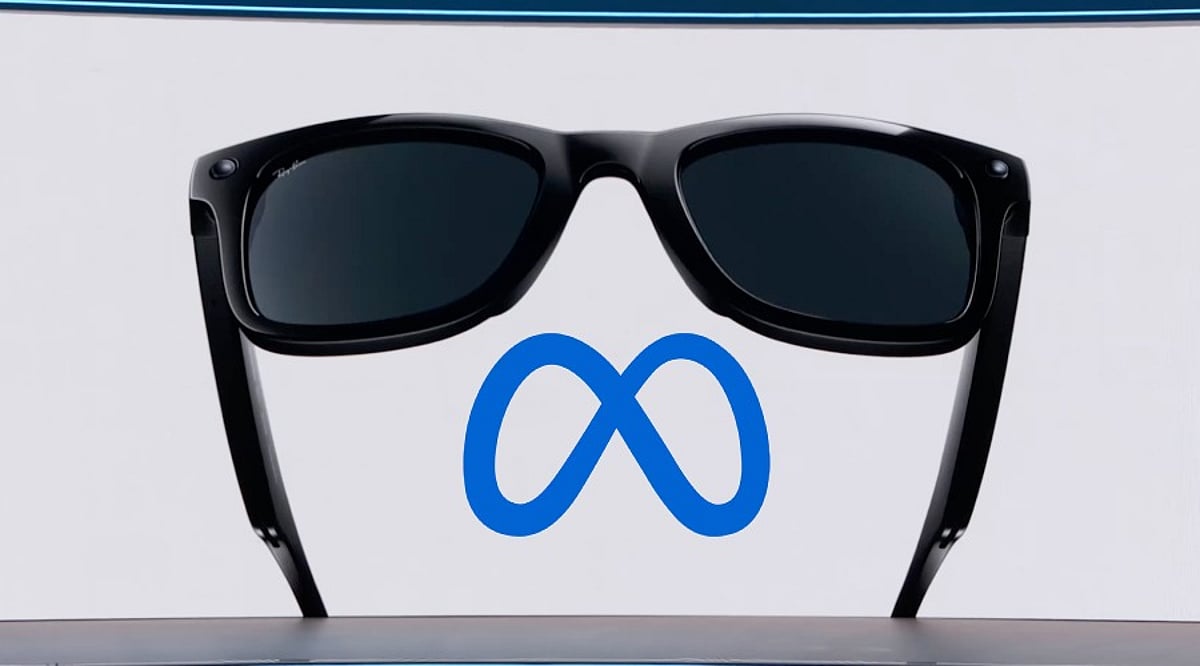
    Meta, Google, and Qualcomm are pushing smart glasses into a new phase, moving beyond basic audio features to integrate AI, cameras, displays, and phone-like capabilities. On September 23, Meta unveiled its advanced VR device in the form of smart glasses, while also launching a camera-free VR glasses model. That same evening, Google partnered with Qualcomm to announce its first Gemini glasses at a Qualcomm event. These moves signal a clear trend: the wearable industry is shifting toward smart glasses that listen, talk, and even provide a screen when needed.

    New Models and Pricing

    Meta’s VR Glasses are priced at approximately ₹1.24 lakh in India and weigh around 100 grams. They rely on a separate pocket device for key hardware and are expected to arrive in spring 2027. Meanwhile, the Ray-Ban Meta Gen 3 will be available for roughly ₹44,300 in India and will feature a 12MP camera, longer battery life, and a dedicated button for Meta AI.

    Market Shift Toward Glasses

    According to the latest statistics, glasses accounted for 84.6% of total XR device shipments in 2026, with headsets making up only 15.4%. The bigger change is not merely making VR hardware lighter; it is about giving people a new way to use AI without reaching for a phone. Current smart glasses already handle calls, music, and voice queries, but newer models are expected to go further—providing directions, translating conversations, or answering questions about objects in the user’s field of view.

    A New AI Interface Takes Shape

    The core idea is simple: instead of pulling out a phone, users can ask their glasses for help, making AI feel more natural in daily tasks. Meta has announced that its Ray-Ban, Oakley, and Meta glasses range will exceed 100 styles by the end of 2026, demonstrating the company’s rapid expansion in the wearable lineup. Meta, Google, and Qualcomm are building toward a future where glasses become a regular AI tool. While phones may still handle the heavy lifting, glasses could become the easier, more intuitive way to access AI.

  • Meta Ray-Ban Audio Launches at $349: Camera-Free AI Glasses Prioritize Privacy and Audio

    Meta Ray-Ban Audio Launches at $349: Camera-Free AI Glasses Prioritize Privacy and Audio

    Meta has introduced the Ray-Ban Meta Audio, its first camera-free AI glasses, priced at USD 349. The device was unveiled at Meta Connect 2026 on September 23, addressing growing privacy concerns around wearable cameras. Instead of capturing images, these glasses focus on audio, calls, and Meta AI assistance.

    Developed in partnership with EssilorLuxottica, the Ray-Ban Meta Audio glasses weigh just 43 grams and offer up to 12 hours of battery life on a single charge. The included charging case extends total usage by an additional 48 hours. Users can listen to music, podcasts, make calls, and engage in hands-free conversations with Meta AI.

    Meta also brings its Muse personal AI agent to the new glasses. Muse can answer questions and help with everyday tasks, providing AI assistance without a camera. The glasses come in Clubmaster and Burbank designs, with 23 color and lens combinations. Both styles support a wide range of prescription options, giving the camera-free AI glasses a conventional eyewear appearance.

    Privacy is central to the product’s positioning, as camera-equipped smart glasses face increasing scrutiny. Critics have raised concerns about recording people without clear consent. Meta’s vice president of AI product, Vishal Shah, emphasized the importance of the recording indicator light, which signals when cameras are active. Removing the camera eliminates photo and video capture, though microphones remain, keeping audio recording and consent considerations relevant.

    Meta continues to offer camera-equipped smart glasses. The company also launched the Ray-Ban Meta Gen 3, which features a 12MP camera and 3K Ultra HD video, starting at USD 449 with up to nine hours of battery life. The two models expand Meta’s smart glasses lineup into distinct use cases: Ray-Ban Meta Audio prioritizes audio and AI, while Gen 3 retains photography and video features. The camera-free model offers a privacy-focused direction for wearable AI.

    Pre-orders for the Ray-Ban Meta Audio began September 23, with shipping starting October 13, 2026.

  • Meta Connect 2026: Seven New AI Devices Aim to Make AI Ubiquitous in Daily Life

    Meta Connect 2026: Seven New AI Devices Aim to Make AI Ubiquitous in Daily Life

    Meta Connect 2026: A New Era of Wearable AI

    Meta Connect 2026 showcased the company’s ambitious vision to integrate artificial intelligence into everyday life beyond traditional screens. The event, held on September 23-24 at Meta’s headquarters, introduced seven new products that span smart glasses, AI assistants, and wearable technology.

    The Seven New Devices

    • Strapless Meta VR Glasses: A new design for virtual reality without traditional straps.
    • Ray-Ban Meta Audio: Camera-free audio glasses weighing 43 grams with up to 12 hours of use, starting at $349.
    • Ray-Ban Meta Gen 3: Refreshed smart glasses with a 12MP camera, 3K video recording, and nine-hour battery life, priced at $449.
    • Meta Adventurer: A budget-friendly option starting at $249.
    • Expanded Meta Ray-Ban Display: An updated version of the display glasses.
    • Muse AI: Glasses-bound AI assistant.
    • Muse Charm: A pocket-sized AI companion.

    Pricing for the lineup ranges from $249 to $1,299, making AI accessible to a broader audience.

    Meta’s AI Strategy: Ubiquity and Accessibility

    Meta emphasized that its Ray-Ban, Oakley, and Meta Glasses range will surpass 100 styles by the end of 2026. The company is expanding into new markets and offering lower-priced options like the Meta Adventurer. The goal is to have AI accompany users throughout their day, whether through glasses, phones, or small devices.

    With these launches, Meta is not focusing on a single high-end device but diversifying its lineup to cater to different needs and budgets. The company’s vision positions smart glasses as the next-generation computing platform.

    Meta Connect 2026 points to a simple goal: Meta wants its AI to stay with users throughout the day. Glasses, phones, and small devices can each become another way to reach the same AI service.

  • WhatsApp Tests Cross-Platform Media Access: Share Instagram and Facebook Content Directly in Chats

    WhatsApp Tests Cross-Platform Media Access: Share Instagram and Facebook Content Directly in Chats

    WhatsApp is reportedly testing a new feature that will allow users to access eligible media from their Instagram and Facebook accounts directly while composing messages or Status updates. The integration, which requires linking WhatsApp to Meta’s Accounts Center, is currently rolling out to a limited group of beta testers.

    With this update, users can select stories, posts, and Reels from their Instagram and Facebook accounts without needing to download and re-upload files. The feature is designed to simplify sharing content across Meta’s platforms and reduce the number of steps involved.

    The functionality works in both individual and group chats as well as WhatsApp Status updates. Instead of manually saving a photo or video from another app and then attaching it, users will see eligible media through the cross-platform connection.

    Accounts Center Integration

    To use the feature, users must connect their WhatsApp account to Meta’s Accounts Center. The Accounts Center already manages connected experiences across Instagram and Facebook, although linking WhatsApp remains optional. Meta has previously stated that personal messages and calls on WhatsApp remain protected by end-to-end encryption.

    Broader Cross-Platform Push

    This update is part of Meta’s wider effort to integrate its apps more closely. In recent months, WhatsApp has introduced easier chat transfers between Android and iOS, dual-account support on iPhone, and new tools for photos and stickers. The Instagram and Facebook media integration could further streamline sharing for users who frequently switch between Meta platforms.

    The feature is being rolled out gradually, so it may not appear for all users immediately. A full public release date has not been announced.

  • Tech Giants Amazon, Google, and Microsoft Commit $80.5 Billion to India’s AI Infrastructure

    Tech Giants Amazon, Google, and Microsoft Commit $80.5 Billion to India’s AI Infrastructure

    Amazon, Google, and Microsoft have announced a combined investment of $80.5 billion in India’s AI and cloud infrastructure through 2030, signaling the country’s growing importance as a global technology hub. Meta and Nvidia are also expanding their presence through strategic partnerships and hardware supply deals.

    Amazon leads with a $48 billion commitment through 2030, including $13 billion specifically for AI and cloud infrastructure. The company plans to expand AWS capacity in Mumbai and Hyderabad, and support over 20 fulfillment centers and 100 delivery stations. Amazon also aims to provide AI tools for millions of small businesses in India.

    Microsoft has pledged $17.5 billion between 2026 and 2029 for cloud and AI infrastructure, including a fourth cloud region in Hyderabad. The company also launched a nationwide AI skilling program targeting 20 million people by 2030.

    Google is investing approximately $15 billion from 2026 to 2030 to build its first Indian AI hub in Visakhapatnam. The project includes gigawatt-scale computing, data centers, and new subsea connectivity, developed in partnership with AdaniConneX and Airtel.

    Meta is leasing capacity at Reliance’s 168 MW AI-enabled data center in Jamnagar, Gujarat, and has contracted nearly one gigawatt of renewable energy. While Meta did not disclose a specific financial commitment, the projects mark a significant step in its Indian infrastructure expansion.

    Nvidia is supplying advanced GPUs for India’s AI computing ecosystem. L&T is building an AI factory in Chennai with 10,000 Nvidia B300 GPUs to support Together AI workloads, demonstrating Nvidia’s role in powering India’s AI growth without a direct investment figure.

    The combined $80.5 billion from Amazon, Microsoft, and Google excludes Meta’s undisclosed deals and Nvidia’s hardware partnerships, reflecting different investment models. India’s growing AI demand, developer talent, and infrastructure plans continue to attract major technology investments, marking a shift toward building AI compute capacity inside the country.

  • Walled Garden Advertising Explained: Why Publishers Are Moving Beyond the Big Three

    Walled Garden Advertising Explained: Why Publishers Are Moving Beyond the Big Three

    Three companies now capture a larger share of global ad spend than the rest of the internet combined. At the same time, the search traffic that once funded publishers is shrinking rapidly. Alphabet, Amazon, and Meta are on track to absorb 58.8% of the global ad market outside China by 2027, according to WARC. Meanwhile, Chartbeat data shows publisher search referral traffic fell by a third globally in the year to November 2025. This double squeeze is why understanding walled garden advertising has become essential for publishers and advertisers alike.

    A walled garden is a closed system operated by a single platform that controls how ads are bought, targeted, and reported. Advertisers gain scale and precision; publishers gain access to demand. Neither side has much say in the rules or visibility into what happens behind them.

    This guide explains what walled garden advertising means, identifies the major players, outlines how the model works, and examines the real trade-offs today. It also explores why ad revenue diversification through independent platforms has become a serious strategy.

    Key Takeaways

    • A walled garden is a closed ad platform that controls buying, targeting, delivery, and reporting, sharing only the data it chooses to release.
    • Google, Meta, and Amazon are the three largest walled gardens, with TikTok and retail media networks growing rapidly behind them.
    • Walled gardens offer rich first-party data and easy setup, but limited transparency, data portability, and negotiating power for advertisers and publishers inside them.
    • Alphabet, Amazon, and Meta already absorb the majority of global ad spend, while publisher search traffic is falling simultaneously — a genuine double squeeze, not a slow drift.
    • Diversifying across walled gardens, the open web, and independent ad networks is a practical way to reduce dependency on any single platform’s rules or pricing.

    What Is Walled Garden Advertising?

    A walled garden is a closed advertising platform that controls how ads are bought, served, tracked, and reported, giving advertisers and publishers only limited visibility into what happens inside it. Google, Meta, and Amazon are the clearest examples: each runs its own auction, holds its own first-party audience data, and shares only the performance metrics it decides to surface.

    This contrasts with the open web, where advertisers buy inventory across many independent publishers through demand-side platforms, supply-side platforms, and ad exchanges, with more visibility into bid data and placement. A walled garden approach means accepting the platform’s rules, measurement, and reporting as the price of access to its audience and first-party data. There is no external audit, no alternative bid view, and no way to take that data elsewhere if you decide to leave.

    Examples of Walled Gardens in Advertising

    The term covers a small set of companies, each closed in a slightly different way. Search, social, and commerce all have their own dominant walled garden, and newer entrants are climbing the same ladder.

    Google

    Google’s walled garden spans Search, YouTube, and its ad-buying tools, including AdSense and DV360. Each surface feeds the same pool of first-party data, and the buying and measurement tools stay entirely inside Google’s own infrastructure. Advertisers get enormous reach and precise targeting. What they don’t get is an outside view of the auction their spend competes in.

    Meta

    Meta’s social advertising business runs Facebook and Instagram as one closed environment for targeting and reporting. Meta’s ad tools draw on user behavior across both apps, and campaign performance is measured entirely by Meta’s own attribution model. Advertisers can optimize inside that system but cannot independently verify it against a neutral source.

    Amazon

    Amazon’s walled garden runs on shopper and purchase data rather than social behavior. Retail media, powered by the Amazon DSP, lets advertisers target people close to a purchase decision using signals no other platform has at that scale. That purchase-intent data stays inside Amazon’s own systems.

    Other Emerging Walled Gardens

    TikTok is the clearest newer entrant, building its own closed targeting and measurement layer on top of a fast-growing audience. Retail media networks beyond Amazon, such as Walmart and other large retailers, are following the same pattern: platforms with valuable first-party data are increasingly choosing to keep that value inside a closed system.

    How the Walled Garden Model Works

    Walled gardens run on three things: first-party data, proprietary auctions, and self-reported measurement. The platform collects behavioral or transactional data from its own logged-in users, uses that data to run its own ad auction, and then reports back on performance using its own tools.

    Self-reported measurement is worth pausing on because it is the part advertisers feel most directly. It means the platform that sold you the ad is also the one telling you how well it performed, with no independent party checking the numbers. That does not necessarily make the numbers wrong, but it does mean there is no outside verification of the platform’s own report — a very different situation from buying through a neutral ad exchange.

    Platforms keep these systems closed for straightforward business reasons. Data and measurement locked inside one system — sometimes called ecosystem lock-in — makes it harder for advertisers and publishers to leave, since switching means starting audience insight and performance history from zero. It also protects a genuine competitive edge: first-party data at that scale is difficult for any single competitor to replicate.

    The Pros and Cons of Walled Garden Advertising

    Walled gardens are not good or bad by default. They represent a trade-off between reach and data on one side, and transparency and flexibility on the other.

    Advantages of Walled Gardens

    The biggest advantage is data. Walled gardens hold detailed, first-party information on logged-in users, which supports precise targeting most open-web inventory cannot match. That scale, combined with a single dashboard for buying and measurement, makes campaigns easy to launch and easy to read. For direct-response advertisers chasing conversions, that combination of targeting depth and integrated reporting often delivers strong, fast results.

    Drawbacks of Walled Gardens

    Advertisers cannot fully audit delivery or targeting because the platform controls every number it reports. Data portability is limited or nonexistent, so leaving a platform later means losing the audience insight built up while using it. The biggest risk is platform dependency: pricing, policy, and algorithm changes happen on the platform’s schedule, and advertisers and publishers relying on one walled garden exclusively have no seat at that table.

    Transparency issues compound this. Publishers using walled gardens for demand often cannot see the full bid landscape behind their earnings, which is one reason independent platforms that build in-house anti-fraud technology and share it openly with partners have become a meaningful point of difference.

    How Walled Gardens Dominate Ad Budgets

    The scale of ad spend concentration shows up clearly in the numbers. In the US, walled gardens already commanded most programmatic display spend a couple of years ago. A Skai walled garden share analysis put walled gardens at 71.5% of US programmatic display ad spending in 2024. The eMarketer 2027 programmatic forecast shows that trend extending further: US walled garden programmatic display spending is forecast to hit $182.75 billion in 2027, more than four times the open web’s projected $42.53 billion.

    Globally, the picture matches. Per the WARC global ad spend forecast (December 2025), Alphabet, Amazon, and Meta together take 56.1% of the global ad market excluding China in 2025 (about $556.6 billion), rising to 58.8% by 2027. The ExchangeWire revenue outlook, citing WARC, puts the combined figure at more than $200 billion in new ad revenue for Alphabet, Meta, Amazon, and TikTok through 2027. US digital advertising overall backs this up too: the IAB/PwC 2024 revenue report found US internet advertising revenue hit $258.6 billion in 2024, up 14.9% year over year, its strongest growth since 2021.

    The pressure is not only about ad dollars. Chartbeat data in the Reuters Institute’s Journalism and Technology Trends and Predictions 2026 report found global Google search referral traffic to publishers fell 33% year on year to November 2025, and 38% in the US. Define Media Group reported a 42% drop in organic search traffic across 64 US publishers since AI Overviews launched in 2024. Falling traffic and a shrinking share of ad dollars at the same time is what has turned this from background chatter into something publishers are watching closely.

    Alternatives to Walled Gardens: The Open Web and Ad Revenue Diversification

    The open web is what sits outside the walled gardens: independent publishers, plus the demand-side platforms, supply-side platforms, and ad exchanges that connect them to advertiser demand. Buying and selling here happens through open programmatic advertising with more visibility into bid data than any single walled garden offers.

    For publishers, ad revenue diversification comes down to a simple problem: relying on one dominant provider, such as Google AdSense, means accepting that company’s rates, policies, and payout terms as the ceiling on what a site can earn. The concentration numbers above make the risk concrete: IAB/PwC concentration data shows the top 10 companies controlled 80.8% of US digital advertising revenue in 2024, while companies ranked 11 to 25 held 11%, and everyone else split just 8.3%. A publisher earning entirely through one of the largest platforms is exposed to whatever that single company decides next.

    Independent ad networks are the practical counterweight. They give publishers a second or third demand source with its own reporting, its own payout terms, and no ownership stake in competing content. For advertisers, the same logic applies in reverse: independent platforms let you reach untapped audiences outside the walled gardens, often at a lower cost per result, through a wider set of high-performing ad formats than a single closed platform typically offers.

    How to Diversify Beyond Walled Gardens

    Diversifying means adding independent, transparent demand alongside the walled gardens you already use, so no single platform decides your results on its own.

    For publishers, start by adding an independent ad network alongside your existing AdSense setup, or, if you are monetizing a site for the first time, go straight to an independent publisher monetization platform built around these terms. From there:

    • Compare fill rate and eCPM across your demand sources, not just your top earner.
    • Check whether you can see real bid data and payout terms before committing, not just a summary dashboard.
    • Confirm the network handles anti-fraud detection in-house, since outsourced detection is harder to hold accountable.
    • Look for format variety. Spreading earnings across pop-under, in-page push, and display inventory limits how much a single format’s performance swings affect total income.
    • Weigh user experience alongside earnings. A network that respects your site’s UX keeps visitors coming back, which protects earnings long-term.

    For advertisers, the equivalent move is spreading spend across walled garden and open-web campaigns, so no single auction sets the ceiling on results. Demand transparency from every platform you use: ask what data you will actually see, not just what results you will be told. Evaluate open programmatic and independent networks on the same criteria you would apply to a walled garden: targeting precision, fraud protection, and reporting depth. Closed platforms are not automatically the safer choice just because they are familiar.

    Conclusion

    Nobody serious is arguing that publishers and advertisers should abandon Google, Meta, or Amazon. Walled gardens offer data and reach that is genuinely hard to match. But given how much of the market they already hold, and how much more they are forecast to absorb while publisher traffic keeps thinning out, treating diversification as optional is a bigger risk than it looks.

    The practical move is adding independent, transparent demand sources alongside whatever walled gardens you already use. The goal is to prevent any single platform’s policy change, algorithm update, or AI feature from defining your results on its own.


  • Meta’s Muse AI Agent Expands to Mac: Hands-Free Task Automation Goes Desktop

    Meta’s Muse AI Agent Expands to Mac: Hands-Free Task Automation Goes Desktop

    Meta has expanded its personal AI agent, Muse, to the Mac platform with a dedicated desktop application. This move significantly broadens Muse’s role in users’ daily workflows, allowing it to interact directly with files, messages, and applications stored on the computer, not just through a phone or web browser.

    Muse originally launched on September 8th in the United States across iOS, Android, the web, and WhatsApp. The Mac app is the latest step in Meta’s push into the agentic AI space, emphasizing AI that performs multi-step tasks rather than just responding to queries.

    More Than a Chatbot

    Muse is designed to handle real-world tasks. On the Mac, users can ask it to organize files, retrieve information from Messages, Calendar, or Notes, and fill out forms using saved documents. The agent works across a user’s entire digital routine, reducing the manual effort of moving data between applications.

    A standout feature is Muse’s ability to continue working even after the app is closed. It resumes when it needs user input or when a task is complete. This background operation distinguishes it from most current AI tools, which typically stop when the conversation ends.

    Built With Privacy in Mind

    Meta has granted users clear control over Muse’s access. Computer access is opt-in, and Full Disk Access is optional. Users can adjust permissions at any time through Mac settings.

    On the technical side, Muse operates within a dedicated virtual space called Muse Secure VM. This private environment gives the agent its own browser, storage, and computing resources. Meta states this setup keeps the agent away from sensitive login credentials and manages actions involving connected services.

    Also Read: Meta Launches Muse AI Agent, Can Send Emails, Book Travel: How It Works

    A Bigger Play for Agentic AI

    The Mac launch is part of Meta’s broader strategy toward AI that performs actions rather than just generating text. Muse is intended to execute multi-step tasks such as sending emails or booking travel with minimal user intervention.

    Currently, Muse is available only in the US. Meta has announced plans to expand the service to additional regions in the coming months.

    Join our WhatsApp Channel to get the latest news, exclusives and videos on WhatsApp.

  • Meta’s Luna Smart Glasses Reportedly Drop the Camera for a Voice-First AI Experience

    Meta’s Luna Smart Glasses Reportedly Drop the Camera for a Voice-First AI Experience

    Meta Bets on Voice-First Wearables

    Meta is reportedly preparing a new pair of smart glasses that will ship without a camera. The device, said to be codenamed Luna, could launch this fall, according to a report from The Information that was later picked up by Reuters. Reuters added that it could not independently verify the report.

    The rumored redesign comes as camera-equipped smart glasses face growing scrutiny over privacy and the risk of unauthorized recording. Meta’s current AI glasses rely on a camera for photos, video, and various AI features, with an LED meant to signal when recording is active. By removing the camera, Luna is expected to ease those privacy worries while preserving many of the AI and audio capabilities.

    What Luna Might Bring

    • Six microphones: The glasses reportedly include six built-in mics to support clear voice interaction.
    • Meta AI plus Muse: Users could talk to Meta AI and the company’s new consumer AI agent, Muse, using voice commands.
    • Built-in speakers: Luna is expected to feature speakers similar to those found on Meta’s existing smart glasses.
    • Side button shortcut: A physical button on the side may offer quick access to Meta AI, giving users an alternative to voice activation.

    Launch Timing and the Road Ahead

    Meta could unveil Luna at its Meta Connect developer conference, scheduled for September 23 and 24. Shipments are reportedly targeted for October, though Meta has not publicly confirmed the product, its release timing, or final specifications.

    If it reaches market, Luna would add another direction to Meta’s expanding wearable strategy. The company is also developing more advanced augmented-reality hardware, underscoring its view of smart glasses as a major platform for AI.

  • How Your Smartphone Apps Track You: A Deep Dive into 2026’s Biggest Data Collectors

    How Your Smartphone Apps Track You: A Deep Dive into 2026’s Biggest Data Collectors

    Your smartphone can reveal significant details about your habits—location, purchases, searches, contacts, identifiers, and usage data can create a detailed digital profile. However, data collection is not automatically the same as harmful tracking. Some information is necessary for app functionality, security, personalization, or analytics. Learn what app tracking means and how to reduce your personal data exposure.

    Meta Apps Lead in Data Collection

    A 2026 Surfshark analysis highlighted Meta apps among the biggest data collectors. The study examined 171 iOS apps from major technology companies. Meta apps disclosed an average of 25 data types. This does not mean every user shares every data type; it shows what developers disclose through Apple’s privacy system. Seven of the study’s most data-hungry apps belonged to Meta. Meta AI reportedly listed 33 of 35 possible data types. Meta Horizon, Messenger, Facebook, and other apps followed closely. The categories can include identifiers, location, product interactions, and browsing information. Some Meta apps also declare data linked directly to users. Meta says information from businesses can help personalize content and AI experiences. Its June 2026 update expanded how this activity can influence personalization. The important point is context: data collection does not automatically mean misuse.

    Google Apps Also Gather Broad Data

    Google apps ranked below Meta on average in the same study. However, Google’s enormous app portfolio makes the picture more complicated. The research examined 44 Google apps. Twenty-nine Google apps appeared among those declaring the broadest data collection. Different Google apps can collect different types of data, including search history, purchases, photos, email addresses, and identifiers. Some collection directly supports useful features like search personalization, account synchronization, and security. Users should examine individual app disclosures rather than relying on a company’s overall reputation.

    Amazon and Other Popular Apps

    Amazon’s apps also collect several categories of user information. The study found an average of 12 data types across Amazon’s apps. Amazon apps commonly declared names, email addresses, device identifiers, and product interactions. Some also declared precise location information. Fitness apps deserve separate attention. Health and fitness applications can access particularly sensitive information. The Surfshark analysis found Fitbit, Strava, and Nike Training Club among data-heavy fitness apps. Fitbit declared 24 data types in that analysis. Fitness data can reveal routines, locations, activities, and other personal details, making permission choices especially important.

    What Does ‘Tracking’ Actually Mean?

    Data collection and tracking are not the same thing. Apple’s privacy system separates these concepts. ‘Data linked to you’ means collected information connects with your identity. ‘Data used to track you’ involves linking information with third-party data. That distinction matters when reading privacy labels. An app can collect information without necessarily using it for cross-service tracking. Apple’s App Store labels show declared data categories and their purposes. Developers provide this information themselves, so privacy labels should be treated as a starting point—not a complete technical audit of an application.

    How to Reduce Your Data Exposure

    You do not need to delete every app to improve privacy. Start by reviewing permissions you rarely use. Location access deserves particular attention. Consider whether an app really needs precise location access. Review microphone, camera, contacts, photos, and Bluetooth permissions too. Disable access when those features are unnecessary. On iPhone, the App Privacy Report can show network activity and accessed domains, providing visibility into connections made by apps and websites. Android users can similarly review permissions through system privacy controls. App-store privacy information can provide another useful reference. Users should also review advertising and personalization settings regularly, as these controls can change as platforms update their privacy systems.

    The Goal Is Smarter Privacy, Not Zero Data

    Modern apps need some information to function properly. Navigation apps need location, while shopping apps need account and purchase details. The bigger issue is understanding what information leaves your device and why companies collect it. The data-hungry app rankings offer a useful warning: popular services can collect far more categories than users expect. That does not make every data-heavy app dangerous, but it does make privacy settings worth reviewing. A few minutes spent checking permissions can significantly improve your digital privacy. The best approach is informed use, not fear of every app.

    FAQs

    What are data-hungry apps?
    Data-hungry apps are applications that report collecting many categories of user information. These categories can include location, identifiers, browsing history, purchases, contacts, and usage data. Collection levels vary between apps, and gathering more data does not automatically mean an app is unsafe or malicious.

    Which apps collect the most personal data in 2026?
    Surfshark’s August 2026 analysis found Meta had the highest average data collection among five major technology companies. Meta apps collected an average of 25 out of 35 possible data types. Meta AI ranked highest individually, declaring 33 data types.

    Does data collection mean an app is tracking me?
    Not necessarily. Data collection and tracking have different meanings. Apple defines tracking as linking app or device data with information from other companies for targeted advertising or measurement. An app can collect information without necessarily using it for cross-service tracking.

    What personal information can mobile apps collect?
    Depending on the app, collected information can include location, email addresses, names, device identifiers, purchase history, browsing history, photos, and usage information. Health and fitness apps can also handle sensitive activity-related information. The exact categories depend on the app and its disclosed practices.

    Are Meta apps the most data-hungry apps?
    According to Surfshark’s 2026 study, Meta had the highest average among the five Big Tech companies analyzed. Its apps averaged 25 of 35 possible data types. The study found that Meta’s seven highest-collection apps occupied the top seven positions.

  • AI Researcher Andrew Tulloch Departs Meta for Anthropic Despite $1.5B Compensation Package

    AI Researcher Andrew Tulloch Departs Meta for Anthropic Despite $1.5B Compensation Package

    AI researcher Andrew Tulloch has left Meta to join Anthropic, less than a year after returning to the company. Tulloch will work on inference and performance at the Claude-maker, focusing on AI model efficiency and large-scale product performance.

    His departure follows Meta’s aggressive recruitment efforts during its superintelligence push, which reportedly included a compensation package valued at up to $1.5 billion over six years. However, Meta spokesperson Andy Stone called that figure ‘inaccurate and ridiculous,’ and the final terms were never disclosed.

    Tulloch informed colleagues of his decision shortly after Meta launched its Muse AI assistant this week, waiting until the release was complete before leaving. Anthropic confirmed his new role, which adds another highly experienced researcher to its team amid fierce competition for elite AI talent.

    Tulloch spent 11 years at Meta before moving to OpenAI in 2023, where he helped train major models including GPT-4o, GPT-4.5, and o3. He later co-founded Thinking Machines Lab with former OpenAI executive Mira Murati before Meta brought him back in October 2025.

    At Meta, Tulloch worked inside TBD, a team supporting Mark Zuckerberg’s superintelligence strategy under Alexandr Wang’s broader Superintelligence Labs organization. His work focused on large-scale machine learning systems and advanced AI development.

    The move signals a shift in focus toward AI infrastructure rather than headline model releases. Anthropic’s inference and performance team works on improving how efficiently models operate, reducing computing costs while improving speed and scalability.

    Tulloch’s exit also highlights the limits of massive compensation packages in retaining top AI specialists. Research autonomy, technical influence, computing access, and team direction increasingly shape senior researchers’ career decisions as Meta, Anthropic, OpenAI, and Google compete for the same small pool of talent.

    The escalating AI talent war now extends beyond salaries into technology, research culture, and strategic influence, with even extraordinary offers unable to guarantee long-term loyalty.