Tag: microservices

  • SAP Seeks Fullstack Developer: Java, Spring Boot, Angular/React, and Microservices Role in Bangalore

    SAP Seeks Fullstack Developer: Java, Spring Boot, Angular/React, and Microservices Role in Bangalore

    Job Overview

    SAP is looking for a Fullstack Developer to build software for SAP Ariba supply chain management solutions. The role requires creating enterprise applications that scale using Java programming and modern user interface development tools. Engineers will work within an Agile Scrum framework to deliver high-quality software, resolve operational issues, and develop new cloud-based commerce system features for international customers.

    Key Details

    • Location: Bangalore, India
    • Gender: Both
    • Qualification: BE/B.Tech/M.Tech/MCA (Full-time)
    • Experience: 6+ years required
    • Job Type: Full Time
    • Apply: Apply Now

    Main Duties

    • Design and develop scalable, maintainable fullstack applications using modern frameworks efficiently.
    • Work within Agile Scrum teams delivering features aligned with sprint timelines consistently.
    • Own features end-to-end and resolve cloud production issues until final resolution.
    • Build and integrate REST APIs and microservices for scalable enterprise system architecture.
    • Contribute to innovation initiatives improving product quality, performance, and development efficiency continuously.

    Essential Qualifications

    • Extensive expertise in fundamental Java programming and enterprise web application development.
    • Practical knowledge of Spring Boot microservices and modern open-source framework implementations.
    • Proficiency in using JUnit, Protractor, and Karma testing tools to assess application performance.
    • Expertise in ORM technologies including JPA, Hibernate, and SQL query creation.
    • Bachelor’s or Master’s degree with at least six years of software development experience.

    Preferred Skills

    • Practical experience with UI technologies: Angular or React JS frameworks.
    • Knowledge of SAP BTP, SAP UI5, and Fiori application development platforms.
    • Experience with SaaS, multi-tenant architecture, and cloud application deployment methods.
    • Advanced expertise in data structures, design patterns, and scalable system design practices.
    • Ability to diagnose performance issues and solve difficult problems in production environments.

    About SAP

    SAP is a worldwide software development corporation delivering complete business solutions and systems for digital transformation. The company provides financial management, supply chain management, human resources, procurement, and analytics tools. Its platforms enable organizations to optimize workflows, enhance operational efficiency, and make real-time data-driven decisions across various sectors with cloud-based and intelligent systems.

  • Top Golang Interview Questions for Freshers and Experienced Developers in 2026

    Top Golang Interview Questions for Freshers and Experienced Developers in 2026

    This guide covers the best Golang interview questions for freshers and experienced developers, including core concepts like goroutines, channels, interfaces, error handling, generics, and performance optimization to help you prepare confidently for technical interviews.

    Go has firmly established itself as one of the most in-demand backend programming languages, powering infrastructure at Google, Uber, Dropbox, Docker, and Kubernetes. Its combination of simplicity, fast compilation, built-in concurrency, and low memory footprint has made it the default choice for cloud-native services, microservices, and high-throughput API development.

    Whether you are a fresher entering the job market or an experienced developer preparing for a senior role, Go interviews follow a predictable structure and knowing which topics matter most makes preparation considerably more efficient.

    Fresher-Level Fundamentals: What Interviewers Always Start With

    For beginners in Go, aspirants must be prepared for questions that will help determine how much the candidate understands about the philosophy behind Go as opposed to its syntax. The most frequently asked question in any beginner Go test involves distinguishing between the different data types in Go, especially between arrays and slices.

    In Go, arrays are static data structures whose size is specified during compilation. Slice on the other hand, is a dynamic view of the underlying array and understanding what it consists of – pointer, length and capacity – is crucial.

    Pointers are another early test. Go makes use of pointers explicitly, and questions on distinguishing between passing a value to and passing a pointer to a function are commonly asked during job interviews. Another topic associated with it is the issue of how Go manages memory; Go utilizes a garbage collector, but knowing the concept of escape analysis (stack vs. heap) proves to be more deep than merely taking tutorial courses superficially.

    Goroutines and Channels: The Concurrency Core

    Go’s concurrency model is its most distinctive feature, and no Go interview skips it. A goroutine is a lightweight thread managed by the Go runtime rather than the operating system, allowing thousands to run concurrently on a small number of OS threads. Interviewers test whether candidates understand the difference between concurrency and parallelism in Go’s context, and how goroutines are scheduled by the Go runtime using the GOMAXPROCS setting.

    Channels are Go’s primary mechanism for communicating between goroutines following the language’s philosophy of sharing memory by communicating, rather than communicating by sharing memory. Candidates should be able to explain the difference between buffered and unbuffered channels, how the select statement enables non-blocking channel operations, and how to avoid common pitfalls like goroutine leaks, where goroutines remain blocked on channel operations that never resolve and are never cleaned up.

    Interfaces and Composition: Go’s Approach to Abstraction

    Go does not have inheritance in the way of conventional object-oriented programming. It implements polymorphism and code reuse through the use of interfaces and struct embedding.

    An interface in Go programming can be satisfied implicitly. If a particular type supports all the methods declared by the interface, then that type satisfies that interface automatically. This is perhaps one of the most distinctive features of Go programming in relation to Java or Python programmers.

    Interviewers at mid and senior level frequently test interface composition combining multiple interfaces and the use of the empty interface (interface{} or the modern any alias) as a way to accept values of any type, along with its tradeoffs. The Stringer interface and its role in how Go formats values for printing is another topic that regularly comes up.

    Error Handling and the Context Package

    Go’s error handling is explicit by design; errors are values returned from functions rather than exceptions thrown. Interviewers test whether candidates understand idiomatic error handling: checking errors immediately, wrapping errors with fmt.Errorf and %w for downstream unwrapping, and the difference between sentinel errors (predefined error values) and custom error types. The errors.Is and errors.As functions, introduced in Go 1.13 and now standard practice, come up regularly at mid-level interviews.

    The context package is another mid-to-senior level staple. It provides a standard way to carry deadlines, cancellation signals, and request-scoped values across API boundaries and goroutines. Understanding when and how to propagate context and why passing context.Background() versus a derived context with a timeout matters in production services is a strong signal of real-world Go experience.

    Senior-Level Topics: Generics and Performance

    Generics were added in Go 1.18, and they are now considered an integral part of any interview for a senior Go developer. With type parameters, a function or data structure may accept any type that meets a given constraint, providing an elegant way of avoiding unnecessary repetition while maintaining type safety. It is essential for a senior developer to know when to use and not use generics.

    Performance profiling, benchmarking with the built-in testing package, and memory optimisation through sync.Pool for object reuse are advanced topics that distinguish senior candidates. The best preparation combines concept mastery with hands-on project experience, a real Go service you have built and can discuss at depth will consistently outperform a candidate who has only studied answers.

    Why This Matters

    Technical interviews increasingly focus on practical problem-solving rather than memorized answers. In my view, understanding Go’s core concepts, especially concurrency, interfaces, error handling, and performance optimization helps developers demonstrate real-world engineering skills that employers value when building scalable, high-performance backend systems.

    Frequently Asked Questions

    What are the most commonly asked Golang interview questions?

    Interviewers frequently ask about slices vs. arrays, pointers, goroutines, channels, interfaces, error handling, structs, maps, the context package, generics, memory management, and Go’s concurrency model.

    Is Golang a good language for freshers to learn?

    Yes. Golang has a relatively simple syntax, strong standard library, excellent performance, and growing demand in cloud computing, DevOps, backend development, and microservices, making it an excellent language for beginners.

    What are generics in Golang?

    Introduced in Go 1.18, generics allow developers to write reusable, type-safe functions and data structures using type parameters and constraints, reducing duplicate code while maintaining compile-time safety.

    How should I prepare for a Golang interview?

    Study Go fundamentals, practice concurrency concepts, solve coding problems, build real-world projects, understand the standard library, review common interview questions, and practice explaining your implementation decisions clearly.

    Which companies use Golang?

    Many leading technology companies, including Google, Uber, Docker, Kubernetes, Cloudflare, Dropbox, Twitch, PayPal, and numerous cloud-native startups use Go for backend services, distributed systems, and infrastructure development.


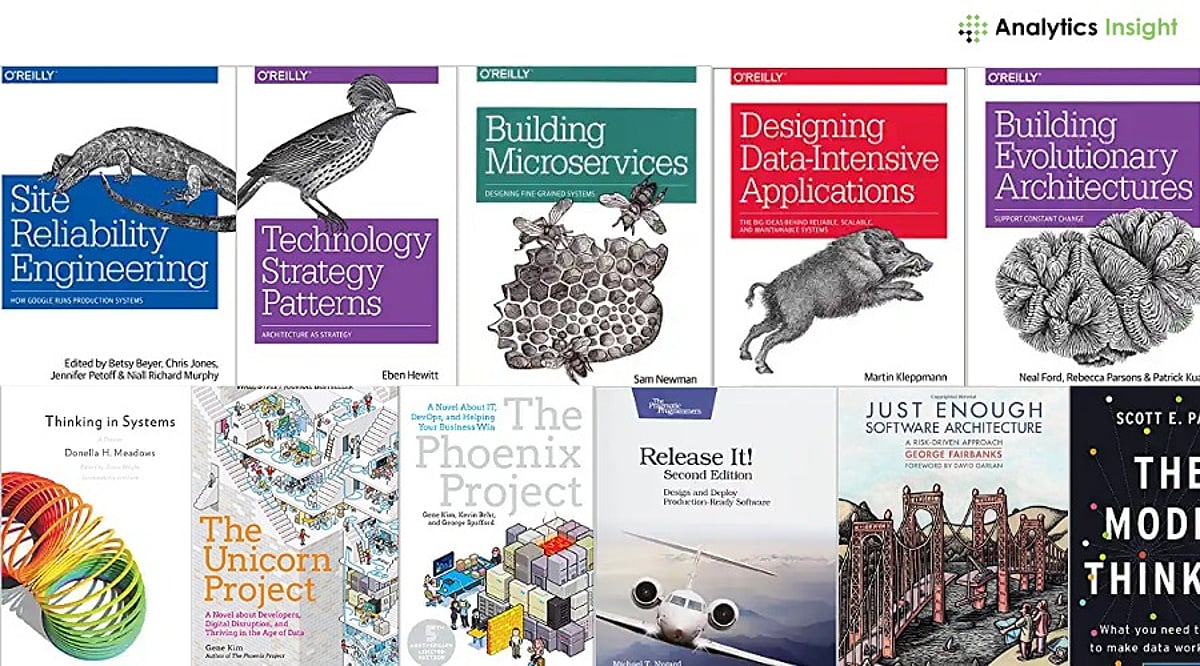
  • Software Architects and Tech Leads: 7 Essential Books for 2026

    Software Architects and Tech Leads: 7 Essential Books for 2026

    Software architecture isn’t just about designing systems anymore. Today’s architects are expected to make decisions that affect scalability, security, cloud adoption, AI integration, and even business outcomes. As companies continue to modernize their technology stacks, experienced software architects and tech leads are becoming harder to find. According to the Stack Overflow Developer Survey 2025, more than 84% of developers already use or plan to use AI tools in their workflows, making strong architectural thinking more valuable than ever. If you’re planning to step into an architecture role or simply want to become a better technical leader, these seven books deserve a place on your reading list.

    1. Designing Data-Intensive Applications

    Martin Kleppmann’s classic explains distributed systems, databases, replication, and scalability in an understandable way. Essential for cloud-native and large-scale data systems.

    2. Fundamentals of Software Architecture

    Mark Richards and Neal Ford cover architecture patterns, trade-offs, and decision-making for developers transitioning to leadership roles.

    3. Software Architecture: The Hard Parts

    Neal Ford, Mark Richards, Pramod Sadalage, and Zhamak Dehghani explore real-world trade-offs in distributed transactions, event-driven systems, and evolutionary architecture.

    4. Clean Architecture

    Robert C. Martin emphasizes separating business logic from dependencies to build maintainable, long-lasting software.

    5. Software Engineering at Google

    Titus Winters, Tom Manshreck, and Hyrum Wright share Google’s engineering culture insights on code reviews, testing, documentation, and technical debt—applicable anywhere.

    6. Building Microservices (Second Edition)

    Sam Newman provides practical guidance on microservices boundaries, API management, and cloud-first architecture.

    7. Head First Software Architecture

    Raju Gandhi and Mark Richards offer a visually engaging introduction to architecture fundamentals for aspiring architects.

    Looking Ahead

    The role of a technical leader today involves having good judgment, communicating ideas well, and knowing system design. Technologies will change, but the principles in these books will remain valid for years.

    FAQs

    Which book is best for beginners? Head First Software Architecture is excellent for transitioning developers.

    Why should software architects read books in 2026? To stay current with AI, cloud, and distributed systems best practices.

    Is Clean Architecture still relevant? Yes, its principles of maintainability and separation of concerns endure.

    Which book is best for distributed systems? Designing Data-Intensive Applications is the go-to resource.

    Can these books help developers become tech leads? Absolutely, they build technical knowledge and leadership skills.

  • Top 10 Essential Spring Boot Libraries for Developers in 2026

    Top 10 Essential Spring Boot Libraries for Developers in 2026

    Spring Boot remains one of the most popular frameworks for building Java applications, but creating robust software requires more than the framework alone. Developers rely on libraries to simplify security, testing, API documentation, logging, database access, and monitoring. Choosing the right libraries saves time, reduces effort, and improves application performance. Below are the ten most essential Spring Boot libraries for developers in 2026.

    Why Spring Boot Libraries Matter

    A typical Spring Boot application does more than serve HTTP requests. It connects to databases, secures APIs, validates user input, logs events, monitors performance, and integrates with cloud services. Instead of building these features from scratch, developers use well-tested, actively maintained libraries supported by the Java ecosystem.

    Best Practices for Using Spring Boot Libraries

    Adding more libraries does not always improve an application. Developers should select libraries that solve specific problems and avoid including multiple tools with overlapping functions. Keeping dependencies updated is critical, as newer versions often include security patches, bug fixes, and performance improvements. Reviewing library documentation before integrating new features into production is also recommended. Using trusted, well-maintained libraries reduces compatibility issues and simplifies long-term maintenance. A clean dependency structure makes applications easier to debug, upgrade, and scale as project requirements evolve.

    Trends Shaping the Spring Boot Ecosystem in 2026

    Spring Boot development continues to evolve alongside cloud-native technology and AI. Current trends include microservices architecture, event-based applications, and AI-powered APIs, which demand higher observability, enhanced security, and increased resiliency. Containerization support, cloud monitoring, automatic API generation, and automated testing are critical capabilities for modern application development. Additionally, native compiling and Kubernetes integration have influenced Java application design. As enterprise software becomes more distributed, developers increasingly focus on performance and maintainability when choosing Spring Boot libraries.

    Top Spring Boot Libraries at a Glance

    • Spring Data JPA – Simplifies database access and CRUD operations with ORM support.
    • Spring Security – Provides authentication, authorization, OAuth2, JWT, and protection against common threats.
    • Springdoc OpenAPI – Generates interactive API documentation automatically.
    • Lombok – Reduces boilerplate code with annotations for getters, setters, and constructors.
    • MapStruct – Simplifies object mapping between layers.
    • Logback – A reliable logging framework for production environments.
    • Testcontainers – Enables integration testing with disposable databases and services.
    • Resilience4j – Adds fault tolerance with circuit breakers, retries, and rate limiters.
    • Micrometer – Provides metrics collection for monitoring and observability.
    • Flyway – Manages database schema migrations safely.

    How to Choose the Right Libraries

    Not every project requires every library. The best approach is to select libraries based on application requirements. For example:

    • Database-driven applications benefit from Spring Data JPA and Flyway.
    • REST APIs typically require Spring Security and Springdoc OpenAPI.
    • Microservices often use Resilience4j and Micrometer.
    • Large enterprise projects usually combine MapStruct, Lombok, Logback, and Testcontainers to improve development speed and software quality.

    Choosing actively maintained libraries also ensures compatibility with future Spring Boot releases.

    Final Thoughts

    Spring Boot is an excellent framework for Java development, but libraries are essential for simplifying modern application development. Whether building RESTful APIs, enterprise-grade platforms, or cloud-native microservices, these libraries solve common development problems without adding unnecessary complexity. By selecting the right tools, developers can boost efficiency and productivity. As enterprise Java applications become increasingly cloud-native and distributed, choosing the right Spring Boot libraries is critical for performance, security, and long-term maintainability.

  • Top 10 Microservices Interview Questions Every Java Developer Should Know

    Top 10 Microservices Interview Questions Every Java Developer Should Know

    Microservices have transformed how modern applications are built, offering scalability, resilience, and faster deployment cycles. Java developers, in particular, rely on frameworks like Spring Boot and Spring Cloud to implement microservices architectures. To help you prepare for your next technical interview, here are the ten most frequently asked microservices questions along with concise explanations.

    1. What Are Microservices?

    Microservices break down an application into small, independently deployable services. Each service handles a specific business capability and communicates with others via lightweight protocols. This architecture contrasts with monolithic applications by enabling modular deployment, fault isolation, and independent scalability. Teams can deliver updates more frequently without risking the entire system.

    2. Why Use Spring Boot for Microservices?

    Spring Boot simplifies microservices development by offering auto-configuration, embedded servers (Tomcat, Jetty), and dependency management through starter modules. It provides production-ready features like health checks, metrics, and externalized configuration. Developers can quickly build standalone services without cumbersome XML setup, making Spring Boot a top choice for Java microservices.

    3. What Is Spring Cloud?

    Spring Cloud extends Spring Boot to address common microservices challenges. It provides tools for service discovery (Eureka), centralized configuration (Config Server), distributed tracing (Sleuth), and circuit breakers (Hystrix). With Spring Cloud, developers can build cloud-native applications that integrate seamlessly with platforms like Kubernetes and Netflix OSS.

    4. How Does Service Discovery Work?

    In a microservices environment, service instances come and go, making static IP addresses impractical. A discovery server (e.g., Eureka or Consul) maintains a registry of available services. Each instance registers itself on startup and sends heartbeats. Clients query the registry to find service locations, enabling dynamic communication, load balancing, and resilience without manual configuration.

    5. What Is an API Gateway?

    An API Gateway acts as a single entry point for all client requests. It handles cross-cutting concerns like authentication, rate limiting, request routing, and protocol translation. By centralizing these tasks, the gateway simplifies client communication with multiple backend services and enforces security policies consistently across the microservices landscape.

    6. What Is the Circuit Breaker Pattern?

    The circuit breaker pattern prevents cascading failures when a service becomes unresponsive. It monitors calls and, after a configurable threshold of failures, opens the circuit to stop further requests. Fallback responses are returned to maintain partial functionality. Once the service recovers, the circuit closes again. This pattern improves overall system resilience and stability.

    7. How Do Microservices Communicate?

    Microservices communicate either synchronously via REST APIs or asynchronously through messaging queues (e.g., RabbitMQ, Apache Kafka). Synchronous calls are straightforward but introduce tight coupling and latency. Asynchronous messaging enables event-driven architectures where services react to events, improving decoupling and scalability. Many systems combine both patterns based on use-case requirements.

    8. What Is Distributed Tracing?

    Distributed tracing helps monitor requests as they travel across multiple services. Tools like Zipkin or Jaeger assign a unique trace ID to each transaction, allowing developers to identify bottlenecks, debug latency issues, and optimize performance. Observability is critical in complex microservices environments, and tracing provides deep insight into request flows.

    9. How Do You Secure Microservices?

    Security in microservices involves authentication, authorization, and secure communication. Common approaches include OAuth2 and JWT for token-based access control, HTTPS for encrypted data in transit, and API gateways to enforce policies. Service-to-service communication should also use mutual TLS (mTLS) to verify identities. Following identity management best practices ensures that each service only accesses permitted resources.

    Mastering these topics will give you a strong foundation in microservices architecture and help you succeed in Java developer interviews. Whether you’re building new systems or maintaining existing ones, understanding these concepts is essential for modern software engineering.