Tag: misinformation

  • Mark Zuckerberg’s Apology to India: 7 Key Facts Behind the Controversy

    Mark Zuckerberg’s Apology to India: 7 Key Facts Behind the Controversy

    Mark Zuckerberg, CEO of Meta, recently issued an apology to India after making an incorrect statement about the country’s 2024 general election results. Here are seven essential points to understand the incident and its aftermath.

    1. Incorrect Election Statement

    During a podcast, Zuckerberg mistakenly claimed that most incumbent governments—including India’s—had lost power in the 2024 elections due to voter dissatisfaction following the pandemic. This was factually wrong: Prime Minister Narendra Modi’s BJP-led National Democratic Alliance secured a third consecutive term in the Lok Sabha elections.

    2. Political Backlash in India

    Indian political leaders and government representatives sharply criticized the statement, calling it misleading. They argued that inaccurate comments from a globally influential tech executive could create confusion and undermine confidence in India’s democratic electoral process.

    3. Government Sought Clarification

    Indian officials publicly highlighted the factual error and urged Meta to acknowledge the mistake. The issue gained widespread traction across news platforms and social media, increasing pressure on the company to respond quickly and clarify its position.

    4. Meta Issued an Apology

    Meta’s India leadership apologized for the inaccurate statement, calling it an inadvertent error. The company clarified that Zuckerberg’s remarks did not reflect the actual outcome of India’s general elections and expressed regret for the confusion caused.

    5. India’s Election Outcome

    Contrary to Zuckerberg’s claim, the BJP-led National Democratic Alliance secured enough seats to form the government. Prime Minister Modi was sworn in for a third term, making India one of the major democracies where the incumbent coalition retained power.

    6. Why the Issue Became Significant

    Because Meta operates Facebook, Instagram, and WhatsApp, its leadership’s public comments carry significant influence. Any factual mistake involving national elections can quickly escalate into a diplomatic and political issue, particularly in countries with hundreds of millions of platform users.

    7. Lessons for Global Tech Leaders

    The controversy underscores the importance of verifying politically sensitive information before making public statements. It also highlights the growing expectation that technology companies and their executives maintain accuracy when discussing elections, governance, and other matters of international public importance.

    This incident serves as a reminder of the responsibility that comes with global influence, especially in the digital age where misinformation can spread rapidly.
  • Google Halts Earth AI Tool After Just One Day Over Fake Image Concerns

    Google Halts Earth AI Tool After Just One Day Over Fake Image Concerns

    Google has abruptly pulled its new Google Earth AI tool less than 24 hours after launch, following widespread concerns that the feature could produce and spread misleading fake imagery. The tool, which used the company’s Nano Banana 2 model to overlay AI-generated images onto real satellite data, was removed after researchers and users reported screenshots that appeared to violate Google’s content policies.

    Launched on July 30 via Google Earth’s web platform, the feature allowed users to enter text prompts and generate new scenes using satellite, aerial, and 3D mapping data. However, within hours, open-source intelligence researchers demonstrated how the tool could create images of sensitive locations, raising red flags about potential misinformation. Researcher Henk van Ess was among those who tested various prompts, showing that the generated content could easily be misused.

    In a statement, Google acknowledged the issue: “We know that people uniquely trust Google Earth for a reliable view of the world. We’ve also seen people sharing screenshots of generated imagery that appear to violate our policies.” The company emphasized that the generated images did not alter the main Google Earth view and that each AI-created image carried a SynthID watermark to help identify synthetic content. Additionally, Google said Gemini and Google Lens could help users detect AI-generated images.

    Despite these safeguards, experts warned that screenshots of the generated visuals could still spread misleading information across social media, bypassing the watermarks. The quick rollback underscores a growing challenge for AI companies: balancing innovation with the risk of amplifying misinformation. Google Earth holds strong public trust as a reliable source of real-world imagery, and the introduction of AI-generated scenes threatened to undermine that credibility.

    Google now plans to strengthen its safety controls before deciding whether to restore the feature. The incident highlights how rapidly AI products can face safety concerns once exposed to public testing. As AI generation tools become more common, companies will need to implement robust safeguards to prevent misuse while still delivering innovative user experiences.

  • Google Halts Earth AI Tool Launch After One Day Due to Misinformation Risks

    Google Halts Earth AI Tool Launch After One Day Due to Misinformation Risks

    Google has removed its Google Earth AI tool less than 24 hours after its launch, following concerns over fake images and misinformation. The feature, introduced on July 30 via the Google Earth web platform, used the company’s Nano Banana 2 model to generate AI images overlaid on real satellite imagery. Users could input prompts to create new scenes using satellite, aerial, and 3D mapping data.

    The rapid rollback came after researchers and users shared screenshots of AI-generated images that appeared to violate Google’s policies. Open-source intelligence researchers highlighted how the tool could be used to create scenes involving sensitive locations, raising fears that fake satellite imagery could spread on social media.

    Google stated, “We know that people uniquely trust Google Earth for a reliable view of the world. We’ve also seen people sharing screenshots of generated imagery that appear to violate our policies.” The company emphasized that the generated images did not alter the main Google Earth view and that each image carried a SynthID watermark to help identify synthetic content.

    Despite these safeguards, experts warned that screenshots could still circulate misleading visuals online. Google now plans to strengthen its safety controls before deciding whether to restore the feature. This incident underscores the growing challenge for AI companies as they integrate generation tools into trusted platforms, where even a brief public test can quickly raise safety concerns.

  • Meta India Head Arun Srinivas Faces Legal Action Over Alleged Morphed Posts Targeting PM Modi

    Meta India Head Arun Srinivas Faces Legal Action Over Alleged Morphed Posts Targeting PM Modi

    Hyderabad Cybercrime Police have registered cases against Meta India head Arun Srinivas and several Facebook and Instagram accounts over the alleged circulation of morphed and objectionable content targeting Indian Prime Minister Narendra Modi during the recent Cockroach Janta Party (CJP) protests in Delhi.

    The FIRs were filed based on complaints alleging that manipulated videos and images of the Prime Minister were shared on social media platforms.

    Complaints Allege Morphed Content Was Shared

    According to the complaints, two individuals came across multiple digitally altered videos and images of the Prime Minister while browsing Instagram. They alleged that the content portrayed him in an obscene, derogatory, and misleading manner and was accompanied by abusive comments that increased its reach.

    “The comments contain offensive language, ridicule, and indecent remarks directed at the Hon’ble Prime Minister and other individuals depicted in the manipulated content, thereby amplifying the offensive nature of the posts and encouraging their wider circulation and engagement. The above content appears to have been digitally altered or AI-generated and circulated on social media,” the complaints stated.

    Complainants Cite Risk of Misinformation

    The complainants argued that the alleged posts could have wider implications beyond social media.

    “Such content has the potential to mislead the public, spread misinformation, incite hatred or public unrest, outrage public decency, defame or insult the dignity of public figures, disturb public order, promote hostility among different sections of society, and otherwise violate the applicable provisions of law,” they added.

    The complaints were filed by S. Aravind Reddy, a 29-year-old businessman, and T. Saikiran Goud, a Telangana BJP activist. Police are also examining several posts and comments shared during the student protests, many of which allegedly contained abusive remarks targeting the Prime Minister.

    Meta Tightens Oversight After Earlier Controversy

    The latest action comes days after Meta drew criticism from the Indian Government when a video posted from the Prime Minister’s official Facebook account was briefly blocked.

    According to sources, Meta has assured the government that it has strengthened safeguards for posts published from the Prime Minister’s account. Prominent accounts will now receive additional oversight, and only senior company officials will be authorized to review such posts. Sources added that every moderation decision will undergo scrutiny by at least two senior executives before any action is taken.

    Government Meeting Expected Soon

    Sources said Meta representatives are expected to meet Indian government officials later this week to discuss content regulation and other policy-related issues.

    Separately, Delhi Police have issued notices to several social media accounts, including some news portals, directing them to remove allegedly offensive and abusive posts targeting Prime Minister Modi that were shared during the recent student protests in Delhi.

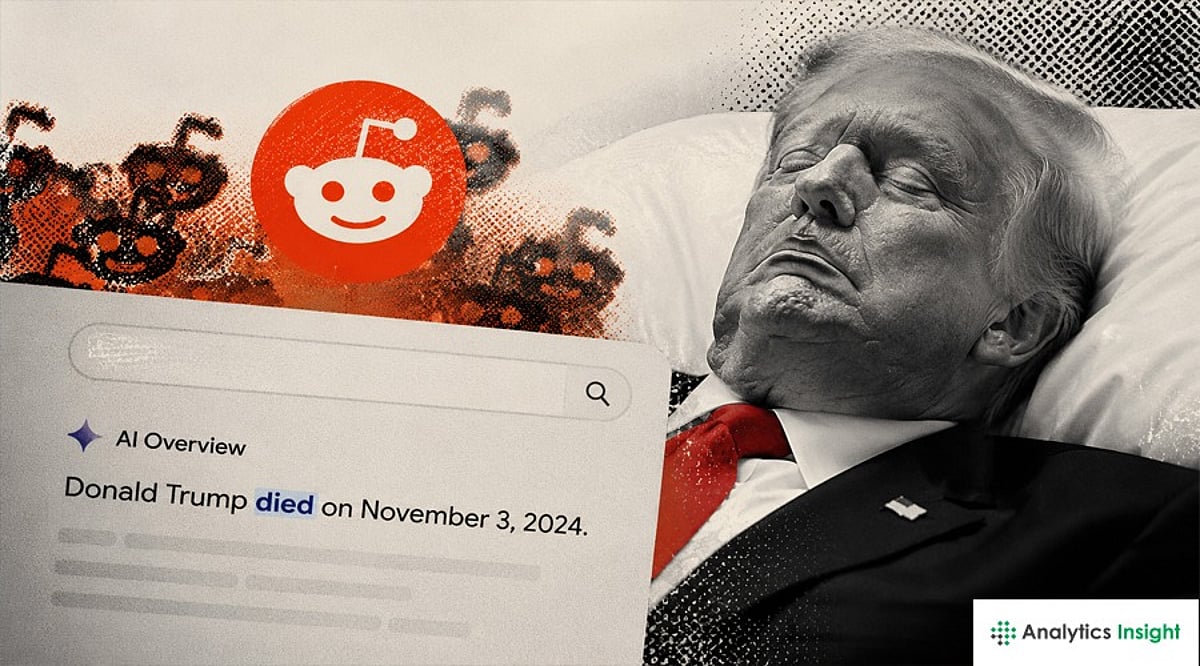
  • Coordinated Reddit Trolls Exploit AI Search Engines with Fabricated Trump Death Story

    Coordinated Reddit Trolls Exploit AI Search Engines with Fabricated Trump Death Story

    A coordinated campaign on Reddit has exposed a critical vulnerability in AI-powered search systems. Members of the subreddit r/poisonai deliberately fabricated a story claiming that US Vice President JD Vance had died from rabies after allegedly biting President Donald Trump. While entirely false, the narrative was sufficiently amplified that some AI search tools began treating it as factual.

    The hoax was crafted to appear authentic through a barrage of fake mourning posts, fabricated screenshots, and supporting comments on Reddit. It also appeared on an AI-generated news site masquerading as a local news outlet, providing additional fodder for AI search engines to index.

    Investigations found that DuckDuckGo and Brave’s AI features propagated the false claims, revealing how coordinated misinformation can bypass systems heavily reliant on user-generated content. Brave, however, emphasized that users should independently verify any AI search results. This incident has sparked renewed concerns about how conversational AI determines which information to trust.

    These findings echo a study from Cornell Tech, which demonstrated that even brief lies posted on Reddit can influence AI programs. The study found that when 60% of statements are misleading, they become redundant in many discussions, leading AI systems to perceive them as truthful. This scenario underscores the challenge AI companies face in delivering timely information without compromising accuracy.