Tag: Movie Review

  • Netflix’s Unabomber Review: Jacob Tremblay and Russell Crowe Elevate an Uneven True-Crime Drama

    Netflix’s Unabomber Review: Jacob Tremblay and Russell Crowe Elevate an Uneven True-Crime Drama

    Unabomber Review: A 3/5 True-Crime Drama

    Netflix’s Unabomber tackles one of America’s most infamous criminal cases by moving between two distinct periods in Ted Kaczynski’s life. The film contrasts his years as an isolated Harvard student with the FBI’s lengthy investigation into the bombing campaign that made him a national obsession.

    Rather than turning the story into a straightforward manhunt, the drama spends significant time with Kaczynski’s personality, his academic brilliance, and the experiences that pushed him further from society. The result is a character-driven true-crime film with strong performances, even if the screenplay does not always make the most of its complicated subject.

    Jacob Tremblay Brings Depth to Young Ted Kaczynski

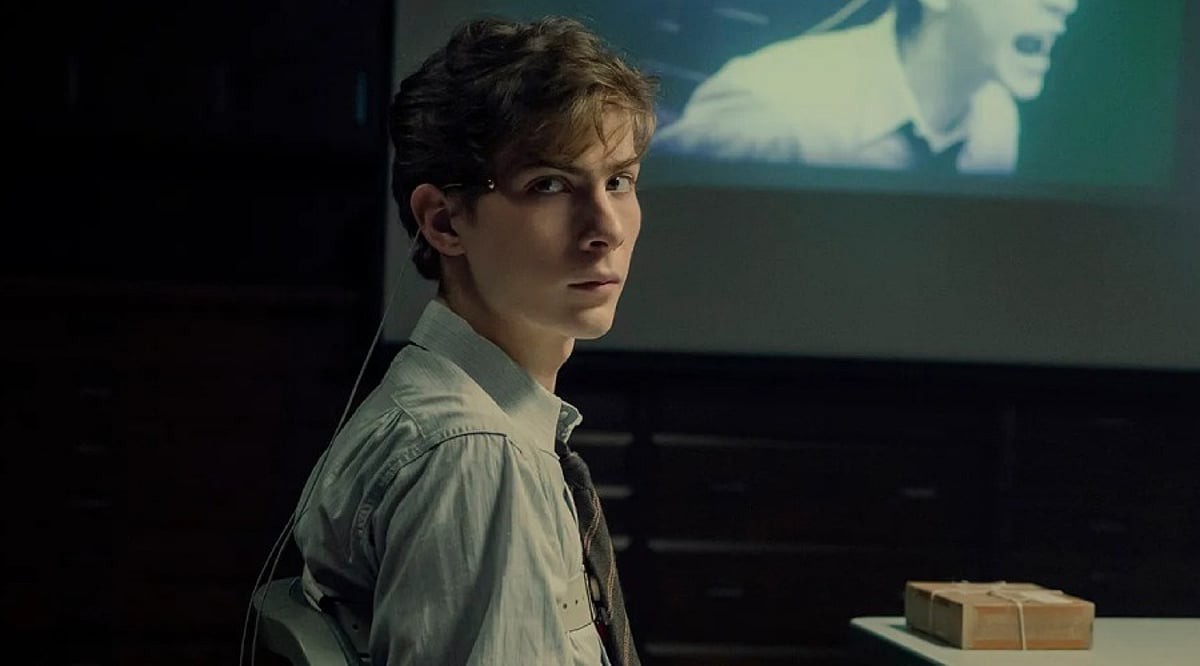
    Jacob Tremblay plays the younger Kaczynski as exceptionally intelligent but deeply disconnected from those around him. His performance deliberately avoids turning the character into an obvious threat. Instead, viewers see a young man struggling to connect, growing more withdrawn, and slowly becoming suspicious of the world around him.

    Tremblay’s strongest moments come in the quieter scenes, especially those involving Harvard professor Henry Murray. His portrayal shifts gradually as Kaczynski becomes more isolated, creating an unsettling progression without exaggerated mannerisms.

    Russell Crowe’s Henry Murray Complicates the Story

    Russell Crowe brings complexity to Murray, the Harvard professor whose psychological experiments become central to the film. Murray initially seems like an accomplished academic drawn to Kaczynski’s intelligence, but his methods create an increasingly uncomfortable dynamic.

    The relationship raises questions about psychological experimentation, authority, and the toll of prolonged emotional pressure on a young person. However, the film sometimes draws too direct a line between Murray’s experiments and Kaczynski’s later crimes. Kaczynski’s actions grew from far more than one relationship or experience, and the screenplay occasionally simplifies that history for dramatic effect.

    The FBI Investigation Adds a Procedural Layer

    The story later shifts to the hunt for the Unabomber, with Shailene Woodley starring as FBI agent Joanne Miller. These scenes provide the film’s procedural element, but they are not always as absorbing as the Harvard storyline. The investigation has the ingredients of a gripping thriller, yet the screenplay moves through several developments too quickly.

    Woodley gives Miller a determined presence, although the character does not receive the same depth as Tremblay’s Kaczynski.

    The Case Closes In on Kaczynski

    As the FBI connects the attacks to a larger pattern, the case becomes more difficult because the bomber leaves no simple trail. The film also highlights the importance of Kaczynski’s writing, especially the manifesto that helped investigators understand the person behind the violence.

    These sections work best when they focus on the painstaking nature of the investigation. Still, they feel compressed given the enormous amount of material surrounding the real-life case.

    Ending and Final Thoughts

    The film eventually moves toward Kaczynski’s identification and capture, using the language and ideas in his writings to expose his identity. The moment of revelation lands emotionally because it connects the isolated academic from the earlier timeline with the man responsible for the bombing campaign.

    The ending does not present the capture as a simple victory. Instead, it leaves viewers with the disturbing contrast between Kaczynski’s early life and the crimes he committed. The film also makes clear that understanding a criminal’s background does not erase responsibility for the crimes.

    Unabomber is an uneven but watchable true-crime drama, elevated considerably by its cast. Tremblay delivers the film’s most layered performance, while Crowe adds nuance to a character who becomes central to the story. The biggest weakness is the screenplay: there is enough material for both a psychological character study and a detailed investigative thriller, but the limited runtime forces the film to compress both. The Harvard storyline feels more developed, while the FBI investigation could have used more depth.

    For true-crime fans, Unabomber offers strong acting and an intriguing look at a notorious case. It is less successful as a definitive examination of Kaczynski or the investigation that finally exposed him.

  • ‘Best of the Best’ Review: A Vibrant Dance Comedy About Friendship, Identity, and Growing Up

    ‘Best of the Best’ Review: A Vibrant Dance Comedy About Friendship, Identity, and Growing Up

    ‘Best of the Best’, directed by Lena Khan and written by Hasan Minhaj and Prashanth Venkataramanujam, follows childhood best friends Maya (Maitreyi Ramakrishnan) and Anjali (Priyanka Kedia) as they arrive at UCLA hoping to leave their high-school embarrassment behind. The two join Team Agni, a competitive Bollywood-fusion dance troupe, but what begins as a chance to prove themselves soon puts their friendship under pressure.

    Overview

    Maya and Anjali’s friendship faces unexpected pressure when competition exposes years of insecurity, resentment and unresolved differences between them. The film blends South Asian identity, college life, dance competitions and family expectations into a familiar coming-of-age story. An emotional finale brings Maya and Anjali together again while giving their friendship and personal journeys satisfying closure.

    Cast and Performances

    Maitreyi Ramakrishnan brings plenty of energy to Maya, a character whose insecurity becomes increasingly important as the story progresses. Maya is competitive and outspoken, but much of that behavior comes from years of feeling like Anjali is the more naturally popular and accepted friend. Priyanka Kedia gives Anjali a softer performance, which works well for a character who initially appears to have an easier life. The film gradually reveals that she is also struggling with parental expectations and uncertainty about what she actually wants.

    Chaneil Kular is charming as Arjun, Maya’s love interest, while Ankur Rathee’s Ronak is deliberately presented as the confident captain whose own ambitions sometimes get in the way of his team. Hasan Minhaj provides comic relief as Professor Latif, the faculty adviser who frequently finds himself trying to manage the students’ personal and professional conflicts.

    The Lead Twist that Changes the Friendship

    The biggest conflict between the friends begins when Maya discovers that she was originally voted to become the team’s female lead, but the result is quietly changed in favor of Anjali. Maya overhears the conversation but chooses not to confront Anjali immediately. Things get worse when Anjali’s academic problems begin affecting her position on the team. Maya is asked to help with an academic assignment but fails to follow through, contributing to Anjali being placed on academic probation and forced to step away from dancing.

    The situation finally explodes when Maya reveals that Anjali only got the lead as the vote was changed. Years of resentment come rushing out. Maya admits that she always felt like the friend who works harder but gets less attention, while Anjali accuses Maya of turning everything into a competition. Their friendship falls apart, and Maya also leaves Agni.

    Arjun’s Relationship with Maya Takes a Hit

    Maya’s growing obsession with proving herself affects her relationship with Arjun. A video from a party makes it appear that Maya and Ronak are becoming romantically involved, leaving Arjun hurt. The misunderstanding is eventually cleared up, but the subplot reinforces one of the film’s larger ideas: Maya spends so much time looking for validation from other people that she struggles to recognize the support that already exists. The romance remains secondary to the friendship between Maya and Anjali, which is ultimately the emotional centre of the film.

    The Koh-i-Noor Twist in the Finale

    After Maya and Anjali eventually return to the team, they are given another opportunity to perform together at nationals. Instead of the predictable wedding-themed routine Ronak initially favours, Maya develops a more ambitious concept based around the Koh-i-Noor diamond. The routine imagines the team retrieving the diamond and ultimately destroying it so that its pieces can be shared rather than remaining a symbol of colonial possession. The idea gives the finale a distinctly South Asian cultural and political dimension without completely taking over the story.

    The performance suffers an unexpected setback when the power goes out. Rather than stopping, Maya and Anjali fall back on the dance routine they performed together years earlier. It becomes a full-circle moment for Maya, who finally gets another chance to perform without allowing her previous humiliation to define her. Agni wins the national competition, while Maya and Anjali repair their friendship. Maya also reconciles with Arjun, and Anjali’s relationship with Ronak is left open-ended.

    Final Verdict

    ‘Best of the Best’ follows a familiar college dance-comedy formula, but its focus on friendship, South Asian identity and the complicated pressures of growing up gives the story enough personality to stand on its own. Ramakrishnan and Kedia are the film’s biggest strengths, particularly when Maya and Anjali’s friendship begins to unravel. The film is also at its best when it allows the characters to be flawed rather than turning either friend into the obvious villain.

    The dance sequences are energetic, although the choreography can be uneven, and some of the conflicts resolve a little too conveniently. Still, the final performance delivers the emotional payoff the film was building towards. It may not reinvent the genre, but ‘Best of the Best’ is a breezy, funny and culturally specific coming-of-age film that ultimately understands that the real victory is not the trophy, it is figuring out what, and who, actually matters.

    FAQs

    What is ‘Best of the Best’ about?

    ‘Best of the Best’ follows childhood friends Maya and Anjali as their friendship faces pressure from dance competitions, personal insecurities, family expectations and changing ambitions during college.

    Who stars in ‘Best of the Best’?

    Maitreyi Ramakrishnan plays Maya, while Priyanka Kedia portrays Anjali. The cast also includes Chaneil Kular, Ankur Rathee and Hasan Minhaj in supporting roles.

    What happens between Maya and Anjali?

    Their friendship breaks down after Maya discovers that the female lead vote was changed in Anjali’s favour, bringing years of resentment and insecurity to the surface.

    What happens in the ending of ‘Best of the Best’?

    Maya and Anjali reunite for the national competition, perform together despite a power outage, and ultimately repair their friendship after their emotional dance performance.

    Is ‘Best of the Best’ worth watching?

    ‘Best of the Best’ offers an energetic mix of comedy, friendship, dance and South Asian identity, supported by engaging performances from Maitreyi Ramakrishnan and Priyanka Kedia.

  • The Love Hypothesis Review: Lili Reinhart and Tom Bateman Deliver a Satisfying Fake-Dating Romance

    The Love Hypothesis Review: Lili Reinhart and Tom Bateman Deliver a Satisfying Fake-Dating Romance

    Introduction

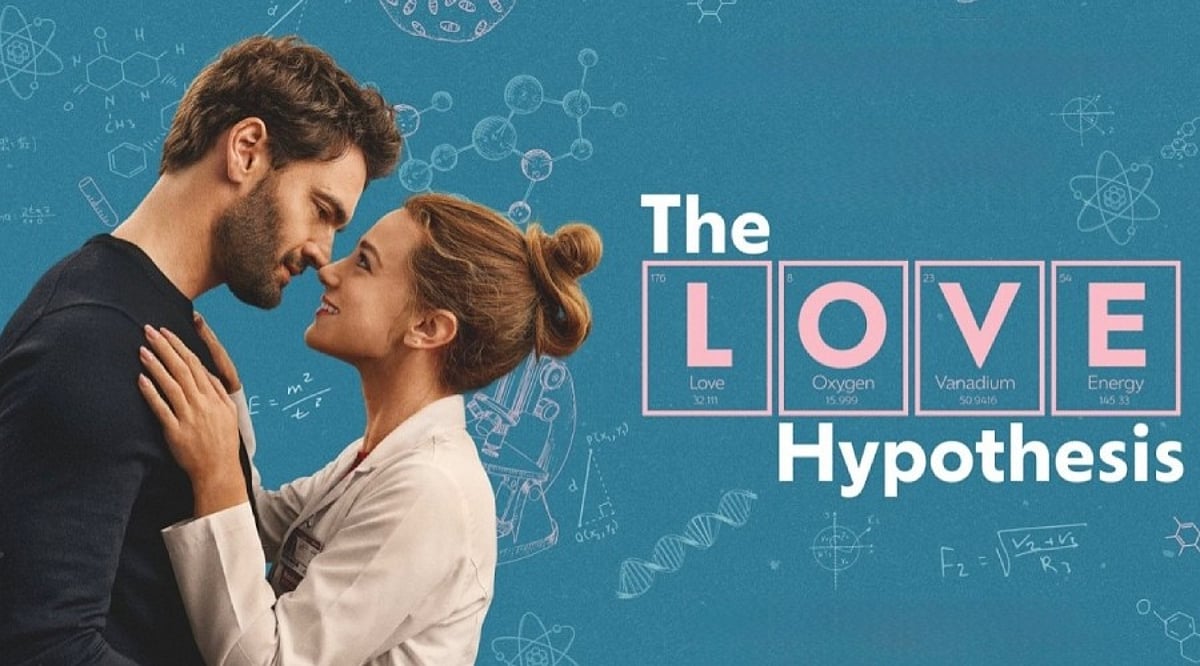
    Based on Ali Hazelwood’s bestselling novel, The Love Hypothesis brings the popular fake-dating trope to the screen with a Stanford PhD student and a notoriously intimidating professor. The film combines romance, academic ambition, and workplace conflict into a story that, while familiar, delivers an emotionally satisfying payoff.

    Cast and Performances

    Lili Reinhart stars as Olive Smith, a PhD student whose personal and professional lives collide when she enters a fake relationship with Dr. Adam Carlsen, played by Tom Bateman. Reinhart effectively portrays Olive’s awkwardness, determination, and growth, while Bateman gradually softens his character’s harsh exterior. Their chemistry may divide viewers, but both actors bring enough depth to keep the story engaging.

    Story and Themes

    The plot follows Olive as she pretends to be in a relationship to convince her best friend Anh that she has moved on. An unexpected kiss with Adam sets off a chain of events that leads to a mutually beneficial arrangement. The film expands the romance with a serious subplot involving Harvard professor Tom Benton, who threatens Olive’s academic career after she rejects his advances. This addition addresses power imbalances in academia and gives the story weight beyond the romance.

    Anh’s role is more significant than in many similar films; she becomes an active participant in the emotional journey rather than a mere plot device.

    Ending Explained

    Adam confronts Benton after learning of his behavior, and the couple finally acknowledges their genuine feelings. A two-year time jump shows Olive leading her own laboratory and the couple still together, confirming that their fake relationship became real. The ending also nods to Adam’s ‘Dr. Evil’ reputation, suggesting Olive has developed a similar formidable presence among students.

    Final Verdict

    The Love Hypothesis earns a rating of 3.5/5. It works best for fans of the book and the BookTok romance genre. While the plot follows a predictable structure and the romantic chemistry isn’t always convincing, strong performances and a meaningful academic subplot make it a worthwhile watch.

  • Lust Stories 3 Review: Strong Performances Anchor an Uneven Netflix Anthology of Desire

    Lust Stories 3 Review: Strong Performances Anchor an Uneven Netflix Anthology of Desire

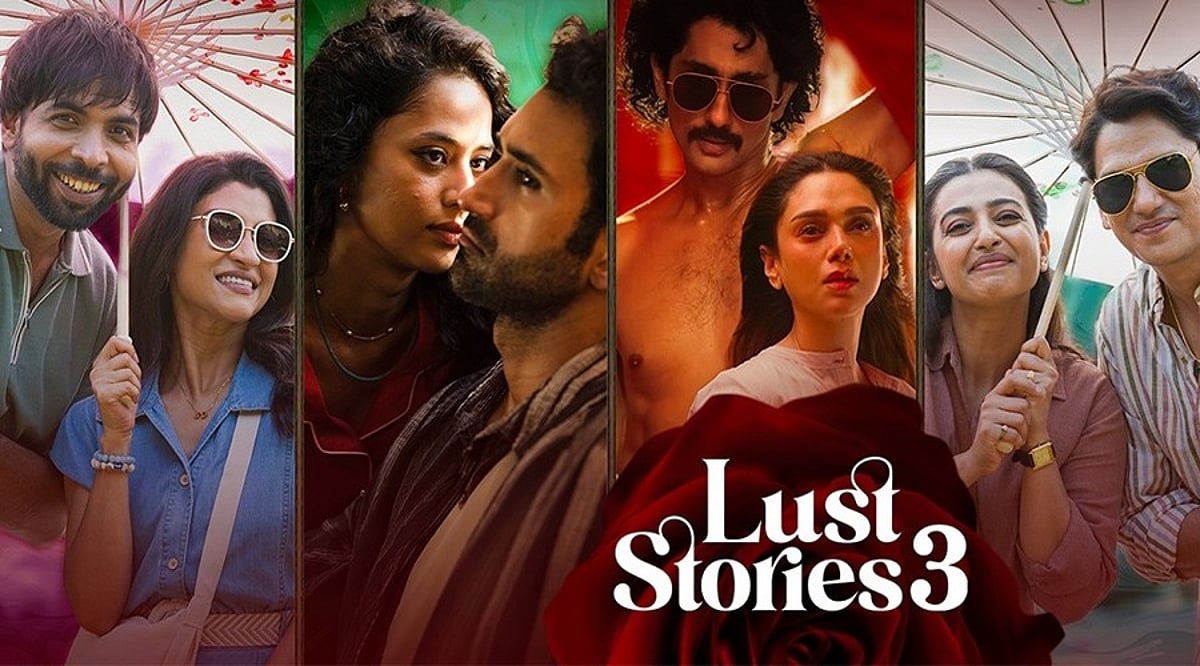
    Lust Stories 3, the latest installment in the popular anthology franchise, brings together four acclaimed directors to explore the complexities of desire, marriage, and loneliness. While not every segment hits the mark, strong performances and visual variety make it a worthwhile watch on Netflix.

    Overview

    • Strong Performances: Konkona Sen Sharma and Radhika Apte bring humour, warmth and emotional depth to the anthology’s strongest segment.
    • Uneven Stories: Four directors offer contrasting perspectives on desire, with some segments working better than others.
    • Final Rating: Despite inconsistent writing, strong performances and visual variety make the anthology an engaging Netflix watch.

    Four Directors, Four Different Takes on Desire

    Direction: 3.5/5
    The four directors bring noticeably different styles to the anthology. Vikramaditya Motwane’s segment gets the balance right, with Konkona Sen Sharma and Radhika Apte playing two married women who question intimacy in their relationships. Kiran Rao takes a lighter approach, while Shakun Batra returns to complicated relationship territory. Vishal Bhardwaj transports the anthology to 1980s Hyderabad with a theatrical feel. The unevenness is unavoidable, but the variety prevents the film from feeling repetitive.

    Strong Ideas, But Not Every Story Finds Its Rhythm

    Writing: 3/5
    The writing is a mixed bag. Motwane’s story is the most engaging because the characters feel like real people rather than plot devices. Batra’s story has a promising central idea about a divorced couple who still feel physical attraction, though some conversations feel overly long. Rao’s segment has an interesting setup but a predictable development. Bhardwaj’s story is playful and imaginative, though its fantasy sequences occasionally stretch the concept too far.

    Konkona and Radhika Lead a Strong Ensemble

    Casting: 4/5
    The performances hold the anthology together. Konkona Sen Sharma and Radhika Apte share a natural chemistry that makes their conversations feel spontaneous. Vijay Varma and Abhishek Banerjee fit comfortably into Motwane’s story, while Ali Fazal and Radhika Madan bring tension to their troubled relationship. Aditi Rao Hydari is perfectly suited to Bhardwaj’s period setting, and Siddharth enjoys a slightly mischievous role.

    The 1980s Hyderabad Story Gets the Best Visual Treatment

    Cinematography: 4/5
    Visually, the anthology offers enough variety. Bhardwaj’s segment stands out with its period production design, interiors, and fantasy sequences. The other stories are more grounded, which works because the camera avoids glamorizing intimate moments.

    Music Supports the Mood Without Taking Over

    Music: 3.5/5
    The background score and songs help establish the mood of each segment, particularly when the tone shifts between comedy, romance, and emotional moments. It never overpowers the stories.

    The Chemistry Works Best When It Feels Unforced

    On-Screen Chemistry: 3.5/5
    The strongest pairings deliver. Konkona and Radhika have the most natural chemistry, built around friendship and familiarity. Ali Fazal and Radhika Madan manage the complicated dynamic of a separated couple still drawn to each other. Aditi Rao Hydari and Siddharth bring a different energy, with Bhardwaj allowing their chemistry to become part of the fantasy.

    An Uneven Anthology Saved By Its Performances

    Final Verdict: 3.5/5
    Lust Stories 3 is not consistently great, but it remains an engaging addition to the franchise. The anthology works best when it remembers that desire is rarely just about sex—it can stem from boredom, loneliness, or the need to feel noticed. Strong performances from Konkona Sen Sharma and Radhika Apte, along with a talented supporting cast, ensure the film remains watchable despite uneven writing.

    FAQs

    Is Lust Stories 3 worth watching?

    Yes, especially for viewers who enjoy relationship-driven anthologies. Strong performances, varied storytelling, and thoughtful explorations of desire make it engaging despite uneven segments.

    Who directed Lust Stories 3?

    The anthology features four directors: Vikramaditya Motwane, Kiran Rao, Shakun Batra, and Vishal Bhardwaj, each presenting a different perspective on desire.

    Who stars in Lust Stories 3?

    The cast includes Konkona Sen Sharma, Radhika Apte, Vijay Varma, Abhishek Banerjee, Ali Fazal, Radhika Madan, Aditi Rao Hydari, and Siddharth.

    Where can you watch Lust Stories 3?

    Lust Stories 3 is available to stream on Netflix.

    What is the rating of Lust Stories 3?

    The anthology receives a rating of 3.5 out of 5, with strong performances and visual variety balancing uneven writing.

  • Mirzapur: The Movie Review – Does the Big-Screen Spin-Off Deliver on Its Promise?

    Mirzapur: The Movie Review – Does the Big-Screen Spin-Off Deliver on Its Promise?

    Bringing a beloved OTT series to the big screen is always a gamble. The audience already knows the characters, their quirks, and most importantly, what makes that world tick. Mirzapur: The Movie walks into that challenge with a lot to live up to. Fortunately, it doesn’t try to reinvent itself. Instead, it leans into the violence, dark humor, family feuds, and power games that fans already love.

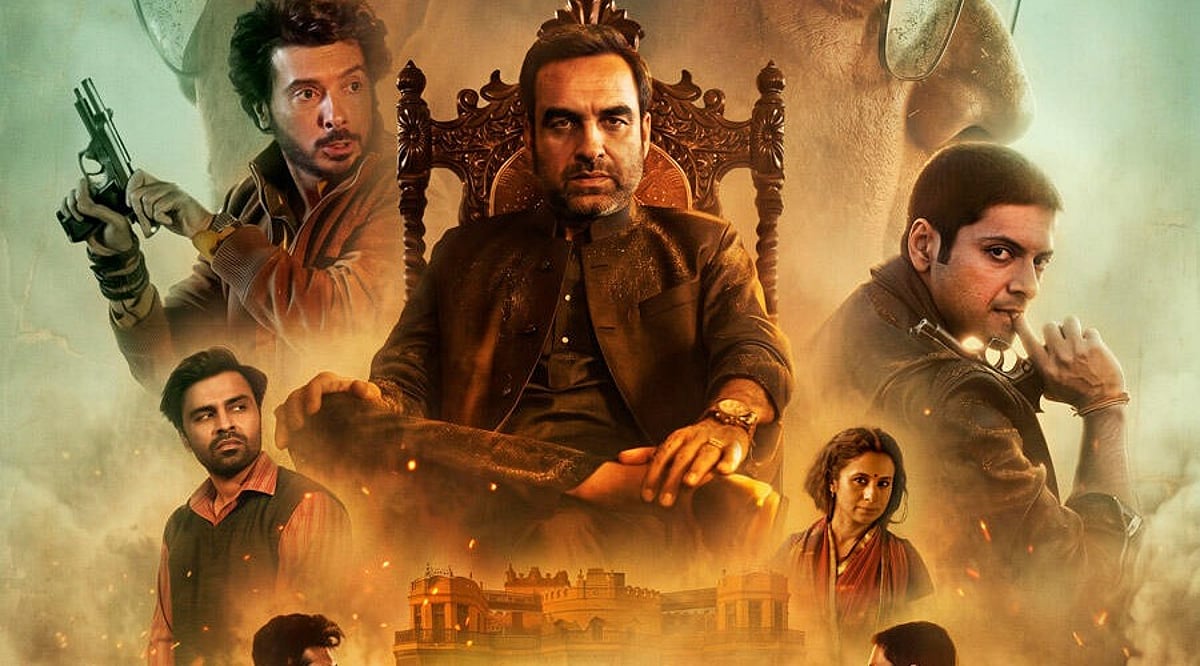
    Directed by Gurmmeet Singh, the film reunites Pankaj Tripathi as Kaleen Bhaiya, Ali Fazal as Guddu Pandit, Divyenndu as Munna Tripathi, and other familiar faces. The result feels less like a standalone film and more like a larger, louder chapter from the Mirzapur universe.

    Familiar Characters, Familiar Chaos

    The film’s biggest strength is its characters. There is no need for lengthy introductions because the audience already knows who these people are and what they are capable of. Guddu remains driven by ambition and anger, while Munna stays the volatile wildcard who can flip a situation in seconds. Kaleen Bhaiya, meanwhile, operates with a calmness that makes him even more intimidating.

    Pankaj Tripathi once again delivers a masterclass in understatement—he doesn’t need to raise his voice to command attention. Ali Fazal brings the physical intensity required of Guddu, and Divyenndu clearly understands why Munna remains one of the franchise’s most entertaining characters.

    Bigger Scale, Same Mirzapur Flavor

    The move to theaters gives the story a bigger canvas, particularly in the action sequences. But the film’s appeal doesn’t come solely from bigger fights or louder moments. It’s the combination of violence, humor, and personal rivalry that keeps things engaging. The arrival of Bappan Yadav, played by Ravi Kishan, adds another spark to the story, bringing his own ambition and unpredictability into a world where no one is willing to give up control.

    The film also gives Rasika Dugal’s Beena Tripathi more room to shine. Beena has always been one of the more calculating characters in this universe, and Dugal plays that intelligence with just the right restraint.

    The Pace Could Have Been Sharper

    Where Mirzapur: The Movie stumbles is its length. Running over three hours, the film takes a little too long to reach its destination. The middle section, in particular, loses some of the urgency the story needs. There are stretches where it feels like a detour rather than pushing the central conflict forward. Some supporting characters could also have been used more effectively.

    That said, the film eventually rediscovers its rhythm. The final stretch brings back the tension and unpredictability that make the franchise work, delivering a stronger finish after a somewhat uneven middle.

    Does It Work on the Big Screen?

    Yes, for the most part. Mirzapur: The Movie understands that fans aren’t expecting a completely new world. They’re coming to spend more time with characters they already know. And that’s precisely where the film succeeds. It preserves the franchise’s rough edges, irreverent humor, and larger-than-life personalities rather than polishing them into something unrecognizable.

    The film may not have the consistently addictive pace of the series, but it carries enough attitude and character to make the theatrical experience worthwhile.

    Final Verdict

    Mirzapur: The Movie isn’t a flawless transition from streaming to the big screen, but it’s a confident one. The performances remain its greatest strength, the action gets the scale it needs, and the familiar mix of violence and humor remains intact. The runtime could certainly have been trimmed, and the middle portion needed tighter writing. But once the film gets going, it reminds you why the Mirzapur world became so popular in the first place.

    For fans, this is less about discovering something new and more about seeing familiar characters return with a little more swagger, chaos, and cinematic scale.

    FAQs

    Is Mirzapur: The Movie connected to the original series?

    Yes, the film continues the story and brings back several key characters from the popular series, including Kaleen Bhaiya, Guddu Pandit, and Munna Tripathi.

    Who stars in Mirzapur: The Movie?

    The film features Pankaj Tripathi, Ali Fazal, Divyenndu, Rasika Dugal, and Ravi Kishan in prominent roles, carrying the familiar characters into the theatrical setting.

    Is Mirzapur: The Movie worth watching for fans of the series?

    Yes, especially for viewers invested in the characters and their rivalries. The film retains the franchise’s trademark violence, dark humor, unpredictable confrontations, and larger-than-life personalities.

    What is Mirzapur: The Movie about?

    The film continues the power struggle surrounding Mirzapur’s criminal empire, weaving together ambition, betrayal, revenge, and shifting alliances as familiar characters fight to establish control over the dangerous underworld.

    Does Mirzapur: The Movie have the same impact as the series?

    The film captures much of the series’ attitude, humor, and violence, but its lengthy runtime and slower middle section prevent it from maintaining the same consistently gripping pace.