

Tag: multilingual content

  • How AI Video Localization Helps Brands Expand Into Global Markets in 2026

    How AI Video Localization Helps Brands Expand Into Global Markets in 2026

    AI video localization is transforming how brands reach international audiences. Instead of re-filming or hiring voice actors for every market, companies can now use artificial intelligence to translate voiceovers, sync lip movements, and adapt on-screen text automatically. This technology turns a single video into dozens of language versions, making global expansion faster, cheaper, and more accessible than ever before.

    What Is AI Video Localization and Why Does It Matter Now?

    AI video localization uses machine learning to adapt video content for different languages and cultures. Rather than manually re-producing a video for each region, the system generates a translated audio track, matches the speaker’s lip movements, and updates captions and on-screen text. This approach significantly reduces the time and cost traditionally associated with localization, opening the door for startups and mid-sized companies to compete globally.

    The Language Factor: How Much Does It Affect Reach?

    Consumer behavior clearly favors localized content. Research from CSA Research shows that around 75% of consumers prefer to buy products when information is presented in their own language, and a majority are more likely to purchase from a brand that communicates in their native tongue. With most high-performing video content still produced in English first, the fastest-growing audiences are often non-English-speaking. Localization bridges this gap, allowing brands to tap into markets they would otherwise miss.

    From Translation to Growth Strategy

    Translation answers the question “what did they say?” Localization answers a bigger one: “will this land with this audience?” This shift in perspective turns localized video into a growth lever. Producing one strong video and adapting it into ten languages multiplies the return on a single creative investment. Instead of ten separate shoots, a team gets ten market-ready assets from one, keeping costs fixed while expanding the addressable audience several times over.

    Markets Driving Demand for Localized AI Video

    The strongest demand comes from fast-growing digital regions. Asia-Pacific, led by markets such as Japan, China, and South Korea, is expanding its use of AI video at a pace well above the global average, with growth rates frequently cited above 40% annually. Europe and Latin America also contribute significant demand, each fragmented across many languages where a single English asset cannot serve the whole region. Tools like VlogMe AI, which supports multilingual voices and avatars across languages including English, Russian, Japanese, and Chinese, are built around this multi-market reality.

    How Brands Are Using AI Video Localization in Practice

    The use cases are broad because video is everywhere. Marketing teams localize product launches and ads so a single campaign runs across regions. Training and HR teams adapt onboarding and compliance videos for global staff. Educators and course creators reach students in their own language. Customer-facing teams localize explainers and support content so help feels native, not translated. The common thread is repurposing: a company records once and generates market-specific versions from that base, keeping brand voice consistent across every region.

    Risks and Challenges to Watch

    Localization at scale is powerful but not risk-free. Quality and nuance remain concerns: a literal translation can miss idiom, tone, or cultural context, so human review of high-stakes content still matters. Authenticity and disclosure are also important, as regulators and audiences increasingly expect clear labeling of AI-generated video. Finally, governance is key: when one asset becomes twenty, weak oversight multiplies mistakes just as quickly as output. Treat localization like any other data-driven process, with review steps, brand guardrails, and clear accountability.

    How to Approach AI Video Localization in 2026

    Start with the markets that matter most, not every market at once. Pick two or three high-potential languages, localize a single proven video, and measure the response before expanding. Build a repeatable workflow: one strong source video, a reliable localization tool, a human review step for tone, and clear labeling of AI-generated content. The goal is not to produce the most content but to reach the right audiences, in their language, with quality that holds up.

    The Bottom Line

    AI video localization has quietly shifted from a technical capability into a business strategy. It lets brands turn one creative investment into many market-ready assets, reach the fastest-growing regions in their own languages, and do it at a cost that no longer requires an enterprise budget. The winners in 2026 will not simply be the companies that make more video — they will be the ones that make their video understood everywhere it travels, and that publish it responsibly.
  • Top AI Lip-Sync and Visual Dubbing Platforms for 2026

    Top AI Lip-Sync and Visual Dubbing Platforms for 2026

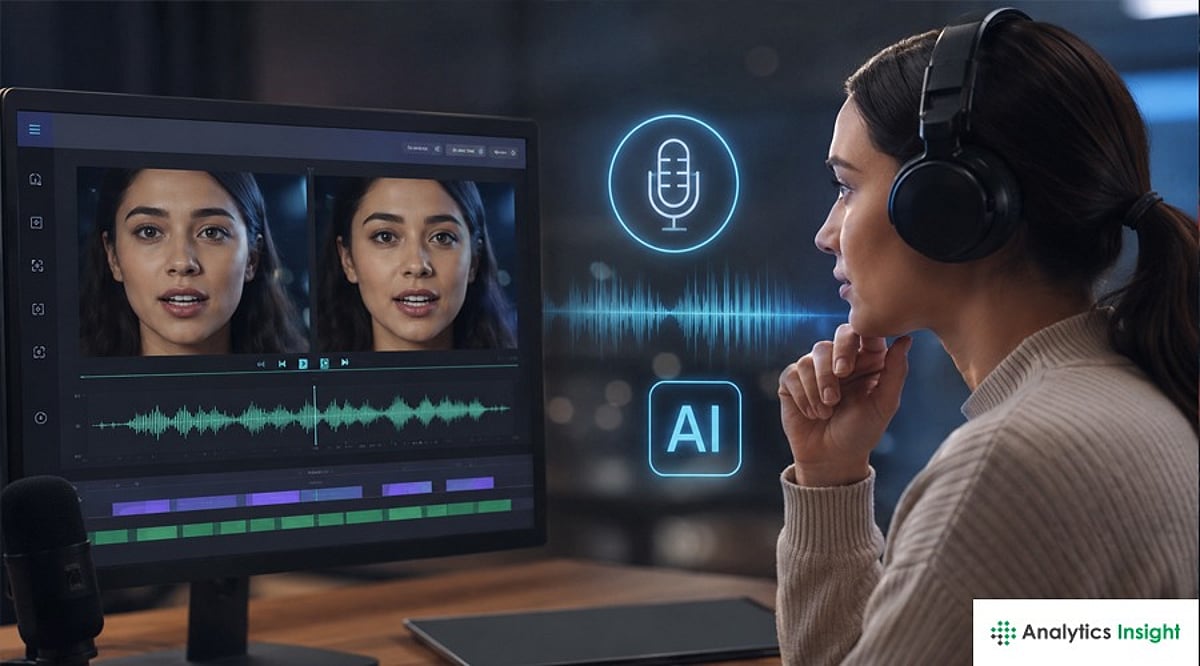
    AI lip-sync and visual dubbing platforms are transforming video localization, enabling creators, studios, and businesses to produce multilingual content with faster workflows and improved accuracy. These tools use machine learning to match facial movements with translated audio, creating more natural video experiences across global markets.

    What Are AI Lip-Sync and Visual Dubbing Tools?

    AI lip-sync platforms analyze facial movements, speech patterns, and video frames, then adjust mouth movements to align with new audio tracks in different languages. They are useful for film and television localization, YouTube and social media content, corporate training videos, advertising campaigns, gaming content, and digital creators targeting global audiences. Compared to traditional dubbing, AI-powered systems significantly reduce production time and allow creators to produce multiple language versions from a single original video.

    Top AI Lip-Sync and Visual Dubbing Platforms

    Sync: Built for Professional Video Dubbing

    Sync, developed by Sync Labs, is a leading AI lip-sync platform focused on professional video production. It allows users to replace audio while keeping facial movements aligned with new dialogue. The platform supports live-action videos, animation, podcasts, games, and AI-generated content.

    • Advanced models: Sync-3 and Lipsync-2-Pro
    • Multi-language support: Hindi, English, Spanish, French, Korean
    • High-resolution output
    • Multiple face processing
    • API and editing workflow support
    • Adobe Premiere and developer integrations

    Sync is designed for users who need high-quality results for professional projects.

    HeyGen: Popular for AI Avatar Videos

    HeyGen is widely used for creating AI-generated presenters and business videos. It allows users to create digital avatars that speak in different languages with matched facial expressions.

    • AI avatar creation
    • Voice translation
    • Multilingual video generation
    • Support for marketing and training videos

    HeyGen is especially useful for companies creating educational content, advertisements, and online presentations.

    Vozo AI: Focused on Easy Video Translation

    Vozo AI provides tools for creators who want to quickly translate and adapt videos. It combines voice conversion with lip-sync technology to make translated videos look natural.

    • AI video translation
    • Voice cloning options
    • Lip movement adjustment
    • Creator-focused workflows

    The platform is aimed at social media users, influencers, and businesses that need quick localization.

    ElevenLabs: Strong Voice Technology

    ElevenLabs is known for realistic AI voice generation. Its technology helps creators produce natural-sounding speech in multiple languages and styles.

    • Realistic AI voices
    • Multilingual voice generation
    • Voice cloning capabilities
    • Audio production tools

    While primarily focused on voice, it plays an important role in AI dubbing workflows when combined with visual lip-sync technology.

    Rask AI: Designed for Global Content Localization

    Rask AI helps businesses translate and adapt videos for international audiences, supporting automated dubbing and localization for different markets.

    • Video translation
    • AI dubbing
    • Multiple language support
    • Business-focused workflows

    The platform is useful for companies converting large volumes of content for global users.

    How AI Dubbing Is Changing the Media Industry

    AI-powered dubbing helps content producers reach audiences in new markets. A single video can now be adapted into several languages without creating separate recordings for every region. Streaming platforms can use these tools for international releases, brands can create regional advertisements faster, and independent creators can expand their audience without heavy investment in traditional dubbing.

    Key Factors to Consider Before Choosing a Platform

    • Accuracy: How naturally lip movements match the new audio
    • Language Support: Availability of required languages and accents
    • Video Quality: Support for high-resolution exports
    • Integration: Compatibility with editing software and existing workflows
    • Pricing: Cost for individual creators vs. large organizations

    Limitations of AI Lip-Sync Technology

    AI dubbing has improved remarkably but still requires human supervision for complex projects. Difficult camera angles, unclear audio, and highly emotional performances may need additional editing. Professional studios often combine AI tools with human editors to maintain creative quality and accuracy.

    Conclusion

    AI lip-syncing and dubbing services are emerging as essential tools for reaching international audiences. Sync provides professional video dubbing, while platforms like HeyGen, Vozo AI, ElevenLabs, and Rask AI serve different content production needs. The future of video localization will involve both artificial intelligence and human ingenuity, making multilingual content creation easier than ever before.