
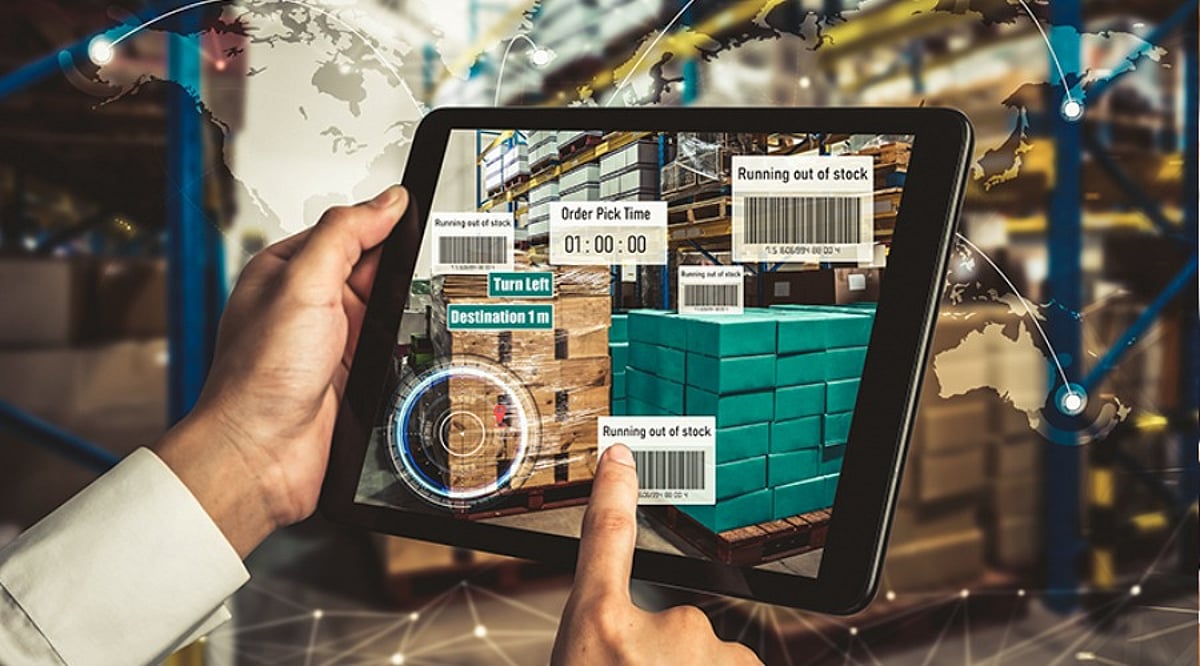
Manufacturing and logistics are moving toward a more connected, automated, and data-driven model as companies look for ways to improve efficiency, manage supply-chain disruptions, and respond faster to changing demand. Artificial intelligence, robotics, smart warehouses, digital twins, and multimodal transportation are emerging as important areas of investment. In India, growing manufacturing activity is also driving demand for modern industrial and logistics infrastructure. Industry forecasts suggest these trends could become more visible through 2027 and beyond.
AI Moves from Experiment to Operations
Artificial intelligence is expected to play a larger role in manufacturing logistics, particularly in planning, procurement, inventory management, and disruption management. The National Institute of Standards and Technology’s 2026 roadmap identifies industrial data analytics, autonomous systems, digital twins, robotics, supply-chain optimization, and sustainable manufacturing as areas where AI and machine learning are enabling advances. AI-powered systems can analyze large volumes of supply-chain information and help companies identify potential disruptions earlier. Emerging agentic AI systems could also support tasks such as finding alternative suppliers and improving production planning.
Smart Warehouses Gain Ground
Warehouses are increasingly becoming technology-enabled logistics hubs rather than simple storage facilities. In India, technologies such as Warehouse Management Systems, automated storage and retrieval systems, robotics, RFID, IoT sensors, artificial intelligence, and digital twins are being used to improve inventory accuracy, operational efficiency, and supply-chain visibility. The expansion is also visible in market numbers: ICRA expects warehousing supply across eight primary Indian markets to grow 12–14% year-on-year to 550–570 million square feet in FY2027. Manufacturing and third-party logistics are expected to remain key demand drivers.
Robotics and Automation Expand
Automation is expected to move beyond repetitive production tasks and deeper into material movement, sorting, storage, and distribution. Physical AI is another trend manufacturers are developing, including more autonomous robots that can work in unstructured environments. Deloitte’s survey showed that 22% of manufacturers planned to use physical AI in the next two years, up from 9% at the time of the survey. In warehouses, autonomous mobile robots and automated distribution systems may become an integral part of the workforce, helping manufacturers handle increased volumes and improve operational consistency.
Digital Twins for Real-Time Decision Making
Digital twins are becoming another key aspect of connected manufacturing. They build virtual replicas of physical devices, processes, or facilities and use real-time data for monitoring, simulation, and decision-making. Industrial digital twins are an important technology in intelligent manufacturing, with multiple applications in predictive analysis and efficient resource management. For logistics functions, digital replicas may help model different scenarios before implementing changes in production, warehousing, or the supply chain network.
Multimodal Logistics Gets More Attention
Supply chains are also expected to rely more heavily on combinations of road, rail, air, and sea transportation. India’s National Logistics Policy, PM GatiShakti, and multimodal logistics parks aim to improve connectivity between production centers, warehouses, and consumption markets. The Unified Logistics Interface Platform is also designed to improve visibility across the logistics chain. The shift could become increasingly important as manufacturers seek greater flexibility and resilience amid geopolitical and transportation disruptions.
Grade A and Automation-Ready Infrastructure
Modern facilities that can accommodate automation and comply with compliance standards have become highly sought after by manufacturers. Light manufacturing leases in India’s eight biggest cities grew from 3.2 million sq. ft. in 2020 to 22.1 million sq. ft. in 2024, according to JLL data cited by The Economic Times. Leasing activity is estimated to rise to almost 34 million sq. ft. by 2027. JLL estimates India’s total warehouse needs to be about 1.2 billion sq. ft. by 2027, while Grade A warehouse inventory might be close to 400 million sq. ft.
Sustainability Becomes Logistics Priority
Companies are increasingly considering sustainability by weighing the environmental impact of manufacturing and delivery. Green logistics initiatives include renewable energy, energy-efficient warehouses, route optimization, and other ways to make transportation more environmentally friendly. India’s logistics and warehousing industry has also become more concerned with sustainability, alongside automation and digitization.
What 2027 Could Look Like
The logistics sector for manufacturing will most likely be defined by a combination of artificial intelligence, automation, smart warehousing, digital twins, and multimodal networks. The industry is moving away from adopting technologies separately toward integrating technologies that connect production, inventory, transportation, and supply chain decision-making. The difficulty for manufacturers will be scaling up and managing all of these aspects together.