Tag: NASA

  • How NASA Is Using AI to Unlock Decades of Space Data for New Discoveries

    How NASA Is Using AI to Unlock Decades of Space Data for New Discoveries

    NASA has spent decades collecting enormous volumes of information from satellites, spacecraft, Earth observations, simulations, and scientific missions. The challenge today is no longer just gathering that data — it is finding meaningful connections across systems that store it in different ways. To address that, the agency is turning to artificial intelligence.

    AI is becoming a core tool for NASA researchers and engineers, helping them search, analyze, and link datasets that would otherwise take weeks or longer to process. Anna Steers-Smith, NASA’s senior advisor on AI, said the agency views AI as a tool for exploration and discovery, not as an end in itself. The push comes as NASA prepares for increasingly complex missions that will generate far more data than before.

    AI Supports Artemis II Planning

    NASA has already applied AI tools during planning for the Artemis II mission. The tools help teams combine information from different sources to support safety recommendations and risk-mitigation scenarios. Troy LeBlanc, chief information officer at NASA’s Johnson Space Center, noted that analyzing information from multiple sources traditionally took experts weeks. AI tools were able to complete parts of that work in seconds.

    Assisting Mission Control

    The agency is also exploring AI support for Mission Control. At Johnson Space Center, NASA has developed a prototype AI agent for SPARTAN flight controllers, who oversee the International Space Station’s power and thermal-control systems. The proposed assistant would help controllers navigate large volumes of information while leaving real-time decisions in human hands.

    Making Earth Science Data More Accessible

    NASA is working with Microsoft on tools that make complex Earth science datasets easier to explore. Earth Copilot and Hydrology Copilot allow users to ask natural-language questions of NASA data. Hydrology Copilot, developed with NASA’s Hydrological Sciences Laboratory, works with information such as precipitation and soil moisture.

    These tools could help users investigate drought conditions, flood risks, and other water-related issues without needing specialized knowledge of NASA’s data systems. AI is also being used in weather forecasting: foundational models trained on decades of Earth science data and physical models can identify and simulate weather patterns more quickly. Processing satellite information closer to where it is collected could also speed up responses to floods and similar events.

    Searching Lessons Learned From Past Missions

    NASA’s AI work goes beyond active missions. The agency has experimented with AI agents that search its public database of lessons learned from decades of programs and missions. A NASA-wide data and AI hackathon attracted more than 500 employees, far exceeding expectations. Other projects included machine-learning tools for assessing forest-fire severity.

    The bigger opportunity for NASA lies in connecting information accumulated across generations of missions. As future projects become more complex — including plans associated with a potential Moon Base — AI could help scientists and engineers make better use of information that might otherwise remain difficult to search, compare, or analyze.
  • AI Aids Earthquake Rescue: NASA, Microsoft, and EU Technologies Deployed in Venezuela

    AI Aids Earthquake Rescue: NASA, Microsoft, and EU Technologies Deployed in Venezuela

    In the wake of devastating earthquakes, rapid and coordinated rescue efforts are critical. Now, artificial intelligence is playing a pivotal role in improving disaster response. NASA, Microsoft, and the European Union (EU) have deployed advanced AI-powered technologies to enhance earthquake rescue operations in Venezuela, demonstrating how cutting-edge tools can save lives and accelerate recovery.

    NASA Disaster Mapping

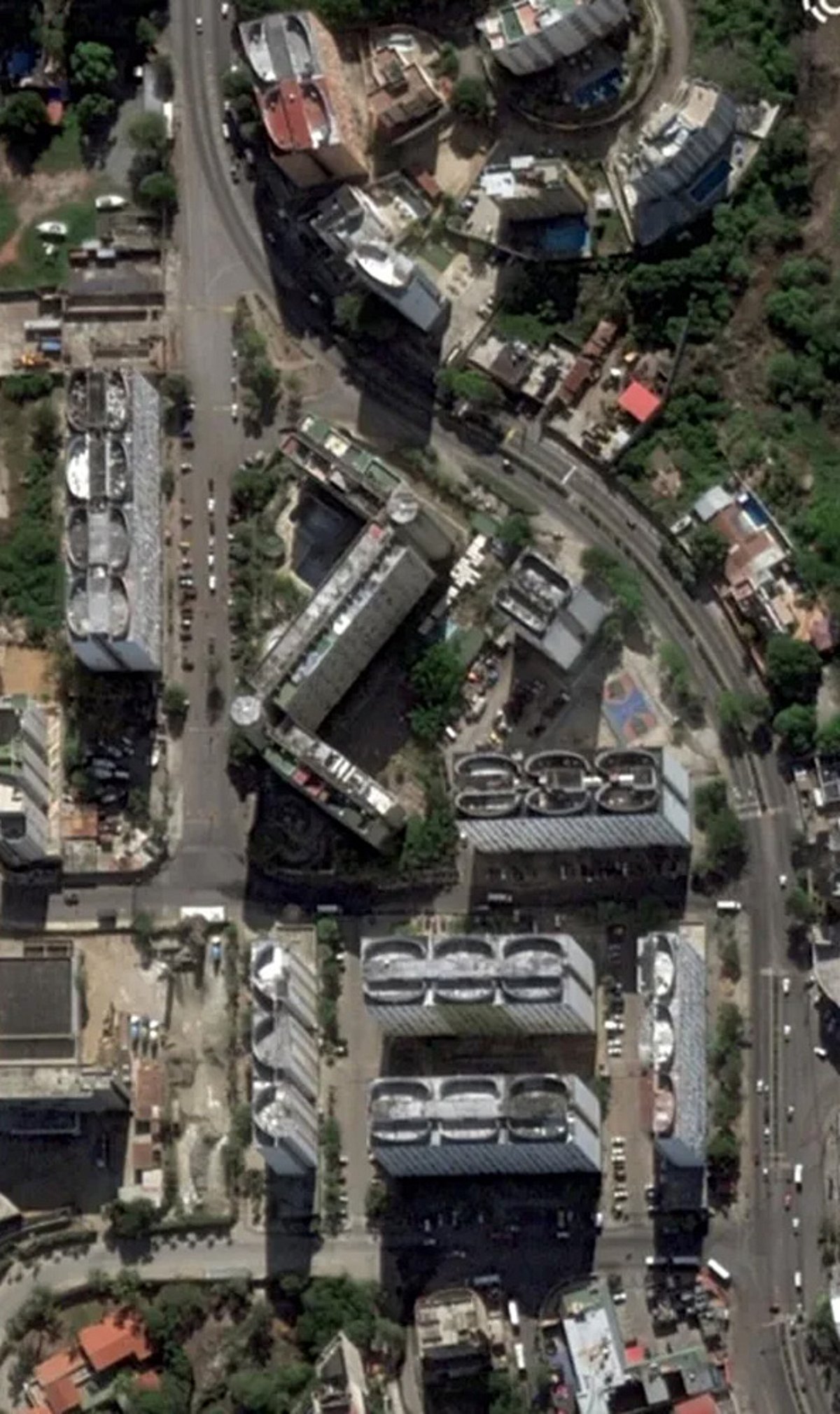
    NASA uses satellite imagery combined with AI to quickly identify damaged areas, blocked roads, and priority rescue zones after an earthquake. This technology enables responders to pinpoint where help is needed most, reducing time spent on manual assessment.

    Microsoft AI Cloud and Copilot for Relief Teams

    Microsoft AI Cloud offers cloud-powered analytics that rapidly process disaster data, helping rescue coordinators manage teams and allocate resources efficiently. Additionally, AI assistants called Copilot summarize incoming reports, organize emergency information, and cut response times during critical operations.

    EU Copernicus Programme

    The EU’s Copernicus Programme delivers satellite-based emergency mapping, providing authorities with accurate assessments of earthquake-affected communities and infrastructure damage. This supports informed decision-making for both immediate rescue and long-term rebuilding.

    AI Damage Assessment

    Computer vision algorithms analyze aerial imagery to estimate structural destruction and identify buildings requiring immediate search and rescue operations. This allows teams to prioritize the most dangerous sites first.

    Predictive Risk Models

    Machine learning models forecast aftershock risks and potential hazard zones, improving responder safety and evacuation planning during emergencies. By predicting where the next threat may emerge, teams can act proactively.

    Drone Surveillance Systems

    AI-powered drones capture real-time visuals, locate survivors, and inspect areas inaccessible to ground rescue personnel. These drones extend the reach of rescue teams, covering dangerous terrain without putting more lives at risk.

    Multilingual Communication Tools

    AI translation tools enable faster communication between international rescue agencies, volunteers, and affected local communities. Breaking language barriers ensures that critical information flows smoothly across all parties involved in the response.

    Future Emergency Collaboration

    Partnerships between governments, technology firms, and humanitarian agencies are expanding AI-powered disaster preparedness and rescue capabilities. The collaboration between NASA, Microsoft, and the EU in Venezuela serves as a model for future joint efforts to use AI for global good.

  • NASA Chief Warns of Moon Race as US Targets 2028 Lunar Landing and China Accelerates

    NASA Chief Warns of Moon Race as US Targets 2028 Lunar Landing and China Accelerates

    NASA Administrator Jared Isaacman has stated that the United States is in a renewed Moon race with China, with both nations racing to land astronauts on the lunar surface before the decade ends. The timeline is narrowing, as China aims to land its astronauts by 2030, while the US targets a return through the Artemis program by late 2028. Isaacman emphasized that the gap between the two plans is now measured in months, not years.

    Speaking on CBS’s Face the Nation, Isaacman said Beijing’s lunar ambitions should be taken seriously. China is advancing rapidly in human spaceflight, with a clear goal of putting astronauts on the Moon. “It is not arguably. Like, there—we are very much in a space race right now, and the Chinese are moving at incredible speeds,” Isaacman said. He added, “The Chinese will land their taikonauts on the moon. There’s no question. The question is, will the United States return before them?”

    China has set a target to land astronauts on the lunar surface before 2030. Its space program has progressed steadily through crewed missions to the Tiangong space station, including the recent launch of the Shenzhou 23 spacecraft. Isaacman noted that China could achieve goals that the former Soviet Union did not reach during the original space race, framing the current contest around timing, execution, and the ability to place crews on the lunar surface first.

    The US plans to use NASA’s Artemis program to return astronauts to the Moon. Isaacman said the Trump administration has made lunar exploration a national priority through new funding. “We are going back,” he said. “It will be an unbelievable display.” Artemis III is scheduled for next year to test key systems for the lunar landing mission. According to Isaacman, the US is targeting the end of 2028 for a crewed lunar landing, with Artemis IV also planned for 2028 to support the next phase of lunar operations. “They said before 2030… we’re saying end of 2028 is when we’re targeting the landing. That is months, not years,” Isaacman said.

    Beyond the first return mission, NASA aims to build a sustained human presence on the Moon as a test site for future Mars missions. Isaacman said infrastructure for a lunar base could arrive as early as 2027, and by 2028 astronauts may find equipment already placed on the Moon, including a lunar terrain vehicle and early base systems. “Early 2030s, the moon is going to be like the International Space Station,” he said. “You’re going to have crews that are there on pretty extended periods of time, as we learn in that environment and prepare for Mars.”

    NASA plans to rely on commercial space companies to support future missions. Isaacman said private launch providers have lowered costs and expanded access to space. He also addressed delays linked to Blue Origin’s New Glenn rocket after a recent launch failure, noting that NASA is helping with the investigation while keeping future lunar work on track. “They’re going to solve that,” he said. “NASA’s there to help.”

  • Desperate Rescue: NASA Launches Spacecraft to Save Swift Telescope From Fiery Demise

    Desperate Rescue: NASA Launches Spacecraft to Save Swift Telescope From Fiery Demise

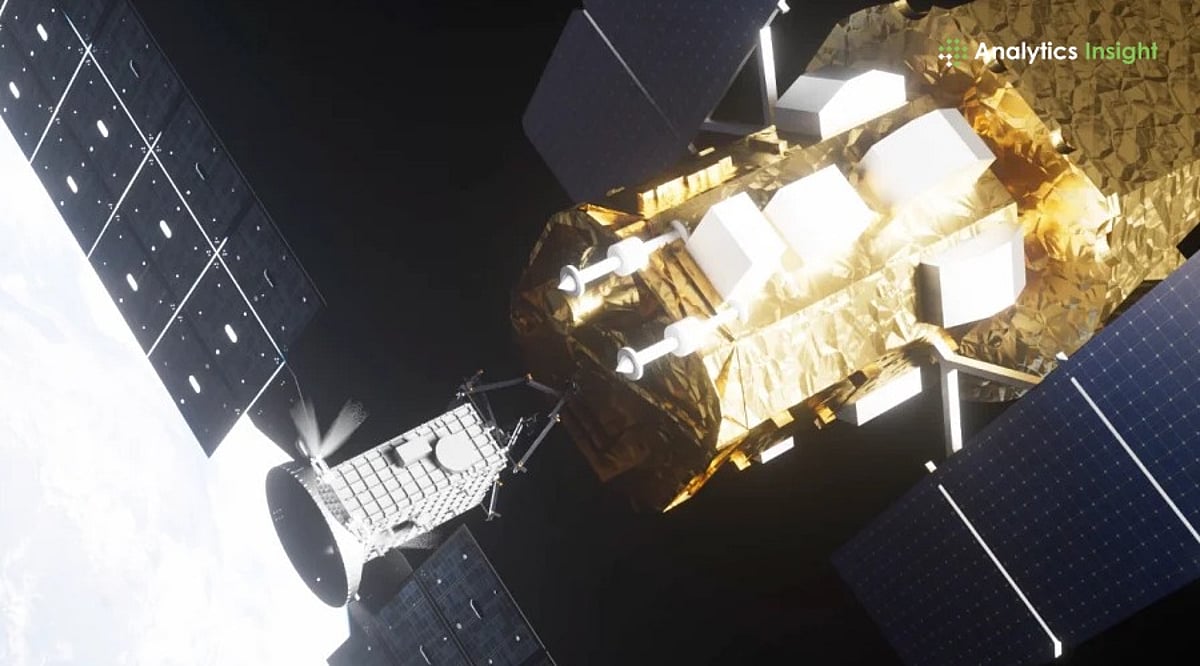
    On Saturday, July 4, 2026, a specially built spacecraft soared into orbit on a high-stakes mission to intercept and save NASA’s aging Swift Observatory before it burns up in Earth’s atmosphere. The Swift telescope, launched in 2004, has been losing altitude far faster than expected due to a series of recent solar storms. Without intervention, it was projected to disintegrate by October.

    The rescue spacecraft, named LINK and built by Katalyst Space Technologies, lifted off from the Marshall Islands aboard a Pegasus rocket dropped from the belly of a modified aircraft. Northrop Grumman handled the launch. LINK is now on a month-long journey to reach Swift, where it will use three robotic arms to physically capture the 1.4-metric-ton telescope and begin boosting it back to a stable orbit.

    NASA is paying Katalyst roughly $30 million (NZ$52.5 million) for the operation. The telescope currently orbits about 360 kilometers above Earth, well below its original altitude. Increased solar activity has heated and expanded the upper atmosphere, creating extra drag that pulls low-orbiting satellites downward. Katalyst plans to raise Swift’s altitude by 240 kilometers, restoring it close to its original orbit. To avoid damaging the telescope, LINK’s thrusters will fire gradually rather than delivering a single jolt. NASA has already paused Swift’s scientific observations to conserve what altitude remains during the rescue.

    Katalyst had just nine months to design, build, and launch the mission — an unusually tight timeline driven by Swift’s rapidly decaying orbit. Bad weather and technical glitches delayed the launch several times before it finally got off the ground. Katalyst CEO Ghonhee Lee acknowledged the immense pressure, noting that the greater risk would have been doing nothing and watching Swift disintegrate in the atmosphere.

    If the mission succeeds, Swift could resume scanning the sky by September, continuing its vital work tracking gamma-ray bursts and exploding stars — some of the most energetic events in the universe. The mission is also being watched closely as a potential blueprint for similar rescues. NASA’s Hubble Space Telescope is experiencing a similar altitude drop due to the same rise in solar activity and could become a candidate for a comparable rescue within the next few years.