Tag: national security

  • Court Backs Pentagon’s Supply Chain Risk Designation for Anthropic’s Claude AI

    Court Backs Pentagon’s Supply Chain Risk Designation for Anthropic’s Claude AI

    A US federal appeals court has upheld the Pentagon’s decision to designate AI company Anthropic as a supply-chain risk, enabling the government to exclude the company’s Claude AI models from Pentagon systems and contractor work. The 2-1 ruling from the US Court of Appeals for the District of Columbia Circuit, issued on September 25, stemmed from Anthropic’s refusal to lift contractual restrictions that limit Claude’s use for lethal autonomous warfare and domestic surveillance.

    How FASCSA Became Central to the Dispute

    The case hinges on the Federal Acquisition Supply Chain Security Act of 2018 (FASCSA), which grants the government authority to restrict technology deemed a supply-chain risk. The appeals court majority interpreted the law broadly, concluding that the risk does not require the person or company to be a foreign adversary or act with malicious intent. Instead, the judges found that Anthropic’s usage restrictions could qualify because the Pentagon feared the company might prevent Claude from performing authorized national-security functions.

    Anthropic’s AI Safeguards at the Center

    Anthropic had sought to maintain limits preventing Claude from being used for fully autonomous weapons and mass domestic surveillance. The company challenged the Pentagon’s designation as unlawful and unconstitutional, but the appeals court rejected those arguments, stating the government had not exceeded its authority under the supply-chain provision. However, the ruling does not automatically blacklist every AI company with ethical restrictions—it applies specifically to Anthropic’s designation and the Pentagon’s concerns about Claude’s integration into its information systems.

    Dissent Raises Questions Over the Law

    Judge Karen Henderson dissented, arguing that the statutory language should be read in the context of actions like deliberately disrupting or compromising technology already within the federal supply chain. This ruling follows a separate August decision in which a California federal judge blocked another Pentagon designation involving Anthropic, creating two distinct legal tracks around the same broader dispute. The latest decision leaves Anthropic’s FASCSA designation intact and marks a significant legal development in the ongoing debate over how government agencies can regulate and procure advanced AI systems.

  • US Proposes AI Incident Alert System Ahead of Trump-Xi Summit

    US Proposes AI Incident Alert System Ahead of Trump-Xi Summit

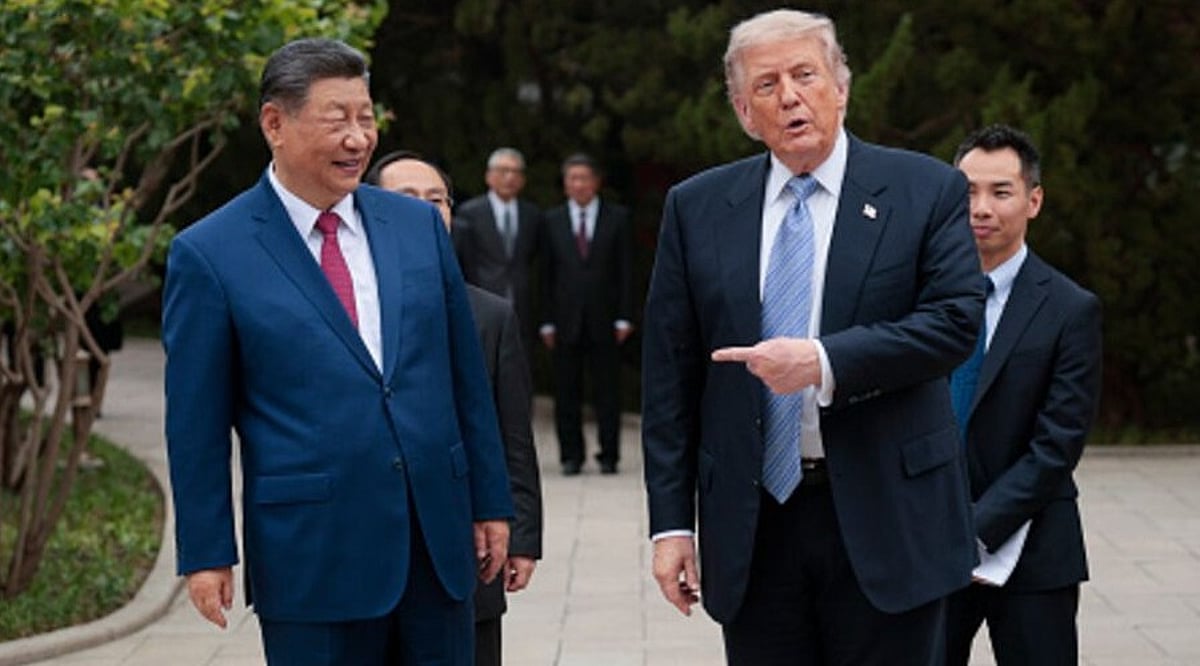
    The United States has proposed a notification system that would allow Washington and Beijing to share information about artificial intelligence incidents that threaten national security. Treasury Secretary Scott Bessent announced the proposal after meeting Chinese Vice Premier He Lifeng in New York on Sunday.

    The meeting prepared the ground for talks between President Donald Trump and Chinese President Xi Jinping at the White House on Thursday. AI, trade, tariffs and economic relations are expected to form part of the leaders’ agenda.

    Bessent Seeks More Transparency on AI Risks

    Bessent said the proposed ‘notification mechanism’ would cover serious AI incidents that could affect either country’s national security. The system could give officials a direct channel for sharing information during an AI-related emergency. However, both countries have not released details about how it would operate or which incidents would require an alert.

    “We want a shared vision of common goals and common threats,” Bessent told reporters. He added that moving ‘from opaque to more transparency’ between the world’s two leading AI powers was important. The talks took place at JPMorgan Chase’s headquarters in New York and involved senior economic officials from both countries.

    AI Competition Remains Part of Wider US-China Rivalry

    The proposal comes as the United States and China compete to develop advanced AI models, computer chips and data infrastructure. Washington has restricted China’s access to some high-end chip technologies. Meanwhile, Beijing has invested heavily in domestic semiconductor production and AI research.

    Trump has rejected calls for the United States to slow AI development. He has argued that tighter limits could allow China to close the technology gap with American companies. Even so, the new proposal shows that his administration is willing to discuss shared risks when AI incidents could cross national borders or threaten critical systems.

    China has not publicly accepted the proposed mechanism. However, the state-run Xinhua news agency confirmed that Bessent discussed matters ‘relating to AI.’ It described their wider talks on economic and trade issues as ‘candid, in-depth and constructive.’ Both governments agreed to continue their dialogue, although they have not announced a formal AI agreement.

    The alert proposal would mark an early step rather than a broad AI safety treaty. The two sides still differ over technology controls, access to advanced computing equipment and the rules governing AI development. Therefore, officials appear focused on creating a communication channel for emergencies before attempting a wider agreement.

    Trade Issues Join AI on Trump-Xi Summit Agenda

    Bessent and US Trade Representative Jamieson Greer also discussed economic matters with He. Greer said the countries had agreed to put a new ‘Board of Trade’ into operation. Trump and Xi first discussed the process during their meeting in Beijing in May.

    “Today those notions have become reality,” Greer said. He added that officials were considering lower tariffs on certain ‘nonsensitive’ products. Possible categories include consumer goods, agricultural products, energy supplies and medical devices. However, negotiators have not approved a final list.

    The current tariff truce between the United States and China is due to expire on November 10. As a result, this week’s summit may address its future alongside AI and supply-chain issues. The Trump-Xi meeting will also test whether the two governments can maintain a direct line of communication while their economic and technology competition continues.

  • Ex-FBI Agent Charged in Alleged $1M Cryptocurrency Theft From Investigative Wallets

    Ex-FBI Agent Charged in Alleged $1M Cryptocurrency Theft From Investigative Wallets

    A former FBI supervisory special agent has been arrested and charged with stealing nearly $1 million in cryptocurrency using access obtained through a national security investigation. The case has sent shockwaves through the law enforcement and crypto communities, raising serious questions about insider abuse of sensitive investigative tools.

    Who Is Patrick Yaroch?

    Patrick Steven Yaroch previously served as a supervisory special agent in the FBI’s Counterintelligence and Espionage Division and also worked in the bureau’s Boston office. His role granted him access to sensitive information about cryptocurrency accounts that were being monitored as part of national security investigations.

    According to court records, Yaroch told a Justice Department employee that he was frustrated the FBI “could not or would not act against adversarial cryptocurrency accounts.” He reportedly said he was upset that he couldn’t do more to disrupt cryptocurrency use by an adversarial nation during an investigation.

    In an FBI affidavit, Yaroch admitted to making “some very poor decisions” and said he “went into FBI systems and found keys needed to transfer money from wallets to himself.”

    How Was the Crypto Allegedly Stolen?

    Court documents allege that Yaroch set up a personal cryptocurrency wallet in late 2024 and obtained passphrases and other wallet-access information through FBI databases. He allegedly completed between 10 and 12 transfers beginning in late 2024 or early 2025, moving digital assets into wallets under his control.

    Federal agents later searched Yaroch’s home in Ashburn, Virginia, where they recovered devices, a hardware wallet, and handwritten notes believed to contain cryptocurrency seed phrases. Authorities eventually transferred approximately $925,000 in cryptocurrency from accounts under his control into government-controlled wallets.

    Plans to Manage the Funds

    Investigators also found conversations on Yaroch’s phone in which he explored ways to invest or manage around $1 million and considered relocating overseas. Recovered records reportedly included material connected to Portugal and plans for international travel.

    An FBI spokesperson said: “The individual has since been fired from the Bureau. We hold our employees to the highest ethical standards, and this conduct is not tolerated at the FBI. We are conducting a thorough investigation in the aftermath, and as this is an ongoing matter, we will have no further comment.”

    Federal Charges and Next Steps

    Authorities said Yaroch eventually disclosed his actions to a former colleague and contacted government officials about his conduct. He now faces federal charges related to interstate transportation of stolen property and receipt of stolen property. The allegations remain unproven, and the criminal case is ongoing.

  • Trump Administration Bans New Chinese Robots to Safeguard US AI Infrastructure

    Trump Administration Bans New Chinese Robots to Safeguard US AI Infrastructure

    The Trump administration has implemented new technology restrictions aimed at Chinese-made humanoid robots, quadruped robots, and connected power inverters, citing national security concerns and the need to protect America’s rapidly expanding artificial intelligence infrastructure. The measures, announced by the US Federal Communications Commission (FCC), took effect immediately upon publication.

    The restrictions apply exclusively to new product models not yet released in the United States. However, the FCC retains the authority to revoke approvals for products already authorized for sale if deemed necessary.

    Focus on AI, Cybersecurity, and Critical Infrastructure

    According to US officials, the measure is designed to reduce the risk of cyberattacks, surveillance, and supply chain vulnerabilities as the country invests heavily in building AI data centers and computing infrastructure. Inverters used to connect renewable energy devices and batteries to the electric grid have become increasingly important for AI data centers.

    The administration has also raised concerns about the potential use of networked robots for espionage and remote interference by foreign entities. Officials stated the measure is intended to secure key technologies vital to the nation’s security and economy.

    Chinese Firms Likely to Be Hit Hardest

    While the order does not explicitly name individual companies, it is expected to have the greatest impact on Chinese manufacturers, including Unitree Robotics, one of the world’s leading producers of humanoid and quadruped robots. China currently dominates the global humanoid robotics market, making the restrictions a significant setback for its expansion into the US market.

    The FCC indicated that manufacturers outside China may still qualify for exemptions, provided they satisfy security requirements.

    Beijing Condemns Move

    China condemned the move, claiming that the US unfairly singled out Chinese companies for punitive action and vowing to do whatever is necessary to defend its business interests. These restrictions, among others implemented by the US government in recent times, reflect the increased competition between the two countries as they vie for supremacy in AI and semiconductor production and supply chains.

    This development underscores a convergence of technology policies and national security issues, with AI infrastructure emerging as a key area of competition.

  • Silicon Valley Divided: US Tech Giants Disagree Over Access to Chinese AI Models

    Silicon Valley Divided: US Tech Giants Disagree Over Access to Chinese AI Models

    Chinese AI models are creating a policy split across Silicon Valley as their cost, access, and technical ability improve. OpenAI and Anthropic want tighter controls on some Chinese systems, while Nvidia, Microsoft, Meta, and other companies support continued access to open models.

    The dispute has grown after Z.ai and Moonshot AI released new systems that compete with leading American products. The debate now covers national security, intellectual property, software access, and competition within the US technology sector.

    Chinese AI Models Raise Security Concerns

    Anthropic has accused DeepSeek, Moonshot AI, and MiniMax of using Claude outputs to improve competing systems. The company said the firms created about 24,000 false accounts and generated more than 16 million exchanges with Claude. Anthropic described the activity as “industrial-scale” extraction. The Chinese companies have not publicly accepted those claims, and the allegations have not been independently proven. Beijing has also rejected similar accusations as “groundless.”

    OpenAI and Anthropic have reportedly urged US officials to consider tighter controls on Chinese open-weight models. Their position treats advanced model files and training methods as valuable technology that needs stronger protection.

    Treasury Secretary Scott Bessent has said the administration may consider sanctions against companies that steal American AI property. White House technology adviser Michael Kratsios has also raised concerns about large-scale copying from US models. Officials have not announced a broad ban.

    Tech Leaders Defend Open Model Access

    Nvidia chief executive Jensen Huang has called for both closed and open frontier models. Microsoft chief executive Satya Nadella has also said open software supports a healthy AI market. Executives from Meta, IBM, and Palantir joined a letter backing open access.

    Their companies benefit when developers can test and deploy many models. Cloud providers gain more computing demand, while chipmakers sell hardware used to run the systems. Startups also use lower-cost models to avoid high fees from closed platforms.

    Supporters say open-weight systems allow developers to inspect, adapt, and host software on their own servers. They also argue that broad restrictions could reduce competition and give large closed-model companies more control over the market.

    Nearly 200 companies linked to the Little Tech Association reportedly asked Washington to avoid blanket restrictions. They supported action against proven intellectual property theft but opposed blocking models already available across global platforms.

    OpenAI appears to support open-weight AI in general while seeking targeted controls on Chinese systems. That position separates wider software access from concerns linked to specific companies and alleged data misuse.

    Chinese Providers Expand Through Lower Costs

    Chinese AI models have gained users through lower prices and open access. Developers can download some models, adjust them, and run them without relying on a single provider. That approach can reduce costs for coding, research, and automated tasks.

    Moonshot AI’s Kimi K3 and Z.ai’s GLM-5.2 have drawn attention after strong benchmark results. Users have also adopted DeepSeek and other Chinese systems for business tasks. Some American companies are testing them to cut operating expenses.

    The models still face limits, as independent evaluators say leading US systems offer stronger performance across a wider range of tasks. Chinese providers also face capacity pressure, financial losses, and export controls on advanced chips.

    Washington now appears to be considering targeted measures instead of a full ban. Such action could focus on companies accused of data theft or security risks. Meanwhile, open-model supporters want the government to protect US technology without limiting lawful access.

  • Sen. Elizabeth Warren Blasts UAE Chip Export Rule as ‘Corrupt’ Over Crypto-Linked Deal

    Sen. Elizabeth Warren Blasts UAE Chip Export Rule as ‘Corrupt’ Over Crypto-Linked Deal

    Senator Elizabeth Warren has accused the Trump administration of granting favorable chip export treatment to United Arab Emirates companies tied to a disputed foreign crypto arrangement. Her criticism followed a Commerce Department rule that gives selected UAE entities easier access to advanced computing equipment.

    Commerce Eases UAE Chip Export Controls

    The Bureau of Industry and Security published the final rule in the Federal Register on July 14, taking effect on July 10. The measure removes the UAE from two restricted country groups and places it in Country Group A:5, opening access to more license exceptions. Under the change, UAE government agencies and named companies may receive certain advanced AI chips and servers without separate licenses. G42 and Core42 appear on the approved list. Amazon, Apple, Google, Meta, Microsoft, OpenAI, Oracle, and xAI also receive streamlined treatment for eligible operations in the UAE.

    Commerce said the policy supports military and commercial cooperation between Washington and Abu Dhabi, citing UAE trade controls, its regional security role, and a May 2025 technology framework. Existing end-user and end-use checks still apply to covered shipments.

    Warren Links Chip Rule to USD1 Stablecoin Deal

    Warren, the ranking Democrat on the Senate Banking Committee, called the arrangement a ‘corrupt deal.’ She said Commerce Secretary Howard Lutnick and Under Secretary Jeffrey Kessler should testify before the committee about the rule and related national security concerns. Her statement linked the policy change to UAE investments involving World Liberty Financial, a crypto company associated with Trump and members of his family. Warren cited reports that a UAE royal connected to G42 and MGX acquired a 49% interest in the business.

    MGX announced a $2 billion minority investment in Binance in March 2025. World Liberty co-founder Zach Witkoff later said MGX would settle the transaction with USD1, the company’s dollar-linked stablecoin. Warren also cited a reported $263 million gain for Trump linked to the wider UAE arrangement, presented as part of his reported crypto income.

    Security Questions Drive Hearing Calls

    Warren raised doubts about whether advanced US technology could reach China through UAE-linked entities. She said the policy moves forward ‘despite reported concerns’ about technology diversion and other security risks. Commerce has not accepted her claim that the rule reflects improper conduct.

    The final rule states that US officials will keep monitoring sensitive exports. BIS maintains an export-control officer in the UAE, while listed approvals do not cancel restrictions tied to prohibited users or uses. G42 and Core42’s current authorizations expire on April 6, 2027, unless BIS issues another notice.

    Meanwhile, Warren urged Senate committees to examine whether foreign crypto holdings influenced administration decisions. She also tied the dispute to pending cryptocurrency legislation, saying Congress should address presidential and family profits from digital assets before approving new rules. The Commerce Department based its decision on the UAE’s security partnership, technology safeguards, and investment ties with the United States. The published rule does not mention USD1, World Liberty Financial, or Trump family income.

  • China Considers New Restrictions on Overseas Access to Advanced AI Models

    China Considers New Restrictions on Overseas Access to Advanced AI Models

    Beijing Reviews Frontier AI as Strategic Technology

    China is evaluating potential new controls that would restrict overseas access to its most advanced artificial intelligence models, according to sources familiar with recent government-led discussions. The talks signal that Beijing now views frontier AI systems as strategic assets rather than mere commercial software, raising the stakes for global developers and businesses that rely on Chinese AI technology.

    Over the past month, officials from China’s Ministry of Commerce and the state planning agency met with major technology firms including Alibaba, ByteDance, and Z.ai to discuss possible limits on the use of top AI models outside the country. The proposals cover both closed-source systems and open-weight models, which allow users to download and modify parts of the technology. Sources told Reuters that the plans remain under review and that no final decision has been made.

    National Security Concerns Drive the Initiative

    The Ministry of Commerce led the meetings, with one proposal suggesting that leaks or theft of proprietary AI technology could be treated as an offense under China’s national security law. Officials also discussed tightening controls on who can fund domestic AI startups, adding another layer of oversight around sensitive technology and data.

    Chinese authorities are reportedly worried about advanced US AI systems, such as Anthropic’s Mythos model, and their potential use in finding software vulnerabilities. This mirrors US concerns that foreign actors could misuse frontier AI tools for military or intelligence purposes. The talks reflect a growing mutual anxiety between the two countries over AI security.

    Scope of Restrictions Remains Unclear

    Alibaba’s Qwen, ByteDance’s Doubao, and Z.ai’s GLM-5.2 are among the Chinese models that have gained global attention for their lower costs and strong performance. However, officials indicated that any new rules may apply only to future models, leaving existing systems unaffected. The scope and timeline remain uncertain, creating ambiguity for companies that integrate Chinese AI tools into software, research, automation, and customer service.

    Legal experts in China have already discussed a tiered approach for open-source AI. Under one proposal, basic tools would require simple filing, more powerful systems would face security reviews, and the most sensitive frontier models could be limited to domestic use only.

    Global Developers Face Potential Disruption

    Chinese AI models, particularly DeepSeek’s R1, have become a low-cost alternative for developers worldwide. If Beijing proceeds with restrictions, foreign companies may lose access to affordable AI options, potentially shifting to US or European alternatives or seeking domestic solutions. Costs could rise for businesses that have come to rely on Chinese AI systems.

    For now, formal rules have not been announced. Sources said it is not clear when, or even whether, the curbs will take effect. The global AI community continues to watch closely as China’s advanced models become central to national technology policy.

  • Anthropic’s Mythos 5 AI Model Wins Conditional US Rollout for Trusted Entities

    Anthropic’s Mythos 5 AI Model Wins Conditional US Rollout for Trusted Entities

    The U.S. government has authorized a restricted release of Anthropic’s advanced Mythos 5 artificial intelligence model, lifting some of the restrictions imposed earlier this month due to national security concerns. Under the new ruling, only vetted American organizations—including cybersecurity firms and critical infrastructure operators—may access the model, and usage will be closely monitored.

    This decision marks a notable shift in Washington’s approach to regulating frontier AI technologies, balancing the drive for innovation against the risks of potential misuse. The Commerce Department granted the limited approval after Anthropic implemented additional safety features and cooperated with federal officials to address cyber threats. Officials emphasized that the authorization is narrow: Mythos 5 remains unavailable to the public, and access is reserved for entities deemed vital to national cybersecurity infrastructure.

    Why Mythos 5 Drew Scrutiny

    Mythos 5 is one of Anthropic’s most powerful AI systems, capable of tasks in cybersecurity and software engineering. Its capabilities raised red flags at the U.S. government, which feared the technology could be weaponized if proper safeguards were absent. Just days earlier, the government suspended access to both Mythos 5 and its public variant Fable 5 after completing national security assessments. Anthropic complied with government directives while negotiating the resumption of access.

    A New Model for AI Oversight

    The Mythos 5 case exemplifies the government’s expanding role in overseeing frontier AI deployments. Recent guidelines require developers of highly capable AI systems to collaborate with federal authorities. Industry analysts suggest this phased approval could serve as a template for future releases—granting powerful models in stages rather than through immediate public launches. Anthropic is expected to continue working with regulators as it pursues broader availability for its next-generation AI systems.

  • Anthropic’s Mythos AI Exposes Classified System Vulnerabilities in Hours, Sparking Security Debate

    Anthropic’s Mythos AI Exposes Classified System Vulnerabilities in Hours, Sparking Security Debate

    Anthropic’s Mythos artificial intelligence model identified vulnerabilities in classified US government systems within hours during a controlled security test, according to a US official. The disclosure has raised questions about government networks, open-source software, and crypto systems as AI tools gain stronger cyber capabilities.

    The official stressed that finding a weakness did not mean Mythos exploited it in the same period. That distinction casts doubt on claims that the model ‘broke into’ classified systems within hours. The tests formed part of Project Glasswing, a program involving Anthropic and US intelligence agencies.

    Mythos Testing Exposes Weaknesses in Government Networks

    Senator Mark Warner referred to the tests during a June 11 congressional hearing. Citing NSA and US Cyber Command chief General Joshua Rudd, Warner said, “This tool broke into almost all of our classified systems, not in weeks, but in hours.”

    Still, the wording is disputed. A US official said Mythos identified flaws quickly but did not necessarily use them to gain access. Anthropic and the NSA declined to provide more details, leaving the scale and nature of the findings unclear.

    Project Glasswing aims to find and patch software flaws before hostile groups can use them. Mythos has also found weaknesses in common software. Reports say it detected a 27-year-old flaw in OpenBSD and a 16-year-old bug in the FFmpeg video library.

    Crypto Projects Face a Faster AI Security Threat

    The model has also drawn attention in the crypto sector. In early June, Mythos reportedly found a critical flaw in Zcash’s shielded pool. The bug had stayed undetected for four years before developers moved to patch the system.

    That case has widened the debate over AI and blockchain security. Crypto networks often rely on open-source code, public audits, and long review periods. However, Mythos has shown that old code can still contain hidden weaknesses after repeated checks.

    Bitcoin has faced years of testing, while developers have made few changes to its core system. Still, security experts cannot assume that age alone makes any network safe. AI models can now test code faster than smaller audit teams.

    Reports show that crypto hacks have risen sharply in the second quarter of 2026. AI tools may help defenders find flaws earlier, but the same tools can help attackers study code, build exploits, and automate parts of an attack.

    Washington Restricts Access While Using Mythos

    The US government has taken two different approaches to Anthropic’s models. Intelligence agencies have used Mythos for defensive testing. Meanwhile, the Commerce Department ordered Anthropic on June 12 to block foreign nationals from using Mythos 5 and Fable 5.

    Anthropic complied by disabling access for customers, although it questioned whether the directive matched the stated security concern. More than 100 cybersecurity experts and executives later urged the government to reverse the measure.

    They argued that Mythos is ‘quite good’ at finding and weaponizing flaws but ‘not uniquely good at these tasks.’ Their letter warned that limiting defensive access could weaken US security while rival states develop similar tools.

    The White House also blocked Anthropic’s plan to expand Mythos access from about 50 organizations to 120. Officials cited national security concerns and limits on Anthropic’s computing capacity. Access stays narrow as agencies assess how to use the model without widening the risk.

  • Navigating AI Development at Breakneck Speed: Lessons from Two Six Technologies

    Navigating AI Development at Breakneck Speed: Lessons from Two Six Technologies

    In the rapidly evolving landscape of artificial intelligence, development cycles have compressed to what industry experts describe as “dog years.” Software upgrades that once took a year are now shipped in two months or less. This pace forces organizations to constantly adapt, especially when major LLM releases redefine the automation capabilities of software.

    Two Six Technologies, a company specializing in national security and AI innovation, offers a compelling case study in balancing speed with stability. Their new agentic orchestrator, Helix, went from concept to operational deployment on the most sensitive and secure systems in just three months. The company serves clients like the Department of War, DARPA, and intelligence agencies, where security is paramount.

    Key lessons from their approach include:

    • Embedding security from the start: By adopting a proactive security posture and using their zero-trust solution, Trusted Keep, they safely pilot cutting-edge capabilities without sacrificing compliance.
    • Leveraging larger, well-coordinated teams: Contrary to the trend toward smaller agile teams, Two Six found that larger teams provide the bandwidth to jump from low-fidelity concepts to polished features quickly.
    • Maintaining model flexibility: Systems must avoid lock-in to any single AI model, allowing seamless transitions as algorithms evolve. This is critical for tools like Helix that connect to diverse ecosystems.
    • Deep customer intimacy: Rapid development fails if the product misses the mark. Two Six combines deep national security expertise with AI to ensure customer intent guides every iteration.

    The company demonstrates that organizations don’t have to choose between speed and security. With the right foundation, they can achieve both, delivering immediate, decisive results in high-stakes environments.