Tag: NEAR Protocol

  • NEAR Intents Aims to Unite Fragmented DeFi Liquidity Across Blockchains

    NEAR Intents Aims to Unite Fragmented DeFi Liquidity Across Blockchains

    NEAR Protocol has unveiled NEAR Intents, a concept designed to create a unified liquidity layer for decentralized finance. The initiative aims to simplify cross-chain activity by connecting liquidity across blockchain networks and reduce the steps users face when moving assets between separate ecosystems. The launch comes as cross-chain transactions gain traction and liquidity remains spread across many platforms. NEAR Intents also extends its reach through ZCash transactions available via services such as Cash App and PayPal.

    NEAR Intents Targets Fragmented Cross-Chain Liquidity

    DeFi liquidity remains divided across blockchain networks, decentralized exchanges, bridges, and applications. This structure can create fragmented markets and inefficient routing. NEAR Intents aims to connect these separate pools through a shared execution layer. As a result, applications can access cross-chain liquidity without building separate systems for every network.

    The system uses an intent-based architecture. Users define the outcome they want, such as exchanging one asset for another across different chains. Independent market participants, called solvers, then compete to complete that request. This model reduces the need for users to manage bridges, routes, or several transaction steps themselves. NEAR says the approach can improve price discovery while making cross-chain activity easier to manage.

    Chain Abstraction Expands Access Across Networks

    Chain abstraction forms another central part of NEAR Intents. The infrastructure allows users to interact with assets across networks such as Bitcoin, Ethereum, and Solana. It reduces the need to manage separate blockchain workflows for each transaction. This design supports NEAR’s broader effort to make cross-chain activity more unified.

    NEAR describes Intents as infrastructure that lets users define high-level financial actions without managing each smart-contract interaction. Applications can focus on the requested outcome rather than every technical step. The ZCash integration extends that usability into payments. NEAR Intents allows ZCash users to transact through Cash App and PayPal, expanding available payment options while linking cross-chain infrastructure with widely used platforms.

    NEAR Extends Intents Beyond Token Swaps

    NEAR is positioning the infrastructure for more than conventional token swaps. The protocol says Intents can support yield products, payments, decentralized applications, and autonomous AI agents. These uses rely on moving value across blockchain networks without requiring separate infrastructure for each chain.

    For developers, the model focuses on simplifying access to cross-chain liquidity while keeping transactions onchain. Instead of treating each blockchain as an isolated liquidity environment, NEAR Intents seeks to connect them through one shared layer. Developers can then build applications around wider liquidity access and cross-chain transaction capabilities.

    The initiative arrives while the wider cryptocurrency market shows mixed signals across altcoins. Cross-chain activity continues to attract attention as blockchain ecosystems expand. Traders are closely monitoring how NEAR Intents affects liquidity and engagement within the broader NEAR ecosystem. The system’s development will depend on its ability to attract liquidity and support transactions across connected platforms.
  • Crypto Market Highlights: Bitcoin ETF Inflows, Zcash Milestone, NEAR Rally, and Solana Speed Upgrade

    Crypto Market Highlights: Bitcoin ETF Inflows, Zcash Milestone, NEAR Rally, and Solana Speed Upgrade

    The cryptocurrency market saw several major developments on September 18, 2026. U.S. spot Bitcoin ETFs recorded $159.45 million in daily net inflows, Zcash surged to a 10-year high above $1,500, NEAR Protocol jumped nearly 28%, and Solana cut its target slot time from 300ms to 250ms. Meanwhile, JPMorgan analysts predicted Bitcoin could outperform gold in the coming months.

    Bitcoin ETFs See $159 Million Inflow

    According to SoSoValue, U.S. spot Bitcoin ETFs recorded total net inflows of $159.45 million on September 17. BlackRock’s IBIT led with $183.66 million in net inflows, bringing its historical total to $64.02 billion. Fidelity’s FBTC saw the largest net outflow at $16.64 million, with a cumulative inflow of $10.05 billion. The total net asset value of Bitcoin spot ETFs now stands at $96.25 billion, representing an ETF net asset ratio of 6.26%. Historical cumulative net inflows have reached $54.73 billion.

    Zcash Hits 10-Year High Above $1,500

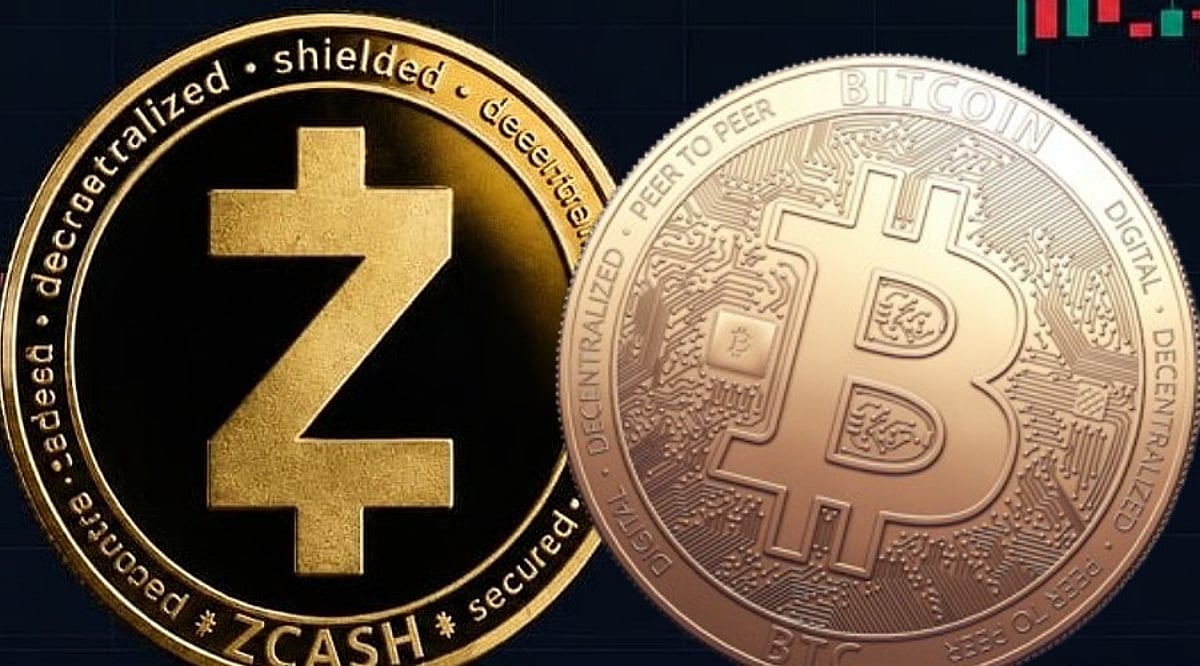
    Zcash (ZEC) surged past $1,500 on September 18, extending a roughly 215% rally from around $470 in mid-August. The token was up more than 10% over 24 hours and 46% over the past week. The rally is driven by institutional demand, short liquidations, and anticipation surrounding the NU7 network upgrade. Grayscale’s spot Zcash ETF (ZCSH), launched on August 25, has attracted over $500 million in assets under management. Paradigm co-founder Matt Huang also disclosed that the firm holds ZEC, calling it a privacy-focused counterpart to Bitcoin.

    NEAR Protocol Jumps 28%

    NEAR Protocol (NEAR) jumped nearly 28% to around $3.47 on September 18, extending its seven-day gain to over 40%. The surge followed the launch of confidential perpetual futures on near.com on September 17. The product allows traders to open positions without publicly linking them to their accounts. Hyperliquid provides execution and liquidity, while NEAR’s Confidential Intents infrastructure handles privacy. Users can access more than 50 perpetual markets while concealing position size, direction, and entry time.

    Solana Cuts Target Slot Time to 250ms

    Solana reduced its target slot time from 300 milliseconds to 250 milliseconds, increasing the network’s slot production rate by nearly 17%. The new setting went live on September 18, bringing Solana to four targeted slots per second, up from roughly 3.3 under the previous configuration. This change is the third stage of SIMD-0525, which aims to gradually reduce slot times from the original 400ms to a final target of 200ms. Shorter slot periods provide wallets, exchanges, and trading applications with more frequent network state updates.

    JPMorgan Sees Bitcoin Outpacing Gold

    In a report published on September 17, JPMorgan analysts predicted that Bitcoin will outperform gold in relative performance if institutional investors begin unwinding their defensive hedges in exchange-traded funds. While gold has led institutional recovery throughout 2026, with inflows erasing all prior capital losses, Bitcoin-backed instruments have only offset half of the redemptions. However, derivatives metrics suggest a different scenario, leading analysts to favor Bitcoin over gold in the near term.

    Frequently Asked Questions

    How much money flowed into Bitcoin spot ETFs?

    U.S. spot Bitcoin ETFs recorded total daily net inflows of approximately $159.45 million. BlackRock’s IBIT led with $183.66 million in net inflows.

    Why is the Zcash price rising?

    Zcash climbed above $1,500 amid institutional demand, short liquidations, and anticipation surrounding its NU7 network upgrade. ZEC has risen roughly 215% from its mid-August level near $470.

    Why did NEAR Protocol jump nearly 28%?

    NEAR surged to around $3.47 as trading activity increased following the launch of confidential-by-default perpetual futures. The product combines Hyperliquid execution and liquidity with NEAR’s Confidential Intents infrastructure.

    What does Solana’s 250ms target slot time mean?

    Solana reduced its target slot time from 300 milliseconds to 250 milliseconds, targeting four slots per second. The change is part of SIMD-0525, which ultimately aims to reduce target slot times to 200ms.

    Why does JPMorgan think Bitcoin could outperform gold?

    According to the report, JPMorgan analysts see potential for Bitcoin to outperform gold if institutional investors unwind defensive gold hedges. Their assessment also considers differences in derivatives positioning between the two assets.

  • NEAR Protocol Price Surges 31% as Confidential Perpetual Trading Launches

    NEAR Protocol Price Surges 31% as Confidential Perpetual Trading Launches

    NEAR Protocol surged toward USD 3.50 on Friday as traders pushed the token 30.8% higher over 24 hours, while a new confidentiality feature added fresh momentum to its September rally.

    CoinGecko data captured at 04:16 UTC also showed NEAR up 46.1% over seven days, 78.9% over 14 days, and 120.1% over one month. Its market value reached about USD 4.575 billion, while daily trading volume rose to USD 1.786 billion. The token also gained about 29% against Bitcoin during the same period, indicating NEAR outperforming the broader crypto market rather than simply following Bitcoin higher. CoinMarketCap separately placed NEAR near USD 3.44, up 27.6%, with a daily range between USD 2.64 and USD 3.45.

    Confidential Perpetual Trading Adds a New Catalyst

    NEAR Protocol announced on September 17 that perpetual positions on near.com had become confidential by default. Users can open leveraged positions from existing accounts without publicly linking each position to the account. The change makes confidentiality the default for those trades, although perpetual trading was already available in the ecosystem through Hyperliquid.

    NEAR’s Confidential Intents documentation says the system uses a dedicated private NEAR shard with a Trusted Execution Environment-based bridge connecting that shard to mainnet. The design can keep order size, trade direction, and other transaction details away from the public mempool. Selective disclosure remains possible, allowing traders to keep sensitive activity private while retaining the option to reveal information when needed.

    NEAR Intents Connects More Than 35 Blockchains

    Funding does not depend only on assets held on NEAR. The interface supports more than 35 blockchains, while NEAR Intents routes activity between networks. This structure reduces several steps that can occur when users move assets across wallets and chains. The platform can shield information such as position size, entry levels, and trading activity from outside observers. At the same time, traders can use assets from supported networks without first moving every position into a single ecosystem.

    NEAR supplies the privacy and cross-chain layer for the product, while Hyperliquid handles the underlying perpetual futures execution. The interface supports more than 50 markets and offers leverage of up to 40 times. Hyperliquid has recorded about USD 240 billion in perpetual trading volume over the last 30 days, giving NEAR’s new interface access to an established derivatives trading venue.

    Hyperliquid Expansion Adds Broader Market Context

    The NEAR launch comes as Hyperliquid draws attention from other market participants. Payward, Kraken’s parent company, has announced plans to launch on-chain perpetual futures based on Hyperliquid for US customers. That planned product would use a structure involving CFTC-regulated Bitnomial Exchange and Bitnomial Clearinghouse, placing Hyperliquid in another derivatives initiative beyond its role in the NEAR product.

    Meanwhile, NEAR entered Friday with substantial price gains already in place. Its seven-day and 14-day advances show that the confidentiality announcement arrived during an established September rally rather than at the start of the move. Trading activity also expanded during the rally, with CoinGecko measuring about USD 1.786 billion in 24-hour volume while the token traded near USD 3.50. The price increase, higher volume, and product update marked the latest phase of NEAR’s September advance.

  • BlockDAG’s CLAIM50 Bonus Fuels 112X Potential as NEAR and Uniswap Pursue Key Upgrades

    BlockDAG’s CLAIM50 Bonus Fuels 112X Potential as NEAR and Uniswap Pursue Key Upgrades

    Traders are on the hunt for the best crypto to buy now, and three names are worth considering this week. The NEAR price today sits near $1.81, with a market cap of roughly $2.35 billion, as the network’s new quantum-resistant upgrade fuels talk of a breakout past $2.56. The Uniswap price is trading around $3.75, down slightly this week, but its new Permissioned Pools feature is drawing institutional interest.

    Then there is BlockDAG, which is pulling buyers in droves, and the numbers explain why. Early buyers using the code CLAIM50 can claim 50% extra BDAG on their next three purchases, while the project’s $0.02 buyback structure offers a 112X return potential. Adding to the momentum, an exchange with spot and futures trading is expected to launch soon on major app stores. Let’s break down which is the best fit for massive gains today.

    NEAR Price Today: Can It Break Higher?

    NEAR Protocol is attracting attention as NEAR price today remains near a key support zone, with traders watching for signs of a possible recovery. NEAR price today is around $1.81, while the token has a market capitalization of approximately $2.35 billion and a 24-hour trading volume of about $143.17 million. Analysts suggest that breaking above the $2.56 resistance level could trigger stronger upward momentum. The project’s latest mainnet upgrade has also improved its long-term outlook by adding quantum-resistant signatures and dynamic resharding technology. These changes aim to make the network safer and more scalable by helping it process growing transaction demand efficiently. Although NEAR has recently declined along with the wider crypto market, its technical improvements and developer-focused upgrades could support future adoption and growth.

    Uniswap Price Outlook After Permissioned Pools Launch

    Uniswap has introduced Permissioned Pools for its v4 platform, allowing regulated assets like tokenized funds, securities, and equities to trade through automated market makers while following compliance requirements. The system uses blockchain-based allowlists, meaning only approved users can buy, sell, or provide liquidity for restricted assets. Developed with partners including Superstate, Securitize, and Dowgo, the feature helps traditional financial assets move on-chain while maintaining regulatory controls. The launch could support wider institutional adoption as the tokenized asset market is expected to reach $11 trillion by 2030. The Uniswap price is trading around $3.75 this week, down 0.5% in 24 hours. Market participants are watching whether the new development can influence the Uniswap price by attracting more institutional activity and liquidity to the ecosystem.

    Why BlockDAG Is Trending With CLAIM50!

    BlockDAG has become experts’ top pick for the best crypto to buy now, and it’s easy to see why. Start with the numbers: BlockDAG is priced at $0.0000077 right now, and its buyback structure lets early buyers redeem tokens at $0.02 each on September 1, a full month before the October 1 payout date set for everyone who buys later. That translates into a 112X return for buyers who move now.

    Layered on top of that is a separate offer: for 2 more days, anyone who completes three purchases using the code CLAIM50 receives 50% extra BDAG on both their existing claim batch and any fresh purchase, adding to whatever the buyback already pays out.

    None of that would matter much if the network behind it sat unused, but BlockDAG’s casino and sportsbook operations have already cleared $200 million in total wagers, running entirely on the project’s DAG-based system. That architecture processes many transactions at once instead of handling them one after another. This helps it support uses like gambling, payments, and future applications without the delays that affect older blockchains.

    The network is also being upgraded to handle up to 7,000 transactions per second, improving its ability to manage higher demand and larger-scale applications. This is why buyers may notice occasional delays with transfers, balance updates, and on-chain transactions while that scaling work continues in the background.

    Finally, the newly launched BDAG AI added roughly $500 million to the project’s overall valuation, and an exchange with spot and futures trading is expected to go live soon on both major app stores. With massive upside, working infrastructure, and expanding utility all lining up at once, it’s easy to see why savvy traders are rushing to secure their shares now.

    Which Is The Best Crypto to Buy Now?

    NEAR price today reflects a project still finding its footing, but its quantum-resistant upgrade and resharding tech give it a real shot at breaking past resistance once market sentiment turns. Uniswap price tells a similar story of steady groundwork, with Permissioned Pools positioning the platform to capture institutional money as tokenized assets move on-chain at scale in the coming years.

    BlockDAG, though, is where the real urgency lies for anyone hunting the best crypto to buy now. At $0.0000077 with a $0.02 buyback locked in for early movers, the 112X potential alone justifies the attention, and the CLAIM50 bonus only sweetens the deal before it disappears. With $200 million wagered through live casino operations, a scaling push toward 7,000 TPS, and an exchange launch on the horizon, the window to get in early is closing fast.

    Disclaimer: Analytics Insight does not provide financial advice or guidance on cryptocurrencies and stocks. Also note that the cryptocurrencies mentioned/listed on the website could potentially be risky, i.e. designed to induce you to invest financial resources that may be lost forever and not be recoverable once investments are made. This article is provided for informational purposes and does not constitute investment advice. You are responsible for conducting your own research (DYOR) before making any investments. Read more about the financial risks involved here.

  • Top AI-Focused Cryptocurrencies to Watch in July 2026

    Top AI-Focused Cryptocurrencies to Watch in July 2026

    As the intersection of artificial intelligence and blockchain technology continues to evolve, several crypto projects are emerging as leaders in decentralized AI solutions. Here are the standout AI crypto picks I’m keeping on my radar this July 2026:

    Bittensor (TAO)

    A decentralized AI network that rewards machine learning contributions. It enables developers to build, share, and monetize artificial intelligence models on a global scale, fostering an open marketplace for AI innovation.

    Artificial Superintelligence Alliance (FET)

    Combines AI infrastructure, autonomous agents, and decentralized computing to power intelligent blockchain applications across multiple industries. FET is designed for efficiency and scalability in real-world use cases.

    Render (RENDER)

    Connects GPU providers with AI developers who need high-performance computing for machine learning, rendering, and advanced AI workloads. The platform ensures secure and efficient resource sharing.

    Akash Network (AKT)

    Offers a decentralized cloud computing platform with affordable GPU resources for AI training and inference. Its blockchain-powered infrastructure enables scalable deployment worldwide.

    NEAR Protocol (NEAR)

    Expands AI integration through developer-friendly infrastructure and scalable blockchain technology. It supports decentralized applications that leverage intelligent automation and AI-powered services.

    Internet Computer (ICP)

    Enables decentralized AI applications to run entirely on-chain. It supports scalable smart contracts and efficient data processing across networks, pushing the boundaries of what’s possible in Web3 AI.

    AIOZ Network (AIOZ)

    A decentralized infrastructure platform supporting AI computation, media streaming, and distributed storage. Its globally connected blockchain-powered network ecosystem is built for performance.

    The Graph (GRT)

    Indexes blockchain data efficiently, allowing AI applications and decentralized services to access structured information for analytics and intelligent decision-making.

    io.net (IO)

    Aggregates distributed GPU resources to provide AI developers with scalable, cost-effective computing power for training advanced artificial intelligence models. This project is particularly promising for reducing the barriers to AI development.

    Stay tuned for more updates on these exciting projects as they shape the future of decentralized AI.

  • Top AI Crypto Coins to Watch in July 2026: Bittensor, Render, Fetch.ai and More

    Top AI Crypto Coins to Watch in July 2026: Bittensor, Render, Fetch.ai and More

    Artificial intelligence and blockchain continue to converge, and AI-focused cryptocurrencies are attracting strong investor interest in July 2026. Here are the best AI crypto coins to watch this month.

    Bittensor (TAO)

    Bittensor rewards developers for contributing AI models through a decentralized machine learning network.

    Render (RENDER)

    Render provides decentralized GPU computing power for AI workloads, creators, and 3D rendering.

    Fetch.ai (FET)

    Fetch.ai enables autonomous AI agents that automate tasks across finance, logistics, and smart cities.

    Near Protocol (NEAR)

    NEAR is expanding AI integrations while providing scalable infrastructure for decentralized applications.

    Akash Network (AKT)

    Akash offers decentralized cloud computing, making AI infrastructure more affordable and accessible.

    Artificial Superintelligence Alliance (ASI)

    The ASI ecosystem combines leading AI blockchain projects to build decentralized artificial intelligence.

    Internet Computer (ICP)

    ICP supports AI-powered decentralized applications with high-performance blockchain infrastructure.

    Why Investors Are Watching AI Coins

    Growing AI adoption and blockchain innovation continue driving interest in AI-focused digital assets.

  • 5 Leading Blockchain Projects Powered by Artificial Intelligence

    5 Leading Blockchain Projects Powered by Artificial Intelligence

    Artificial intelligence and blockchain are rapidly converging to create decentralized ecosystems for computing, automation, and data sharing. Unlike traditional AI controlled by large corporations, AI-powered blockchain projects distribute resources across global networks, offering developers, businesses, and users greater transparency, security, and ownership.

    Here are five standout blockchain projects that are harnessing AI to reshape the digital landscape in 2026:

    Bittensor (TAO)

    Bittensor is a pioneering AI-native blockchain that rewards developers for training and sharing machine learning models through a decentralized intelligence marketplace. Its Yuma Consensus mechanism continuously incentivizes high-quality AI outputs, enabling AI models to collaborate and compete efficiently.

    Render Network (RENDER)

    Render Network provides decentralized GPU computing for AI developers, artists, and creators. Users with unused GPU power can rent it to others for AI model training, generative AI, visual effects, and 3D rendering. This shared computing model reduces costs while meeting the growing demand for AI processing power.

    Fetch.ai (FET)

    Fetch.ai focuses on autonomous AI agents that communicate, automate tasks, and complete transactions without constant human input. These intelligent agents are applied across decentralized finance, logistics, smart cities, and energy management, making blockchain automation faster and more efficient.

    SingularityNET (AGIX)

    SingularityNET operates as a decentralized marketplace where developers can build, publish, and monetize AI services. Rather than relying on large tech firms, creators offer AI models directly to users while benefiting from blockchain-based transparency, interoperability, and community governance.

    NEAR Protocol (NEAR)

    NEAR Protocol is evolving into an AI-friendly Layer-1 blockchain by supporting user-owned AI and autonomous applications. Its chain abstraction technology enables developers to build AI-powered decentralized apps that interact seamlessly across multiple blockchain networks with improved scalability and user experience.

    AI-powered blockchain projects are laying the foundation for decentralized digital economies by combining intelligent automation, secure data sharing, and distributed computing. While challenges like regulation and token volatility remain, platforms such as Bittensor, Render, Fetch.ai, SingularityNET, and NEAR Protocol are among the strongest projects shaping the future of AI and Web3 in 2026.