
Tag: network security

  • Firewall Fundamentals: How They Work and Why They Matter in Cybersecurity

    A firewall is a fundamental component of network security. It controls traffic moving between networks or devices, restricting unwanted connections and reducing exposure. Security teams rely on firewalls to enforce security policies and protect sensitive systems. Modern networks are more complex than ever, with cloud services, remote workers, mobile devices, and connected systems creating multiple entry points. Firewalls now protect different network segments and workloads while working alongside other security controls. Understanding how a firewall works reveals why proper configuration is as important as the technology itself.

    What Is a Firewall?

    A firewall is a device or software that controls network traffic. It sits between networks with different security requirements—for example, separating an internal network from the internet. The firewall checks traffic against defined security rules and can allow, block, or modify traffic based on those rules. Firewalls can protect entire networks (network firewalls) or individual devices (host-based firewalls), making them a central control point for network access.

    How Does a Firewall Work?

    A firewall examines incoming and outgoing network traffic, comparing it with its configured policy. The policy determines which connections can proceed. Rules can consider addresses, ports, protocols, and other traffic details. More advanced systems can inspect application-level information. For example, an organization may block unnecessary inbound connections while also restricting specific outbound traffic from internal systems. Firewalls can operate in both directions, controlling traffic entering and leaving a network. The goal is controlled connectivity rather than unrestricted access.

    Main Types of Firewalls

    Firewalls come in several forms, each with different capabilities and deployment models:

    • Packet-filtering firewalls examine network traffic using defined packet information, applying rules based on addresses, protocols, and ports.
    • Stateful firewalls track active connections, allowing decisions based on connection state.
    • Proxy firewalls act as intermediaries between users and external services, providing additional inspection and control.
    • Host-based firewalls run directly on individual devices, restricting connections to and from that specific system.

    Modern security environments often combine several firewall technologies. The National Institute of Standards and Technology (NIST) identifies network, host-based, personal, and proxy-related firewall approaches.

    Why Firewalls Matter in Cybersecurity

    A firewall reduces a network’s exposure to unwanted traffic and restricts access to sensitive systems and services. Organizations typically use firewalls between networks with different security requirements—sensitive internal systems may need stricter controls than general office networks. Firewalls also support network segmentation, limiting unnecessary communication between different environments. Logging is another critical capability: centralized firewall logs help security teams review network activity, support investigations, and enable security monitoring. However, a firewall is only one layer of security. It cannot replace endpoint protection, identity controls, monitoring, or secure configurations.

    Firewalls in Modern Network Environments

    Traditional perimeter security is no longer sufficient for many organizations. Employees work remotely, and applications run across cloud environments. Firewalls now appear at multiple points within an architecture—protecting internet gateways, internal segments, servers, and cloud workloads. NIST notes that firewalls can also restrict connectivity between internal networks, which is important when systems process sensitive information. Cloud environments can use virtual or software-based firewall controls to apply policies closer to individual workloads. The exact design depends on the organization’s architecture and risk profile.

    Firewall Limitations and Best Practices

    A firewall cannot stop every cyberattack. Threats may bypass network controls through compromised accounts or trusted connections. Poorly configured rules can create security gaps; excessive permissions may expose services unnecessarily. Security teams should review firewall rules regularly, remove unused rules and services, and enable and monitor logging. Firewalls work best as part of a layered security strategy, alongside access controls, endpoint security, encryption, monitoring, and incident response. The key takeaway: a firewall controls network access, but it does not secure an entire environment on its own.

    Frequently Asked Questions About Firewalls

    What is a firewall in cybersecurity?

    A firewall is hardware, software, or a combination of both that controls network traffic according to defined security policies. It can allow or block connections based on addresses, ports, protocols, and other traffic characteristics.

    How does a firewall work?

    A firewall examines network traffic and compares it with configured rules. The rules determine which connections should be permitted or blocked. Depending on its capabilities, a firewall can inspect different traffic characteristics and apply controls to incoming or outgoing connections.

    What are the main types of firewalls?

    Common firewall types include packet-filtering, stateful, proxy, and host-based firewalls. Each uses different methods for examining or controlling traffic. Organizations often combine firewall technologies across different parts of their network architecture.

    Can a firewall prevent cyberattacks?

    A firewall can reduce exposure to unwanted network traffic, but it cannot prevent every cyberattack. Compromised credentials, malicious insiders, trusted connections, and other attack methods can bypass network controls. Firewalls should therefore form part of a broader security strategy.

    Why are firewall logs important?

    Firewall logs record information about network activity and security decisions. Security teams can review these records to identify unusual traffic patterns or investigate incidents. Centralized logging supports monitoring and security analysis across larger environments.
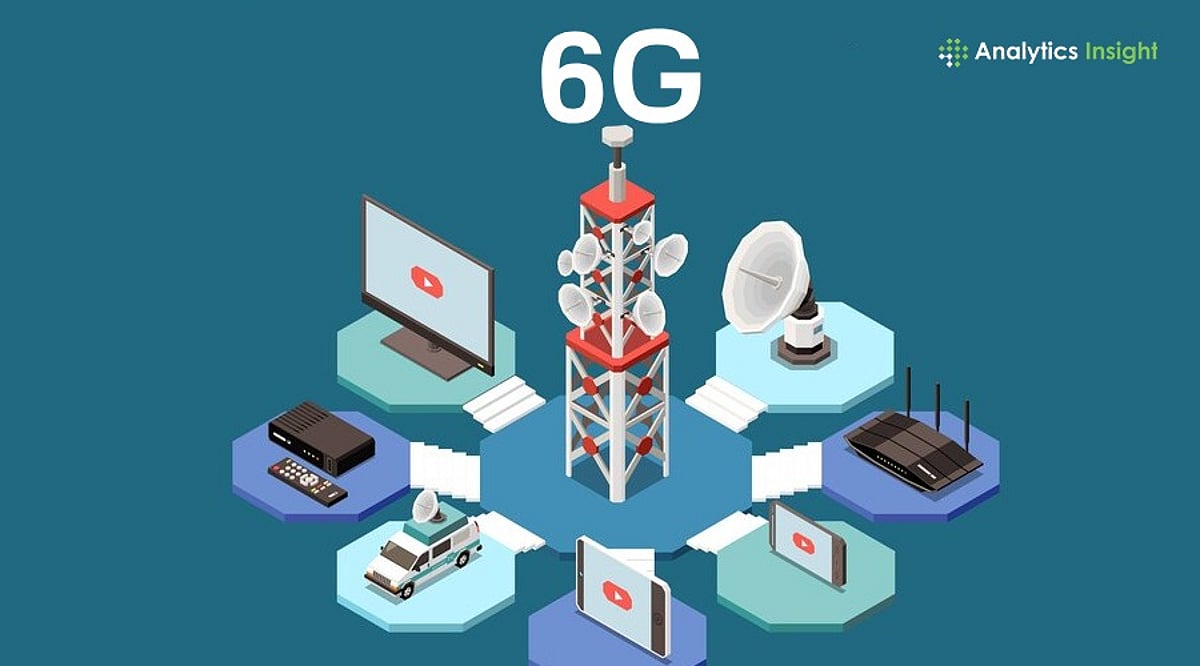
  • How Metamaterials Are Revolutionizing 6G and Next-Generation Wireless Communications

    How Metamaterials Are Revolutionizing 6G and Next-Generation Wireless Communications

    Metamaterials are reshaping wireless communication by enabling precise control over radio waves. These engineered materials improve coverage, reduce energy consumption, support terahertz communication, increase network capacity, strengthen security, and unlock advanced services that will define future 6G networks.

    What Are Metamaterials?

    Metamaterials are artificial materials composed of tiny structures arranged in specific patterns. Their unique design gives them properties not found in natural materials. Instead of simply letting radio waves pass through, metamaterials can bend, focus, reflect, or redirect waves in a controlled manner. This ability comes from the shape and layout of their building blocks, offering a completely new way to manage electromagnetic signals in wireless networks.

    Why Metamaterials Matter for 6G

    The success of 6G depends on millimeter-wave and terahertz frequencies, which provide much larger bandwidth than current systems. However, these high-frequency signals lose power quickly, struggle to penetrate obstacles, and weaken in dense urban areas or indoors. Traditional solutions require more base stations and higher power, increasing cost and energy use. Metamaterials offer an alternative by steering signals intelligently, improving communication without massive infrastructure expansion.

    Reconfigurable Intelligent Surfaces (RIS)

    One of the most promising applications of metamaterials is the reconfigurable intelligent surface (RIS). These surfaces consist of thousands of programmable elements placed on walls, ceilings, windows, or billboards. Each element can electronically adjust the direction of incoming radio waves, directing them precisely where needed. This turns random reflections into focused transmissions, eliminating dead zones and improving coverage in challenging environments. Since many RIS designs are passive, they consume very little power.

    Better Coverage and Higher Capacity

    Metamaterials dramatically improve wireless coverage in difficult locations such as offices, underground stations, factories, and crowded city streets. Intelligent surfaces redirect signals around obstacles, reducing dead zones without additional towers. By precisely controlling radio waves, multiple users can share the same spectrum more efficiently, lowering interference and boosting network capacity — even in densely populated areas.

    Energy Savings and Faster Communication

    Energy efficiency is a key goal for future networks. Instead of relying on powerful transmitters and extra base stations, passive metamaterial surfaces redirect signals with minimal power. This reduces electricity usage and operating costs. Metamaterials also enable reliable terahertz communication, which offers enormous bandwidth for ultra-high data rates. Intelligent surfaces guide terahertz signals along optimal paths, overcoming rapid signal loss and making high-speed links more dependable.

    AI Support, Sensing, and Security

    Artificial intelligence plays a crucial role in optimizing intelligent metamaterial surfaces. AI algorithms analyze network conditions in real time, selecting the best signal direction, reflection angle, and phase adjustment. This allows the network to adapt instantly to user movement and traffic changes, creating a smart wireless environment.

    Metamaterials also support Integrated Sensing and Communication (ISAC), a key 6G feature. The same infrastructure can provide both communication and object detection, motion tracking, localization, and environmental mapping. This benefits autonomous vehicles, industrial automation, healthcare, robotics, and smart cities.

    In terms of security, intelligent surfaces direct signals precisely to intended receivers, minimizing leakage. This controlled propagation makes interception much harder, strengthening physical-layer security before encryption.

    Challenges and Future Outlook

    Despite impressive progress, large-scale commercial deployment faces challenges. Accurate channel estimation requires complex calculations for surfaces with thousands of elements. Fast-moving users demand near-instantaneous signal updates. Hardware design, costs, and international standardization still need further development.

    Nevertheless, research is accelerating. New technologies such as active RIS, hybrid RIS, STAR-RIS, and dynamic metasurface antennas aim to overcome current limitations. As these innovations mature, metamaterials will become a cornerstone of 6G wireless networks, enabling faster, smarter, and more reliable communication systems for the future.

    Frequently Asked Questions

    1. What are metamaterials in wireless communication?
    Metamaterials are specially designed materials that control radio waves by bending, reflecting, or focusing them to improve wireless communication.

    2. Why are metamaterials important for 6G networks?
    They solve key challenges like signal blockage, weak coverage, and high energy use while enabling much faster data transmission.

    3. What is a Reconfigurable Intelligent Surface (RIS)?
    RIS is a programmable surface with many small elements that redirect radio signals toward the desired location for better communication.

    4. How do metamaterials improve network security?
    They direct signals toward intended receivers and reduce unwanted leakage, making interception more difficult.

    5. Which industries will benefit from metamaterial-based 6G technology?
    Smart cities, healthcare, autonomous vehicles, manufacturing, robotics, agriculture, and extended reality applications.

  • Link11 Launches Next-Gen Network DDoS Protection to Stop Attacks Before They Impact Infrastructure

    Link11 Launches Next-Gen Network DDoS Protection to Stop Attacks Before They Impact Infrastructure

    Link11, a leading European provider of cloud-based cybersecurity solutions, has announced the launch of its completely rebuilt Layer 3/4 DDoS mitigation solution. Designed to address the growing complexity of modern network attacks, the new platform combines behavior-based, AI-driven detection with full IPv4 and IPv6 coverage for modern infrastructures.

    Today’s DDoS attacks are no longer simple volume or protocol attacks. They can originate from compromised devices within trusted networks, mimic real traffic, and appear in short, high-intensity bursts that leave little time for manual response. The Next-gen Network DDoS Protection from Link11 is built to counter these evolving threats with greater automation and less reliance on manual tuning.

    The platform is designed entirely with European data sovereignty in mind, running on Link11’s own cloud infrastructure with security data hosted in Europe. This enables companies to maintain control over their data, mitigate legal uncertainties, and minimize reliance on non-European cloud providers.

    Previous solutions often relied on rigid rule systems and static thresholds. While effective against volumetric attacks, this approach is no longer sufficient against today’s AI-driven, adaptive attack patterns. Link11 rebuilt the Network DDoS solution from the ground up, combining insights from more than one million mitigated attacks with deep learning to deliver faster, smarter, and more precise protection.

    “Today’s DDoS attacks are increasingly AI-generated, precise, and designed to outsmart traditional detection logic,” said Jens-Philipp Jung, Link11’s CEO. “After more than 12 months of development and testing, we don’t see this product as just an update. Rather, we see it as a complete redesign: a platform that keeps pace with the current threat landscape and will also meet future requirements.”

    With Next-Gen Network DDoS Protection, Link11 goes beyond traditional behavioral analysis by analyzing and mitigating each attack vector individually. Rather than responding with a blanket response, targeted countermeasures are initiated. This significantly reduces false positives and accelerates mitigation time to under three seconds for unknown vectors, down from the previous under 10 seconds.

    Built on state-of-the-art technology, the new solution provides real-time logs, reason codes, and a completely redesigned dashboard. Security teams gain deep visibility into how attacks unfold and how mitigation measures are applied. During an attack, teams can quickly see which traffic is being blocked or allowed, why those decisions are being made, and which services remain available.

    “One guiding principle drove the development of this new solution: resilience is not a technical metric, but a business promise. Next-gen Network DDoS Protection is designed to help users keep this promise,” explained Marc Lamik, CPO of Link11.

    The platform continuously learns from live traffic patterns and adapts its detection logic automatically, significantly reducing the need for manual fine-tuning and SOC team intervention. It provides full IPv4 and IPv6 coverage for consistent protection across modern dual-stack infrastructures.

    For existing customers, switching to the new version requires no configuration effort. The migration involves an internal routing change and does not cause any downtime. Baselines and configurations are preserved, and protection remains uninterrupted during the switch.

    Next-gen Network DDoS Protection is now available for existing and new Link11 customers.

    About Link11

    Link11 is a leading European IT security provider that protects global infrastructures and web applications from cyberattacks. Its cloud-based IT security solutions help companies worldwide strengthen the cyber resilience of their networks and critical applications and prevent business disruptions. Link11 is a BSI-qualified provider of DDoS protection for critical infrastructure. The company meets the highest standards in data security and compliance with PCI DSS, SOC 2 Type II, BSI C5, and ISO 27001.

    This is a paid press release published via CyberNewswire, a PR newswire syndication platform for cybersecurity companies.