Tag: neuroscience

  • Temple Wearable by Deepinder Goyal Shows Strong Brain Blood Flow Correlation in Early Study

    Temple Wearable by Deepinder Goyal Shows Strong Brain Blood Flow Correlation in Early Study

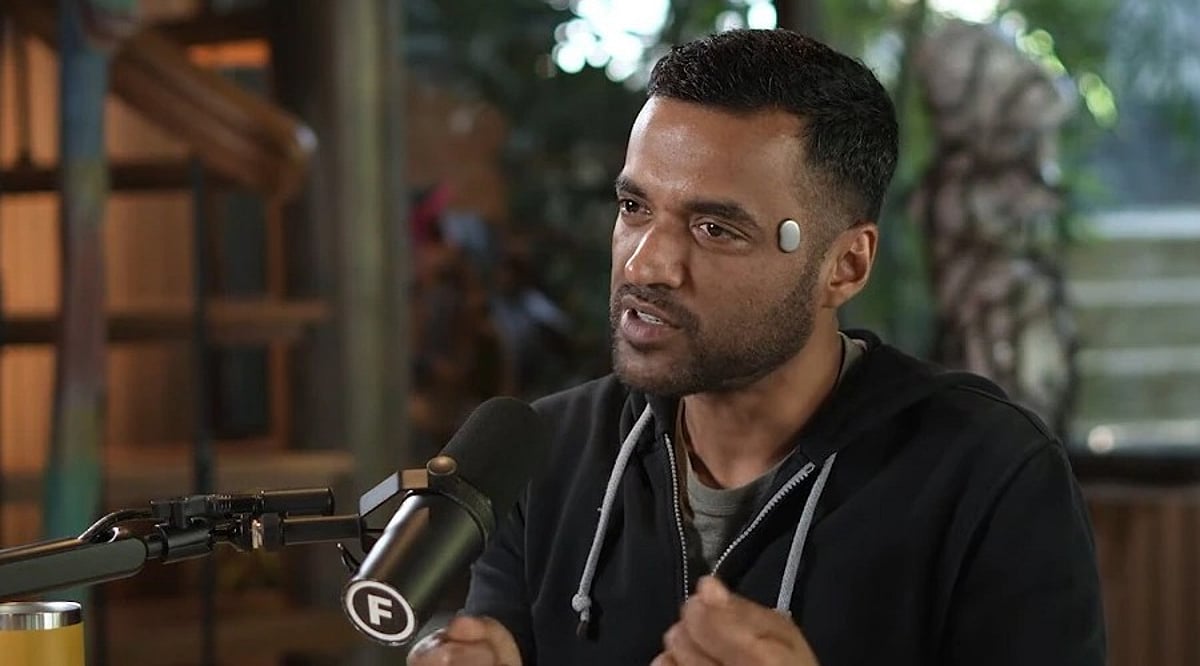
    Deepinder Goyal’s Temple wearable has released its first brain flow study, revealing promising results in tracking cerebral blood flow changes. The preprint, published on medRxiv on September 4, 2026, tested 23 healthy adults in Meerut and compared Temple’s Brain Flow index with Transcranial Doppler (TCD) during exercise and posture changes.

    Researchers found that Temple closely followed middle cerebral artery blood velocity in both tests. Median within-person correlations reached 0.795 during cycling and 0.799 during postural changes, indicating a strong relationship between the wearable’s readings and actual cerebral blood dynamics.

    The Temple device uses an optical sensor placed near the temple to generate its proprietary Brain Flow index, analyzing optical signals from tissue near the skin surface. In contrast, TCD measures blood velocity inside the middle cerebral artery using ultrasound.

    An important finding suggests the signal is not simply a reflection of heart rate. During the posture test, heart rate decreased while middle cerebral artery blood velocity increased, yet Temple’s Brain Flow index followed the cerebral blood velocity pattern during the same transition.

    Despite these promising results, several limitations prevent the Temple wearable from being considered a proven brain monitoring device. The study used normalized relative signals rather than absolute blood flow measurements. Optical readings near the temple can also capture signals from the scalp and other superficial blood vessels. The study involved a small group of young, healthy adults and remains a preprint without peer review. Temple Pvt Ltd funded the research, though authors reported no competing interests.

    Goyal called the study ‘the first step’ while sharing the findings on X. The next stage will require independent studies that separate scalp circulation from brain circulation. Larger and more diverse trials could determine whether Temple’s Brain Flow index reflects genuine cerebral activity.


  • Latest MIT Research on Aging: Alzheimer’s Breakthroughs, Caregiving Tech, and Longevity Insights

    Latest MIT Research on Aging: Alzheimer’s Breakthroughs, Caregiving Tech, and Longevity Insights

    MIT continues to lead in aging research with groundbreaking studies spanning neuroscience, immunology, and assistive technology. From understanding how immune system changes contribute to Alzheimer’s and Parkinson’s to developing wearable imaging for elderly care, MIT researchers are tackling aging from multiple angles.

    Key Highlights

    • Li-Huei Tsai’s leadership: After 16 years directing the Picower Institute, Tsai will focus on Alzheimer’s and Down syndrome research.
    • W.M. Keck Foundation grant: Assistant Professor Alison Ringel explores the intersection of immunology and aging biology.
    • Wearable ultrasound for elderly care: SMART’s WITEC group aims to develop real-time monitoring for chronic conditions.
    • Tau protein structure: Chemists reveal the fuzzy coat around Tau proteins, potentially blocking Alzheimer’s tangles.
    • Immune-informed brain aging: Symposium highlights new treatments for Alzheimer’s and Parkinson’s based on immune factors.
    • Ianacare for caregivers: Steven Lee’s startup provides resources for family caregivers.
    • Tissue flexibility: Fluid between cells influences organ rigidity, with implications for aging and disease.
    • Eldercare robot: New robot assists sitting, standing, and fall prevention for aging in place.
    • Long-term care challenges: A new book explores global solutions for elder care burden.
    • Expansion microscopy: Since 2015, this technique has powered discoveries in kidney disease, Alzheimer’s, and more.
    • 40Hz gamma stimulation: Evidence grows for using gamma rhythms to fight Alzheimer’s.
    • Aging innovation clusters: MIT AgeLab’s book compares regions competing to serve an aging population.
    • Longevity planning: PLAN Forum imagines new industry around financial planning for longevity.
    • Super-healing species: Albert Almada studies stem cell regeneration mechanisms.
    • Blood cell production with age: New tool traces how blood cell family trees change in old age.

    These studies represent MIT’s comprehensive approach to understanding and improving healthspan.

  • Picower Institute for Learning and Memory: Pioneering Neuroscience Research at MIT

    Picower Institute for Learning and Memory: Pioneering Neuroscience Research at MIT

    The Picower Institute for Learning and Memory is a leading neuroscience research center at the Massachusetts Institute of Technology dedicated to understanding the mechanisms of learning and memory, and to developing new treatments for brain disorders. The institute brings together researchers from diverse fields to explore how the brain processes, stores, and retrieves information, with a focus on translating basic discoveries into clinical applications.

    Recent Breakthroughs from the Picower Institute

    These studies highlight the institute’s commitment to advancing our understanding of the brain and developing new therapies for neurological and psychiatric conditions.

  • Exploring the Mind: MIT’s Brain and Cognitive Sciences Department Advances Neuroscience Research

    Exploring the Mind: MIT’s Brain and Cognitive Sciences Department Advances Neuroscience Research

    The MIT Department of Brain and Cognitive Sciences is a hub for groundbreaking research into how the brain works, from neural circuits to cognition. Recent highlights from the department showcase a wide range of discoveries and innovations.

    Key Research Highlights

    A new study in Scientific American explores how curiosity-driven science is essential to America’s success, featuring promising young scientists and icons at MIT. Another study reveals that people expect reciprocal generosity only in interactions with friends or those of equal social status. Myriam Heiman has been named director of The Picower Institute for Learning and Memory, where she will lead research on neurodegenerative diseases like Huntington’s and Parkinson’s.

    Innovative MRI sensors developed at MIT now detect target molecules in the brain and body with greater sensitivity. Researchers have also uncovered the rules neurons follow to process visual input, shedding light on how brain cells organize thousands of circuit connections. Six MIT faculty and ten alumni were elected to the National Academy of Sciences for 2026, recognized for outstanding contributions to natural and social sciences.

    Four members of the MIT community, including computational neuroscientist Sven Dorkenwald and cell biologist Whitney Henry, were named 2026 Searle Scholars. Language development research shows that the brain’s language network is still evolving in adolescence, but by age 4, language processing is already lateralized to the left side. A powerful shrinking technique developed at MIT could enable devices that compute with light.

    Researchers are also rethinking how the brain uses categories to make sense of the world, proposing a challenge to traditional views. The MIT BrainTrust program supports neighbors living with brain injuries through a buddy program involving nearly 100 students. Rett syndrome studies using advanced human cell cultures highlight potential for personalized treatments, tracking how different mutations alter neural circuit development.

    Beacon Biosignals, founded by MIT alumni, is mapping the brain during sleep with an AI-driven platform to diagnose and treat disease. MIT senior Olivia Honeycutt investigates how language shapes our views of the world. Finally, a study in nematodes reveals how neurons sense bacteria in the gut, showing neural interaction with bacteria has important effects on animal brains.