Tag: NLP

  • How AI-Driven Learning Systems Are Transforming Raw Data into Lasting Knowledge

    How AI-Driven Learning Systems Are Transforming Raw Data into Lasting Knowledge

    Executive Overview

    In the age of big data, the real challenge for professionals and universities isn’t collecting information—it’s making sense of it. With technical documentation, academic papers, and online courses growing exponentially, traditional study methods fail to turn data into true understanding. Advances in NLP, vectorization, and predictive learning analytics now enable intelligent tools that convert static texts into dynamic learning engines.

    1. The Data Ingestion Bottleneck in Modern Learning

    While data science has revolutionized business analytics, personal knowledge management still lags. Engineers, doctors, and software developers consume gigabytes of unstructured text each year, but human memory faces three critical bottlenecks:

    • Unstructured Information Overload: Technical manuals, PDFs, and articles lack standardized structures for quick memory encoding.
    • The Decay of Static Knowledge: Without periodic retrieval, memory follows a steep exponential decay curve—up to 70% of technical data is lost within days.
    • Manual Processing Overhead: Extracting concepts, creating self-assessment questions, and scheduling reviews imposes prohibitive operational drag on learners.

    Modern EdTech architectures solve this by applying data-driven parsing directly to learning materials, shifting the burden of content structuring from users to intelligent algorithms.

    2. The Mechanics of AI-Powered Knowledge Extraction

    The convergence of Large Language Models (LLMs) and Retrieval-Augmented Generation (RAG) enables a new paradigm in educational data processing. Instead of treating documents as static assets, modern learning engines treat them as structured knowledge graphs. The automated active-learning pipeline operates in three stages:

    1. Semantic Parsing and Chunking: NLP algorithms break lengthy technical documents into distinct contextual units, isolating core concepts, formulas, and relationships.
    2. Automated Synthesis of Retrieval Cues: Generative models convert semantic chunks into active-recall prompts, transforming passive text into targeted Q&A pairs and conceptual flashcards.
    3. Algorithmic Repetition Scheduling: Machine learning models track user response performance, latency, and confidence scores to calculate optimal spacing intervals for each flashcard.

    By continuously analyzing user interaction data, these platforms adjust review difficulty and frequency in real time, maximizing memory consolidation while minimizing redundant study time.

    3. Practical Implementation: Algorithmic Memory via LongTerMemory

    A prime example of this data-centric approach to study optimization is LongTerMemory. Designed to streamline knowledge acquisition for complex materials, the platform shows how intelligent parsing and automated workflows optimize the learning pipeline:

    • Instant Document Conversion: Raw study materials are converted in seconds into structured, high-yield flashcard decks.
    • Data-Driven Spaced Repetition: Algorithms calculate exact review intervals based on historical recall accuracy, reinforcing weak concepts precisely before memory decay.
    • Unified Cross-Platform Analytics: Mobile and desktop synchronization enables micro-learning sessions while gathering continuous data on overall mastery progression.

    Through this automated workflow, learners bypass the administrative burden of card creation and focus exclusively on active cognitive retrieval, significantly accelerating mastery over complex domains.

    4. The Horizon of Predictive Learning Analytics

    As NLP and personalized analytics advance, future educational technology will go beyond simple flashcard algorithms. Next-generation knowledge platforms will use predictive analytics to identify memory retention vulnerabilities before they cause performance drops. By unifying cognitive neuroscience principles with real-time data science, AI-driven learning tools are transforming passive digital content into actionable knowledge assets—setting a new benchmark for continuous professional development and intelligent learning infrastructure.

  • How AI Interview Copilots Are Transforming Job Interview Preparation

    How AI Interview Copilots Are Transforming Job Interview Preparation

    In the contemporary job market, the interview process is a critical juncture for candidates seeking to secure their desired positions. With the rapid advancement of artificial intelligence (AI), a new tool has emerged to revolutionize this process: the AI Interview Copilot. This innovative technology offers a range of benefits and features that can significantly enhance the interview experience for both candidates and interviewers.

    Understanding the AI Interview Copilot

    The AI Interview Copilot is an intelligent software application designed to assist candidates during job interviews. It leverages cutting-edge AI algorithms and natural language processing (NLP) techniques to provide real-time guidance, feedback, and support. By analyzing the candidate’s responses, body language, and tone of voice, the copilot can offer valuable insights and suggestions to help the candidate perform at their best.

    One of the key features of the AI Interview Copilot is its ability to simulate real interview scenarios. It can generate a variety of interview questions based on the job description and industry requirements, allowing candidates to practice and prepare in a realistic environment. The copilot also provides detailed feedback on the candidate’s performance, highlighting areas for improvement and offering tips on how to answer questions more effectively.

    In addition to question generation and feedback, the AI Interview Copilot can also assist with resume review and preparation. It can analyze the candidate’s resume, identify strengths and weaknesses, and provide suggestions for improvement. This can help candidates create a more compelling resume that stands out from the competition.

    Benefits for Candidates

    Here are some of the main advantages the AI Interview Copilot offers for candidates:

    • Safe Practice Environment: Job interviews make many candidates nervous or anxious. The copilot helps alleviate such feelings by providing a stress-free environment for practice. Candidates can build confidence and improve their performance by practicing responses and getting feedback.
    • Identify Strengths and Weaknesses: A detailed analysis of answers and performance helps candidates identify their strengths and areas for improvement. This self-awareness is invaluable when preparing for future interviews and sharpening skills.
    • Personalized Feedback: The AI Interview Copilot customizes its feedback to the individual needs and objectives of each candidate. It provides targeted suggestions on improving communication skills, answering difficult questions, and showcasing relevant experience and skills.
    • Time and Effort Savings: Candidates no longer have to spend hours researching interview questions and practicing alone. The copilot generates relevant questions, gives immediate feedback, and provides helpful resources quickly, allowing candidates to focus on other aspects of their job search.

    Benefits for Interviewers

    Interviewers also stand to benefit from the use of the AI Interview Copilot:

    • Standardized Process: The copilot ensures all candidates are asked the same set of questions, eliminating bias and ensuring fairness. This leads to more objective and consistent evaluations.
    • Comprehensive Candidate Data: By analyzing responses, body language, and tone of voice, the copilot provides interviewers with a more detailed understanding of candidates’ skills, personality, and suitability for the role.
    • Time Savings: Automating question generation and feedback frees up interviewers to focus on evaluating qualifications and organizational fit.
    • Improved Experience: A more structured and efficient interview process reduces stress and anxiety for both parties, leading to a more positive and productive interaction.

    Challenges and Limitations

    The AI Interview Copilot has many benefits, but it also has several challenges and drawbacks. One major challenge is ensuring the accuracy of analysis and feedback. While AI algorithms have improved dramatically, they are still not perfect, and there is always a risk of misinterpreting candidates’ responses or providing incorrect feedback.

    Another challenge involves ethical issues associated with the use of AI in interviews. Bias in the algorithms could lead to unfair treatment of some candidates. It is essential to develop and deploy the copilot transparently, without bias, and in a way that respects privacy and human rights.

    The AI Interview Copilot may not be appropriate for all types of interviews or industries. Some interviews require a more personal approach or the ability to read non-verbal cues that are difficult for the copilot to analyze. In those cases, human interviewers may still be needed.

    Finally, the AI Interview Copilot is not free. Some copilot services charge a subscription or fee, which could be a barrier for some candidates or organizations. Such costs should be considered when deciding whether to use a copilot.

    Conclusion

    To put it simply, the AI Interview Copilot is a powerful instrument capable of transforming the job interview process. It provides real-time guidance, feedback, and support to help candidates perform their best and take advantage of their interview opportunities. It also offers benefits to interviewers, such as standardizing the interview process and collecting more complete data about candidates. However, it is important to be aware of the challenges and limitations associated with its use and to employ it in a responsible and ethical manner.

  • Top AI Skills Employers Will Demand Most in 2026

    Top AI Skills Employers Will Demand Most in 2026

    The artificial intelligence job market is heating up, and employers are already signaling which skills will be most valuable in 2026. From engineering robust AI systems to ensuring ethical governance, professionals who master these competencies will stand out. Here are the top AI skills that will shape career opportunities in the near future.

    AI Engineering

    Employers are prioritizing professionals who can build, deploy, optimize, and maintain scalable AI systems. Expertise in modern frameworks, cloud platforms, and automation tools is essential for this role.

    Prompt Engineering

    Crafting accurate prompts for generative AI models dramatically improves productivity, workflow automation, content quality, and enterprise AI application performance. This skill is becoming a cornerstone of efficient AI use.

    Machine Learning

    Strong machine learning expertise remains critical for developing predictive models, improving algorithms, handling large datasets, and solving complex business challenges effectively.

    Data Engineering

    Organizations are seeking experts who can manage data pipelines, ensure data quality, handle storage, integrate systems, and process information reliably to support AI model training and deployment.

    AI Governance

    As AI adoption grows, businesses increasingly value professionals who can ensure ethical AI practices, regulatory compliance, transparency, risk management, and responsible deployment across enterprise environments.

    Python Programming

    Python continues to be the preferred language for AI development, enabling automation, model building, data analysis, and seamless integration with AI frameworks efficiently.

    Cloud AI Platforms

    Experience with cloud-based AI services helps professionals deploy scalable applications, optimize infrastructure costs, and accelerate enterprise AI implementation across industries.

    Natural Language Processing (NLP)

    NLP expertise enables organizations to create advanced chatbots, language models, intelligent search systems, and multilingual customer engagement solutions successfully.

    Business Intelligence

    Employers favor professionals who combine AI knowledge with business intelligence to transform analytics into strategic decisions, operational improvements, and measurable organizational growth.

  • Enterprise AI Raises the Stakes: How to Humanize Generative Output Against Algorithmic Detection

    Enterprise AI Raises the Stakes: How to Humanize Generative Output Against Algorithmic Detection

    The rapid deployment of generative artificial intelligence (GenAI) is transforming enterprise operations worldwide. Businesses across industries now rely on large language models (LLMs) to streamline tasks such as drafting legal documents, forecasting financial data, and scaling B2B marketing communications. Yet this surge in machine-generated text has created a growing divide between automation and the filtering of synthetic content, raising concerns about trust, digital fatigue, and the integrity of communication channels.

    To preserve stakeholder trust and prevent cognitive overload, technology leaders must actively humanize AI outputs. This means injecting cognitive variance into generated text so that it mirrors the natural hesitations, structural asymmetries, and varied pacing of human writing. Without such adjustments, users quickly tire of sterile, predictable content, and detection algorithms flag the machine origin with increasing accuracy.

    Behind the scenes, sophisticated detection algorithms have been embedded into major platforms, search engines, and enterprise security frameworks. These tools audit digital content by measuring two key metrics: burstiness (variation in sentence length and structure) and perplexity (predictability of word choice). Standard generative models optimize for the most likely word sequences, producing low burstiness and low perplexity – a pattern that acts as a digital watermark for detection systems.

    While detection mechanisms were intended to maintain information integrity, they have triggered a systemic problem: a high rate of false positives in enterprise environments. Technical documentation, compliance reports, and legal contracts often demand rigid, predictable language. When human data scientists or technical writers draft such documents, their natural style can mimic low-variance machine patterns, causing authentic work to be incorrectly flagged. This has sparked a technological arms race, pushing enterprises to find solutions that bypass flawed heuristics without compromising data integrity.

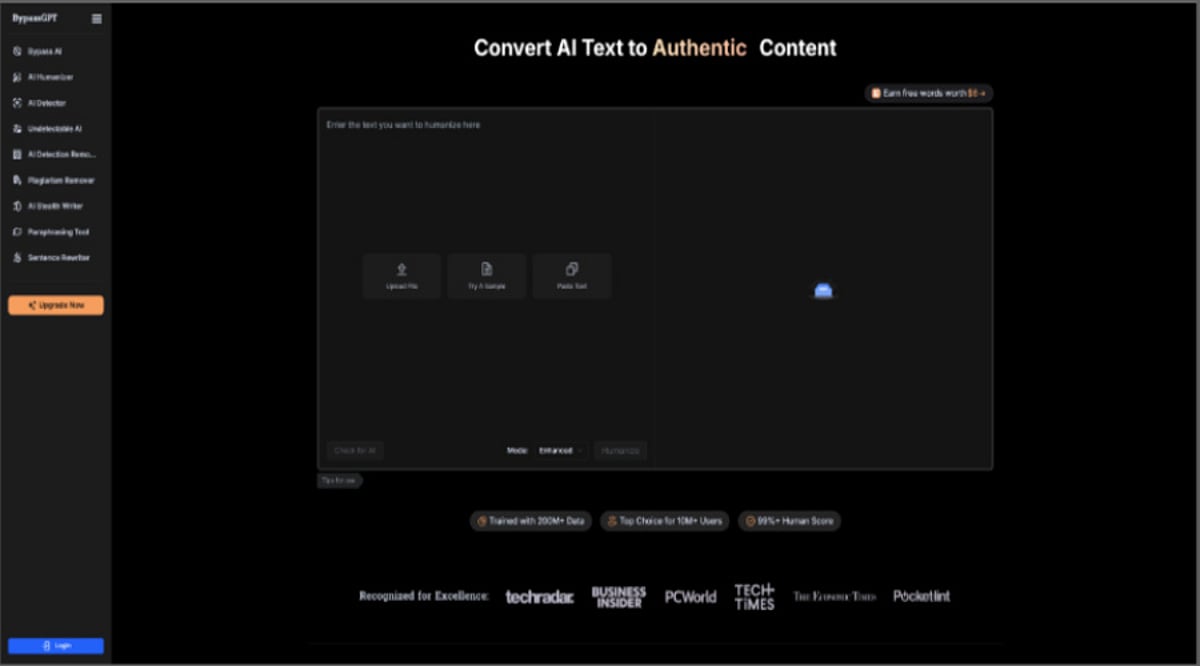
    This necessity has given rise to a new category of natural language processing tools known as AI Stealth Writers. Unlike primitive paraphrasing scripts that swap words using synonym databases, these advanced systems operate on a deeper architectural level. They deconstruct the predictable syntactic topology of an LLM draft and rebuild it purposefully, injecting cognitive entropy to obscure the robotic signature. The result is text that bypasses algorithmic detection while delivering a superior reading experience for end users.

    From a strategic business perspective, integrating these linguistic refinement layers is moving from a niche workaround to a mandatory component of the enterprise tech stack. Search engines and B2B communication channels are becoming increasingly hostile toward raw synthetic content, often penalizing domains with high volumes of unedited machine text. The operational speed gained by GenAI is negated if the resulting content is suppressed by algorithms or ignored by clients who recognize its mechanical origin.

    Looking ahead, continued advances in NLP will enable enterprises to produce descriptive texts that are indistinguishable from human authorship. Platforms like the newly launched BypassGPT are working to bridge the gap between computational efficiency and human-like empathy. Companies that embrace such technologies will gain a competitive edge in today’s regulatory environment and global marketplace.