
Tag: NVIDIA

  • AI News Roundup: Investment Hurdles, Strategic Scaling, Chip Deals, and Global Regulation Efforts

    AI News Roundup: Investment Hurdles, Strategic Scaling, Chip Deals, and Global Regulation Efforts

    Weekly AI News Briefing

    This week’s AI landscape highlights critical shifts from experimentation to enterprise execution, major chip industry deals, and new regulatory frameworks. Below are the key stories.

    • AWS Co-Founder Matt Domo on Why AI Investments Are Stalling – Domo explains how organizations can move beyond pilot projects to full-scale AI deployment and unlock real value.
    • Micron and Rivals Secure US$22bn AI Deals with NVIDIA – To break the semiconductor boom-bust cycle, chipmakers like Micron are locking in multi-year contracts with NVIDIA, ensuring steady revenue streams.
    • McKinsey: Scaling AI Beats Fragmented Business Pilots – Partner Rahul Shahani reports that embedding AI across multiple functions yields double the profit margins compared to isolated experiments.
    • AIB Overhauls Mobile Banking App With Advanced AI Insights – The Irish lender uses machine learning to turn transaction data into personalized financial guidance for customers.
    • Pangaea Data and Sanofi Partner to Tackle Disease Underdiagnosis – Their AI scans electronic health records to help clinicians identify patients with Alpha-1 Antitrypsin Deficiency earlier.
    • UN’s New Environmental Initiative for AI – Secretary-General António Guterres launches a program to track the power and water consumption of AI systems during London Climate Action Week.
    • The Global Awards 2026: Tech and AI Categories – The upcoming awards will recognize AI-led innovation in sustainability, procurement, and supply chain.
    • Tech CEOs Push for US-Led AI Coalition at G7 Summit – Global executives propose an international framework to address national security risks and regulate advanced frontier models.
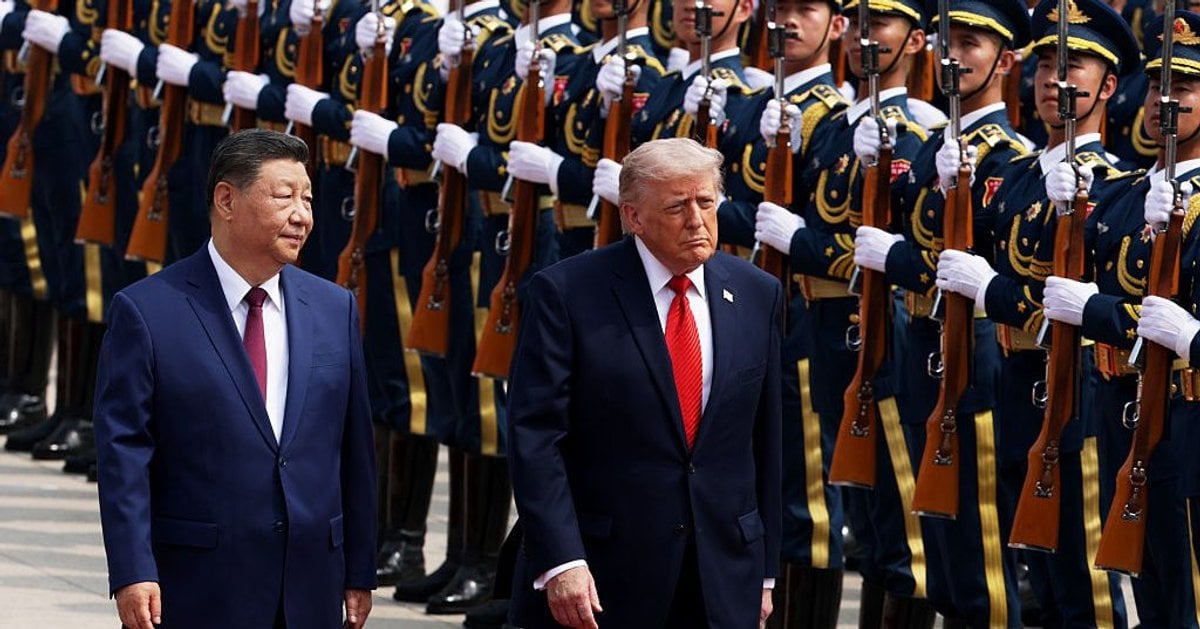
  • Trump’s Beijing Visit Opens Door for Nvidia Chips to Power Chinese AI Giants

    Trump’s Beijing Visit Opens Door for Nvidia Chips to Power Chinese AI Giants

    President Donald Trump’s recent trip to Beijing, accompanied by a delegation including Apple’s Tim Cook, Tesla’s Elon Musk, and Nvidia’s Jensen Huang, signals a potential reset in AI supply chains between the U.S. and China. The visit, focused on high-level negotiations, suggests a shift toward a transactional relationship where American semiconductor technology may support Chinese AI development.

    At the state banquet, President Xi Jinping emphasized the possibility of common cause between China’s rejuvenation goals and America’s “Make America Great Again” agenda. Behind the diplomatic smiles, however, lies a strategic contest: Beijing’s “new productive forces” policy prioritizes AI, advanced manufacturing, and robotics, exemplified by the transformation of Chongqing into a high-tech megacity. Yet China remains dependent on U.S.-controlled high-end accelerators for training frontier AI models.

    Nvidia’s Jensen Huang’s presence is particularly significant. After years of tightening export controls, Washington is now considering case-by-case reviews for advanced AI compute exports. Nvidia is positioned to ship H200 data center GPUs to major Chinese cloud platforms like Alibaba and Tencent. Although not the top-tier Blackwell-class chips, the H200 is roughly six times more powerful than any domestic Chinese alternative, potentially compressing AI training timelines for Chinese firms.

    For Apple and Tesla, the mission focuses on supply chain stability and regulatory clarity. Apple aims to protect its manufacturing resilience and consumer base, where the iPhone 17 has seen success. Tesla views China as crucial for production and full self-driving deployment, seeking clarity on mapping and data policies to compete with domestic rivals.

    This delegation represents an attempt to reverse the 20% decline in U.S. imports from China. By leveraging tech leaders for targeted access—compute in exchange for market openness and IP protections—both nations may enter a more transactional era. The true metrics of success will be the speed of Chinese hyperscalers building H200 clusters and the regulatory wins secured by Apple and Tesla. Ultimately, compute access shapes capability, and this visit suggests a hard-nosed accommodation that keeps the AI flywheel spinning on both sides of the Pacific.

  • Micron Locks in $22 Billion AI Chip Deals with NVIDIA to Break Memory Market Cycles

    Micron Locks in $22 Billion AI Chip Deals with NVIDIA to Break Memory Market Cycles

    Memory chipmakers are rewriting their playbook. Long treated as interchangeable commodities, memory chips forced suppliers into brutal boom-bust cycles. Now, with AI demand surging, Micron Technology has secured $22 billion in multi-year commitments from customers like NVIDIA — a move designed to stabilize cash flow and shield production from market volatility.

    The agreements follow similar long-term deals by rivals SK Hynix and Samsung. Under these “take-or-pay” contracts, clients must either purchase chips or pay up anyway. Micron’s Chief Business Officer Sumit Sadana told Reuters that billions of dollars have been placed on Micron’s balance sheet as a show of confidence in the new business model.

    While the deals provide visibility and validate the AI demand narrative, analysts warn that the strategy remains a gamble. Memory stocks stay vulnerable to sudden downturns, and any cooling of AI demand could send buyers back to the negotiating table. Micron itself posted a $5.3 billion loss in 2023 when consumer electronics spending collapsed.

    Investors are watching whether Micron’s pricing power can last. The company argues that these long-term contracts push financial risk further into the future and turn chipmakers into strategic partners rather than commodity suppliers. New factory expansions will now require collaborative customer funding, keeping supplies tight until at least 2027.