
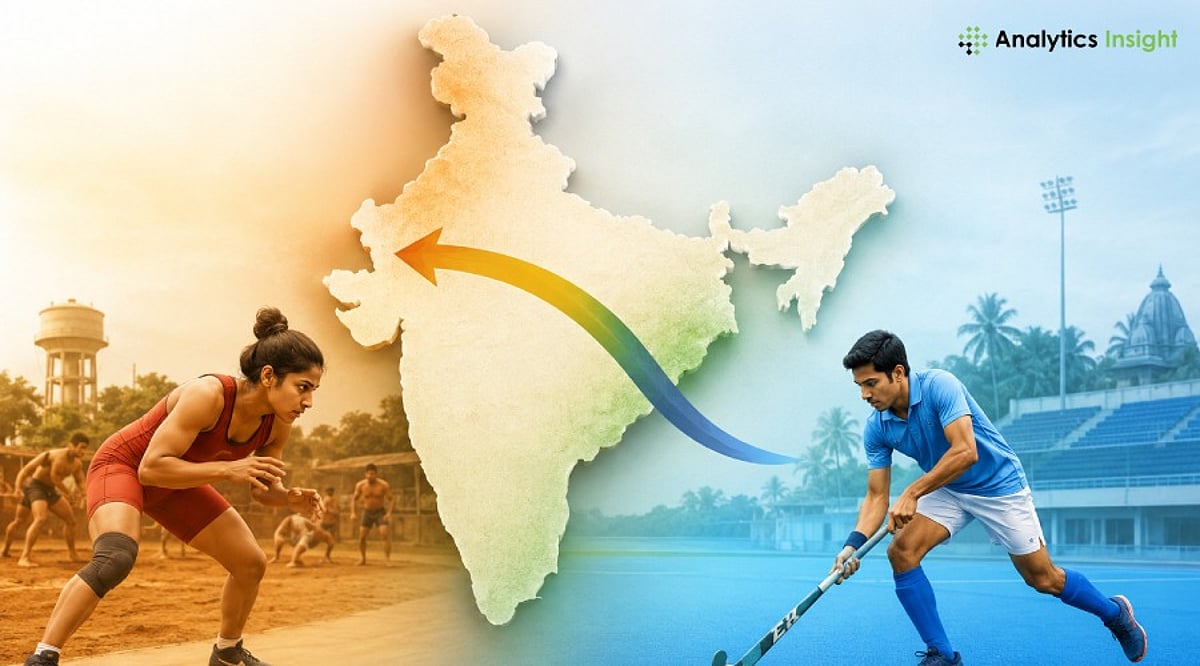
India’s sporting success has never been spread evenly across the map. Because sports falls under the Constitution’s State List, individual state governments—not the central government—carry primary responsibility for building athletes from the ground up. That structural reality has produced a handful of clear standouts: Haryana, Odisha, Karnataka, Punjab, Maharashtra, Tamil Nadu, and Kerala have each built distinct sporting identities through different combinations of infrastructure, funding, and long-term planning.
What Actually Defines a Winning Sports Ecosystem
Every successful state seems to have the same basic components that keep recurring: a dense network of grassroots coaches, stable government support that is not affected by regime change, use of sports science and current training practices, and increasingly private sector participation. Those states that can combine some of these factors do better than those that just have one component, like infrastructure but no grassroots flow into it.
Comparing India’s Leading Sports States
Haryana: India’s Medal Factory
Despite holding barely 2% of India’s population, Haryana consistently produces a disproportionate share of the country’s Olympic medalists, anchored by its wrestling and boxing culture. The state runs thousands of village-level sports nurseries feeding into district academies, backed by cash incentives that reward medal winners directly and a sports quota system that channels athletes toward stable government employment. Names like Neeraj Chopra, Sakshi Malik, Bajrang Punia, and Vinesh Phogat trace back to this same rural training ecosystem, built on the idea that talent identification has to start at the village level rather than in cities.
Odisha: India’s Hockey Capital
While Odisha followed a more focused and targeted path by investing heavily in one sport where it could dominate internationally, through the help of Mission Olympic Cells and the Odisha Naval Tata Hockey High Performance Centre, the state developed world-class infrastructure and became the first Indian state government to support a national team in the form of Indian hockey. This proved rewarding, as the result was two Hockey World Cups at Kalinga Stadium in Bhubaneswar and many talented athletes such as Amit Rohidas and Deep Grace Ekka who made India proud on the international front.
Karnataka, Punjab, and Maharashtra: Different Paths to the Same Goal
The state of Karnataka has emphasized sports science and private academies, generating all-round talent in badminton, cricket, and athletics through coached techniques and technologies. The state of Punjab is famous for its hockey and athletics tradition, which continues to train its athletes at specialized sports schools even years later, despite having produced players such as Milkha Singh. The state of Maharashtra has developed itself on the back of shooting, cricket, and badminton.
Tamil Nadu and Kerala: Niche Excellence
Tamil Nadu has been able to distinguish itself in the world of chess and table tennis due to its well-thought-out strategies to promote these games. In Kerala, athletics and volleyball have been the two main areas where success has come to the fore, thanks to the efforts taken in sports schools and the Kerala Sports Council, which has continued to produce talent since the days of P.T. Usha.
Common Traits Behind Every Successful State
Considering all seven states, there are certain trends that persist: sustainable policy-making irrespective of political changes, real investment in the well-being of athletes instead of temporary recognition, and an increasing dependence on private funding. The states that have understood sports as long-term economic and cultural investments instead of temporary prestige projects are the states that consistently produce champions, and the other Indian states trying to develop their sports identity should take lessons from them in the process of India bidding for the Olympics in 2036.
Why This Matters
India’s Olympic ambitions depend not only on individual talent but also on strong state-level sports ecosystems. Understanding how leading states consistently develop elite athletes offers valuable lessons for policymakers, sports administrators, and aspiring athletes seeking sustainable pathways to international success.