

Tag: Online Education

  • How Amrita Online’s MBA in Artificial Intelligence Creates Data-Driven Leaders

    How Amrita Online’s MBA in Artificial Intelligence Creates Data-Driven Leaders

    Why Data-Driven Leadership Is the New MBA Baseline

    Business decisions today rarely happen without a dashboard, a model, or a forecast behind them. Organizations across banking, technology, consulting, and manufacturing are pushing decision-making down to managers who can read data directly instead of waiting for a separate analytics team to translate it. The Online MBA in Artificial Intelligence from Amrita Online is built to answer that shift. Rather than treating AI and analytics as an elective bolt-on to a traditional MBA, the curriculum weaves machine learning, deep learning, and data visualization into core management training, along with a strong emphasis on responsible AI and ethics.

    Inside the AI and Analytics Curriculum

    The program’s applied, tool-based approach starts with foundations such as a first-semester elective on computer systems, then builds into machine learning, deep learning, and natural language processing. This is not AI taught as a business case study to read about; it is AI taught as a set of working techniques students apply directly to business problems.

    Layered onto this technical core is a strong data visualization component, giving students the advanced analytical skills needed to turn raw data into decision-ready insight. The goal is for graduates to lead AI transformation in their organizations, not just understand it from the sidelines.

    Key technical areas covered include:

    • Programming and computer systems foundations
    • Machine learning and deep learning techniques
    • Natural language processing for unstructured data
    • Business intelligence-style data visualization for communicating results

    Capstone-Style Projects: Where Tools Meet Business

    Technical tools only build career-ready leaders when applied to real business problems. That is where the program’s project-based structure comes in. The curriculum combines videos, case studies, and projects developed by faculty and industry leaders, giving students applied, capstone-style assignments rather than purely theoretical coursework.

    The semester structure opens with foundational management subjects such as Fundamentals of Management and Organizational Behaviour, Human Resources and Organizational Development, and Marketing and Consumer Behaviour. Students then apply AI and analytics tools inside real management contexts, from HR analytics to marketing forecasting to operational decision-making.

    Measurable Career Outcomes and Placement Support

    Amrita Online is the online learning division of Amrita Vishwa Vidyapeetham, ranked 8th by India’s National Institutional Ranking Framework (NIRF 2025). The program reports an average salary growth of 33.94 percent among recent Online MBA graduates, based on a graduate survey.

    Beyond the classroom, students receive mentorship from industry experts, soft skills and aptitude training, resume building, and mock interviews. Placement assistance connects graduates with hiring partners including Honeywell, HDFC Bank, Amazon, Deloitte, Philips, BNY Mellon, Apple, Grant Thornton, and Exide.

    Program at a Glance

    • Duration: Minimum 2 years, extendable up to 4 years, across 4 semesters
    • Accreditation: UGC-recognized and AICTE-approved; NIRF rank #8 in India
    • Quality: NAAC A++ accredited, values-driven institution
    • Outcomes: Alumni report an average 33.94% salary growth
    • Global Credibility: WES-recognized credentials with study abroad pathways at premier US and European universities
    • Startup Ecosystem: Access to Amrita TBI, recipient of the National Award for Best Startup Incubator (2017)
    • Community: Learners across more than 50 countries and 28 Indian states

    Eligibility Criteria

    • A minimum of 50 percent marks in undergraduate studies
    • Completion of 10+2
    • An undergraduate degree of at least three years
    • Final-year students may apply with their last completed semester results
    • Work experience is an added advantage, reflecting the program’s design for working professionals

    Fees and Payment Options

    For Indian students: The total tuition fee for the Online MBA in Artificial Intelligence is Rs. 2,44,000, split as Rs. 61,000 per semester across four semesters. Paying the full one-year fee upfront brings a 5 percent discount, reducing the one-year fee to Rs. 1,15,900. A zero-cost EMI option is available at Rs. 10,625 per month.

    For foreign nationals: The semester fee is Rs. 73,000, with a discounted one-year fee of Rs. 1,38,700 and a total tuition fee of Rs. 2,92,000. All students additionally pay a registration fee of Rs. 700 and an examination fee of Rs. 2,750 per semester.

    Global Exposure Alongside the Technical Curriculum

    Students can access international exposure through Amrita’s global university partnerships, including Oakland University, University of New Mexico, Institut Mines-Télécom, and the University of Barcelona. Opportunities include student exchange programs, study abroad semesters, and summer programs, often without paying tuition fees at the host university.

    Same Degree, Same Recognition

    The curriculum, faculty, and academic standards for the online program mirror those of the on-campus MBA, with the online mode of study noted only on the back of the certificate. Graduates also join the Amrita alumni network, connecting them with a global community of professionals across industries.

    Is the Amrita Online MBA in AI Worth It?

    For working professionals and graduates who want an MBA that builds real fluency in AI, machine learning, and data visualization rather than just business theory, the program makes a strong, evidence-backed case. The tool-based curriculum, applied project work, and structured placement support are designed to convert technical fluency into measurable career growth. For entrepreneurs and professionals seeking flexibility without sacrificing institutional prestige, Amrita’s NAAC A++ grade and NIRF ranking add credibility.

    Note: Fees, deadlines, and program details can change. Confirm the latest information directly on the official Amrita Online website before applying.

  • How Southern Utah University and Risepoint Are Expanding Access to Education in Cedar City

    How Southern Utah University and Risepoint Are Expanding Access to Education in Cedar City

    Southern Utah University (SUU) was literally built by its community. Founded in 1897 as a teacher training school, residents of Cedar City contributed resources and physical labor to erect the first building, driven by a mission to widen access to education for those overlooked by the existing system. The great-grandfathers of SUU’s current president, Mindy Benson, were among those early builders. More than a century later, the institution still defines itself by that deep connection to place.

    “As a regional institution, that’s part of who SUU is and what we do,” Benson said. “We’re the economic driver, we’re the cultural center, and we try to provide access where others wouldn’t have it.”

    Holding to that commitment in the 2020s meant meeting people who could no longer sit in a classroom in Cedar City five days a week. Many of them already hold a degree from the university and want to return to reskill or advance while working full time and raising families. Others live in rural stretches of southern Utah, where the nearest campus is a long drive and the local economy needs credentialed workers it cannot easily import. Serving both groups required SUU to deliver its programs online without diluting them — a challenge for a relatively small regional institution.

    Building Online Capacity Through Partnership

    SUU partnered with Risepoint, an education technology company, to build that capacity. James Sage, the university’s associate provost, described the contribution as less about outsourcing than about clarified self-knowledge. “They really helped us have a vision for what we could be in the online space,” he said. “They’ve helped us with market research, so we know what students are interested in. They’ve helped us align our academic programs to what the industry needs.”

    The university retained ownership of admissions, curriculum, instruction, and financial aid, while Risepoint provided services like outreach, online infrastructure development, and student support.

    Community Impact Over Headline Growth

    Since the partnership began, SUU has enrolled more than 4,600 new online students across nursing, business, communication, cybersecurity, and music. Its online MBA grew from 84 students to more than 1,000, aided by a seven-week course format and a price working adults can manage. Much of that growth has come from students who already live and work in the region.

    Ken Hall, dean of the Dixie L. Leavitt School of Business, framed the stakes locally: the school’s job, he said, is “to raise the overall economic condition of individuals and families that live here in Southern Utah.”

    Meeting Rural Healthcare Needs

    Nowhere is the regional logic clearer than in healthcare. Southern Utah is rural, and its medical system is stretched thin. The university’s nursing programs partner with local hospitals so that online and in-person students alike train in real clinical settings, keeping graduates prepared to practice where shortages are most severe.

    “We’re in a rural area, and there are doctors, but there are very few,” said Taylor Harris, a family nurse practitioner student who earned her bachelor’s degree on campus. “Family nurse practitioners can step in and bridge the gap between people being seen or not seen. Having nurses pursue an advanced degree helps your own community to strengthen their healthcare system.”

    Salvador Rodriguez, another nurse practitioner student, plans to use his Spanish to serve the area’s Hispanic residents directly, so patients do not have to depend on an interpreter.

    The flexibility matters even in fields that look nothing like nursing. Percussionist and music educator Kit Chatham earned a graduate music technology degree through the university’s asynchronous program while keeping a working musician’s schedule. “There were times that I was doing 10 shows a week,” he said. The format gave him room to do both, and he now directs the program he came through, serving as SUU’s Director of Graduate Music Technology.

    What distinguishes Southern Utah University’s story from a standard growth narrative is the absence of a crisis. The university was financially healthy when it began, and its aim was to honor an old promise to its community in a format more of that community could reach. Through its partnership with Risepoint, it has been able to extend the same career-connected, faculty-led education its campus students receive to working adults across the region, in the same fields the area depends on. For a university that was built by Cedar City, continuing to serve Cedar City is the assignment itself, and online learning has become one of the main ways it gets done.

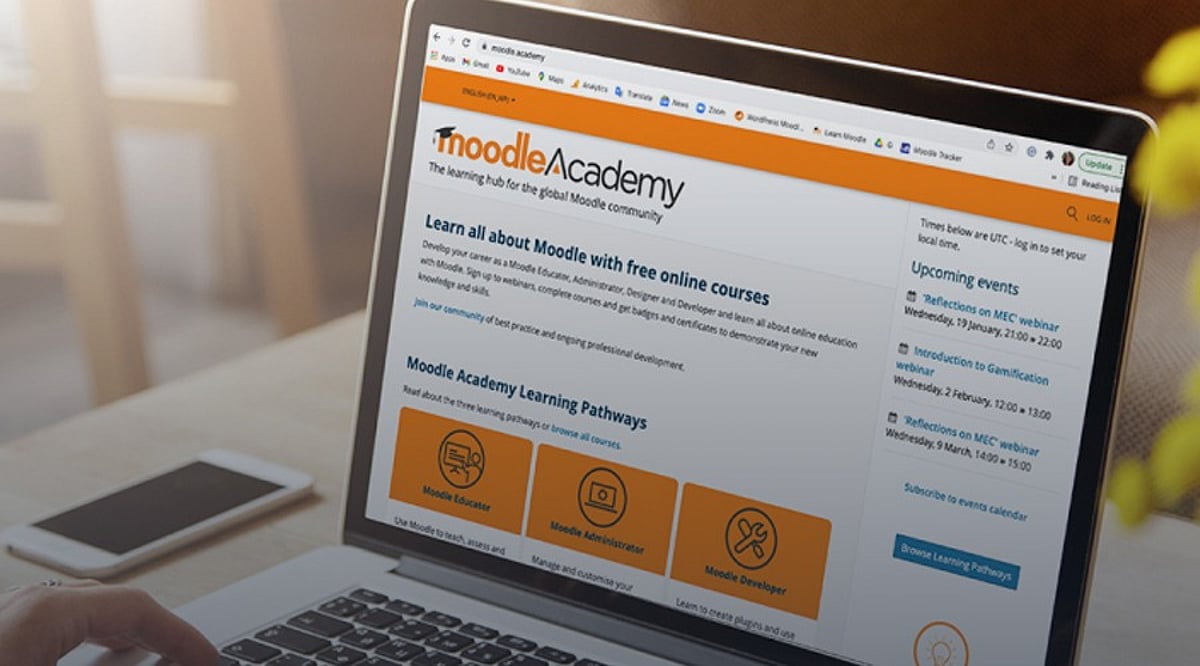
  • Moodle Review: Features, Benefits, and Challenges of the Open-Source Learning Platform

    Moodle Review: Features, Benefits, and Challenges of the Open-Source Learning Platform

    Overview

    Moodle is a powerful open-source learning platform used by educators worldwide to deliver online courses. It supports millions of students and institutions with tools for course management, collaboration, assessment, and content sharing. Designed as a flexible alternative to commercial solutions, Moodle offers mobile and cloud-based learning options.

    General Information

    • Launch Date: August 2002
    • Target Audience: Universities, educational institutions, government and public sector, corporations, enterprises, non-profit and global organizations
    • Platform Support: Web browsers, Windows, macOS, Linux, iOS, Android
    • Download: Click Here

    Main Features of Moodle

    • Modern web interface with a personalized dashboard accessible from browsers and mobile apps
    • Integrated calendar for tracking assignments, deadlines, meetings, and course activities
    • Built-in text editor for formatting content, inserting images, and creating structured learning materials
    • Cloud storage integration supporting Dropbox and Google Drive uploads
    • Collaboration tools including quizzes, forums, chats, wikis, surveys, and peer assessment workshops

    Benefits of Moodle

    • Open-source license allows free use and modification
    • Highly customizable to meet specific institutional requirements
    • Mobile apps (iOS and Android) enable learning anytime, anywhere
    • Simplified content creation with text editor and course management tools
    • Extensive plugin ecosystem, updates, and community resources for continuous improvement

    Challenges of Moodle

    • Limited direct customer support; relies on community forums and documentation
    • Some users report bugs, crashes, and performance issues
    • Initial setup requires technical expertise or IT personnel
    • Certified service providers for hosting and maintenance incur additional costs
    • Steep learning curve for new users unfamiliar with learning management systems

    Subscription Information

    Moodle is distributed under the GPL open-source license, meaning it is free to download and use. Organizations can deploy it on their own servers or opt for hosting and support from certified Moodle partners, who provide implementation, maintenance, and technical assistance for a fee.

    Support Options

    • Help Center: Extensive documentation, setup guides, and tutorials covering course creation, user management, and mobile learning. Community forums offer troubleshooting assistance.
    • Customer Support: Primarily community-based. Direct technical support is available through Moodle Certified Service Providers.

    Conclusion

    Moodle remains one of the most popular open-source learning platforms globally. While it demands technical expertise for setup and maintenance, its comprehensive features, collaboration capabilities, and zero licensing cost make it an effective solution for educational institutions, universities, and organizations seeking digital learning tools.