
Tag: online safety

  • India Supreme Court Urges Stricter Social Media Safeguards for Minors

    India Supreme Court Urges Stricter Social Media Safeguards for Minors

    India is moving toward tighter regulations on children’s access to social media, with the Supreme Court directing the central government to examine statutory safeguards for users under 18. The focus is not on banning internet access for minors but on whether they should be allowed to independently create and manage social media accounts.

    What the Supreme Court Said

    A bench led by Chief Justice of India Surya Kant, along with Justices Joymalya Bagchi and V Mohana, asked the Centre to consider strengthening existing intermediary rules to ensure social media platforms comply with Indian laws concerning minors. Justice Bagchi emphasized that safeguards should have a statutory basis rather than remain mere guidelines. Solicitor General Tushar Mehta assured the court that the government would examine possible measures.

    The proceedings follow a petition filed by the Just Rights for Children Alliance (JRCA), which seeks enforceable safeguards for minors using social media and other digital platforms.

    Why Age 18 Matters

    The petition relies on Section 11 of the Indian Contract Act, which addresses the legal capacity to enter into contracts. Senior advocate H.S. Phoolka, representing JRCA, argued that existing law already covers minors’ contractual capacity, making it unnecessary to wait for the proposed data protection framework. Signing up for social media involves accepting a platform’s terms and conditions, raising questions about how platforms allowing younger users align with Indian law.

    Parental Consent Under Consideration

    One proposed option is requiring parental or legal guardian consent before users under 18 can enter into contracts with social media platforms. The petition also suggests identity verification or e-KYC for parents or guardians. These changes would require platforms to build systems compliant with Indian legal requirements, rather than relying solely on their existing minimum-age policies. Currently, platforms like Facebook and Snapchat allow account creation from age 13.

    What Happens Next

    The JRCA petition highlights risks including online grooming, sexual exploitation, trafficking, sextortion, cyberbullying, behavioral profiling, misuse of personal information, and exposure to age-inappropriate content. The Centre is now examining whether stronger safeguards can be incorporated into the statutory framework governing digital intermediaries. The Supreme Court is expected to hear the matter again after the government reviews the issue.

  • Truecaller Launches Scam Checker: Real-Time Fraud Detection Powered by Community Intelligence

    Truecaller Launches Scam Checker: Real-Time Fraud Detection Powered by Community Intelligence

    Truecaller has unveiled its new Truecaller Scam Checker, a dedicated web and Android destination designed to help users quickly assess suspicious links, phone numbers, and messages. The tool leverages the collective scam intelligence of over 500 million users to provide instant, actionable insights before individuals engage with potential fraud.

    Available initially in India on the Android app and globally via the Truecaller website, Scam Checker consolidates multiple scam-detection capabilities into a single, user-friendly interface. This initiative extends Truecaller’s core mission beyond caller ID and spam blocking to a more proactive, community-driven approach to fraud prevention.

    Key Features of Truecaller Scam Checker

    With this new tool, users can:

    • Check suspicious links for signs of phishing or malicious intent.
    • Search phone numbers to see what Truecaller’s detection systems and community signals reveal.
    • Browse Scamfeed reports to discover similar scams reported by other users.
    • Describe a concern in their own words and receive relevant results, including checks on any links or numbers mentioned in the query, along with related community reports.

    These features collectively address the three components of a typical scam message: a number, a link, and a story. Users can now verify all three simultaneously in seconds, empowering them to make informed decisions before responding.

    Future Expansion and Availability

    Truecaller plans to broaden Scam Checker’s capabilities in the near future, including wider coverage of scam techniques, screenshot uploads for richer analysis, and user authentication features. The company also intends to roll out the service to additional regions and iOS devices at a later date.

    “People often sense that something is wrong, but they need a quick way to check before responding,” said Rishit Jhunjhunwala, CEO of Truecaller. “Scam Checker brings together our detection capabilities and what our community has reported so that people can investigate a suspicious link, number or story in one place.”

    About Truecaller

    Truecaller is an essential communication tool for 500 million active users worldwide, with over one billion downloads since launch. In 2025 alone, the platform identified 68 billion spam and fraud calls. Headquartered in Stockholm, Truecaller is a GSMA member and has been publicly listed on Nasdaq Stockholm since October 2021. For more information, visit truecaller.com.

  • iDenfy Launches Standalone Selfie-Based Age Estimation Tool for Faster Onboarding

    iDenfy Launches Standalone Selfie-Based Age Estimation Tool for Faster Onboarding

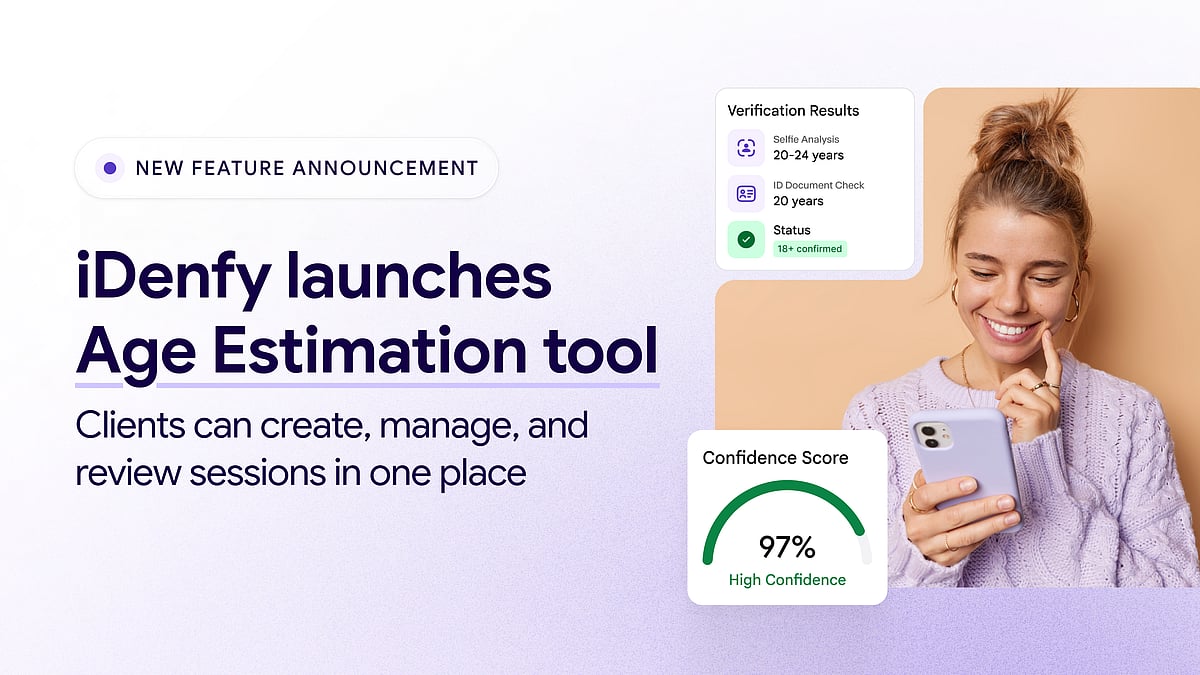
    iDenfy, a global RegTech platform specializing in identity verification and fraud prevention, has announced a significant upgrade to its age verification platform with the introduction of a new Age Estimation tool. This feature allows businesses to estimate a user’s age using a real-time selfie, eliminating the need for an ID document upload in many cases.

    How the Age Estimation Tool Works

    Traditionally, iDenfy’s age verification required users to upload a government-issued ID. With the new Age Estimation add-on, users can simply capture a selfie, and the system analyzes facial features to estimate age within a three-year accuracy gap. Businesses can set a configurable age limit and buffer zone. Users clearly above the threshold pass instantly; those near the limit are automatically routed to a certified ID document check within the same session for final verification.

    Standalone Product with Dedicated Infrastructure

    Unlike a bundled feature, iDenfy has built Age Estimation as a standalone product with its own permission structure, billing model, and API endpoints. This means partners who only need age estimation checks can access it without adopting the full identity verification stack. The dedicated dashboard provides a centralized view of sessions, token generation, and detailed session pages, supported by custom settings and verification URLs.

    Benefits for Businesses and Compliance

    Validated age data reduces the risk of underage access to restricted products while minimizing personal data collection. Because most users pass with just a selfie, companies avoid requiring government IDs from their entire user base. This supports compliance with regulations such as the UK Online Safety Act, EU Digital Services Act, GDPR, and emerging state-level laws in the US and Australia’s under-16 social media restrictions.

    Domantas Ciulde, CEO of iDenfy, commented: “Age estimation only works if the people using it can actually see what’s happening inside each session. We improved our product against disguises such as makeup or a moustache to precisely estimate people’s age and brought it into the dashboard with its own sessions list and detailed view.”

    He added: “Centralizing session creation and results in one dashboard view might sound like a small operational detail, but for partners that run age checks at scale, it removes a lot of manual tracking that used to happen outside our platform.”

    Availability

    The Age Estimation dashboard module is now available to iDenfy partners, who can integrate via API or Dashboard with 24/7 support. For more information, visit iDenfy’s age verification service page.

  • Report: YouTube and X Fuel Surge in AI Deepfake Nudify App Discoveries

    Report: YouTube and X Fuel Surge in AI Deepfake Nudify App Discoveries

    Finding AI nudify apps online may be easier than many people think. A new study claims that social media platforms, especially YouTube and X (formerly Twitter), are helping users discover websites that offer these harmful tools. The research, conducted by The Institute for Strategic Dialogue (ISD), reveals that this occurs despite most major platforms having rules against abusive and non-consensual explicit content.

    According to the report, many nudify websites receive millions of visits. Between December 2025 and March 2026, social media accounted for 5.7 million visits to these sites. YouTube sends the largest share—over 1.82 million visits, representing nearly 30% of all social media traffic. X follows with about 20%, contributing more than 1.3 million visits. Reddit, Facebook, Instagram, and other platforms also send users to these sites, but in much smaller numbers.

    The study highlights how videos, posts, and shared links are often used to direct people to AI nudify services. It also puts a spotlight on content moderation gaps. YouTube states it removes content promoting harmful or illegal activity and prohibits explicit material. X also claims it does not allow non-consensual intimate content. However, researchers found that posts linking to these websites remain available in many cases.

    Facebook and Instagram have announced policies against deepfake abuse and AI-generated explicit content, but the report suggests a gap between rules and what users actually see. Some posts stay online until reported, while others are taken down only to reappear quickly. The study concludes that current moderation systems are struggling to keep pace with the spread of AI tools, emphasizing the need for faster and more effective action by platforms to prevent harmful content from reaching wider audiences.

  • GTA 6 in Australia May Require Age Verification or Face $50 Million Fine

    GTA 6 in Australia May Require Age Verification or Face $50 Million Fine

    Grand Theft Auto VI could face strict new age-verification requirements in Australia, with Rockstar Games potentially facing fines of up to A$50 million if it fails to comply. The Australian government is considering stronger age checks for online services that offer adult content, and if the rules become law, Rockstar would need to confirm a player’s age before granting access to GTA 6.

    The proposal has sparked debate across the gaming community. Supporters argue that stronger checks will help protect younger players from mature content. Critics, however, worry that the process could force companies to collect sensitive personal information from millions of users, raising privacy and data security concerns.

    Australia’s New Rules Could Affect GTA 6

    The entire gaming world is eagerly awaiting the chance to explore Vice City, but the game’s content is not suitable for all ages. Following the lead of countries like China and Russia, Australia is moving toward stricter protections for minors. The proposed system would require developers to verify that a customer is old enough to access adult content—potentially by checking an official ID or using another approved method before a purchase or download is completed.

    If implemented, Rockstar Games must comply before launching GTA 6 in Australia. Each breach could result in a fine of up to A$50 million. Rockstar already enforces age-verification rules for GTA Online and is expected to apply similar measures for the upcoming installment, though no official announcement has been made.

    Privacy vs. Protection

    This debate extends beyond a single game. Supporters of the proposal argue that children should not have easy access to adult content and that stronger checks are a straightforward way to enhance online protection. Critics, however, point out that age verification may require companies to collect ID details, photos, or other personal information, raising concerns about data leaks, hacking, and how that information is stored or used.

    The issue has become highly controversial: one side wants better protection for minors, while the other demands stronger privacy safeguards for everyone.

    Why GTA 6 Is the Perfect Target

    GTA 6 is one of the most anticipated games ever announced. The series is known for crime, violence, strong language, and other mature themes, and it reaches millions of players worldwide. That makes it a natural focus for lawmakers and the public. A smaller game might not attract the same level of scrutiny, but GTA’s popularity turns it into a symbol in broader debates about video games, age limits, and online safety.

    Whether the new rules will change how Australians buy or play GTA 6 remains uncertain. What is clear is that one of the world’s biggest games has become part of an even larger discussion about privacy, protection, and the future of digital content regulation.

  • Top Gaming Scams to Watch Out for in 2026: Red Flags You Might Be Missing

    Top Gaming Scams to Watch Out for in 2026: Red Flags You Might Be Missing

    As the gaming industry continues to expand, cybercriminals are refining their tactics to target players. In 2026, scammers are leveraging artificial intelligence, fake giveaways, and fraudulent platforms to steal credentials, money, and personal data. Recognizing these red flags is essential to staying safe while gaming.

    AI-Generated Phishing Messages

    Scammers now use AI to craft convincing emails and messages that mimic official gaming platforms. Never click unsolicited login links or verify accounts through unknown sources. Always navigate directly to the official website.

    Too-Good-to-Be-True Game Deals

    Massive discounts on skins, in-game currency, premium accounts, or collectibles are almost always scams. Purchase digital content only through official stores and trusted marketplaces.

    Fake Giveaways from Popular Creators

    Fraudsters impersonate streamers, esports teams, and developers, promising exclusive rewards. Legitimate giveaways never require passwords, payment details, or account credentials to participate.

    Suspicious Beta Testing Invitations

    Cybercriminals distribute fake beta invites containing malware or phishing links. Download beta versions only after confirming announcements from official game developers.

    Unofficial Trading Platforms

    Private item trading often involves fake buyers, manipulated payment proofs, and fraudulent middlemen. Always use secure, developer-approved trading systems whenever available.

    Malicious Mods and Cheat Software

    Free mods, hacks, cheats, and cracked games may contain hidden malware. Download gaming tools exclusively from reputable creators and verified community platforms.

    Fake Esports Tournament Registrations

    Scammers advertise nonexistent tournaments and collect registration fees or personal information. Verify organizers through official esports websites before entering any competition.

    Impersonated Customer Support Teams

    Fraudsters pretend to resolve hacked accounts while requesting passwords or payments. Authentic support teams never ask for sensitive credentials or cryptocurrency transfers.

    Weak Account Security Practices

    Using simple passwords or skipping multi-factor authentication makes accounts easier to compromise. Strong, unique credentials and MFA provide essential protection against cyberattacks.

  • Indian Government Summons Meta Over Instagram Ads Allegedly Tied to Child Sexual Abuse Material

    Indian Government Summons Meta Over Instagram Ads Allegedly Tied to Child Sexual Abuse Material

    The Indian government has issued a summons to Meta after reports surfaced alleging that Instagram displayed advertisements linked to Child Sexual Abuse Material (CSAM). The move underscores growing nationwide concern over platform safety and content moderation practices.

    Union IT Minister Ashwini Vaishnaw has directed the Ministry of Electronics and Information Technology (MeitY) to demand an explanation from the social media giant regarding the alleged promotion of illegal material on its platform. According to government officials, Meta’s content moderation policies, ad review systems, and mechanisms to prevent the dissemination of such content will be scrutinized closely.

    The government intends to investigate the approval process for these advertisements and the detection methods in place. This development follows repeated calls from authorities for digital platforms operating in India to comply with national laws and ensure they do not host harmful or illegal content.

    Meta has not yet issued a public statement in response to the summons. The outcome of this inquiry will determine whether further legal action is taken against the company. The case highlights the ongoing debate about the responsibility of social media platforms to protect users, especially children, from exploitation and abuse.