Tag: Open Source

  • Moonshot AI Opens Kimi K3 for Public Download, Challenging OpenAI and Anthropic

    Moonshot AI Opens Kimi K3 for Public Download, Challenging OpenAI and Anthropic

    Moonshot AI has officially released its latest large language model, Kimi K3, for public download. The move allows developers worldwide to access, deploy, customize, and experiment with the model, marking a significant step in the global AI race.

    The Chinese AI startup gained international attention after Kimi K3 demonstrated competitive reasoning, coding, and multilingual performance against leading AI models from OpenAI and Anthropic. Reports indicate that the model’s capabilities surprised industry observers, approaching performance levels associated with advanced OpenAI systems across several benchmark evaluations.

    Kimi K3’s strong reasoning and coding results have positioned it as another notable competitor challenging Anthropic’s latest large language models. The public release includes open model weights, encouraging transparency, customization, fine-tuning, and community-driven improvements for developers and AI researchers.

    Organizations can integrate Kimi K3 into applications, automate workflows, build AI assistants, and accelerate software development with flexible deployment options. The availability of Kimi K3 expands choices beyond proprietary AI systems, potentially accelerating innovation, reducing costs, and encouraging broader adoption across industries.

    The release reflects intensifying global competition as companies rapidly develop powerful foundation models with stronger reasoning, efficiency, and accessibility for enterprises.

  • Block (Jack Dorsey’s Company) Debuts Buzz: An Open-Source AI Workspace Challenging Slack

    Block (Jack Dorsey’s Company) Debuts Buzz: An Open-Source AI Workspace Challenging Slack

    Jack Dorsey’s Block has officially launched Buzz, a new open-source workplace collaboration platform designed to bring together human teams and AI agents in a single, unified workspace. The platform aims to reduce dependency on traditional tools like Slack and GitHub by integrating messaging, coding, and AI-powered workflows.

    What Is Buzz?

    Buzz is a model-agnostic, decentralized, and self-sovereign platform. It offers threaded conversations, direct messaging, voice support, code repositories, and automated workflows. Unlike many existing tools, Buzz allows organizations to use multiple AI models rather than being locked into a single provider.

    The platform has been released under an open-source license, giving developers full access to its source code. This enables teams to customize deployments, build new features, and adapt the software to their internal workflows—a level of flexibility that could appeal to organizations seeking greater control over their workplace software.

    Availability and Early Stage

    Block has made Buzz available as a free desktop application for macOS, Windows, and Linux. However, the company notes that Buzz is still in its early stages, and it remains to be seen how quickly enterprises will adopt the platform.

    Block’s Broader AI Strategy

    The launch of Buzz aligns with Block’s wider AI strategy. Earlier this year, Jack Dorsey announced plans to reduce the company’s workforce from over 10,000 employees to under 6,000 as Block shifts toward a more AI-driven operating model. Alongside Buzz, Block’s portfolio includes Square, Cash App, Afterpay, and Tidal.

    Block is betting that a platform capable of consolidating conversations, coding, and AI workflows into one workspace can simplify how teams collaborate. The company aims to reduce reliance on multiple disconnected tools, offering a more integrated approach to work.

    Market Context

    Buzz enters a market dominated by Slack, which remains one of the most widely used workplace collaboration tools. At the same time, AI-focused collaboration platforms are gaining traction as companies increasingly deploy AI agents for software development and business operations. Buzz’s open-source, model-agnostic design positions it as a flexible alternative in this evolving landscape.

    For more details, visit Analytics Insight.

  • Insignary Introduces Clarity On-Demand: Pay-Per-Project SBOM Generation Without Annual Contracts

    Insignary Introduces Clarity On-Demand: Pay-Per-Project SBOM Generation Without Annual Contracts

    Toronto, Canada – July 15, 2026 – Insignary Inc., a leader in software supply chain security and binary software composition analysis (SCA), today announced the launch of Insignary Clarity On-Demand, a self-service, pay-per-project offering that provides immediate access to patented SCA and Software Bill of Materials (SBOM) generation — with no annual subscription required.

    Most traditional SCA tools rely on what software claims to contain rather than what it actually contains. Clarity On-Demand addresses this gap by analyzing compiled binaries to detect every open-source component, including those from AI-generated code, vendor libraries, and statically linked binaries that bypass package managers.

    Designed for Flexibility and Urgency

    Clarity On-Demand is built for two primary audiences:

    • Teams evaluating Insignary Clarity before committing to a full enterprise deployment.
    • Smaller organizations that need professional-grade SBOM generation and vulnerability visibility for a specific project without an ongoing subscription.

    With regulatory deadlines looming — including Canada’s Bill C-8 (Critical Cyber Systems Protection Act) and the U.S. FDA’s requirement for SBOMs in premarket submissions for connected cyber devices — organizations can no longer wait for annual procurement cycles.

    “You cannot verify an SBOM by reading the manifest that created it. You verify an SBOM by examining the software that was actually built, shipped, and deployed. Clarity On-Demand makes that level of verification accessible to any organization — from a development team preparing for its first compliance audit to an enterprise team evaluating binary SCA for the first time.” — Taek Wan Kim, President & CEO, Insignary

    What Clarity On-Demand Includes

    Each subscription provides two weeks of access for a single user and a single project. Within that window, users can:

    • Generate a complete SBOM from source code and compiled binaries
    • Receive automated license and security risk alerts
    • Identify components associated with known patent licensing risks
    • Receive alerts for known exploits tied to identified components

    Clarity On-Demand is available on a self-service, pay-per-project basis with plans based on scan volume. First-time users receive 50% off their first project. Full pricing details are available at insignary.com/clarity-on-demand.

    Why Binary-Level Analysis Matters

    The U.S. National Security Agency (NSA) specifically recommends that national security system owners “obtain SBOMs and associated vulnerability and code quality information from analysis of software binaries.” Clarity On-Demand extracts fingerprints directly from compiled binary code using Insignary’s patented technology, ensuring no component goes undetected.

    Trusted by Governments and Global Enterprises

    Insignary’s technology is already used by government organizations and global leaders across electronics, defense, financial services, automotive, manufacturing, medical devices, and other sectors. Key partners include BearingPoint (exclusive distributor in Europe), Cybertrust Japan, and TechMatrix.

    About Insignary

    Insignary Inc. is a Toronto-based cybersecurity company specializing in binary software composition analysis and software supply chain security. Its patented technology identifies open-source components, vulnerabilities, and software provenance directly from compiled binaries without requiring access to source code. For more information, visit www.insignary.com.

    Contact

    Principal Solutions Architect
    Jessica Lee
    Insignary
    jessicalee@insignary.com

    This is a paid press release published via CyberNewswire, a PR newswire syndication platform for cybersecurity companies.

  • AI Startup MyDecisive Raises $12M Seed Funding and Unveils Open-Source Observability Platform SmartHub

    AI Startup MyDecisive Raises $12M Seed Funding and Unveils Open-Source Observability Platform SmartHub

    AI DevOps startup MyDecisive has emerged from stealth with $12 million in seed funding and the launch of SmartHub, an open-source observability platform designed to help enterprises manage telemetry data more efficiently while reducing cloud costs.

    Founded by enterprise software veteran Ari Zilka, MyDecisive is taking a different approach in the crowded observability market. Instead of forwarding every log, metric, and trace to external monitoring platforms, SmartHub processes data closer to where applications run. This allows engineering teams to filter, secure, and route telemetry before it leaves their infrastructure.

    Open-Source Platform Targets Rising Observability Costs

    SmartHub is built on Kubernetes, OpenTelemetry, and Prometheus. It supports log processing, trace sampling, runtime controls, and automated workflows that help teams monitor applications without moving unnecessary data across cloud environments. As AI workloads grow, enterprises are generating more telemetry than ever. MyDecisive argues that processing data at the edge reduces storage requirements, lowers cloud spending, and speeds up operational decisions. The platform is fully open-source, allowing developers to deploy and customize it without being locked into a proprietary ecosystem.

    Octant Adds Enterprise Capabilities

    Alongside SmartHub, MyDecisive introduced Octant, its commercial platform for enterprise customers. Octant adds governance, security, automated runbooks, anomaly detection, and cloud auto-scaling on top of the open-source foundation. The company claims the combined platform can cut production operating costs by up to 90% and can be deployed within a day—estimates that have not been independently verified.

    Fresh Capital to Support Expansion

    Copper Sky Capital led the $12 million seed round. The funding will be used to expand product development and grow the company’s enterprise business. Zilka, who previously founded Terracotta and served as CTO at Hortonworks, emphasized that enterprises need platforms that can process operational data where it is created rather than sending everything to centralized observability tools.

    MyDecisive says its platform is already being used across sectors including financial services, healthcare, retail, and telecommunications. As enterprises expand AI deployments, the startup is positioning SmartHub as an open-source alternative for organizations looking to improve observability while keeping infrastructure costs under control.

  • Top Computer Vision APIs and AI Models to Watch in 2026: A Comprehensive Guide

    Top Computer Vision APIs and AI Models to Watch in 2026: A Comprehensive Guide

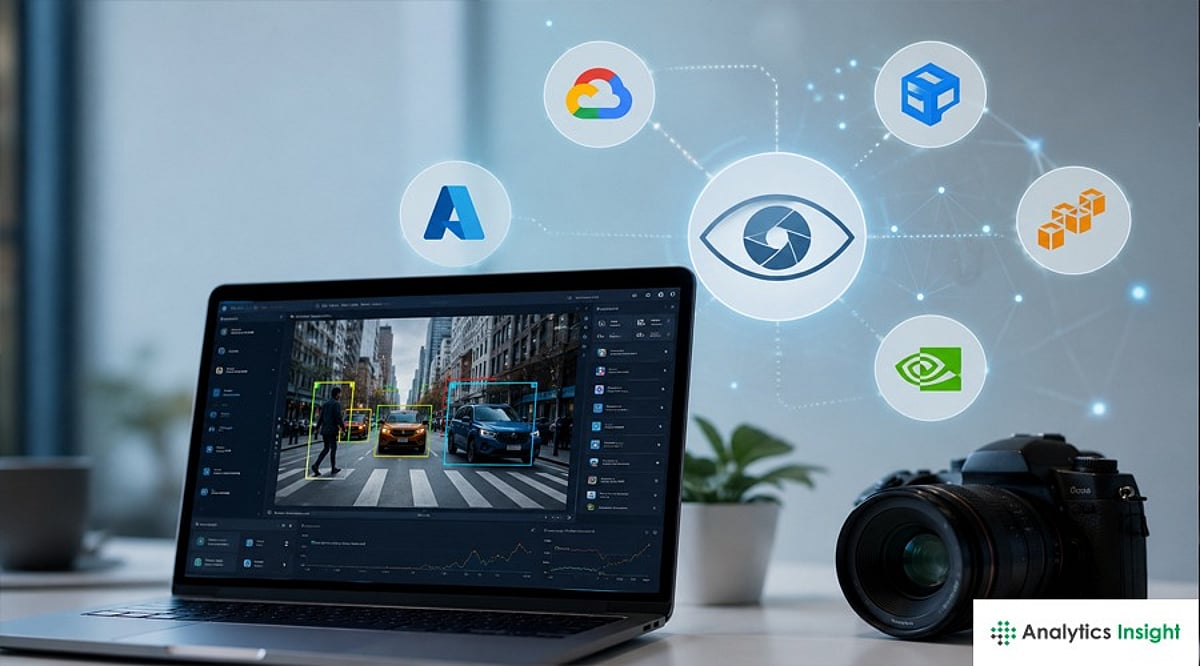
    Computer vision APIs and AI models have become essential for OCR, facial recognition, image analysis, and visual reasoning. This guide compares leading platforms, including Google Cloud Vision, AWS Rekognition, Azure AI Vision, Clarifai, Imagga, and multimodal AI models, helping businesses choose the right solution.

    Overview

    Computer vision has moved well past simple object detection. Today’s APIs and models handle everything from document OCR and facial analysis to open-ended visual reasoning, and the right choice depends heavily on what a team is actually building. With hyperscalers, specialized platforms, and multimodal language models all competing for the same use cases, picking a computer vision stack in 2026 means weighing accuracy, cost, and ecosystem fit rather than chasing a single “best” answer.

    The Hyperscaler Trio Still Anchors Most Production Systems

    Google Cloud Vision, AWS Rekognition, and Azure AI Vision continue to be the default starting point for almost all teams due to their unique strengths. Google Cloud Vision wins on OCR precision and number of label classes, which is above 10,000, with good support for multilingual text detection and hence is great for document scanning and e-commerce catalogs. AWS Rekognition wins on face-based functionality and video recognition and comes pre-integrated with S3, Lambda, and Kinesis Video Streams for organizations that want to use AWS. Azure AI Vision is a part of the new Azure AI Foundry Tools, and for enterprise teams on Microsoft identity & compliance services, it is clearly the winner, although its pricing model for Vision, Custom Vision, Face, and Document Intelligence services might be quite confusing.

    Specialized Platforms Fill Gaps Hyperscalers Leave Open

    Apart from the “big three”, Clarifai and Imagga offer their services to those teams that require more flexibility than label-based tools can provide. With Clarifai, you get access to pre-trained models, visualized no-code model building, and a marketplace of 300+ community models, which makes it one of the best options for teams without dedicated machine learning engineers but wishing to create custom classifiers. Imagga is marketed as an inexpensive solution providing tagging and classification of images for about $0.60 per 1,000 images along with color detection and intelligent image cropping.

    Multimodal Language Models are Reshaping What ‘Vision’ Means

    The biggest shift in 2026 isn’t a new API; it’s the rise of vision-capable large language models like GPT-4o, GPT-5.4 Vision, and Claude’s vision capabilities. Unlike traditional cloud vision APIs that return a fixed list of labels, these models can reason about an image, answer open-ended questions about its content, and extract information in custom formats without retraining. This makes them a better fit whenever a task requires contextual understanding rather than a predefined label taxonomy, reading a messy handwritten form and inferring intent, for instance, rather than simply detecting that text is present.

    Comparing the Leading Computer Vision Options

    [Insert comparison table or bullet list summarizing Google Cloud Vision, AWS Rekognition, Azure AI Vision, Clarifai, Imagga, GPT-4o Vision, Claude Vision, YOLO, SAM 2, CLIP, SigLIP – as per source text but rewritten for clarity]

    Open-Source Models Remain a Serious Option

    For teams with in-house ML infrastructure, open-source models continue to close the gap with commercial APIs. YOLO-based object detectors remain the go-to for real-time detection tasks, while Meta’s Segment Anything Model (SAM 2) has become a standard tool for precise image segmentation. CLIP and SigLIP-style embedding models have also gained traction, since they produce reusable vectors that power similarity search and clustering rather than fixed labels, a meaningfully different approach from the labeled-output model that cloud APIs are built around.

    Choosing Right Stack for Your Use Case

    No clear victor emerges from the comparison above. Teams who develop pipelines that use large quantities of documents find that Google Cloud Vision works better for them; those with a native AWS infrastructure find more value in Rekognition, while those who use Microsoft software find greater utility in closer integration with Azure services. At the same time, the need for vision to include actual visual understanding is moving the industry towards multimodal LLMs. The best generic advice in 2026 remains unchanged: always try at least two or three solutions on your actual data since accuracy and cost both vary significantly once you move past vendor demo datasets.

    Why This Matters

    Computer vision now powers everything from document automation and medical imaging to autonomous systems and AI assistants. Choosing the right API or AI model directly impacts development speed, operating costs, accuracy, and scalability, making platform selection a critical decision for businesses investing in AI-powered applications.

    Frequently Asked Questions

    What is a computer vision API?

    A computer vision API enables software applications to analyze and interpret images or videos using artificial intelligence. It can detect objects, recognize faces, extract text through OCR, classify images, and automate visual inspection without requiring developers to build AI models from scratch.

    Which is the best computer vision API in 2026?

    There is no single best option for every project. Google Cloud Vision excels in OCR, AWS Rekognition is ideal for facial recognition and video analysis, Azure AI Vision suits Microsoft enterprises, while GPT-4o Vision and Claude Vision are stronger for contextual image understanding.

    What is the difference between traditional computer vision APIs and multimodal AI models?

    Traditional computer vision APIs return predefined outputs such as labels, detected objects, or extracted text. Multimodal AI models like GPT-4o Vision and Claude Vision go further by understanding context, answering questions about images, summarizing visual content, and extracting structured information.

    Is Google Cloud Vision better than AWS Rekognition?

    The answer depends on the use case. Google Cloud Vision generally offers stronger OCR capabilities and broader image labeling, while AWS Rekognition provides better facial analysis, video recognition, and seamless integration for organizations already using the AWS cloud ecosystem.

    When should businesses choose open-source computer vision models?

    Open-source models such as YOLO, SAM 2, and CLIP are ideal for organizations with machine learning expertise and dedicated infrastructure. They provide greater flexibility, customization, and lower long-term costs but require more technical effort than managed cloud APIs.

  • Cardano Logs 233 GitHub Commits in a Week as Governance Platform Proposal Evolves

    Cardano Logs 233 GitHub Commits in a Week as Governance Platform Proposal Evolves

    Cardano has recorded 233 GitHub commits over the past seven days, according to Token Terminal, positioning it among the most actively developed Layer-1 blockchain networks. The activity represents roughly 6.2% of the approximately 3,700 total Layer-1 commits tracked during that period.

    Meanwhile, the Cardano Foundation continues advancing its governance framework, proposing an off-chain discussion platform following the adoption of the Cardano Constitution in February 2025. Together, these developments underscore the network’s ongoing focus on both technical progress and decentralized decision-making.

    Cardano Maintains Strong Development Momentum

    Token Terminal data shows steady developer participation throughout the week. While commit counts do not directly influence token prices, many market observers track them as a proxy for network advancement. Despite a smaller market capitalization compared to several peers, Cardano consistently ranks among leading blockchain projects for open-source development activity.

    Everstake, a staking provider, recently described Cardano as “one of the strongest foundations in the cryptocurrency industry,” citing its active developer community, improving network metrics, and expanding ecosystem as key factors supporting its long-term position.

    The week’s development pattern followed a familiar cadence: commits started strong, dipped around July 4 (a low point), then rebounded on July 5 and peaked on July 6 before tapering slightly but remaining above the week’s minimum. Such batch-driven activity is common in open-source projects, and similar trends appeared across other Layer-1 blockchains.

    Cardano Foundation Advances Governance Plans

    Alongside development work, the Cardano Foundation is advancing governance tools in the wake of the Cardano Constitution’s activation. A newly proposed open off-chain discussion platform aims to improve collaboration among stakeholders. Participants would access the platform using verified identities linked to on-chain credentials. The framework would feature independent moderation, transparent governance discussions, and open communication standards.

    The proposal carves out dedicated spaces for ADA holders, Delegated Representatives, proposal authors, and committee members. Optional user profiles could display governance interests and prior voting history. Ultimately, the foundation stated that the platform itself could be subject to an on-chain community vote, allowing the ecosystem to decide which collaboration tool best serves its needs rather than relying on a central authority.

    Development and Governance Remain Active

    Cardano’s recent GitHub activity continues a multiyear trend of consistent developer contributions, even as market attention oscillates around price movements. Governance development is proceeding in parallel, with the proposed discussion platform marking the next step in decentralized decision-making. Both efforts reflect ongoing momentum across Cardano’s technical and organizational fronts.

    What could sustained development and expanding governance tools mean for Cardano’s long-term network growth? The latest data shows developers building while governance initiatives move forward under the foundation’s current proposals, offering a clearer picture of the network’s dual-track progress.

    Conclusion

    Cardano recorded 233 GitHub commits over the past week while advancing governance plans through a proposed community discussion platform. The updates highlight continued developer activity alongside efforts to improve decentralized collaboration, providing insight into the network’s ongoing technical and governance evolution.

  • Top 10 GitHub Repositories for Mastering Claude Code in 2026

    Top 10 GitHub Repositories for Mastering Claude Code in 2026

    Claude Code has evolved far beyond a terminal novelty. Today, developers use it to read entire codebases, run commands, and manage multi-step engineering workflows. However, out-of-the-box capabilities only scratch the surface. The real power lies in the ecosystem built around it: skills, subagents, hooks, and reusable workflows that transform Claude Code from a helpful assistant into a structured development system. Here are ten GitHub repositories worth exploring if you’re serious about mastering Claude Code in 2026.

    Start with Anthropic’s Official Repositories

    The most reliable starting point is Anthropic’s anthropic/skills repository. It contains ready-made SKILL.md files for common tasks such as working with PDFs, spreadsheets, and presentations. Pair it with claude-code-action, Anthropic’s official GitHub Actions integration for automating Claude Code inside CI/CD pipelines. Another newer addition from Claude Code Skills 2.0 is Skill Creator, which lets you build, evaluate, and benchmark your own custom skills — no more guessing whether they actually work.

    Discover the Wider Ecosystem

    Before installing anything, it helps to know what exists. hesreallyhim/awesome-claude-code is a curated index of slash commands, CLAUDE.md files, hooks, and workflow tools — essentially a table of contents for the entire ecosystem. For a different angle, x1xhlol/system-prompts-and-models-of-ai-tools collects exposed system prompts and tool definitions from Claude Code and comparable agentic tools. This is especially useful for anyone studying how these systems are structured behind the scenes.

    Frameworks That Enforce Better Engineering Habits

    Two repositories stand out for imposing real discipline on how Claude Code writes software. Superpowers encodes a strict development methodology: brainstorm, spec, plan, test-driven development, review, and finalize. Notably, it refuses to keep any code written before tests exist. Everything Claude Code (ECC), built by hackathon-winning developer Affaan Mustafa, takes a broader approach, shipping dozens of specialized subagents, reusable skills, and security scanning tools that work across Claude Code and several other AI coding tools. Both are open source and free. Most experienced users pick a handful of components that fit their workflow rather than use every feature.

    Utilities That Solve Everyday Friction

    Some repositories exist purely to fix common pain points. Repomix packs an entire codebase — folder structure, documentation, and all — into a single AI-readable file, solving the problem of Claude Code losing context on larger projects. Claude Mem addresses a related issue: by default, Claude Code forgets everything between sessions. This tool gives it persistent memory of past decisions and project quirks.

    Advanced Setups for Teams

    For developers curious about running Claude Code as a coordinated team rather than a single assistant, the gstack repository documents Garry Tan’s setup. It assigns opinionated roles — Engineering Manager, Release Manager, QA — through reusable skills and slash commands. This is not a beginner’s starting point, but it’s a useful reference for structuring multi-agent workflows.

    Choosing Where to Start

    With so many options, star count alone isn’t a reliable filter; usefulness depends on what you’re trying to solve. Beginners are better served starting with Anthropic’s official repositories and the awesome-claude-code index before layering in frameworks like Superpowers or utilities like Repomix as specific needs arise. Building a stack gradually, rather than installing everything at once, tends to produce a far more stable and productive Claude Code setup.

    Why This Matters

    Claude Code is rapidly becoming a key AI development platform for software engineers. Understanding its ecosystem of GitHub repositories enables developers to automate workflows, improve coding efficiency, build custom AI skills, and integrate Claude into real-world engineering pipelines — making it an increasingly valuable tool for modern software development.

    Frequently Asked Questions

    What is Claude Code?

    Claude Code is Anthropic’s AI-powered coding assistant that helps developers understand codebases, write code, debug applications, execute terminal commands, automate workflows, and perform complex software engineering tasks. It supports both individual developers and teams working on modern software projects.

    Why should developers use GitHub repositories to learn Claude Code?

    GitHub repositories provide practical examples, reusable skills, automation workflows, documentation, and open-source tools that extend Claude Code’s capabilities. They allow developers to learn from real implementations instead of relying only on official documentation or theoretical tutorials.

    Which GitHub repository is best for beginners learning Claude Code?

    Anthropic’s official anthropic/skills repository is the best starting point for beginners. It contains ready-made skills for common development tasks and helps users understand how Claude Code executes structured workflows before exploring more advanced community-built repositories.

    Can Claude Code be integrated into CI/CD pipelines?

    Yes. Anthropic’s claude-code-action repository enables Claude Code to integrate with GitHub Actions and CI/CD pipelines. Developers can automate reviews, documentation, testing, and other engineering tasks directly within continuous integration and deployment workflows.

    Should developers install every Claude Code repository?

    No. The best approach is to start with official Anthropic repositories and gradually add tools that solve specific problems. Installing too many extensions at once can create unnecessary complexity and make workflows harder to maintain over time.

    Is the Claude Code ecosystem expected to grow in 2026?

    Yes. As Anthropic continues expanding Claude Code and enterprise adoption increases, the open-source ecosystem is expected to grow significantly. Developers can expect more GitHub repositories focused on automation, custom skills, AI agents, testing, memory management, and collaborative development workflows.

  • Why AI Sovereignty and Open Source Are Critical for India’s Digital Future: An Interview with Mishi Choudhary

    Why AI Sovereignty and Open Source Are Critical for India’s Digital Future: An Interview with Mishi Choudhary

    Artificial intelligence is reshaping global economics, governance, and national security. But as nations push to adopt AI, a pressing question arises: Can India rely on foreign AI models it neither owns nor fully understands?

    In this episode of the Analytics Insight Podcast, host Priya Dialani speaks with Mishi Choudhary, a technology lawyer and founder of SFLC.in, about the growing importance of AI sovereignty, open-source systems, and technological independence. The conversation covers data governance, cybersecurity, public policy, innovation, and India’s AI ambitions. Below are key excerpts from the interview.

    What does AI sovereignty actually mean?

    AI sovereignty refers to a nation’s ability to create, understand, evaluate, and regulate the AI technologies it depends on. It does not imply isolation from the rest of the world, but rather the capacity to retain control over its digital future.

    Why is open-source AI essential for sovereignty?

    Open-source AI allows governments, private enterprises, and researchers to study, modify, and improve AI technologies. It reduces reliance on a small group of foreign corporations, fosters creativity, strengthens security, and encourages the development of in-house technical skills, avoiding vendor lock-in.

    Why are countries increasingly concerned about AI sovereignty now?

    As AI applications expand into healthcare, finance, education, governance, and national security, nations want greater control over their data and infrastructure and aim to minimize dependence on the few multinational corporations dominating the AI industry.

    What should India do to strengthen its AI ecosystem?

    India should promote open-source AI in government initiatives, focus on cybersecurity, develop Indian-language AI models, improve public procurement policies, and adopt accountable AI solutions.

    How can India balance AI innovation with accountability?

    Innovation and accountability must go hand in hand. While India needs to foster AI innovation, it should also implement strict guidelines for audit transparency, data protection, healthy competition, and regulatory oversight.

    Listen to the full podcast here.

  • The 10 Most Influential Open-Source AI Platforms of 2026

    The 10 Most Influential Open-Source AI Platforms of 2026

    The open-source AI landscape is evolving at a breathtaking pace, democratizing access to cutting-edge technology and shifting power away from closed-door tech giants. From powerhouse models transforming natural language processing to advanced frameworks orchestrating complex autonomous agents, open-source innovation is the true engine driving the AI revolution. Whether you’re a developer looking to deploy efficient local models or an enterprise building scalable AI infrastructure, these tools offer unprecedented flexibility and control.

    1. Hugging Face (Founded 2016, CEO Clément Delangue) – Hugging Face occupies a unique position at the center of the modern AI ecosystem. While many focus on individual models, Hugging Face builds the infrastructure, community, and distribution network that powers much of the open-source AI movement. It hosts hundreds of thousands of models, datasets, and applications, making it the default destination for discovering, evaluating, and deploying AI technologies.
    2. Llama (Meta AI) (Launched 2023, CEO Mark Zuckerberg) – The Llama family of models has done more than any other project to legitimize open-weight AI at global scale. Successive generations push performance boundaries while remaining accessible to researchers, developers, and businesses. Llama has become the foundation for countless derivative projects and commercial applications worldwide.
    3. DeepSeek (Launched 2023, CEO Liang Wenfeng) – DeepSeek has become one of the most disruptive forces in AI, releasing highly-capable open models that rival established competitors while reportedly requiring far fewer resources. Its achievements challenge assumptions about the cost and complexity of building state-of-the-art AI systems.
    4. Mistral AI (Launched 2023, CEO Arthur Mensch) – Founded by former researchers from Google DeepMind and Meta, Mistral AI has become Europe’s most prominent AI challenger. Its open-weight philosophy combined with strong performance and efficiency attracts developers, enterprises, and governments alike.
    5. Qwen (Alibaba Cloud) (Founded 2023, CEO Eddie Wu) – Alibaba Cloud’s Qwen family has emerged as a strong challenger to Western AI platforms. With multilingual capabilities and impressive performance across reasoning, coding, and enterprise tasks, Qwen has gained substantial adoption throughout Asia and beyond.
    6. OpenClaw (Launched 2025, Creator Peter Steinberger) – OpenClaw represents the growing momentum behind truly open AI development. Built around transparency and accessibility, it attracts developers seeking alternatives to closed commercial systems. Its focus on open weights and community-led innovation reflects a broader movement toward decentralized development.
    7. Microsoft AutoGen (Launched 2023, CEO Satya Nadella) – AutoGen has become a leading framework for multi-agent AI systems, enabling multiple language models and software tools to collaborate on complex tasks. Its integration with the Microsoft ecosystem strengthens its appeal among enterprise users as agentic AI becomes a major trend.
    8. LangChain (Launched 2022, CEO Harrison Chase) – LangChain is one of the most widely used frameworks for building applications powered by large language models. It provides tools to connect AI systems with external data sources, workflows, and software environments, making it easier to build chatbots, autonomous agents, and enterprise AI solutions.
    9. Ollama (Launched 2023, CEO Jeffrey Morgan) – Ollama has democratized access to large language models by making local AI deployment straightforward. Users can run powerful open-source models on personal computers, removing dependence on cloud infrastructure for many use cases, and lowering technical barriers for a broad range of users.
    10. vLLM (Launched 2023, CEO N/A) – vLLM has become one of the most influential open-source inference engines in the AI ecosystem. Originally developed at UC Berkeley, it makes deployment of large language models faster and more cost-effective through innovative memory management, enabling organizations to serve AI applications at scale without excessive infrastructure costs.
  • Big Data Insights: Key Trends, Tools, and Industry Impact in 2025-2026

    Analytics Insight’s Big Data section curates essential articles exploring the transformative power of data analytics across industries. From open-source tools to predictive market analysis, these pieces uncover how organizations leverage big data for strategic advantage.

    Top Headlines

    • Best Open-Source Big Data Tools in 2026: A comprehensive guide to the most effective open-source platforms for handling massive datasets.
    • What is Big Data Analytics? (2026 Guide): Explains the meaning, types, tools, and real-world applications of big data analytics.
    • The Growing Role of Big Data in Predictive Market Analysis: How data-driven models forecast market trends with increasing accuracy.
    • Big Data in Telehealth and Remote Diagnostics: Transforming patient care through real-time data processing and remote monitoring.
    • Gartner’s Essential Features for BI Platforms (2025): Key capabilities business intelligence tools must offer in the modern data landscape.
    • Top Free Scala Courses for Big Data (2025): Learning resources for mastering Scala, a language critical for big data frameworks.
    • Drinksworld Uses Big Data for Business Growth: A case study on how data analytics drives strategy in the beverage industry.
    • Big Data Reshaping the Automotive Industry: From autonomous driving to supply chain optimization, data is revolutionizing mobility.
    • Big Data Revolution in Healthcare: Predictive analytics and precision medicine are becoming standard through big data.
    • Top 10 Data Lakes for Big Data Analytics: A detailed overview of leading data lake solutions for scalable analytics.
    • Big Data Analytics Trends to Watch in 2025: Emerging patterns that will define the next wave of data analytics.
    • Why the World Would End Without Data: A thought piece on the catastrophic consequences of a data-less society.

    These articles provide a rich resource for professionals, researchers, and enthusiasts looking to stay ahead in the rapidly evolving world of big data.