Tag: Optimus

  • SanDisk Optimus Series Signals Shift in Gaming Hardware Priorities: Speed and Capacity Take Center Stage

    SanDisk Optimus Series Signals Shift in Gaming Hardware Priorities: Speed and Capacity Take Center Stage

    SanDisk is making a stronger push into the gaming and esports sector as modern games demand increasingly more storage for downloads and updates. With the Indian gaming market surpassing the USD 1 billion mark in 2025 and projected to have over 550 million gamers in 2026, the company is entering the ecosystem with two powerful new SSDs: the SanDisk Optimus GX SSD and the SanDisk Optimus GX PRO SSD. Launched in 2026, these drives are built for gamers and developers, respectively, offering the capacity and speed required by demanding titles.

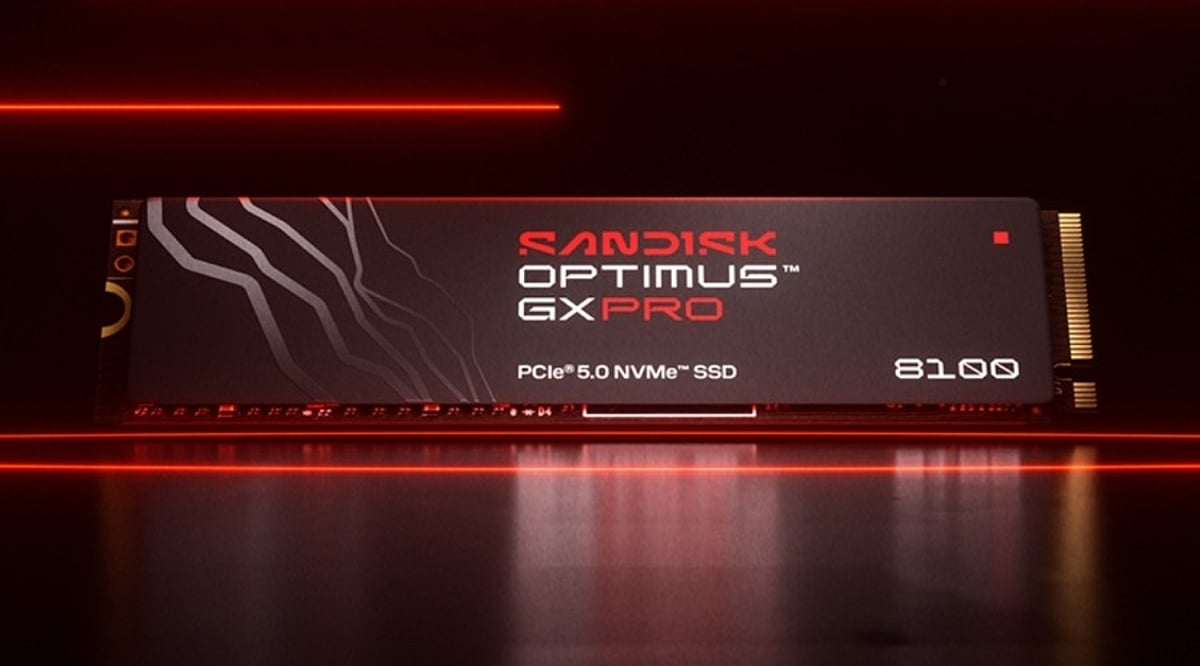
    Traditional gaming hardware discussions often center on GPUs and CPUs, but the SanDisk Optimus GX PRO 8100, a PCIe 5.0 NVMe SSD, aims to deliver a friction-free experience. Players can run games, multitask, and transfer files without lag. For console gamers, SanDisk introduced microSD Express cards for handheld gaming consoles, boasting read speeds up to 880 MB/s and the ability to store up to 36 games.

    As AAA games grow and digital libraries expand, storage is becoming a regular part of gaming upgrades rather than an afterthought. The Optimus range illustrates how gaming hardware priorities are evolving: performance is no longer just about graphics and processing power. For players with extensive libraries, fast and spacious storage is now one of the most practical upgrades available. As games continue to expand, the humble SSD may play an increasingly critical role in any gaming setup.

  • Tesla Optimus Output Climbs to Hundreds Per Week as Hand Dexterity Remains a Bottleneck

    Tesla Optimus Output Climbs to Hundreds Per Week as Hand Dexterity Remains a Bottleneck

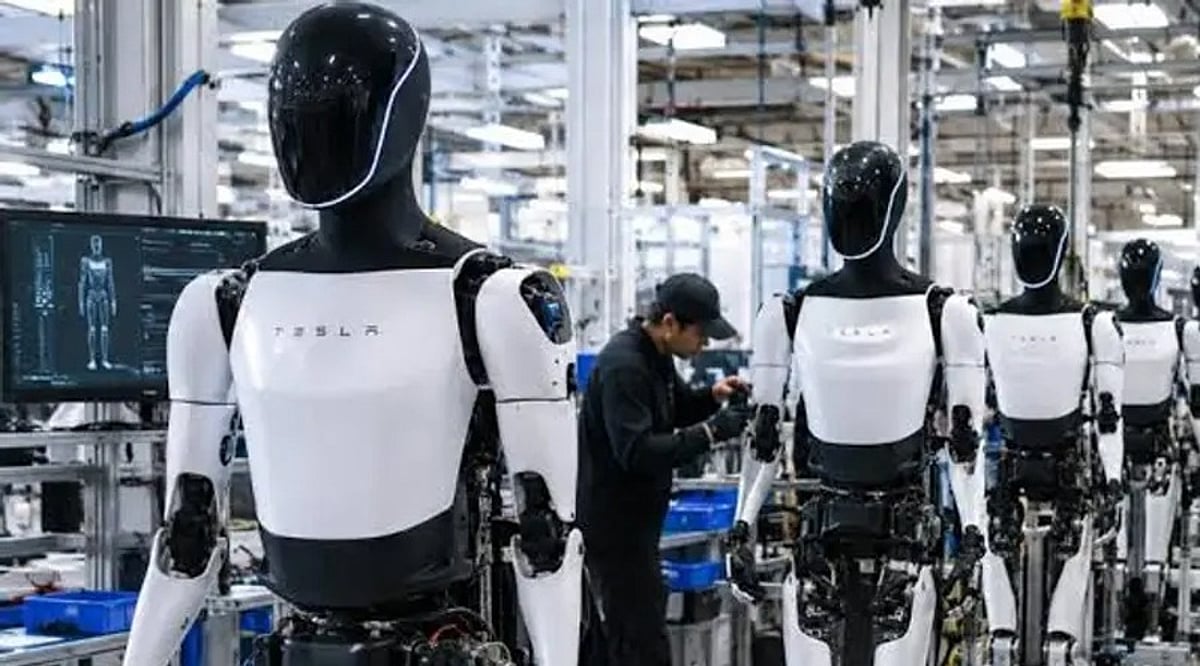
    Tesla has reportedly ramped up production of its Optimus humanoid robot to several hundred units per week, marking roughly a tenfold increase from the second quarter of 2026. The company is aiming for more than 1,000 robots per week by the end of the year, but manufacturing challenges around the robot’s complex hands and supply chain are still slowing the ramp.

    Optimus production surges

    According to The Information, Tesla went from producing dozens of Optimus units weekly during Q2 2026 to several hundred units per week in recent weeks. That is a significant jump, though not yet the stable, high-volume output Tesla wants.

    Tesla is working toward a production line capable of more than 1,000 Optimus robots per week by the end of 2026. Longer term, Elon Musk has discussed manufacturing around 20,000 robots per week.

    Hands remain the hardest engineering challenge

    One of the biggest obstacles is Optimus’ hand. The robot must perform precise, human-like movements, which requires a dense array of compact motors, actuators, sensors, and mechanical parts working together.

    According to the report, Tesla is facing difficulties not only with hand manufacturing and assembly, but also with automated production equipment and supplier availability. The company continues to refine the hand design as it moves toward a production-ready version.

    Producing these intricate components consistently at high volumes makes the challenge even greater. Tesla has previously noted that the hand and forearm system is one of the most difficult parts of Optimus to engineer.

    What’s next for Optimus

    Tesla has not publicly confirmed an exact current weekly production figure, so the several-hundred-unit number remains a reported estimate rather than an official company count.

    The company is also developing Optimus V3, which is expected to introduce hardware and design changes aimed at mass production. For now, Tesla’s immediate focus is on making its manufacturing process reliable enough to support far higher volumes.

  • Tesla Stock Awaits Q2 Earnings: Margins, Cash Flow, and Robotaxi Updates in Focus

    Tesla Stock Awaits Q2 Earnings: Margins, Cash Flow, and Robotaxi Updates in Focus

    Tesla stock edged higher ahead of its second-quarter earnings report, as investors zeroed in on automotive margins, free cash flow, and rising capital expenditures. The upcoming results, due after the market close on Wednesday, July 22, will also shine a spotlight on the company’s progress with Robotaxi expansion, Optimus humanoid robot production, and whether stronger vehicle deliveries can offset mounting costs.

    Shares gained roughly 3% on Tuesday, rebounding from four consecutive losing sessions, though the stock remains down about 13% for 2026.

    Deliveries Recover, Bolstering Revenue Forecasts

    Tesla delivered 480,126 vehicles in the second quarter, a 25% increase year over year. Production reached 451,758 units, while energy storage deployments hit 13.5 gigawatt-hours. Model 3 and Model Y accounted for 467,762 deliveries.

    The company’s internal consensus points to quarterly revenue of approximately $27.58 billion. Analysts expect adjusted earnings of roughly $0.55 per share, up from $0.40 a year ago. Broader market estimates place revenue between $26.2 billion and $27.7 billion.

    The delivery rebound may provide a tailwind for automotive revenue after weaker periods. However, Tesla cautioned that pricing, production costs, foreign exchange rates, and product mix also influence profitability.

    Margins and Cash Flow Under Pressure

    Wall Street forecasts Tesla’s automotive gross margin, excluding regulatory credits, will fall to about 18.1%, down from 19.2% in the previous quarter. Financing incentives, vehicle discounts, and higher input costs could further weigh on the metric.

    Free cash flow is likely to draw particular scrutiny. LSEG data points to negative free cash flow of roughly $3.3 billion for the period, which would mark Tesla’s first quarterly cash burn in more than two years.

    Gene Munster of Deepwater Asset Management expects automotive margins to slightly exceed consensus and projects second-quarter capital spending of about $6.7 billion. “I expect good news,” Munster wrote, but questioned how investors would react to higher spending in 2027.

    In April, Tesla raised its 2026 capital expenditure plan above $25 billion, covering data centers, vehicle plants, robotaxis, and the Optimus humanoid robot program. Investors will be watching whether operating cash flow can fund these projects without severely depleting Tesla’s cash reserves.

    Robotaxi Timelines Return to the Forefront

    Gary Black of The Future Fund noted that repeated missed Robotaxi targets have eroded confidence in Tesla’s public timelines. He pointed to Elon Musk’s earlier forecast that the service would cover half of the U.S. population by the end of 2025.

    Tesla expanded Robotaxi coverage to Orlando and Tampa ahead of earnings, but the service remains limited compared with earlier national ambitions. The company has started production of the Cybercab, though those vehicles have not yet entered its commercial network.

    Investor questions also center on the Optimus production schedule and obstacles slowing Robotaxi expansion. Nine of the ten most-supported questions on Tesla’s investor platform concern artificial intelligence projects, Full Self-Driving, Robotaxi, or Optimus.

    Shareholders have also asked about market speculation regarding a potential Tesla-SpaceX merger. Neither company has confirmed such a transaction. The earnings call is expected to focus on reported financials, spending plans, and management’s timelines for products that have yet to generate significant revenue.

    Tesla shares traded near $379 early Wednesday, placing its market capitalization above $1.3 trillion. The earnings call will begin at 5:30 p.m. Eastern Time.

  • Tesla Q2 Deliveries Surge 25% as Robotaxi and Optimus Spending Strains Cash Flow

    Tesla Q2 Deliveries Surge 25% as Robotaxi and Optimus Spending Strains Cash Flow

    Tesla approaches its second-quarter earnings report with strong vehicle deliveries and higher expected revenue. However, rising spending on Robotaxi, Optimus, AI data centers, and Cybercab production could push free cash flow deep into negative territory.

    Wall Street expects Tesla Q2 revenue of $26.21 billion, up 16% from a year earlier. Analysts also forecast adjusted earnings of $0.50 per share and adjusted EBITDA of $4 billion.

    Tesla Q2 Deliveries Support Revenue Growth

    Tesla delivered 480,126 vehicles during the quarter, up 25% from a year earlier. The total also exceeded the Bloomberg consensus estimate of 397,466 vehicles by a wide margin.

    The new Model Y helped improve production after last year’s factory transition reduced output. Tesla also used lower prices across several markets, which supported demand and lifted deliveries.

    Energy storage deployments reached 13.5 gigawatt-hours during the quarter. This figure rose more than 50% from 8.8 gigawatt-hours in the first quarter.

    Regional sales trends moved in different directions. Cox Automotive expects Tesla’s US sales to fall 20% after the federal EV tax credit expired. Meanwhile, European registrations rose sharply, with Greater Europe up nearly 108% in May.

    Deutsche Bank analyst Edison Yu said, “International strength is doing the heavy lifting.” He identified Europe as the main driver, while China also supported results. Tesla also plans to raise production at its Berlin factory during 2026.

    Robotaxi and Optimus Spending Pressures Cash

    Tesla’s stronger deliveries may not prevent a steep drop in free cash flow. Company-compiled analyst estimates point to negative free cash flow of $3.254 billion for the quarter.

    Capital spending could reach $6.7 billion, more than double the level from a year earlier. Tesla generated nearly $5.6 billion in free cash flow during the same quarter last year.

    The company continues to spend on Optimus robot production, AI data centers, and Cybercab manufacturing. These projects require large upfront investment while commercial returns remain limited.

    Morgan Stanley analyst Andrew Percoco said investors still question whether Robotaxi and Optimus can advance fast enough. “As capex more than doubles and free cash flow turns negative,” he wrote. Investors want evidence that spending can build Tesla’s physical AI business.

    Tesla’s long-term valuation depends heavily on growth beyond vehicle sales. Therefore, the earnings call may focus on production timelines, technology progress, and spending plans for these projects.

    Tesla Earnings History Adds Caution

    Tesla shares have fallen about 16% this year as investors weigh stronger deliveries against higher spending. The stock also faces pressure from uncertainty around future earnings growth and cash generation.

    Recent earnings history may also shape expectations. Tesla has missed adjusted earnings-per-share estimates in five of the past eight quarters, according to Bloomberg data.

    The company’s international sales recovery offers support, while weaker US demand adds pressure. High capital spending adds another challenge as Tesla expands several projects at the same time.

    The quarterly update will give investors fresh details on automotive margins, energy revenue, and cash use. Management may also provide new targets for Robotaxi, Optimus, Cybercab, and AI infrastructure spending.

    Investors will compare those updates with delivery growth and regional sales trends. Any change in the full-year spending outlook could affect expectations for Tesla’s near-term cash position over the coming several quarters.

  • Tesla Stock Poised for 7% Swing as Q2 Earnings Put AI and Robotaxi Plans in Focus

    Tesla Stock Poised for 7% Swing as Q2 Earnings Put AI and Robotaxi Plans in Focus

    Tesla stock enters a key earnings week with options traders preparing for a sharp move. The company will release its second-quarter results after the market closes on Wednesday, July 22, followed by an earnings call at 5:30 p.m. Eastern Time.

    Recent options pricing points to a potential swing of about 7% in either direction by Friday. Based on Thursday’s close, that range could take TSLA stock near $365 or above $416. Shares closed Friday at $380.84, down 2.6%.

    The expected move reflects that traders see room for a strong reaction to the Q2 report, though options pricing does not predict direction. Tesla shares have fallen more than 10% since the start of 2026, and a 7% rise would recover part of those losses, while a similar decline would push the stock further below analyst targets.

    Wall Street remains divided on Tesla’s valuation. Among 11 analysts tracked by Visible Alpha, six rate the stock neutral, four rate it a buy, and one recommends selling. Price targets range from $130 to $600, with a $408 average. Morgan Stanley recently raised its price target to $417 from $415, maintaining an equal-weight rating and expecting a solid quarter. The firm noted that the key investor debate remains whether Robotaxi and Optimus progress can justify an accelerating AI investment cycle.

    For the second quarter, Tesla’s company-compiled consensus calls for revenue of $27.58 billion, up from $22.50 billion a year ago. Analysts expect non-GAAP earnings of $0.55 per share and GAAP earnings of $0.36. Automotive revenue is projected at $20.05 billion, energy storage at $3.77 billion, and services at $3.76 billion. Wall Street anticipates a 19.5% gross margin but also forecasts negative free cash flow of about $3.25 billion and capital spending near $6.70 billion.

    Tesla delivered 480,126 vehicles during the quarter and produced 451,758, with Model 3 and Model Y deliveries reaching 467,762. The company also deployed 13.5 gigawatt-hours of energy storage products.

    Investors are expected to look beyond vehicle sales during the call, as Tesla shifts resources toward autonomous driving, Robotaxi services, the Optimus humanoid robot, energy storage, and other AI-linked projects. Progress on Robotaxi and Optimus could shape the stock reaction, with analysts seeking clearer timelines, spending plans, and commercial targets. The Tesla Semi program may also draw questions, especially after Tesla opened a public Megacharger station in Bloomington, California, and encouraged fleet customers to install chargers at their depots.

    Investors have submitted questions about Semi production, sales estimates, and revenue. While Tesla does not answer every submitted question, the Q2 call will provide the next scheduled update on financial results and the company’s broader growth plans.

  • Tesla Optimus Robot: 10 Impressive Capabilities Already Demonstrated

    Tesla Optimus Robot: 10 Impressive Capabilities Already Demonstrated

    Tesla’s humanoid robot, Optimus, has already demonstrated a wide range of practical skills, from walking independently to assisting with household chores. Here are 10 things Tesla Optimus can already do, showcasing its rapid progress in robotics and artificial intelligence.

    • Walk Independently: Optimus can walk steadily across different surfaces using advanced balance systems and AI-powered movement coordination for stable navigation.
    • Carry Objects: The robot lifts, carries, and transports everyday items carefully, demonstrating practical usefulness in warehouses, factories, and future household environments.
    • Sort Items: Optimus identifies, categorizes, and organizes objects using computer vision, making repetitive industrial and logistics tasks more efficient and accurate.
    • Perform Factory Tasks: Tesla designed Optimus to handle repetitive manufacturing jobs, reducing human workload while increasing productivity across production facilities and assembly lines.
    • Climb Small Steps: The robot navigates slight elevation changes and steps with improved stability, expanding mobility across real-world indoor environments effectively.
    • Use Human-Like Hands: Advanced robotic hands grip delicate and heavy objects precisely, enabling versatile performance in numerous practical everyday applications.
    • Respond to Voice Commands: AI-powered speech recognition allows Optimus to understand instructions and complete assigned tasks through natural voice interactions efficiently.
    • Learn Through AI Training: Optimus continuously improves movement and task performance using artificial intelligence models trained on real-world human demonstrations and experiences.
    • Assist with Household Chores: Tesla envisions Optimus helping with cleaning, organizing, carrying groceries, and other repetitive household responsibilities in the near future.

    These capabilities mark significant strides toward a versatile, general-purpose robot that could transform industries and daily life. Stay tuned for more updates on Tesla Optimus.