
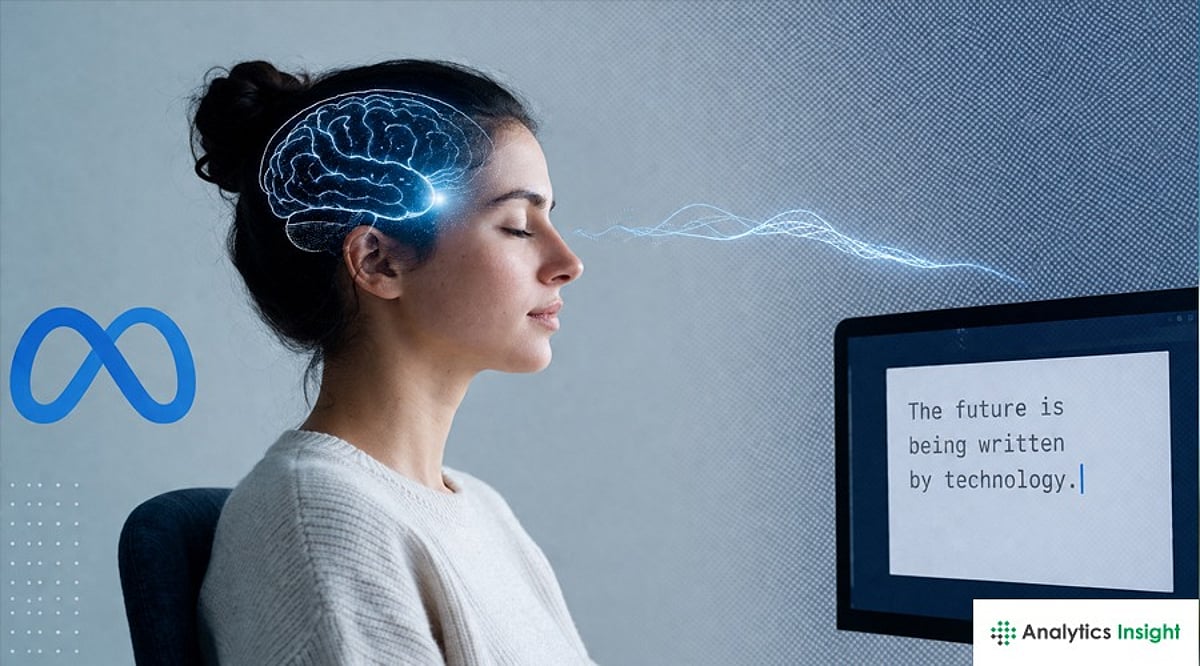
Meta has unveiled Brain2Qwerty v2, a cutting-edge AI system that translates brain signals directly into text using non-invasive magnetoencephalography (MEG) technology. Unlike traditional brain-computer interfaces that require surgical implants, this system uses a helmet equipped with sensors to detect the magnetic fields generated by neural activity while a user types.
In tests, Brain2Qwerty v2 achieved significant improvements over its predecessor, marking it as Meta’s most accurate end-to-end sentence decoder to date. The technology holds particular promise for individuals with paralysis, brain damage, or speech-related neurological disorders, offering them a potential future means of communication through thought alone.
Despite the breakthrough, Meta acknowledges that the system remains experimental. Current MEG equipment is bulky, expensive, and requires a controlled environment, making it impractical for everyday use. Further advancements in both hardware miniaturization and AI algorithms are necessary before Brain2Qwerty v2 can become a viable communication aid outside research settings.
The development underscores the accelerating progress in brain-computer interface technologies and their potential to transform healthcare and human-computer interaction.