Tag: Paytm

  • How Vijay Shekhar Sharma Bet on a Cashless India and Won

    How Vijay Shekhar Sharma Bet on a Cashless India and Won

    Every day, millions of Indians scan a QR code without a second thought. From roadside tea stalls and neighborhood kirana stores to taxi rides and hospital bills, digital payments have become part of everyday life. Long before that familiar QR sticker appeared across the country, Vijay Shekhar Sharma was betting that India’s relationship with cash would eventually change.

    From a Hindi-Medium Classroom to Big Dreams

    Sharma grew up in Harduaganj, a small town in Uttar Pradesh, in a Hindi-medium household where English was not spoken. When he entered engineering college in Delhi at fifteen, the coursework was not what slowed him down—the language was. Textbooks, lectures, and classroom conversations all arrived in a language he was still learning to read fluently, let alone speak with confidence. He has often said that English, not mathematics or physics, was the steepest climb of his early life. That struggle shaped how he approached everything afterward. Sharma taught himself English by reading everything he could find, and he carried the same self-taught instinct into technology.

    Building One97 Before Smartphones Took Over

    While still in college, he built indiasite.net, an early web content venture. He sold it two years later for a million dollars, a deal that gave him both confidence and capital for what came next. In 2000, he started One97 Communications, offering mobile content and services at a time when most of India had barely heard of the internet, let alone owned a smartphone. The dot-com crash tested that first venture severely. One97 survived by pivoting and adapting, a pattern Sharma would repeat throughout his career.

    The Bet That Became Paytm

    Those years also changed how Sharma viewed technology. While many internet companies were still thinking in terms of websites, he had become convinced that India’s next computing platform would be the mobile phone. Paytm began modestly, as a platform for prepaid mobile recharges, but the ambition behind it was never modest. Sharma wanted to turn the phone into a wallet—one that could hold money the way a physical wallet did and move it as easily as a text message.

    How Demonetisation Accelerated Paytm’s Growth

    For years, that vision grew steadily rather than explosively. Then, in November 2016, the government withdrew high-value currency notes from circulation overnight. Cash, the backbone of Indian commerce, disappeared from circulation almost instantly. Demonetisation did not create Sharma’s vision; it accelerated one that already existed. While demonetisation drove a surge in adoption, Paytm had already spent years building its payments infrastructure, merchant network, and consumer base before the policy took effect. Sharma became the public face of a shift the entire country was living through at once.

    The IPO That Changed the Conversation

    Growth on that scale eventually demands a different kind of scrutiny. In 2021, Paytm’s parent company, One97 Communications, went public in what was then India’s largest IPO, raising close to 18,300 crore rupees. The transition from startup darling to publicly listed company fundamentally changed the questions investors asked. Growth alone was no longer enough. Paytm’s listing was followed by a sharp decline in its share price as public investors questioned when, or if, the company would turn a profit. The optimism that had carried Paytm through a decade of private funding rounds met a far more skeptical audience.

    Regulatory Challenges and Rebuilding Trust

    If the IPO tested Paytm’s financial discipline, what followed tested its governance. The Reserve Bank of India moved against Paytm Payments Bank in 2024, citing persistent compliance concerns and ultimately restricting most of its operations. The action marked one of the biggest regulatory setbacks in Paytm’s history. Beyond the operational impact, it raised broader questions about governance, compliance, and how quickly fintech companies could scale while still meeting banking regulations. It forced Sharma into a period of restructuring and rebuilding, separating the payments bank from the broader Paytm ecosystem and working to reassure both regulators and customers that the business could operate within tighter compliance boundaries. Public markets demanded profitability. Regulators demanded stronger governance. Both pressures arrived within a few years of each other, and both forced Sharma to prove that Paytm could mature into an institution, not just remain a fast-growing startup.

    The Legacy of Vijay Shekhar Sharma

    Vijay Shekhar Sharma’s story mirrors the evolution of India’s digital economy itself. It began with a language barrier in a small town, accelerated through bold bets on mobile technology, and was tested by the realities of public markets and regulation. Sharma has often credited his upbringing for giving him the discipline to keep rebuilding after setbacks—a quality that has become as important as his willingness to take risks. His journey suggests that building a company at a national scale is less about getting a single decision right than about repeatedly adapting as technology, markets, and institutions evolve.

  • Top Fintech Stocks to Watch in July 2026: Global and Indian Picks for Digital Payments and Lending

    Top Fintech Stocks to Watch in July 2026: Global and Indian Picks for Digital Payments and Lending

    The fintech sector continues to surge, offering investors a mix of high-growth opportunities and varied risk profiles. From global payments leaders to Indian digital-finance champions, these seven stocks provide exposure to digital payments, lending, cross-border finance, and financial technology innovation.

    PayPal (PYPL, US)

    PayPal stock trades at $56.08 with a market cap of $49.53 billion, a P/E ratio of 10.64, and a dividend yield of 0.74%. Growth drivers include rising digital payments, merchant services, and new products like cryptocurrency and buy now, pay later (BNPL). The stock is down 27.72% over the past year after peaking in 2025, with a 52-week range of $38.46 to $79.50.

    Risks: Intensifying competition (Visa, fintechs), margin pressure, regulatory scrutiny.
    Thesis: PayPal’s entrenched network and transition to AI-driven merchant tools and crypto features could revive growth, though near-term execution and macro uncertainty temper the outlook.

    Block, Inc. (SQ, US)

    Block trades at $77.15 with a market cap of $45.92 billion, a P/E of 63.33, and average daily volume of 4.9 million shares. Its 52-week range is $48.21 to $84.08. Key drivers are Cash App (payments, Bitcoin) and SMB payment terminals (Afterpay BNPL). Analysts give a Positive/Buy rating.

    Risks: High valuation, crypto volatility, consumer spending slowdown.
    Thesis: Block’s diversified fintech ecosystem (POS, digital bank products, crypto) drives strong revenue growth. Prudent reinvestment and expansion in developing markets and crypto can reward long-term holders despite short-term volatility.

    Adyen (ADYEY, Netherlands)

    Adyen’s market cap is $28.55 billion, stock at $9.01. The company powers payments for global merchants (Netflix, Shopify) and expands in Asia. FY25 net revenue grew 17%, but market cap dropped 50% YoY amid margin pressure. P/E is 23.7, and analysts rate it Buy on 30%+ long-term EPS growth.

    Risks: E-commerce slowdown, pricing competition, FX swings.
    Thesis: Adyen’s unified platform and global reach support above-market growth. Despite headwinds, its conservative profitability and digital commerce migration make it attractive.

    Wise plc (WISE, UK)

    Wise market cap is £9.28 billion, FY25 revenue £1.212 billion, profit before tax £565 million. It has 10 million+ users for low-cost cross-border transfers and multi-currency accounts. P/E is 24.8. Analysts rate it Buy.

    Risks: FX risk, competition from banks and fintechs, economic downturn cutting remittances.
    Thesis: Wise dominates peer-to-peer currency transfers with a trusted brand and asset-light model. As cross-border payments grow, Wise should deliver steady profit growth.

    One97 Communications (PAYTM, India)

    Market cap: Rs. 82,213 crore ($9.8 billion), FY25 revenue Rs. 6,494 crore (+5.7% YoY). Turned profitable in FY26 (est. profit $5.4 billion). Paytm’s digital payments, financial services (UPI, wealth, lending), and commerce platforms fuel India growth. Q1 FY26 revenue rose 28% YoY to Rs. 2,410 crore. Analysts raised target to Rs. 1,476.

    Risks: Regulatory changes, intense competition (Google Pay, banks), profitability execution.
    Thesis: India’s leading fintech super-app with immense scale. Government push for digital finance and expansion into banking/loans should drive outsized growth. Suits high-growth, India-focused investors.

    Bajaj Finance (BAJFINANCE, India)

    Market cap: Rs. 6,30,565 crore, FY25 net profit Rs. 16,779 crore, AUM Rs. 4.17 lakh crore. Bajaj Finance offers consumer loans, BNPL, insurance, and app-based lending. Stock up 10% in one year, near fair value per analysts. P/E is 32.6.

    Risks: Rising credit defaults (auto, MSME loans), higher borrowing costs, regulatory lending limits.
    Thesis: Blends fintech innovation (BFL app) with prudent risk management. Should deliver 20%+ annual growth, strong franchise and capital make it a core long-term holding in India.

    MercadoLibre (MELI, Argentina/US)

    Market cap: $91.2 billion, FY25 net revenues over $30 billion (Q126: $8.8 billion, +49% YoY). Net income $1.99 billion (2025 estimate). Dominates Latin American e-commerce and fintech (MercadoPago payments, credit). Trades at 46x earnings. Analysts: Moderate Buy.

    Risks: Latin America economic instability, high valuation, rising competition.
    Thesis: With 600M+ addressable users and increasing fintech penetration, MercadoLibre is uniquely positioned. Diversified model (commerce + fintech) should generate strong double-digit growth. High-risk, high-reward.

    Frequently Asked Questions

    1. Which fintech stocks are included in this July 2026 list? The seven companies are PayPal, Block, Adyen, Wise, MercadoLibre, One97 Communications (Paytm), and Bajaj Finance.
    2. Which stock may suit value-focused fintech investors? PayPal’s P/E of 10.64 is considerably lower than peers, though its valuation reflects competition and margin concerns.
    3. Which two Indian fintech stocks are covered? One97 Communications (Paytm) and Bajaj Finance — the former high-growth digital ecosystem, the latter established consumer lending.
    4. Which stock carries the highest growth and valuation risk? Block and MercadoLibre, due to valuation and execution risks, crypto volatility, consumer spending, and economic instability.
    5. Are fintech stocks suitable for conservative investors? Fintech can be volatile. Conservative investors may prefer Bajaj Finance or PayPal over speculative high-growth names.

    Disclaimer: This article is for informational purposes only and does not constitute investment advice. Always conduct your own research before investing.

  • 8 Indian Fintechs Including BharatPe and Paytm Make CNBC-Statista Global Top 2026 List

    8 Indian Fintechs Including BharatPe and Paytm Make CNBC-Statista Global Top 2026 List

    Eight Indian fintech companies have been recognized in the CNBC-Statista World’s Top Fintech Companies 2026 list, underscoring the country’s expanding influence in the global financial technology sector. The featured firms are BharatPe, Paytm, PhonePe, Razorpay, Cashfree, Freecharge, MobiKwik, and Skydo, all placed in the payments category, which remains the largest segment in this year’s rankings.

    Compiled annually by CNBC and market research firm Statista, the list identifies leading fintech companies across multiple business segments worldwide. Payments accounted for 115 companies, or 23% of the 500 firms featured, reaffirming its dominance. The report notes that payment companies are now expanding beyond digital checkouts to focus on real-time domestic and cross-border money movement, reflecting evolving customer and business needs.

    Wealth technology was the second-largest category with 75 companies (15% of the list), followed by enterprise fintech and alternative financing, each comprising 12%. This year’s rankings introduced a separate regtech category, which along with digital assets remained one of the smallest segments, signaling increased focus on regulatory compliance as artificial intelligence becomes more prevalent in financial services.

    Statista evaluated approximately 3,500 fintech companies using over 25,000 data points, assessing indicators such as revenue growth and employee headcount. The final list features companies headquartered in more than 50 countries and territories, listed alphabetically within their categories rather than assigned numerical positions.

    According to McKinsey, the global fintech industry generated $650 billion in revenue in 2025, a 21% year-on-year increase, compared to 6% growth for the broader financial services industry. The report also noted 31 fintech IPOs in 2025, with the combined market capitalization of listed fintech companies reaching a record $850 billion.

    The inclusion of eight Indian companies highlights the country’s growing role in global fintech. As digital payments continue to expand and companies diversify their offerings, Indian firms are strengthening their position alongside established global players.

  • Paytm Shifts Focus from Bonus Shares to Wealth Management with Rs. 100 Crore Investment in Paytm Money

    Paytm Shifts Focus from Bonus Shares to Wealth Management with Rs. 100 Crore Investment in Paytm Money

    One97 Communications, the parent company of Paytm, is trading at around Rs. 1,265.20 after its board withdrew the proposed bonus share issue and approved an investment of up to Rs. 100 crore in its wholly owned subsidiary, Paytm Money. While the decision disappointed investors expecting a bonus issue, it signals a notable shift in the company’s capital allocation strategy.

    Rather than opting for a corporate action that could have boosted short-term market sentiment, Paytm is channeling fresh capital into its wealth management business, underscoring its confidence in the segment’s long-term growth potential and ability to drive future profitability.

    Capital Allocation Reflects a Long-Term Strategy

    Dividend stocks are generally seen as an indication of confidence since they boost shareholders’ holdings without requiring any further investments. Nevertheless, they do not create new funds, enhance performance levels, nor help to improve competitiveness. Paytm’s board has instead chosen to deploy capital into Paytm Money, signaling that expanding its wealth management business is a higher strategic priority than issuing bonus shares. The Rs. 100 crore investment, to be made through a rights issue, will enable the subsidiary to strengthen its business while remaining wholly owned by One97 Communications. The move indicates that the company is prioritizing sustainable growth over short-term market enthusiasm.

    Paytm Money Emerges as a Strategic Growth Engine

    India’s payments ecosystem has reached a point where there is no dearth of users but little scope for monetization. There is continued pressure on transaction margins owing to the level of competition and regulations. In such a scenario, it makes more sense to focus on wealth management, which generates revenue from various avenues like equity trading, mutual funds, ETFs, IPOs, advisory services, and margin lending. Such a business generates high margins and increases the lifetime value of the customer.

    Paytm Money has gradually added more products in the investment domain over the past few years, making it a critical part of the Paytm financial services suite. The new round of funding will help with product development and regulatory compliance.

    Technology and AI Are Driving Platform Expansion

    Artificial intelligence has started playing a vital role in the development of online investment applications, and the Paytm Money application is one of them. The company has been utilizing AI features to make the investment process easier and more personalized for customers. These features help investors analyze their portfolios and make decisions, which will not only improve the customer experience but also lower the cost of serving customers. In addition, AI enhances operational efficiency, making it possible to scale up without increasing costs.

    Margin Trading Strengthens the Revenue Model

    A similarly important element driving trust in Paytm’s wealth management products is the growing importance of the Margin Trading Facility (MTF) service offered by the company. While traditional brokerage depends on trading volumes, the margin facility gives Paytm the chance to make money through interest generated by clients’ borrowed capital used to buy shares. Thus, the improved profit stream is why margin financing may become one of the most lucrative sources of income for Paytm Money.

    Beyond Payments: Expanding to a Multifunctional Financial Services Platform

    This trend corresponds to the overall strategy in India’s fintech sector. Firms that built their business model on a digital payments platform gradually started offering wealth management, lending, and insurance services to increase profits. In the case of Paytm, the ultimate goal is not only processing payments but also leveraging its large user base to cross-sell investments and financial services, generating higher profits.

    Improved Financial Performance Supports Expansion

    This improved financial stability allows the company to make such moves. Recently, Paytm posted a net income of Rs. 220 crore against an annual revenue growth of 28% to Rs. 2,448 crore. With its improved profitability, the company’s balance sheet is now stronger, and it can invest in companies with long-term growth potential.

    Strategic Implications

    While the pullback of the bonus share proposal might have hogged most of the limelight, the more important thing here is Paytm’s changing strategy. What the company is telling us is that any future growth will not come through expanding its payments business, but rather through improving its high-margin financial services. With an investment of Rs. 100 crore in Paytm Money, the company is focusing more on a business area with better earning potential and monetization. If the company succeeds in converting its huge payments base into an investing base, this move could turn out to be much more rewarding than even a bonus share proposal.

  • Behind Every UPI App: The Sponsor Banks Ensuring Fast and Reliable Payments

    Behind Every UPI App: The Sponsor Banks Ensuring Fast and Reliable Payments

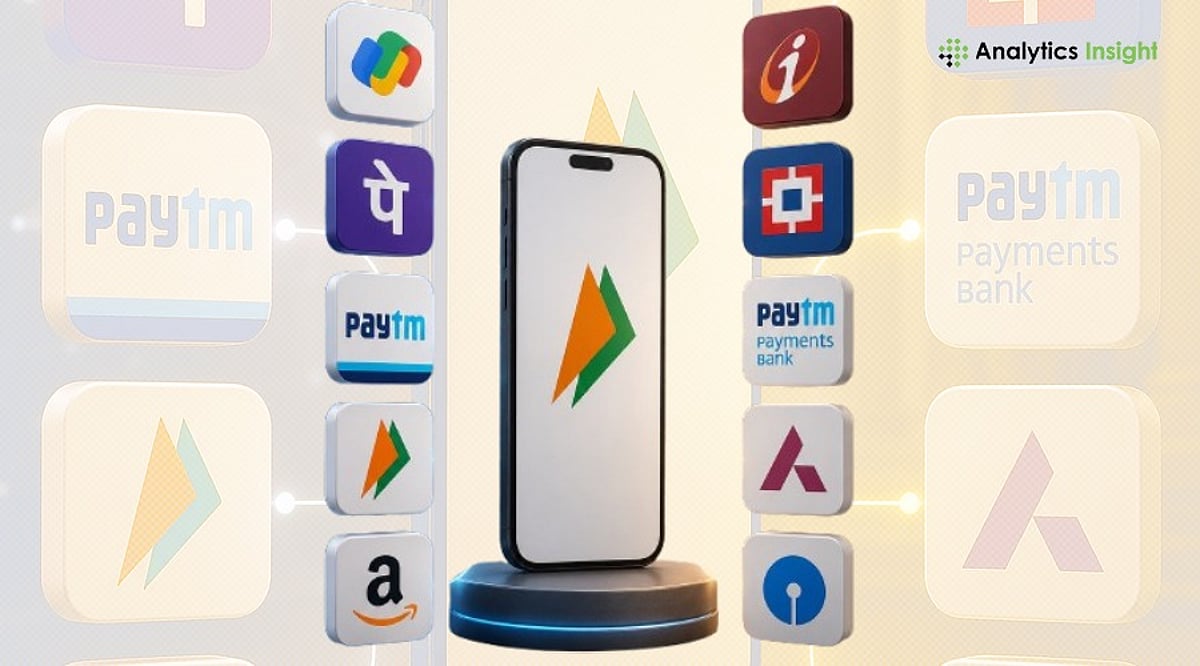
    India’s digital payment revolution runs on a simple interface that millions open daily, yet the banking infrastructure behind it remains largely invisible. Every transaction through apps like PhonePe, Google Pay, and Paytm passes through a sponsor bank before reaching the National Payments Corporation of India (NPCI) settlement system. This partnership defines transaction speed, dispute resolution, and overall reliability.

    What Is a Sponsor Bank?

    UPI apps—technically third-party application providers—do not hold banking licenses. They rely on regulated banks called Payment Service Provider (PSP) banks or sponsor banks to authenticate transactions, connect to NPCI’s core network, and settle funds. Without such a tie-up, no UPI app can process a single payment.

    The importance of sponsor banks became starkly visible in 2020 when the Reserve Bank of India placed a moratorium on Yes Bank, which then supported about 20 of the 32 third-party UPI apps. The disruption forced many apps to adopt multi-bank partnerships—a practice now standard across the industry.

    Which Banks Sponsor India’s Top UPI Apps?

    UPI App Sponsor Banks
    PhonePe Yes Bank, ICICI Bank, Axis Bank
    Google Pay Axis Bank, ICICI Bank, HDFC Bank, State Bank of India
    Paytm Axis Bank, HDFC Bank, SBI, Yes Bank

    PhonePe originally launched with Yes Bank as its sole partner in 2016. After the 2020 crisis, it added ICICI Bank and Axis Bank, distributing transaction load across three institutions. Google Pay entered with Axis Bank and gradually expanded to include ICICI Bank, HDFC Bank, and SBI, ensuring high success rates even during peak volumes.

    Paytm underwent the most significant restructuring. After the RBI restricted Paytm Payments Bank from onboarding new customers in early 2024, NPCI approved a multi-bank model. Axis Bank, HDFC Bank, SBI, and Yes Bank now jointly handle its UPI traffic, with user handles like @ptaxis and @ptsbi.

    How Sponsor Banks Work in the UPI Ecosystem

    A sponsor bank performs several critical functions that a UPI app cannot legally do alone:

    • Issuing and managing the Virtual Payment Address (VPA) handle
    • Authenticating the user’s linked bank account via NPCI’s mapper system
    • Routing payment requests to the beneficiary bank in real time
    • Settling funds between payer and payee banks
    • Handling regulatory compliance and dispute escalation

    When a payment fails, the sponsor bank is the first point of technical accountability, though the app remains the customer’s primary support contact. Apps with a single sponsor bank face greater risk during outages; those with multiple partners recover faster.

    Why Multiple Sponsor Banks Matter

    NPCI enforces a volume cap that restricts any single third-party app to 30% of total UPI transaction volume. This rule, expected to take fuller effect by year’s end, pushes apps and sponsor banks toward diversification. Benefits include:

    • For users: Clearer path for dispute escalation
    • For businesses: Better reliability when evaluating payment integrations
    • For regulators: Reduced systemic risk if one sponsor bank faces trouble
    • For developers: Ability to plan redundancy before launching new UPI products

    Final Thoughts

    The sponsor bank model forms the structural foundation of every UPI transaction in India. From PhonePe’s early reliance on Yes Bank to Paytm’s pivot to a four-bank arrangement, the pattern is clear: diversification protects both the app and the user from single-point failures. As UPI expands globally and transaction volumes continue climbing, strong banking partnerships will become even more critical to maintaining the seamless experience users expect.

    Frequently Asked Questions

    What is a sponsor bank in the UPI ecosystem?

    A sponsor bank (PSP bank) connects a third-party UPI app to NPCI’s network and handles authentication, routing, and settlement for every transaction.

    Which bank sponsors PhonePe?

    PhonePe operates through three sponsor banks: Yes Bank, Axis Bank, and ICICI Bank—a structure adopted after the 2020 Yes Bank moratorium.

    Why did Paytm switch to multiple sponsor banks?

    After regulatory restrictions on Paytm Payments Bank in 2024, NPCI approved a multi-bank model using Axis Bank, HDFC Bank, SBI, and Yes Bank to keep its UPI services uninterrupted.

    Does BHIM need a sponsor bank?

    BHIM operates as a direct extension of NPCI and does not require a separate sponsor bank, unlike third-party apps such as PhonePe and Google Pay.

    Why do UPI apps prefer multiple sponsor banks?

    Multiple sponsor banks reduce dependency risk, distribute transaction load, and help apps maintain uptime even if one partner bank faces technical or regulatory disruption.