Tag: PayU

  • PayU Unveils AI Agent Store to Help Indian SMBs Automate Commerce and Payments

    PayU Unveils AI Agent Store to Help Indian SMBs Automate Commerce and Payments

    PayU has launched Agent HQ, a dedicated AI agent store designed specifically for small and medium-sized businesses (SMBs) in India. The platform enables merchants to deploy specialized AI agents across various stages of commerce, from improving product discoverability on AI shopping platforms to simplifying payment operations and creating conversational AI experiences.

    According to PayU, the platform helps SMBs adapt to shifting consumer behavior, noting that nearly 50% of search traffic is moving to AI agents. Shoppers referred by AI can also achieve conversion rates up to three times higher than traditional channels.

    What Agent HQ Offers

    Agent HQ is built on over a decade of PayU’s commerce intelligence, covering more than 450,000 merchants, over 700 million shopper journeys, and Rs. 7,800 billion in processed transactions.

    Through the platform, merchants can make their products and services discoverable and transactable on AI platforms such as Claude and ChatGPT, as well as messaging channels including WhatsApp. Businesses can also create custom conversational AI assistants for their websites, apps, and customer journeys. These assistants provide real-time shopper support and handle post-purchase queries.

    AI Agents for Payments and Operations

    Agent HQ includes AI agents designed to automate operational tasks such as transaction follow-ups, chargeback reconciliations, refund escalations, and settlements. The agents use merchant transaction data—including success and failure patterns, chargeback histories, and shopper behavior—to suggest targeted sales and marketing campaigns while helping merchants reduce fraud, disputes, and operational effort.

    Integration with PayU Merchant Dashboard

    Agent HQ is integrated directly into the PayU merchant dashboard. Merchants can hire an AI agent in a few clicks, choose its frequency, monitor its activity, and receive outputs through email and WhatsApp. PayU emphasizes that all agents operate strictly within boundaries defined by merchants.

    Manas Mishra, Chief Product Officer at PayU & Wibmo, said Agent HQ expands PayU’s value-added offerings by providing merchants with a personalized team of AI agents to improve discoverability, drive growth, and manage payment operations.

    Merchants including Policybazaar, Daily Objects, and Pinq Polka are already using Agent HQ to enhance their commerce workflows.

  • Razorpay vs PayU vs Cashfree: The Ultimate Payment Gateway Comparison for 2026

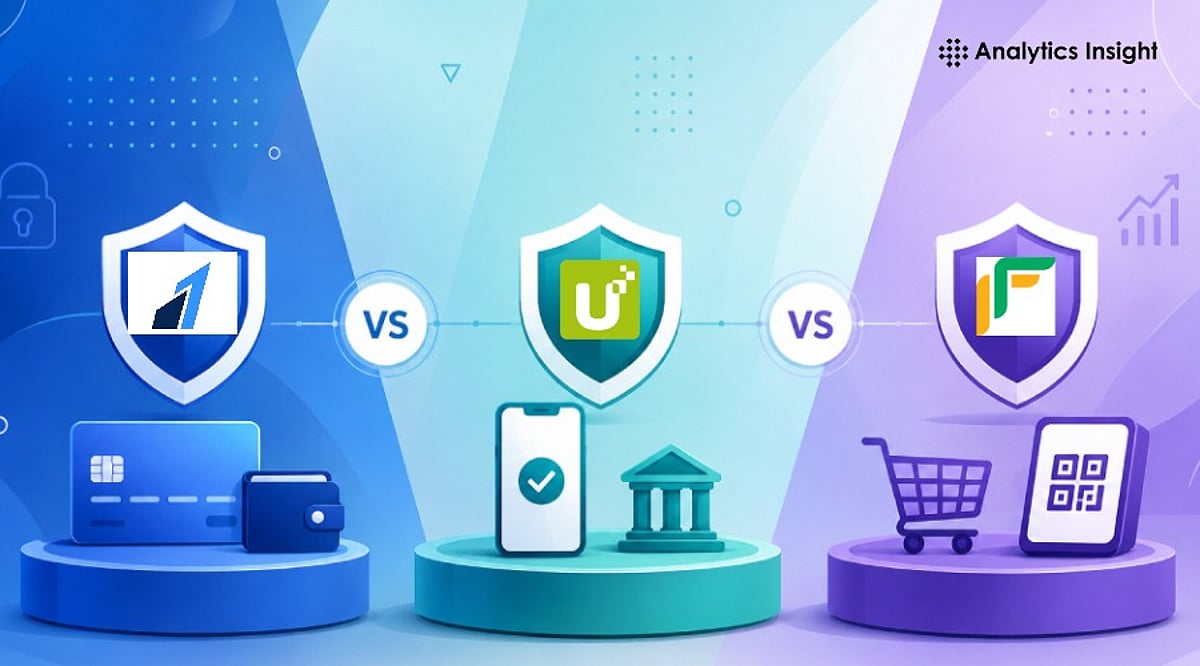
    Razorpay vs PayU vs Cashfree: The Ultimate Payment Gateway Comparison for 2026

    Choosing the right payment gateway is more than a technical decision—it directly impacts your customer experience, settlement speed, and long-term business growth. As we look ahead to 2026, three major Indian payment gateways stand out: Razorpay, PayU, and Cashfree. Each offers distinct strengths, making the best choice dependent on your specific business needs rather than just transaction fees.

    What Really Matters in a Payment Gateway

    Four key factors set these gateways apart: pricing, settlement speed, features, and developer experience. While transaction fees are important, integration quality, recurring billing support, payout capabilities, and payment success rates often have a greater impact on your bottom line. A low fee is attractive, but delayed settlements or poor operational support can quietly increase your costs over time.

    At a Glance

    This comparison focuses on pricing, settlement cycles, integrations, and business capabilities specific to India’s market, helping merchants make an informed decision for 2026.

    Payment Methods and Integrations

    All three gateways support UPI, credit and debit cards, net banking, and digital wallets. The real differences lie in advanced features:

    • Razorpay and Cashfree offer UPI AutoPay for recurring payments, payment links, and seamless integrations with Shopify, WooCommerce, and Magento.
    • PayU excels in international payments, with strong EMI and Buy Now Pay Later support, plus a broader range of global payment options.

    Security is consistent across all three: PCI DSS compliant, with fraud detection and tokenization.

    Razorpay: Broad Ecosystem, Transparent Pricing

    Razorpay charges a flat 2% + 18% GST on most domestic transactions (cards, UPI, net banking, wallets). Premium methods like EMI, corporate cards, and Amex/Diners cost 3% + GST. There are no setup or annual fees under the standard plan. Domestic settlements run on a T+2 cycle; international settlements take T+7. Note that UPI transactions may have zero MDR under government regulation, but platform fees can still apply.

    Razorpay stands out for subscription tooling, UPI AutoPay, and fast integration—ideal for SaaS and D2C businesses. High-volume merchants (above ~Rs. 50 lakh/month) can negotiate custom rates. Its dashboard provides success-rate breakdowns by payment method and issuing bank, helping diagnose failed transactions.

    PayU: Enterprise Scale, Negotiated Pricing

    PayU does not publish a standard rate card. Independent sources typically cite domestic pricing around 2% for cards, net banking, BNPL, and wallets, rising to ~3% for Amex, Diners, EMI, and international transactions. UPI fees can be negotiated below 1% at higher volumes. This approach offers flexibility for merchants with negotiating leverage.

    PayU’s value at scale comes from dedicated account management, established chargeback handling, and cross-border infrastructure supporting over 150 payment methods globally. The trade-offs include a longer onboarding process with more documentation and a merchant dashboard that users rate lower than Razorpay’s in usability.

    Cashfree: Lower Published Rate, Stronger Payouts

    Cashfree’s standard rate is 1.95% across payment modes for auto-activated merchants—slightly undercutting Razorpay’s published TDR. Setup and integration are free. Settlement follows the same T+2 default, with instant settlement available within 15 minutes for an additional charge.

    Cashfree’s primary differentiator is its payout infrastructure, widely recognized as best-in-class for marketplace and vendor disbursement workflows. Merchants should confirm current promotional pricing and any annual fees directly with Cashfree’s sales team, as some third-party sources report a fixed annual charge not listed in their public FAQ.

    Which Payment Gateway Suits Your Business?

    Subscriptions and Recurring Billing

    Razorpay is the stronger choice for subscription-driven and SaaS businesses. Its UPI AutoPay support and fast integration make it the most complete option for recurring billing.

    Vendor Payouts and Marketplace Settlements

    Cashfree is best positioned for marketplaces and vendor-heavy models. Its payout infrastructure and competitive transaction costs make it ideal where bulk disbursements are a core requirement.

    High Transaction Volume and Enterprise Scale

    PayU is the more appropriate choice for enterprises processing high volumes. Its negotiated pricing model and dedicated account support suit businesses with the scale to justify custom terms.

    Complex or Multi-Factor Requirements

    Businesses with international payment needs or those balancing success rates and costs should evaluate all three providers directly. The right choice depends on your specific payment mix and operational requirements.

    Final Thoughts

    Selecting a payment gateway is a long-term decision that shapes how your business handles money. Razorpay, PayU, and Cashfree each excel in different areas. The businesses that get this right are those that take the time to compare details, verify actual terms with each provider, and avoid jumping at the first option. This extra effort builds payment infrastructure that will hold up well beyond 2026.

    FAQs

    1. Which is the best payment gateway for 2026?

    There is no single best gateway for every business. Razorpay suits SaaS and subscriptions, Cashfree is ideal for marketplaces and payout-heavy operations, and PayU works well for enterprises needing negotiated pricing and dedicated support.

    2. How do Razorpay, PayU, and Cashfree differ in fees?

    Razorpay publishes a standard domestic fee of 2% + GST. Cashfree lists 1.95% for eligible merchants. PayU generally offers negotiated pricing based on volume.

    3. Which gateway is best for startups and small businesses?

    Razorpay is popular for its developer-friendly APIs, subscription tools, and straightforward onboarding. Cashfree is another strong option for competitive pricing and payout capabilities.

    4. Do they support UPI payments?

    Yes. All three support UPI, cards, net banking, and wallets. Razorpay and Cashfree also offer UPI AutoPay for recurring payments.

    5. What should businesses compare besides transaction fees?

    Compare settlement speed, success rates, integrations, recurring billing, payout capabilities, security, customer support, and scalability. These factors often have a greater long-term impact than fees alone.

  • Prosus India Achieves EBITDA Profitability on $781 Million FY26 Revenue, Driven by PayU Growth

    Prosus India Achieves EBITDA Profitability on $781 Million FY26 Revenue, Driven by PayU Growth

    Prosus India has reported $781 million in revenue for fiscal year 2026 and turned adjusted EBITDA positive, marking a significant financial milestone. The results reflect stronger operational performance, disciplined cost management, and continued growth across its investment portfolio despite a challenging funding environment. The Prosus India ecosystem employed 3,897 people during the fiscal.

    Prosus India Achieves Key Financial Milestone in FY26

    According to Prosus’ FY26 annual report, revenue from its India ecosystem rose 13% year-on-year to $781 million in FY26 from $694 million a year earlier. The business posted an adjusted EBITDA (aEBITDA) profit of $18 million, compared to a loss of $25 million in FY25, while its adjusted EBIT loss narrowed sharply to $10 million from $49 million. Fintech platform PayU largely drove it.

    PayU’s payments business generated $577 million in revenue, up 10% year-on-year, and delivered EBITDA of $12 million. Higher-margin value-added services (VAS) and SaaS offerings accounted for 33% of payment revenue, supporting margin expansion. The company’s credit business reported an adjusted EBITDA of $6 million. Credit revenue rose 19% year-on-year to $204 million, while new loan issuances touched $221 million during the year.

    Revenue Growth Driven by Strong Portfolio Performance

    The company said PayU accounts for around 25% of India’s online payments industry revenue and manages $682 million in assets under management through its lending business. During the year, it also increased its stake in banking payments technology firm Mindgate to 70.7%. During FY26, PayU processed total payment volume (TPV) worth $90 billion across its platform.

    Prosus said it is building one of India’s most comprehensive digital consumer ecosystems, with PayU increasingly driving collaboration across portfolio companies. The report highlighted that PayU now processes a significant share of credit card payments on Swiggy, has expanded merchant and consumer lending with Meesho, has originated $2.1 million in loans through the partnership, has processed $1.5 million in UPI GMV for ixigo, and has improved transaction success rates. It also processed $5 million of Swiggy’s GMV.

    During the year, Prosus acquired a 16.24 percent stake in ixigo and increased its holding in Rapido to 23.52 percent. The company said its Indian e-commerce ecosystem now reaches more than 500 million users annually and processes 450 million orders each month.

    What EBITDA Profitability Signals for Future Growth

    A positive Adjusted EBITDA indicates that Prosus India is becoming more operationally efficient while it is still growing revenue. The fact shows how good the balance between growth and costs is, which is increasingly appreciated by investors. If the trend continues, it will allow Prosus to build a solid financial foundation and grow the portfolio in the future.

  • PayU Unveils CLI and Builder MCP: AI-Powered Developer Tools for Lightning-Fast Payment Integration and Operations

    PayU Unveils CLI and Builder MCP: AI-Powered Developer Tools for Lightning-Fast Payment Integration and Operations

    PayU, India’s leading diversified fintech platform, has announced the launch of two innovative developer tools: PayU CLI and Builder MCP. These tools are designed to accelerate payment gateway integrations and streamline daily payment operations, leveraging AI to boost developer productivity.

    PayU Builder MCP: AI-Native Integration Made Simple

    Builder MCP is an AI-native server that connects AI coding assistants—such as Cursor, VS Code, and Claude Desktop—directly to PayU’s APIs. It generates production-ready integration code in seven languages, including PHP, JavaScript, Java, Python, Kotlin, and Swift. The code comes with built-in error handling, webhook verification, and security best practices, allowing developers to complete integrations in hours rather than days. Developers can browse integration catalogs, retrieve platform-specific code, and search documentation semantically without leaving their IDE.

    PayU CLI: Command-Line Payment Management

    PayU CLI brings payment management and operational workflows to a single terminal. Teams can create and send payment links, search transactions, process refunds, review settlements, and generate reports—all without navigating complex web dashboards. The tool supports multi-account management and seamless switching between test and production environments, making it especially useful for DevOps teams handling multiple merchants.

    Complementary Tools for the Full Payment Lifecycle

    While each tool serves a distinct purpose, they work together across the payment lifecycle. Developers can use Builder MCP during implementation to generate code via AI assistants, then switch to PayU CLI for ongoing operations like transaction monitoring and settlement tracking. For instance, a developer using Cursor could ask Builder MCP for PayU checkout integration and receive copy-paste-ready JavaScript with error handling. Meanwhile, the operations team could use PayU CLI to instantly create a ₹5,000 payment link or check yesterday’s settlement—all from the terminal.

    “AI has fundamentally transformed software development, and AI agents are now a nuanced part of everyday developer workflows. Merchants and their tech teams are looking for a payment partner that provides lightning-fast product integrations, operational flexibility, and enhanced developer productivity. Our new CLI and Builder MCP tools solve each of these requirements by bringing PayU’s payment infrastructure to where developers work—in the terminal. This is just the first of our steps in this direction,” said Narendra Babu, CTO of PayU.

    About PayU

    PayU is India’s leading diversified fintech platform, backed by Prosus. Regulated by the Reserve Bank of India, PayU offers advanced digital financial solutions to merchants, banks, and consumers. Its award-winning payment gateway empowers over 450,000 businesses—including top enterprises, e-commerce giants, and SMBs—to accept digital payments across more than 100 online methods, including credit cards, debit cards, net banking, EMIs, pay-later options, QR, UPI, and wallets. PayU is a preferred partner in the affordability ecosystem, offering broad issuer coverage and easy integration for card-based EMIs, pay-later options, and new-age cardless EMIs, while delivering industry-leading success rates and a seamless checkout experience.