
Tag: PCE

  • Wall Street on Edge: Fed Decision, Inflation Data, and Big Tech Earnings Set for Volatile Week

    Wall Street on Edge: Fed Decision, Inflation Data, and Big Tech Earnings Set for Volatile Week

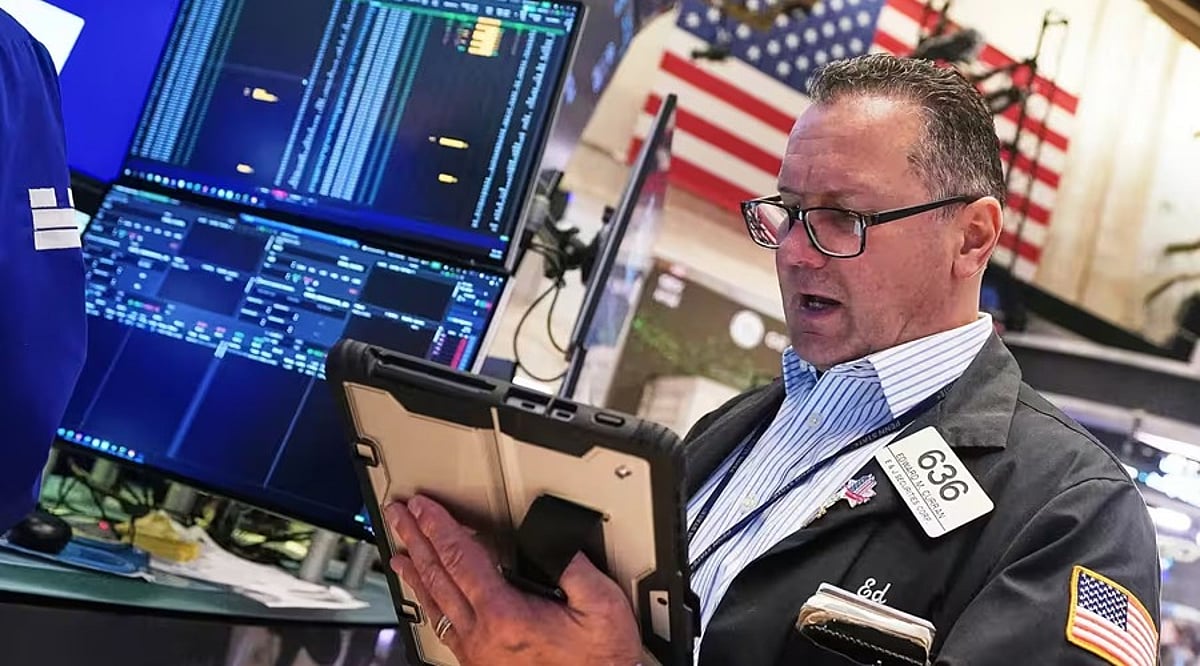
    Global markets are bracing for a turbulent 72-hour period as a wave of major events—including a Federal Reserve decision, key inflation data, GDP figures, and earnings from tech giants Microsoft, Meta, Apple, and Amazon—converge on the calendar. The sequence kicks off with consumer confidence data, followed by the Fed’s policy announcement, economic growth and inflation reports, and a flurry of earnings from four of the largest companies in the S&P 500. Traders are poised for sharp moves across stocks, bonds, currencies, and cryptocurrencies as each release could shift expectations for the next Fed meeting.

    Fed Decision Takes Center Stage

    Tuesday’s Conference Board consumer confidence report provides an early gauge of household demand. A weak reading may signal slower spending, while a stronger figure could reinforce the view that the economy can handle higher borrowing costs. Consumer spending drives the bulk of U.S. economic activity, making this data a key precursor to the Fed’s decision.

    The Federal Reserve will announce its rate decision Wednesday after a two-day meeting. Rate futures indicate roughly a one-in-three chance of a quarter-point increase, though most economists expect the central bank to hold the federal funds rate at 3.50% to 3.75%. Markets will scrutinize Chairman Kevin Warsh’s remarks for hints about September and any signs of policy division. A surprise hike would likely lift short-term yields and the dollar while pressuring rate-sensitive equities. Even a hold could spark volatility if the statement signals another increase is imminent. Investors will also watch the number of dissenting officials.

    PCE and GDP Data Drop on Thursday

    Thursday brings a double dose of economic data: the advance estimate for second-quarter GDP and the June personal income and outlays report, which includes the Personal Consumption Expenditures (PCE) price index—the Fed’s preferred inflation gauge. Both releases are scheduled for 8:30 a.m. Eastern Time.

    GDP data will reveal whether consumer demand and business investment sustained economic growth during the quarter. Forecasts generally point to annualized growth above 2%, though estimates vary. A stronger reading could buoy risk assets but may also strengthen the case for tighter policy if inflation remains elevated. The PCE figures may carry more weight for rate expectations. Softer monthly and annual readings would support the view that price pressures are easing, while firm core inflation could reignite concerns about the need for another rate increase. The worst-case scenario for markets would be weak GDP combined with stubborn inflation.

    Big Tech Earnings Add Pressure

    Microsoft and Meta report after Wednesday’s closing bell. Microsoft investors will focus on Azure growth, AI demand, and capital spending. Meta’s report will draw attention to advertising revenue, user activity, and the cost of expanding its AI infrastructure. Both companies have the power to influence broader tech valuations.

    Apple and Amazon follow after Thursday’s close. Apple’s iPhone demand, services sales, and AI plans will shape expectations for its next quarter. Amazon Web Services growth will indicate the pace of corporate cloud spending, while retail margins and delivery costs will impact Amazon’s broader results. Together, these four companies represent a significant portion of the S&P 500, and their guidance could move index futures even if headline earnings beat forecasts.

    Weekend Sentiment Check

    Friday’s final University of Michigan sentiment reading closes the seven-event stretch. Inflation expectations will be closely watched to see if the preliminary July improvement survived later changes in fuel prices, financial markets, and household views nationwide.

  • Bitcoin, Ethereum, XRP Find Footing as Traders Eye Key Support Levels and Macro Data

    Bitcoin, Ethereum, XRP Find Footing as Traders Eye Key Support Levels and Macro Data

    Bitcoin, Ethereum, and XRP started the new week with signs of stability after posting steep losses during the previous trading sessions. The three largest cryptocurrencies by market capitalization remain under technical pressure, but recent price action shows that selling has slowed near important support levels.

    Bitcoin recovered near $60,000, Ethereum continued to trade above $1,500, and XRP defended the $1.00 mark. At the same time, traders continued monitoring macroeconomic developments, exchange flows, and technical indicators for signs of the market’s next move.

    Bitcoin Holds Above $60,000 While Recovery Faces Resistance

    Bitcoin traded back above $60,000 after falling nearly 6% over the previous week. The rebound came as the market attempted to stabilize following broad selling across digital assets. Despite the recovery, Bitcoin remained below its 50-day, 100-day, and 200-day exponential moving averages, showing that the broader trend has not changed.

    The Relative Strength Index (RSI) stayed close to 33, placing Bitcoin just above oversold conditions. The MACD also remained slightly negative, although selling momentum appeared to weaken. Traders continued watching resistance around $64,000, followed by the major moving averages near $66,971, $70,591, and $76,516. Until those levels are reclaimed, the latest recovery remains limited.

    Ethereum and XRP Defend Key Price Levels

    Ethereum traded near $1,585 and continued holding above the $1,500 support area. The asset also remained below its major moving averages, leaving the broader technical structure under pressure. However, the RSI remained near oversold territory, while the MACD turned slightly positive, showing that downside momentum had eased.

    If Ethereum continues higher, resistance stands near the 50-day EMA around $1,833, followed by the $2,000 area and the 100-day EMA near $2,010. On the downside, traders continued watching $1,500 closely because a break below this level could expose support near $1,385.

    XRP traded around $1.05 while defending the psychological $1.00 support level. The token also stayed below its major moving averages and beneath a descending price channel. Its RSI remained near 33, while the MACD continued to show weak momentum. Resistance remained near $1.19, followed by $1.21 and $1.30.

    Exchange Flows and Macro Events Remain in Focus

    Market participants also monitored activity on Binance after the exchange recorded more than $400 million in weekly net outflows during the week beginning June 22. The reported outflows represented a small share of the exchange’s total tracked assets, although Binance recorded the largest weekly net outflows among major exchanges.

    The movement came ahead of the European Union’s Markets in Crypto-Assets (MiCA) transition deadline and followed Binance’s withdrawal of its MiCA license application in Greece. Broader market conditions also remained tied to global developments. Reports that the United States and Iran agreed to halt strikes and resume talks lifted equity futures, but cryptocurrencies showed only a limited response.

    Bitcoin traded near $59,700, while Ether posted modest gains and XRP remained under pressure. Market participants also continued monitoring upcoming US economic data, including the Personal Consumption Expenditures (PCE) report, for additional direction.

    For now, Bitcoin, Ethereum, and XRP have stabilized near important support levels. Traders continue watching whether buyers can maintain those areas while the market reacts to technical signals and broader economic developments.