
Tag: perpetual contracts

  • A Complete Guide to Crypto Derivatives: Futures, Options, and Perpetual Contracts

    A Complete Guide to Crypto Derivatives: Futures, Options, and Perpetual Contracts

    Crypto derivatives are financial instruments that allow traders to speculate on cryptocurrency prices without owning the underlying assets. They include futures, options, and perpetual contracts, and are traded on both regulated exchanges and decentralized platforms. Unlike spot trading, derivatives derive their value from the price of the underlying cryptocurrency.

    Crypto Futures

    Futures are contracts to buy or sell an asset at an agreed price on a specified future date. For example, a Bitcoin futures contract provides exposure to Bitcoin’s price without requiring the trader to hold BTC directly. They are commonly used for speculation, hedging, and institutional risk management.

    Traditional futures have expiration dates. Traders can close positions before expiry or settle according to the contract’s rules. Regulated venues like the CME have brought crypto derivatives into traditional financial markets, giving institutional participants access through established futures infrastructure.

    Perpetual Contracts

    Perpetual futures, also known as perpetuals or perps, have no fixed expiration date. Instead, exchanges use funding payments to keep perpetual contract prices aligned with underlying spot markets. When perpetual prices trade above spot, long traders may pay funding to short traders; when below spot, the direction can reverse. Funding rates thus provide useful information about market positioning—extremely positive funding indicates aggressive leveraged long exposure, while negative funding suggests stronger short positioning.

    Crypto Options

    Options give the buyer the right, but not the obligation, to buy or sell an underlying asset at a predetermined strike price. Call options benefit from higher prices, while put options provide protection or exposure to declines. Options are useful for hedging, volatility strategies, and structured trades, as losses for an option buyer are generally limited to the premium paid.

    Leverage and Risk

    The defining risk across crypto derivatives is leverage. A trader may control a position substantially larger than deposited collateral, magnifying potential gains but also increasing losses and liquidation risk. Perpetual markets can experience rapid liquidation cascades when prices move sharply against leveraged positions.

    Open interest (the number of outstanding contracts) helps analysts understand market conditions. Funding rates indicate positioning in perpetual markets, and options implied volatility shows expectations about future price movements.

    Why This Matters

    Crypto derivatives increasingly shape price discovery, liquidity, and institutional risk management. In August 2026, the CME reported an average daily volume of 175,000 cryptocurrency derivative contracts, representing USD 7.9 billion notional—highlighting their growing role beyond speculative retail trading.

    Final Thoughts

    Crypto derivatives are becoming more integrated with traditional financial markets as regulated futures and options expand alongside perpetual contracts. Understanding leverage, funding rates, open interest, collateral, and liquidation risk is essential, as derivatives can amplify both market opportunities and losses.

    FAQs

    1. What are crypto derivatives?

    Crypto derivatives are financial contracts whose value is linked to an underlying cryptocurrency such as Bitcoin or Ethereum. They allow traders to gain price exposure, hedge positions, or speculate without necessarily owning the cryptocurrency directly.

    2. What is the difference between crypto futures and perpetual contracts?

    Traditional crypto futures have a predetermined expiration or settlement date, while perpetual contracts have no fixed expiry and use periodic funding payments to keep their prices aligned with the underlying spot market.

    3. How do crypto options work?

    Crypto options give buyers the right, but not the obligation, to buy or sell an underlying asset at a specified strike price. Calls provide upside exposure, while puts can be used for downside exposure or hedging.

    4. Why is leverage risky in crypto derivatives trading?

    Leverage allows traders to control positions larger than their deposited collateral, magnifying both potential gains and losses. Sharp adverse price movements can trigger liquidations, potentially causing traders to lose some or all of the collateral supporting a position.

    5. What do open interest and funding rates indicate?

    Open interest measures the value or number of outstanding derivative contracts, helping indicate market participation. Funding rates apply to perpetual markets and can provide insight into whether leveraged positioning is leaning more heavily toward longs or shorts.

    Disclaimer: This article is for informational purposes only and does not constitute investment advice. Cryptocurrency investments carry risk, and you should conduct your own research before making any investment decisions.

  • A Comprehensive Guide to Shorting Bitcoin During Market Declines

    A Comprehensive Guide to Shorting Bitcoin During Market Declines

    When cryptocurrency prices tumble, most holders can only watch their portfolios shrink. However, traders who understand how to short Bitcoin can position themselves to profit from falling markets, not just rising ones. Shorting is not reserved for professionals; it is a standard trading tool that provides a way to act in both up and down markets.

    What Does It Mean to Short Bitcoin?

    Going long means buying an asset hoping its price will rise. Shorting is the opposite: you profit if the price falls. A short position gains value as the asset declines and loses value as it climbs. In short selling Bitcoin, you are effectively betting against the price, and your profit comes from the difference between where you open the position and where you close it at a lower level. Many wonder whether you can short crypto without actually owning any coins. The answer is yes—derivatives make it possible to take a short position without holding the underlying asset first, making shorting accessible to anyone with the right products.

    How to Short Crypto: The Main Methods

    There are several ways to short crypto. The most common for retail traders is through derivatives, where you open a short position on a contract whose value tracks Bitcoin. You can also short on margin by borrowing the asset, selling it, and buying it back later at a lower price—though that process is more involved. For most traders, the simplest route is to use perpetual contracts, which allow you to open a leveraged short position that profits directly from falling prices without worrying about an expiry date. Perpetuals are popular because they offer flexibility: you can open and close at will, use leverage to size the position, and hold as long as your market view plays out, paying only the funding cost along the way.

    Where You Can Short Bitcoin

    Shorting takes place on derivatives platforms rather than simple spot exchanges. When choosing an exchange that supports short positions, consider liquidity, available contracts, fees, and the platform’s track record for reliability and security. A liquid venue ensures your short fills and closes at fair prices—critical during the fast, volatile moves that shorting aims to capture.

    The Risks of Shorting

    Shorting carries a unique danger. When you are long, your maximum loss is the amount you invested because a price can only fall to zero. When you are short, the price can theoretically rise without limit, so losses are unbounded. A sudden rally—especially a short squeeze, where rising prices force shorts to buy back and push prices even higher—can be brutal. Adding leverage multiplies the risk. A leveraged short can be liquidated quickly if the market rallies, and shorting against a strong uptrend is one of the fastest ways to lose money. Disciplined shorts use stop-loss orders, modest leverage, and careful position sizing, and they respect that markets can rise irrationally for longer than expected.

    Shorting Responsibly

    Shorting is a tool, not a worldview. Traders who use it well treat it as one side of a two-sided market, deploy it when the evidence supports a decline, and always define their risk before entering. Knowing where you will exit if you are wrong is even more important when shorting than when going long, because the downside is open-ended. Knowing how to short Bitcoin turns a falling market from a threat into an opportunity. Through derivatives such as perpetual contracts, you can profit from declines, hedge existing holdings, or simply trade both directions of the market. But the open-ended risk of shorting, amplified by leverage, demands real discipline. Use it deliberately, size it carefully, and never short without a plan for being wrong.

    Disclaimer: This article is for informational purposes only and does not constitute financial advice. Leveraged trading carries a high level of risk and can result in the loss of your entire capital. Always conduct your own research before making any investment decisions.

  • SPCX Perpetual Liquidations Surpass $50 Million as SpaceX Stock Tests Nasdaq Debut

    SPCX Perpetual Liquidations Surpass $50 Million as SpaceX Stock Tests Nasdaq Debut

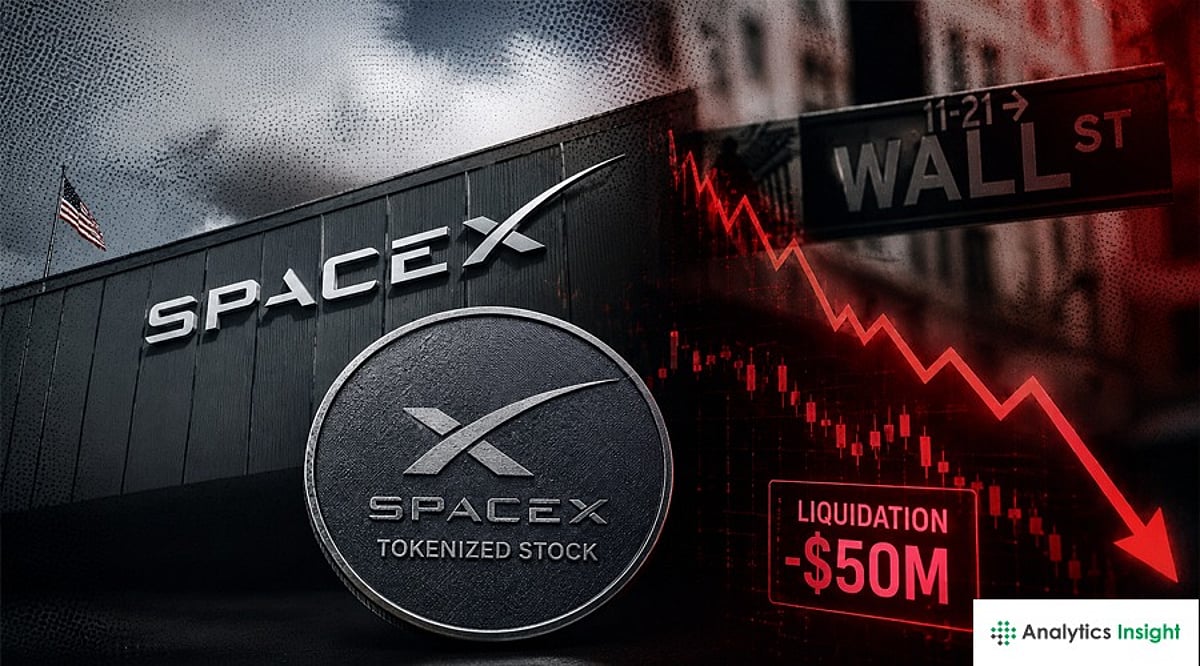
    SPCX perpetual contracts have witnessed over $50 million in liquidations within 48 hours as SpaceX shares dipped below their $150 Nasdaq opening price. The event underscores the heightened volatility and risk inherent in leveraged tokenized stock products, which can react far more aggressively than traditional equity markets.

    What Happened

    According to market data, SPCX-linked perpetual contracts recorded more than $50 million in forced closures, trailing only Bitcoin and Ethereum in liquidation volume among crypto derivatives during that period. The liquidations followed a sharp decline in SpaceX stock, which fell below its Nasdaq debut price after a major drawdown. Investors who bought shares above the company’s $135 initial public offering price are now facing losses.

    How SPCX Differs from Traditional Stock Ownership

    SPCX products are pre-IPO or equity perpetual contracts that offer leverage, cash settlement, and funding mechanisms. Unlike owning actual shares, these instruments provide price exposure without ownership rights, voting rights, or share delivery. Binance lists SPCXUSDT as a USDT-settled pre-IPO perpetual contract, while Coinbase explains that such products settle entirely in cash. Crypto.com describes a structure allowing conversion between SpaceX pre-IPO perpetuals and equity perpetuals depending on platform mechanics.

    This structure places traders in a derivatives-driven environment where margin requirements and funding rates dictate outcomes. If prices move sharply against a position, exchanges can liquidate traders automatically at any time—without waiting for a market close.

    Liquidation Pressure Builds Around Leveraged Exposure

    The $50 million liquidation figure is a notable signal because Bitcoin and Ethereum typically dominate liquidation rankings due to deep liquidity and large leveraged positions. SPCX joining that group reflects strong demand for SpaceX-linked exposure. Liquidation risk does not require a total collapse in the underlying asset—a combination of leverage, open interest, and adverse price movement can easily trigger forced exits.

    While traditional investors may still be evaluating whether the decline reflects temporary weakness or fundamental concerns, perpetual contract markets react instantly, closing positions as soon as collateral support drops.

    Tokenized Stock Perpetuals Face a Different Risk Cycle

    Tokenized stock perpetuals trade around the clock, using venue-specific mark prices and funding systems while enforcing margin requirements continuously. This continuous trading can amplify disagreements over value into sudden liquidation pressure, even as traditional investors are still assessing the stock’s outlook.

    These products may ultimately serve as effective risk-transfer markets, but that will require improved liquidity and reduced leverage. Until then, high open interest and persistent volatility will likely sustain heavy market stress.

    What’s Next

    SpaceX stock slipped below its Nasdaq opening price, triggering the $50 million liquidation wave for SPCX. The event highlights how tokenized stock perpetuals can lead to rapid forced exits when leverage and margin rules kick in. Market participants are now watching to see if the asset stabilizes and whether open interest, funding rates, and liquidation activity will flatten out.