
Tag: perpetual futures

  • Remittix Markets Live: Perpetual Futures Launch Adds a New Trading Layer to RTX Ecosystem

    Remittix Markets Live: Perpetual Futures Launch Adds a New Trading Layer to RTX Ecosystem

    Remittix Markets Goes Live

    Remittix Markets has officially launched, bringing perpetual futures trading to the RTX ecosystem. The new platform expands Remittix beyond its original crypto-to-fiat payments focus and gives active traders another way to engage with the project ahead of the official RTX token launch.

    Remittix now operates with two distinct product pillars: PayFi for crypto-to-bank payments and Markets for perpetual futures trading.

    A New Trading Layer for RTX

    Remittix Markets is the dedicated perps trading platform inside the wider RTX ecosystem. Perpetual futures allow users to take long or short positions on crypto assets without contracts expiring on a predetermined date. Traders can use them to respond to rising or falling markets, hedge existing exposure, and stay active during changing conditions.

    Leverage can increase the size of potential gains, but it also increases losses and liquidation risk. Risk management is therefore an important part of any perps trading strategy.

    Markets Could Create More Regular Ecosystem Activity

    Payments and trading generate different types of user engagement. A PayFi customer may use the platform when sending crypto to a recipient or transferring value into the banking system. A trader may return to Remittix Markets regularly to monitor prices, manage positions, and react to volatility.

    This gives Remittix another route for building platform activity. Markets can attract active traders, while PayFi continues serving users who want a simpler connection between digital assets and traditional finance. The launch does not guarantee demand for RTX, but it gives users another entry point into the ecosystem and strengthens the project’s wider product narrative.

    Remittix Moves Beyond a Single-Product Model

    Remittix was initially built around solving the friction involved in moving value from crypto into fiat bank accounts. With the arrival of Remittix Markets, the project is no longer dependent on one product category or one type of user.

    Payments and perpetual futures now sit within the same ecosystem, giving Remittix a broader commercial direction. Markets targets crypto traders seeking ongoing exposure to digital asset price movements, while PayFi targets individuals and businesses that want to move money between crypto and conventional banking more efficiently.

    PayFi Keeps Real-World Utility at the Center

    The Remittix PayFi platform is designed to let users send crypto while recipients receive fiat directly into their bank accounts. This removes several steps that often make crypto-to-bank transfers difficult, including sending assets to an exchange, manually converting them, and initiating a separate withdrawal.

    The platform has been fully developed and tested by members of the Remittix community. That gives the ecosystem an existing product foundation while Markets introduces a separate trading layer.

    RTX Approaches Its Next Major Milestone

    The Remittix presale has passed $31 million and is approaching the $32 million milestone, when the team is expected to reveal the official RTX launch date. With Remittix Markets now live and the PayFi platform already developed and tested, Remittix is entering its next phase as a multi-product ecosystem rather than a single-use crypto project.

    Learn more about Remittix here: Remittix Presale | Remittix Markets.

    Frequently Asked Questions

    What is Remittix Markets?

    Remittix Markets is the live perpetual futures trading platform within the RTX ecosystem.

    What can users do with perpetual futures?

    Users can take long or short positions through contracts that do not have fixed expiry dates.

    How does Remittix Markets fit alongside PayFi?

    Markets focuses on active crypto trading, while PayFi is designed to support crypto-to-fiat transfers into bank accounts.

    Is perpetual futures trading risky?

    Yes. Leverage can amplify both gains and losses, and positions can be liquidated if the market moves against the trader.

    Editorial Disclaimer: This article is for informational purposes only and does not constitute investment advice. Cryptocurrency investments are risky and may result in the loss of capital. Always conduct your own research before investing.

  • RWA Perpetual Trading Volume Nearly Equals Bitcoin on Major Exchanges as Wright Reignites Protocol Debate

    RWA Perpetual Trading Volume Nearly Equals Bitcoin on Major Exchanges as Wright Reignites Protocol Debate

    Perpetual futures tied to tokenized stocks and commodities generated $61.7 billion in seven-day volume on Hyperliquid and Binance, nearly matching Bitcoin’s perpetual turnover. According to data from Talos, the RWA perpetual volume reached 99.2% of Bitcoin’s perpetual volume across both venues during the week ending July 31, 2026.

    Tokenized equity contracts contributed 57.8% of the tracked RWA volume, while commodities accounted for 28.2%. These contracts allow traders to gain price exposure without directly owning the underlying tokenized assets. Meanwhile, on-chain real-world asset value stood near $36.8 billion, excluding stablecoins, as reported by RWA.xyz.

    Hyperliquid recorded $25.1 billion in RWA perpetual volume from July 13 to July 19, representing about 52% of its $48.2 billion weekly total. For the first time, RWA derivatives surpassed every other perpetual category combined on Hyperliquid. The exchange relies on on-chain execution, oracle pricing, and automated liquidation systems. In contrast, Binance operates through centralized custody, exposing users to exchange counterparty risk.

    Early figures for the following week showed RWA perpetual volume reaching $37.2 billion, exceeding Bitcoin perpetual volume by about 9%, according to the Talos dashboard. Equity-linked contracts contributed $22.8 billion, commodities added $9.1 billion, and indexes produced $4.2 billion. Despite this growth, RWA perpetuals represented only about 7.5% of the broader $821.4 billion futures market tracked by Talos.

    Amid this market activity, Craig Wright revived a long-running dispute over Bitcoin governance. Wright argued that Bitcoin’s base protocol should remain permanently fixed, with competition occurring above rules that developers, miners, companies, or foundations cannot change. He accused supporters of developer-led upgrades of defending committee control while labeling fixed rules as centralized. His comments reignited debate over whether immutable rules outweigh the need to address vulnerabilities and new technical demands.

    Bitcoin traded at $63,012 on August 2, down 2.46% over seven days, with a market value near $1.26 trillion and $12.9 billion in daily volume. RWA perpetual contracts carry liquidation risks when leveraged positions move sharply against traders, and near parity with Bitcoin on two venues does not represent dominance across the entire crypto-derivatives market.

  • Crypto Wallets Evolve: BloFin Wallet Adds Perpetual Futures, Yield Products, and Visa Payments

    Crypto Wallets Evolve: BloFin Wallet Adds Perpetual Futures, Yield Products, and Visa Payments

    Crypto wallets are moving beyond simple storage. BloFin Wallet now combines perpetual futures, yield products, and a Visa payment card, reflecting growing demand for platforms that unite self-custody, trading, earnings, and daily spending in one interface.

    BloFin Extends Wallet Services Beyond Storage

    Users can trade perpetual contracts linked to more than 100 digital and traditional financial assets through BloFin Wallet, eliminating the need for a separate derivatives exchange. The wallet maintains user control through self-custody, while its yield products allow asset storage and earnings within the same environment.

    BloFin’s Visa card connects supported digital assets with everyday retail payments. It works wherever Visa is accepted and supports both Apple Pay and Google Pay.

    Together, these services cover four common activities: storing, trading, earning, and spending. This structure reduces the number of applications required to manage a digital asset portfolio.

    Crypto Platforms Target a Unified User Experience

    Historically, crypto users relied on separate services for storage, trading, lending, and payments, often moving assets repeatedly between wallets, exchanges, and DeFi protocols. Each transfer added network fees, settlement time, and security considerations. It also created more steps for users moving from market activity to savings or spending.

    Now, exchanges and wallet providers combine spot trading, derivatives, staking, lending, payment services, and DeFi access. Some platforms include tokenized financial products. The sector’s current direction centers on reducing fragmentation through integrated services, responding to demand for smoother financial tools rather than isolated applications.

    Payments and Capital Efficiency Shape Competition

    Unified platforms can improve capital efficiency because users keep assets within one environment. They can trade, seek yield, or make purchases without repeated blockchain transfers. This approach reduces operational friction, as funds remain available for different uses without moving through several networks and service providers.

    Payment cards extend crypto services beyond market activity and long-term holding. Visa and Mastercard partnerships connect digital asset balances with established payment networks and retail systems. Stablecoins may support this connection by reducing price volatility during payments, and their blockchain settlement features fit platforms combining digital assets with daily transactions.

    Meanwhile, wallet providers continue expanding into derivatives, DeFi, and tokenized assets. Competition now centers on which platforms can offer the smoothest digital asset lifecycle through one interface.

    Conclusion

    Crypto wallet providers are combining self-custody, perpetual futures, yield products, and payment cards to reduce transfers between services. BloFin Wallet reflects this shift through integrated trading and Visa spending. Users now face a market where platforms compete across the full digital asset lifecycle.

  • MEXC Secures Second Place in TradFi Perpetual Futures with $323.9 Billion Volume, CoinGecko Report Reveals

    MEXC Secures Second Place in TradFi Perpetual Futures with $323.9 Billion Volume, CoinGecko Report Reveals

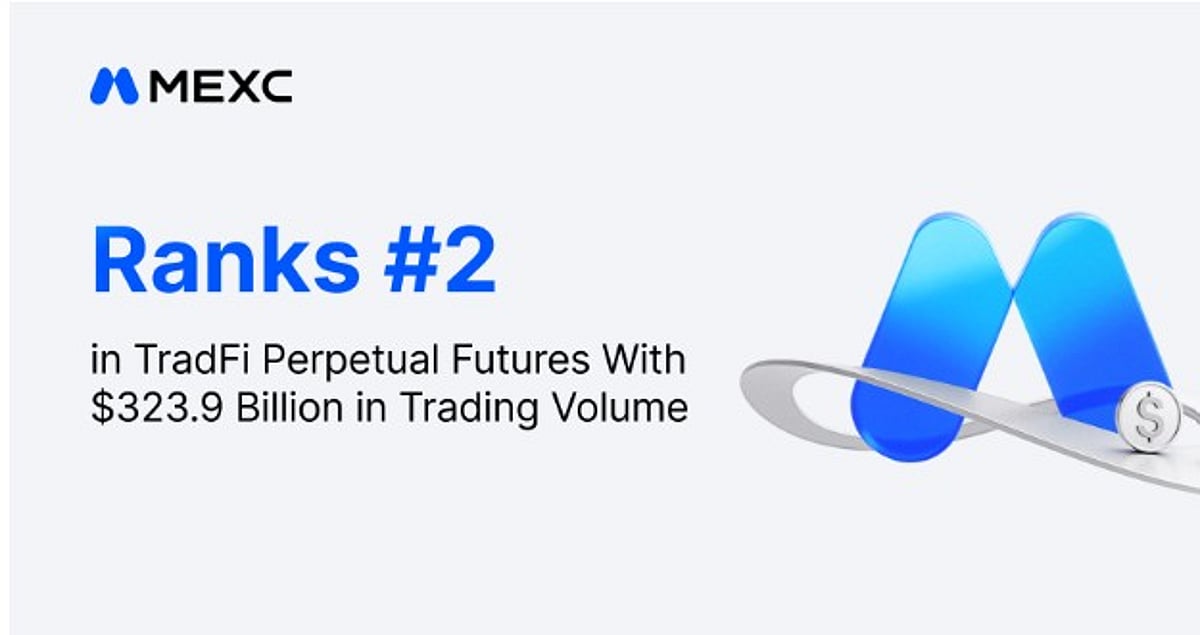
    MEXC, a leading 0-fee digital asset trading platform, has emerged as a top performer in CoinGecko’s newly released TradFi on Crypto Exchanges Report 2026. The exchange ranked second in TradFi Perpetual Futures trading volume, recording an impressive $323.86 billion between January 2025 and May 2026, while also leading all exchanges in the total number of RWA and TradFi product listings.

    According to the report, MEXC listed 358 RWA Spot and TradFi Perpetual Futures products during the review period, the highest among all centralized and decentralized exchanges tracked. This includes 199 RWA Spot and 159 TradFi Perpetual Futures, providing users with extensive access to stocks, commodities, and other traditional financial assets.

    In terms of trading volume, MEXC’s cumulative TradFi Perpetual Futures volume reached $323.86 billion, second only to Binance. The exchange’s average monthly market share in this segment rose from 21.7% in 2025 to 22.8% in the first five months of 2026. Notably, this growth occurred during a period of rapid expansion in the overall TradFi Perpetual Futures market, indicating that MEXC’s trading volume grew faster than the market average.

    “From product listings and cumulative trading volume to monthly market share, the CoinGecko report reflects MEXC’s progress in RWA and TradFi trading,” the exchange stated. “Looking ahead, MEXC will continue to expand its RWA and TradFi offerings under its ‘Infinite Opportunities’ vision, refining the trading experience and making it easier for global users to access a broader range of assets.”

    MEXC, trusted by more than 40 million users across 170+ markets, offers industry-leading 0-fee trading and access to over 3,000 digital assets. The platform serves as a gateway for trading cryptocurrencies alongside tokenized assets, including stocks, ETFs, commodities, and precious metals.

  • Remittix Launches Perpetual Futures Platform Remittix Markets, Expanding RTX Ecosystem Beyond Payments

    Remittix Launches Perpetual Futures Platform Remittix Markets, Expanding RTX Ecosystem Beyond Payments

    Remittix has officially unveiled Remittix Markets, a new perpetual futures trading platform that signals the next phase of growth for the RTX ecosystem. The announcement marks a significant expansion of the project’s product roadmap, moving beyond its original focus on crypto-to-fiat payments into the derivatives trading space.

    Until now, Remittix has been primarily known for its PayFi solution, which allows users to send cryptocurrency while recipients receive fiat directly into their bank accounts. With the addition of Remittix Markets, the project now offers a dual-layer ecosystem: payments for everyday use and perpetual futures trading for more active participants. This combination positions Remittix differently from single-product crypto projects, giving RTX a broader utility and engagement potential.

    Remittix Markets Adds a New Growth Layer

    The strategic logic is clear. A payments-only platform builds utility through transaction volume, while a trading-only platform generates activity through leveraged positions. By integrating both, Remittix aims to create a self-reinforcing ecosystem where payments drive real-world adoption and trading boosts platform engagement.

    The crypto-to-fiat component is already fully developed and has been tested by community members. Remittix Markets now adds a perpetual futures layer, allowing users to trade with leverage and further deepen their involvement with the RTX token. For holders, this ecosystem depth could become a key part of the long-term value proposition.

    PERPS300 Bonus and 10% Trading Bonus

    To support the launch, Remittix has introduced two promotional incentives. New RTX buyers can receive a 300% buy bonus by using the promo code PERPS300 during the campaign period. Additionally, users who purchase RTX tokens worth over $500 will receive a 10% trading bonus on the Remittix Markets platform. These bonuses are designed to drive momentum and encourage larger purchases ahead of the official launch.

    Presale, Airdrop Registration, and Launch Milestone

    Remittix has raised $30.9 million in its presale and is approaching the critical $32 million milestone. Once that target is reached, the team is expected to announce the official launch date—a key focus for current RTX holders.

    Airdrop registration is also live. Participants can register through the official Remittix website by connecting their wallet, submitting their wallet address, and completing the registration page. Users are strongly advised to use only official links and avoid unofficial websites, direct messages, or unknown accounts claiming to offer airdrop access.

    RTX Ecosystem Enters a Bigger Phase

    The Remittix Markets reveal comes at a pivotal moment. With the payments platform already built and tested, airdrop registration active, and the presale nearing the launch milestone, the addition of perpetual futures trading gives the project a stronger narrative than one-track crypto launches. Remittix is simultaneously building around payments, trading, and token distribution, providing RTX with a broad ecosystem story as launch approaches.

    For more information, visit the official Remittix website: https://remittixpresale.io. Airdrop registration is available at https://airdrop.remittixpresale.io.

    FAQ

    What is Remittix Markets?
    Remittix Markets is the new perpetual futures trading platform being added to the RTX ecosystem.

    What bonuses are available with Remittix Markets?
    Users can receive a 300% buy bonus on new RTX purchases with promo code PERPS300, plus a 10% trading bonus on the platform for RTX buys over $500.

    When will Remittix reveal its launch date?
    Remittix has raised $30.9 million in its presale, and the official launch date is expected to be revealed once the project reaches the $32 million milestone.

    Disclaimer: This article is for informational purposes only and does not constitute financial advice. Cryptocurrency investments carry risk. Always conduct your own research before investing.
  • Remittix Launches Perpetual Futures Platform, Signaling New Growth Phase for RTX Ecosystem

    Remittix Launches Perpetual Futures Platform, Signaling New Growth Phase for RTX Ecosystem

    Remittix has unveiled Remittix Markets, a perpetual futures trading platform that could mark a fresh growth chapter for the RTX ecosystem. The announcement gives Remittix a broader product direction as the project moves closer to its official launch.

    While its original focus has been PayFi and crypto-to-fiat payments, Remittix Markets introduces a trading product designed to boost activity, user engagement, and utility around the RTX token. Instead of relying on a single use case, Remittix is now building across two major categories: real-world payments and perpetual futures trading.

    This dual approach gives RTX a stronger ecosystem narrative at a time when the project is already gaining traction through presale momentum, airdrop registration, and an upcoming launch date milestone.

    Remittix Markets Adds a Trading Growth Layer

    The Remittix Markets reveal changes how the project can be viewed. A payments-only platform typically depends on transfer volume and real-world usage, while a trading platform depends on market activity and user liquidity. Remittix is now bringing both under one ecosystem, with PayFi forming the base and perps trading becoming the next growth layer.

    The crypto-to-fiat platform is already fully developed and has been tested by community members. It allows users to send crypto while recipients receive fiat directly into their bank accounts. Remittix Markets now adds a second product route, giving users another way to interact with the ecosystem beyond holding RTX or using the payments platform.

    PERPS300 Bonus and 10% Trading Bonus

    To support the Remittix Markets announcement, Remittix has introduced two incentives for users. New RTX buyers can receive a 300% buy bonus by using promo code PERPS300. This gives users an added incentive to make a purchase while the Remittix Markets campaign is active. Users who make RTX buys over $500 will also receive a 10% trading bonus on the Remittix Markets platform, designed to reward larger buyers and support early interest in the new perps trading product.

    Together, these offers give the platform a stronger promotional push and add urgency around the current Remittix launch window.

    Presale, Airdrop Registration, and $32M Milestone

    Remittix has raised $30.9 million in its presale and is moving closer to the key $32 million milestone. Once the project reaches $32 million, the team is expected to reveal the official launch date. This makes the current phase important for RTX holders, especially with Remittix Markets now part of the wider ecosystem story.

    Airdrop registration is also live. The registration process is connected to the distribution of RTX tokens purchased during the presale. Holders can register through the official Remittix site by connecting their wallet, submitting their wallet address, and completing the registration page. Users should only use official Remittix links when registering and avoid unofficial websites, fake direct messages, or unknown accounts claiming to offer airdrop access.

    A Broader RTX Story Takes Shape

    The Remittix Markets reveal gives RTX a stronger comparison against single-product crypto projects. Instead of relying only on presale momentum, Remittix is now building around payments, trading, token distribution, and launch preparation. Its crypto-to-fiat platform has already been developed and tested, the presale is nearing a major launch date milestone, and Remittix Markets now adds a fresh trading angle.

    For RTX holders, this could be the start of a new growth chapter as Remittix expands from PayFi into a wider ecosystem built around both payments and perps trading.

    Discover the future of PayFi with Remittix by checking out their project here: Website | Airdrop Registration

    FAQ

    What is Remittix Markets?
    Remittix Markets is the new perpetual futures trading platform being added to the wider RTX ecosystem.

    What bonuses are available with Remittix Markets?
    Users can receive a 300% buy bonus on new RTX purchases with promo code PERPS300, plus a 10% trading bonus on Remittix Markets for RTX buys over $500.

    When will Remittix reveal the official launch date?
    Remittix has raised $30.9 million in its presale, and the official launch date is expected to be revealed once the project reaches the $32 million milestone.

    Disclaimer: This article is provided for informational purposes only and does not constitute investment advice. You are responsible for conducting your own research (DYOR) before making any investments. Cryptocurrencies are risky and may result in loss of capital.

  • How Crypto Derivatives Drove $20.57 Trillion in Trading Volume in Q1 2026

    How Crypto Derivatives Drove $20.57 Trillion in Trading Volume in Q1 2026

    Despite a 22.30% drop in the combined cryptocurrency market cap from $2.96 trillion to $2.3 trillion in the first quarter of 2026, trading activity surged to a staggering $20.57 trillion. This massive capital turnover was driven not by retail spot buying but by an institutional pivot toward derivatives, which now command nearly 90% of total volume. The market has shifted from simple accumulation to complex hedging, yield strategies, and professional risk management.

    The Institutional Pivot to Complex Instruments

    Capital behavior in early 2026 confirms that sophisticated counterparties dictate price discovery. Over-the-counter data from Wintermute shows options notional trading grew 3.8x, and trade counts expanded 2.1x compared to early 2025. These metrics point to a decisive move toward systematic yield generation and structured execution rather than simple directional spot bets. Demand for capital-efficient exposure also pushed the number of CFD underlying tokens from 15 to 46 over the past year, indicating institutions are diversifying beyond major assets into broader markets.

    Operating in this environment requires highly reliable infrastructure. Large-scale execution naturally filters out venues with thin order books, forcing market makers and asset managers to operate where execution certainty is guaranteed. “As trading activity normalized in Q1, market structure became clearer: derivatives continued to lead price discovery, while liquidity consolidated on platforms able to support scale,” notes Binance Co-CEO Richard Teng. “In a lower-volume environment, Binance’s consistent leadership across both spot and perpetual markets reflects the value users place on deep liquidity and reliable execution.”

    Absorbing the ETF and Treasury Inflows

    The influx of structured capital helps explain the persistent demand for derivative instruments. According to Grayscale, spot crypto exchange-traded products have recorded net inflows of $87 billion since January 2024. As traditional funds enter the digital asset space, authorized participants and market makers must immediately hedge their massive exposures to maintain delta-neutral positions. Spot markets simply cannot support this level of sustained institutional hedging. These entities rely heavily on deep perpetual futures markets to manage risk efficiently.

    CryptoQuant data demonstrates this imbalance clearly: perpetual futures generated $3.5 trillion in monthly volume by the end of Q1, entirely surpassing the $0.8 trillion processed in spot markets. Derivatives act as the primary sponge for these massive institutional flows. Market makers facilitating ETF transactions or managing corporate treasury allocations use perpetual swaps and options to lock in pricing and minimize volatility exposure. The underlying market structure has fundamentally adapted to support traditional financial mechanics, moving the core of crypto trading permanently into the derivatives sector.

    Centralization of the $4.5 Trillion Surge

    As overall activity pulled back, liquidity became distinctly concentrated. Total centralized exchange trading volume cooled 48% from its October 2025 peak, settling at $4.3 trillion in March 2026. Rather than fragmenting during this slowdown, institutional volume clustered on the most liquid venues to minimize counterparty risks. Reporting from CoinGlass confirms this structural consolidation: Binance captured 34.9% of the Top 10 derivatives volume, processing roughly $4.90 trillion for the quarter.

    Looking specifically at the perpetual futures sector, Binance leads with $1.4 trillion in monthly volume, effectively doubling the $0.7 trillion handled by OKX. This concentration culminated in Binance recording a cumulative 2026 perpetual volume of $4.5 trillion by the end of March. This market share distribution is a direct result of institutional demand for deep, slippage-free order books. High-frequency trading systems and advanced hedging strategies break down on platforms lacking sufficient depth. Asset managers and proprietary trading firms direct capital toward venues that can consistently support large-scale derivative execution without compromising entry and exit pricing.

    The Future of Market Mechanics

    The first quarter of 2026 indicates a paradigm shift. The historical four-year cycle driven by retail spot accumulation has been replaced by steady, derivative-heavy institutional volume. As exchange-traded funds, corporate treasuries, and hedge funds become prominent market participants, their operational requirements command how the entire industry functions daily. Trading volume now favors efficiency and depth over speculative retail momentum. Strict risk protocols demand robust platforms. As the ecosystem matures, venues offering the deepest liquidity across futures, options, and spot markets will command the space regardless of underlying price action. Liquidity naturally begets liquidity. The infrastructure that successfully absorbs this institutional complexity will remain the primary engine of cryptocurrency price discovery moving forward.