Tag: Perplexity

  • 2026 Guide to Measuring Crypto AI Visibility: Essential Metrics and Tracking Tools

    2026 Guide to Measuring Crypto AI Visibility: Essential Metrics and Tracking Tools

    A crypto AI visibility tracker measures how often an answer engine names an exchange, wallet, or protocol when someone asks a buying question, and which sources it cites when it does. Collecting that number is the easy part. Knowing whether it means anything is harder, because the same prompt run twice can return a different answer.

    This is what to measure, where crypto answers actually come from, and how to tell a tracking figure that survives scrutiny from one that does not.

    What Does Crypto AI Visibility Tracking Actually Measure?

    Three different things, and they get reported interchangeably, which is where most of the confusion in this category starts.

    • Mention rate is how often a brand is named in the answer text.
    • Citation share is how often a page the brand controls, or a page that talks about it, appears in the engine’s source list.
    • Position is where the brand sits against competitors when the engine returns a ranked set.

    These move independently. A large exchange can be named in most answers and cited almost never, which happens when engines know the brand from training but reach for third-party pages when they need a source. The reverse happens to smaller protocols carrying one strong write-up.

    When a tool reports a single visibility score, the question to ask is which of the three it is built from and how they are weighted. The weights behind the citeOS score are published at citeos.io/methodology. Most vendors do not publish theirs, which is not disqualifying, but it does mean two scores are not comparable.

    Where Do AI Engines Actually Get Their Crypto Answers?

    Almost entirely from pages the brand does not own, and the mix is specific to this category.

    Across a corpus of 39,948 citation events covering 72 crypto brands between April and August 2026, spanning 17,276 pages and 4,395 source domains, 92.22% of citations pointed at pages the brand does not control. Its own domain accounted for 7.78%.

    The rest of the map, as a share of all citations recorded:

    • Long tail of independent sites: 79.09%
    • The brand’s own domain: 7.78%
    • YouTube: 4.49% (appears for all 72 brands)
    • Mid-tier crypto press: 2.27%
    • Aggregators such as CoinGecko and CoinMarketCap: 2.26%
    • Reddit: 2.19%
    • Other community sources: 1.34%
    • Top-tier crypto press: 0.36%
    • X: 0.29%

    This is what a horizontal tool built for B2B software cannot supply. It can report that a brand is invisible. It cannot say where to go, because it holds no map of which sources answer crypto buying questions.

    What Is Crypto Press Actually Worth for AI Visibility?

    Far less at the top than the rate cards imply, and this is the most checkable claim in the dataset.

    The four outlets crypto teams pay most for — CoinDesk, Cointelegraph, The Block and Decrypt — returned 143 citations between them across the entire corpus, which is 0.36%. A basket of 21 mid-tier outlets returned 907, or 2.27%, cited 6.34 times more often at a fraction of the placement cost. CryptoSlate on its own returned 312, more than double all four top-tier outlets combined.

    That basket is a judgement call and it is published on request.

    The mechanism looks like format rather than prestige. Mid-tier outlets publish more roundups, comparisons and “best X for Y” pages, and those are the pages engines quote. A single announcement piece, however good the masthead, is rarely the page that answers a buying question.

    None of this makes top-tier placement worthless. It buys trust transfer and human readers, and both are real. It is simply not what moves citations.

    Why Do Two Trackers Report Different Numbers for the Same Exchange?

    Because answer engines are non-deterministic. The same prompt, same engine, same day, can return a different answer and a different source list.

    On top of that sits personalisation. Account history, geography and logged-in state all shape what an individual sees. There is no single correct number for how visible a brand is in ChatGPT, only a distribution.

    Two tools can both be honest and still disagree, because they sampled different draws from the same distribution.

    What this rules out is spot-checking. Asking ChatGPT about an exchange, seeing a competitor named instead, and concluding there is a visibility problem is not measurement. It is one draw.

    How Many Samples Does a Crypto Tracking Number Need?

    Enough that the noise averages out, and the tool should say what it used.

    For reference, a single citeOS audit is 20 buyer-style prompts across 5 engines, which is 100 observation points per brand. The corpus behind the figures above is 39,948 events across 72 crypto brands.

    Evidence that sampling noise averaged out sits inside the data rather than in a claim about it. Citations scale with the number of pages that mention a brand at a rate of 1.48 per page, with a correlation of 0.80 and a coefficient of variation of 9.5% across brands of very different sizes. A constant that stable does not appear if per-answer randomness is driving the result.

    The practical test for any tracker is to ask how many times it probes each prompt per engine per cycle. If the answer is once, the output is a trend line drawn through noise. If the vendor cannot answer, that is also an answer.

    Appearance Rate Is Not Share of Citations

    This is the most common error in published AI visibility research, and it inflates numbers by an order of magnitude.

    Appearance rate asks: in what percentage of prompts did this source show up at all? Share of citations asks: of all citations recorded, what percentage went to this source?

    Reddit is the standard example. In this corpus Reddit appears for 71 of the 72 brands, which is close to universal, while accounting for 2.19% of citation volume. Both numbers are real and they describe different things. Published figures putting Reddit at 40% or more of AI citations are almost always appearance rates reported as volume shares.

    When a tracker reports a percentage, the only question that matters is which denominator it used. If the documentation does not say, treat the number as directional.

    What Should a Crypto Project Track That a General Tool Will Not?

    Three things, and they are why crypto teams usually outgrow a horizontal tool.

    • The category source map. Covered above. Without it, a low score is a diagnosis with no treatment.
    • Vertical-correct prompts. “Best crypto exchange” and “safest crypto wallet” are different buyer questions drawing on different source pools. A tracker that accepts typed prompts but holds no view on which prompts matter in a given vertical is a spreadsheet with an API attached.
    • Page treatment, not just page count. Being the subject of a page earned 6.22 citations in the data. Being one name inside someone else’s ranked list earned 3.78. Being mentioned nearby without making the list earned 3.39. Dedicated coverage converts better per page, while lists still carry more total volume because there are far more of them and one list serves many brands at once. A tracker that counts mentions without distinguishing these is measuring the wrong unit.

    Which AI Visibility Trackers Are Worth Looking At for Crypto?

    The category has a long tail of thin products. These are the ones with either real adoption or a published method behind them. citeOS publishes this page and appears in the list, placed where the same criteria put it rather than at the top.

    • Profound is the enterprise default and the most widely adopted tool in the category. Deep prompt coverage and reporting built for a team where this is somebody’s actual job. Overkill, and overpriced, for a five-person crypto marketing team.
    • Otterly.AI is the practical choice for small teams that want tracking running the same day. Less depth than Profound, materially cheaper, and enough to answer the basic question of whether a brand is being named.
    • Peec AI is built around competitive benchmarking, so it suits a team whose real question is not “are we visible” but “why is that exchange being recommended instead of us”.
    • Crawlux is the strongest crypto-native option. It covers ChatGPT with browsing, Perplexity and Claude, maps categories across DeFi, exchange, NFT, wallet and L1, and ships a token schema validator for FinancialProduct and CryptoExchange markup that no general platform offers. Free first audit, Pro at $25, Team at $49 for five seats.
    • citeOS runs 20 buyer prompts across 5 engines for 100 observation points per audit, scored against a database of 500+ ranked crypto outlets across 10 verticals, with the weights published. It has no schema validator, and it covers fewer engines than several tools in this list. What it holds that the others do not is the ranked crypto source database, which is what turns “you are invisible” into a named list of places to go.

    The wider general-purpose comparison is at best AI visibility tools, and the crypto-specific one at crypto AI visibility.

    What No Crypto Visibility Tracker Can Tell You Yet

    Citation counts are not traffic and they are not revenue. No tool in this category can currently connect a cited page to a deposit or a swap.

    Personalisation is unmeasured. Every figure above describes a clean baseline. A logged-in user with history in a different jurisdiction sees something else, and no published study yet quantifies how far that moves it.

    Five months is a short window in a retrieval landscape that keeps changing, and this source map is crypto only. It does not transfer to other categories.

    Frequently Asked Questions

    What is a crypto AI visibility tracker?

    A tool that runs buyer-style crypto prompts against answer engines on a schedule and records whether a brand is named, which sources are cited, and where it sits against competitors.

    How often should a crypto project track AI visibility?

    Weekly is enough for most teams. Daily tracking mostly buys noise unless the tool takes many samples per prompt.

    Can I check crypto AI visibility for free?

    Yes. Crawlux and citeOS both offer a free first scan, and DABLOCK publishes a free public index.

    Why does my exchange appear when I ask ChatGPT but not in the tracker?

    Non-determinism and personalisation. A logged-in session with history is not the same draw as a clean probe, which is why a single self-check is not measurement.

    Is AI visibility tracking different for crypto?

    The mechanics are the same. The source pool is not. Crypto answers lean on aggregators, mid-tier crypto press and YouTube in proportions that do not match other categories, and top-tier crypto press returns far less than its price implies.

    Does crypto PR improve AI visibility?

    Mid-tier placement does, measurably more than top-tier. In this corpus the four most expensive outlets returned 0.36% of citations against 2.27% for a basket of 21 mid-tier outlets.
  • How AI Detectors Actually Work: Methods, Accuracy, and Why You Shouldn’t Trust Them Completely

    How AI Detectors Actually Work: Methods, Accuracy, and Why You Shouldn’t Trust Them Completely

    AI detectors have become essential tools for educators, editors, and hiring managers who need to distinguish human-written text from machine-generated content. But how reliable are they really? This article explores the techniques behind AI detection, their real-world accuracy, and the critical limitations you need to understand.

    What AI Detectors Actually Measure

    AI detectors do not uncover a hidden signature embedded in text. Instead, they analyze statistical patterns—primarily perplexity and burstiness—and return a probability score, not a definitive verdict. Perplexity measures how predictable a sentence is to a language model; human writing tends to be less predictable. Burstiness captures the natural variation in sentence length. However, newer AI models have become better at mimicking these variations, making burstiness less reliable.

    Four Core Detection Techniques

    • Classifiers (e.g., GPTZero, Originality.ai): Trained on large datasets to recognize subtle patterns in word choice and structure.
    • Watermarking (e.g., Google DeepMind’s SynthID): Embeds a signal during generation, but only works if the AI system cooperates and editing can weaken it.
    • Provenance analysis: Examines document history, edit trails, and drafting behavior (e.g., Google Docs version history).
    • Text-based scanners (e.g., Turnitin’s AI detector): Analyze the submitted content directly without historical context.

    The Accuracy Problem

    No AI detector is 100% accurate. One widely cited study found that detectors flagged essays from non-native English speakers as AI-generated far more often than those from native speakers. Accuracy varies by dataset, AI model, and even the writer’s background. Paraphrasing or restructuring a passage can erase the original statistical fingerprint, causing many detectors to miss reworked AI content entirely.

    Why a Single Score Isn’t Enough

    Most real-world writing today involves some level of AI assistance. A single confidence score cannot fairly capture that blend. Institutions that treat detection scores as absolute proof risk penalizing honest authors while failing to catch cleverly rewritten machine text. The best approach is to use detection scores as a starting point, combined with contextual review, writing samples, and direct conversation.

    The Future of Trust in Writing

    As generation and detection technologies continue to evolve, the real challenge will shift from identifying machine text to redefining what trust means in written communication. Judgment, context, and human review will become more valuable than any single algorithmic score.

  • Perplexity Enters AI Coding Assistant Arena to Challenge Claude Code

    Perplexity Enters AI Coding Assistant Arena to Challenge Claude Code

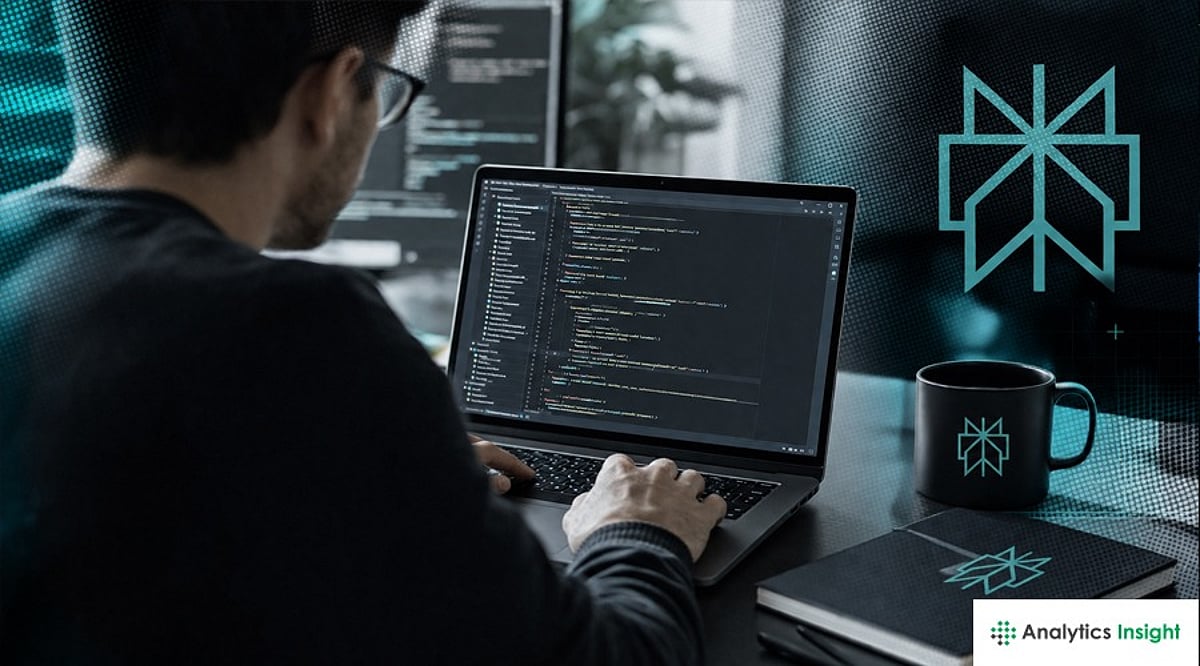
    Perplexity, the AI-powered search company, is reportedly developing a coding assistant designed to compete head-to-head with Anthropic’s Claude Code and other popular developer tools. According to recent reports, the tool, internally named Teammate, has been tested by Perplexity’s own engineers for several months and is expected to be model-agnostic, giving developers the flexibility to choose the underlying AI model that best fits their workflow.

    Unlike some rivals that lock users into a single AI system, Perplexity’s approach emphasizes choice. Developers may be able to switch between models—such as Anthropic’s Claude, OpenAI’s GPT, or others—depending on the task. This flexibility could be a key differentiator in the increasingly crowded AI coding assistant market.

    Teammate Already in Internal Use

    Sources indicate that Teammate has been assisting Perplexity’s in-house engineers with code writing, bug detection, and other aspects of software development for the past few months. The company has not officially announced a public release date, but the internal testing suggests a launch could be forthcoming as Perplexity seeks to expand beyond search into everyday productivity tools.

    Competing with Claude Code and Others

    Claude Code, built by Anthropic, has gained popularity for its deep reasoning capabilities and ability to handle large code datasets. Perplexity, meanwhile, is best known for its search engine that provides quick, source-backed answers. With Teammate, Perplexity aims to target the same professional developer audience but with a multi-model twist that could give it a competitive edge.

    If Perplexity succeeds in launching a broad, model-agnostic coding assistant, it could shake up the AI coding landscape and force established players to consider offering more flexible integrations. The race for AI-powered developer tools is heating up, and Perplexity’s entry signals that the battle is far from over.

    For now, developers and industry watchers await an official announcement from Perplexity regarding Teammate’s availability and pricing.

  • Perplexity’s Ascent: How Aravind Srinivas Built an AI Search Challenger from IIT Madras to Silicon Valley

    Perplexity’s Ascent: How Aravind Srinivas Built an AI Search Challenger from IIT Madras to Silicon Valley

    In early 2025, Perplexity entered India through a major partnership with Bharti Airtel, giving millions of users access to Perplexity Pro. What looked like a routine telecom-AI deal signaled a deeper shift: a two-year-old startup was now challenging Google’s dominance in online search at scale. Leading that charge was Aravind Srinivas, a Chennai-born engineer who studied at IIT Madras and narrowly missed transferring into computer science.

    Srinivas’s journey is anything but linear. Growing up in a family that valued academic achievement, he faced the intense pressure of IIT entrance exams. When he couldn’t switch into computer science, he taught himself Python and enrolled in machine learning courses outside his department. He contributed to research at conferences like NeurIPS and ICLR while still an undergraduate, gaining early exposure to deep learning.

    He earned a PhD in computer science from UC Berkeley, interning at OpenAI, DeepMind, and Google Brain between 2019 and 2021. Those experiences revealed skill gaps he worked aggressively to close, rather than retreating from the field. In 2022, he co-founded Perplexity with Denis Yarats and Johnny Ho, positioning it as an answer engine that uses large language models to generate conversational responses with live source citations.

    Perplexity grew rapidly, attracting millions of users for research, coding, and everyday queries. The Airtel partnership underscored its strategy to expand beyond desktop search into mobile-first markets. But the company also faced sharp criticism: Forbes and WIRED accused it of plagiarizing paywalled content, and publishers raised legal concerns about scraping practices. Srinivas acknowledged early shortcomings in attribution and defended AI-powered search as an inevitable evolution.

    Today, Perplexity sits at the center of the AI search race—hailed as a promising challenger yet emblematic of the unresolved tensions around copyright and fair use. Srinivas’s story illustrates how combining research, engineering, and product instinct, even without a traditional path, can reshape an industry.

  • From IIT to AI Search: The Unconventional Rise of Perplexity’s Aravind Srinivas

    From IIT to AI Search: The Unconventional Rise of Perplexity’s Aravind Srinivas

    In early 2025, Perplexity entered India through a major partnership with Bharti Airtel, giving millions of users access to Perplexity Pro almost overnight. On the surface, it looked like another telecom-AI announcement. Inside the technology industry, however, the deal carried a different meaning.

    A startup founded in 2022 was now entering India at a massive scale while positioning itself as an alternative to Google’s dominance in online search. Leading that company was Aravind Srinivas, a Chennai-born engineer who joined IIT Madras in electrical engineering and was unable to transfer into computer science after narrowly missing the required GPA cutoff.

    Perplexity’s rise has been unusually fast, even by Silicon Valley standards. According to reports citing investor discussions, the company reached multi-billion-dollar valuations within roughly two years of launch as investors rushed toward generative AI startups. At the same time, the company has faced growing scrutiny over attribution, scraping practices, and the legal boundaries surrounding AI-generated information products.

    What makes Aravind Srinivas’s story compelling is how imperfect and unpredictable it feels. His journey has been shaped by ambition, self-doubt, deep focus on research, strong product instinct, and constant public scrutiny, rather than a smooth path to success. Srinivas grew up in Chennai in a family where academic achievement was highly valued.

    In a conversation on the Lex Fridman Podcast, he spoke about the culture surrounding IIT admissions and the pressure attached to engineering entrance exams in India. By the time he entered the country’s competitive coaching ecosystem, academic performance had already become central to his life. That unexpected shift changed the direction of his learning.

    Instead of depending entirely on departmental coursework, he began teaching himself programming outside the classroom. He learned Python independently, enrolled in machine learning coursework available outside his department, and became involved in AI research under Professor Balaraman Ravindran.

    While still an undergraduate, Srinivas contributed to research connected to major AI conferences, including NeurIPS, AAAI, and ICLR. The experience exposed him early to deep learning research during a period when modern AI systems were still largely confined to academic labs rather than mainstream products. By the end of his undergraduate years, Srinivas had already moved across mathematics, coding, AI research, and systems thinking. The combination would later become central to his work in AI.

    He started pursuing his PhD in computer science at the University of California in 2017, where he worked on machine learning systems, generative models, and transformer-related research. Between 2019 and 2021, he interned at OpenAI, DeepMind, and Google Brain during the period just before large language models entered mainstream public attention. Those experiences became some of the most defining moments of his career.

    In podcast interviews, Srinivas said that when he entered environments filled with highly skilled engineers and researchers, he realized that he needed to improve his programming skills and ability to solve problems from the basics. He described the experience as motivating rather than discouraging.

    Instead of retreating from the field, he immersed himself more deeply in large language models and scaling systems research. The tone of those interviews felt very different from the polished image often associated with Silicon Valley founders. In those interviews, Srinivas spoke less about confidence and more about aggressively closing gaps in his own knowledge.

    In 2022, Aravind Srinivas co-founded Perplexity with Denis Yarats and Johnny Ho. Computer scientist Andy Konwinski also became an early supporter and close collaborator. The timing was important. Interest in generative AI was growing quickly, but internet search still mostly worked the same way it had for years, with users typing keywords and receiving pages of links.

    Perplexity tried to simplify that experience. Rather than functioning as a traditional search engine, the company positioned itself as an answer engine that used large language models (LLMs) to generate conversational responses while retrieving information from live web sources.

    Citations became an important part of Perplexity’s identity since many AI products were already facing criticism for hallucinations, where systems generate false or unsupported information. To separate itself from competitors, Perplexity designed its interface to display source links alongside AI-generated answers.

    Perplexity grew quickly as millions of users started using it for research, summaries, coding help, and everyday questions. Its partnership with Bharti Airtel later showed that the company’s strategy was not only focused on improving research quality but also on reaching more users through wider accessibility, especially in markets where smartphone usage was growing faster than traditional desktop search habits.

    But Perplexity’s rapid rise also brought intense criticism. In 2024, Forbes and WIRED reported that Perplexity had plagiarized paywalled content without giving enough credit to the original publishers. The Verge separately reported concerns around scraping practices that appeared to bypass publisher-set restrictions such as robots.txt preferences.

    Some publishers responded with legal threats, arguing that AI-generated summaries could reduce the value of original journalism. The issue soon grew into a larger debate about copyright, fair compensation, and the future of online publishing in the AI era.

    In posts published on X during mid-2024, Srinivas acknowledged shortcomings in Perplexity’s early attribution systems and said the company was working on improving citation visibility and publisher relationships.

    At the same time, he defended AI-powered search as an inevitable shift in how people would consume information online. That tension now sits at the center of Perplexity’s identity. The company is simultaneously viewed as one of the most promising consumer AI startups and one of the clearest examples of the unresolved conflicts shaping the modern AI industry.

    Aravind Srinivas’s rise from IIT classrooms to the center of Silicon Valley’s AI race does not offer a simple formula for success. His journey shows that the AI industry now values people who can quickly combine research, engineering, and product thinking, even without following a traditional career path.