Tag: PhonePe

  • 10 Fintech Leaders Revolutionizing Digital Payments Worldwide

    10 Fintech Leaders Revolutionizing Digital Payments Worldwide

    From mobile wallets to global payment networks, a new wave of fintech companies is transforming how the world sends and receives money. Here are ten key players driving innovation in digital payments.

    Stripe

    Stripe powers online payments for millions of businesses with developer-friendly APIs and global payment solutions, making it a cornerstone of modern e-commerce.

    PayPal

    PayPal remains one of the world’s most trusted digital payment platforms, serving both consumers and merchants with secure and convenient transactions.

    Block (Square)

    Block, formerly known as Square, simplifies digital payments for businesses while expanding into banking, Bitcoin, and financial services.

    Adyen

    Adyen enables seamless omnichannel payments for global brands through a unified commerce platform, catering to enterprise-level needs.

    Razorpay

    Razorpay has become a leading fintech firm in India, offering payment gateways and business banking solutions to a growing market.

    PhonePe

    PhonePe continues to drive UPI adoption across India with digital payments, financial services, and merchant solutions.

    Revolut

    Revolut combines digital banking, global payments, investing, and cryptocurrency services in a single app, appealing to modern consumers.

    Wise

    Wise makes international money transfers faster and cheaper through transparent exchange rates, challenging traditional remittance services.

    These companies exemplify the rapid evolution of fintech, each contributing to a more accessible and efficient financial ecosystem.

  • How Sameer Nigam Built PhonePe Into India’s Digital Finance Powerhouse

    How Sameer Nigam Built PhonePe Into India’s Digital Finance Powerhouse

    As India surged ahead in adopting digital payments at an unprecedented scale, a handful of entrepreneurs worked quietly behind the scenes to drive that transformation. One key figure is Sameer Nigam, founder and CEO of PhonePe, who turned a fledgling idea into one of the nation’s biggest fintech success stories.

    From a simple payment app to a comprehensive digital solution for millions of Indian consumers, PhonePe’s evolution reflects Nigam’s unwavering vision. His journey from engineer to entrepreneur is a blend of technical expertise and business acumen. With a computer science degree from the University of Mumbai and the University of Arizona, plus an MBA from Wharton, Nigam honed his skills at Shopzilla in the US before co-founding Mime360, a digital content distribution company later acquired by Flipkart. That acquisition introduced him to India’s booming e-commerce scene, where he held leadership roles in engineering and marketing.

    During those years, as India underwent digital transformation, Nigam spotted a critical gap in payment systems. In 2015, he co-founded PhonePe with Rahul Chari and Burzin Engineer. At a time when the Unified Payments Interface (UPI) was still nascent, the founders bet on its future rather than building a digital wallet. That bet paid off spectacularly. The 2016 demonetization campaign accelerated India’s shift to digital payments, and PhonePe surged ahead with its intuitive interface, fast bank integration, and easy onboarding for first-time digital users.

    Today, PhonePe is far more than a payments app. It offers insurance, mutual funds, lending, stock investments, merchant solutions, and app discovery. Nigam’s leadership philosophy centers on trust. Instead of aggressive marketing, he focused on building reliable technology capable of handling massive transaction volumes without hiccups. This engineering-first approach helped PhonePe thrive within India’s rapidly evolving digital payment ecosystem.

    Nigam also understood India’s diverse consumer base. By simplifying services and offering them in multiple languages, PhonePe reached users in metropolitan, suburban, and rural areas. For many Indians, the app was their first experience with digital financial services.

    Beyond payments, Nigam envisioned a complete digital ecosystem. Under his guidance, PhonePe expanded into wealth management, insurance distribution, lending, and merchant services. The launch of the Indus Appstore marked its entry into digital commerce, signaling ambitions far beyond fintech. This diversification is central to Nigam’s strategy of building a multi-product platform.

    Colleagues describe Nigam as a leader who prioritizes product-centricity and experimentation. His engineering mindset fosters a culture of innovation. Rather than chasing media hype, he lets the company’s products and performance speak for themselves, earning him recognition as a key fintech opinion-maker in India.

    As India moves deeper into the digital era, Nigam’s influence extends beyond PhonePe’s growth metrics. He has made digital payments a routine practice for small businesses and consumers alike. The future of India’s fintech industry may involve artificial intelligence, embedded finance, digital commerce, and greater financial accessibility. Given PhonePe’s trajectory, Nigam intends to be at the forefront of that evolution.

    This is not just an entrepreneurial success story; it is a story of reshaping an entire nation’s relationship with finance. Sameer Nigam has cemented his place as one of the architects of India’s digital financial revolution.

  • Behind Every UPI App: The Sponsor Banks Ensuring Fast and Reliable Payments

    Behind Every UPI App: The Sponsor Banks Ensuring Fast and Reliable Payments

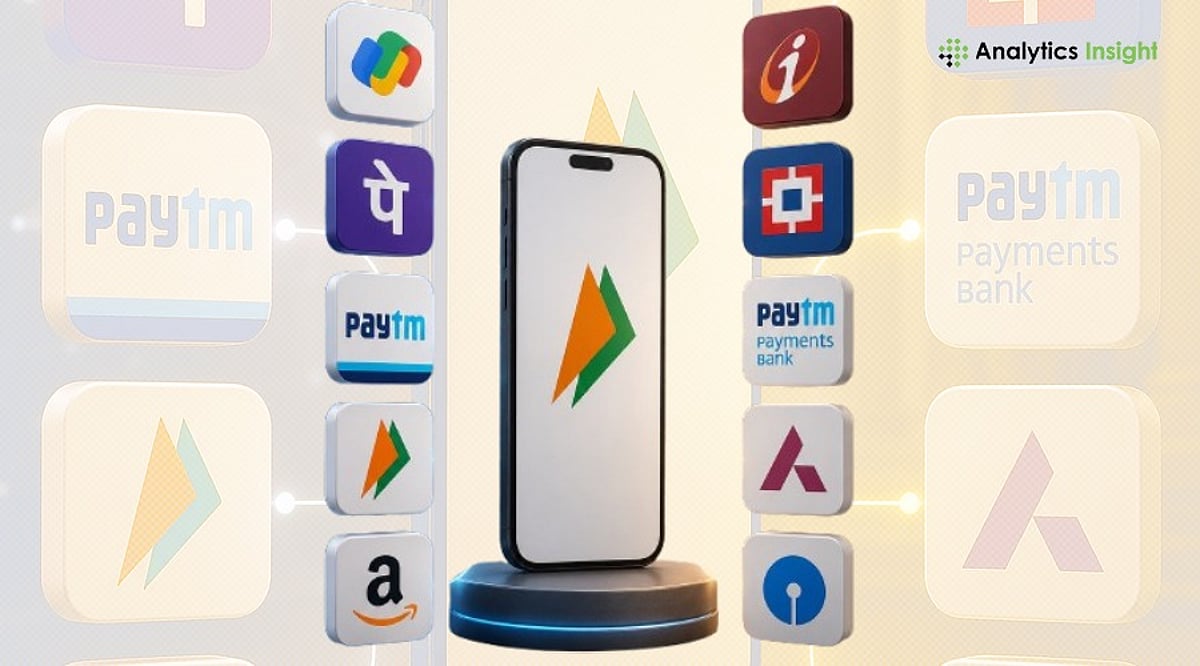
    India’s digital payment revolution runs on a simple interface that millions open daily, yet the banking infrastructure behind it remains largely invisible. Every transaction through apps like PhonePe, Google Pay, and Paytm passes through a sponsor bank before reaching the National Payments Corporation of India (NPCI) settlement system. This partnership defines transaction speed, dispute resolution, and overall reliability.

    What Is a Sponsor Bank?

    UPI apps—technically third-party application providers—do not hold banking licenses. They rely on regulated banks called Payment Service Provider (PSP) banks or sponsor banks to authenticate transactions, connect to NPCI’s core network, and settle funds. Without such a tie-up, no UPI app can process a single payment.

    The importance of sponsor banks became starkly visible in 2020 when the Reserve Bank of India placed a moratorium on Yes Bank, which then supported about 20 of the 32 third-party UPI apps. The disruption forced many apps to adopt multi-bank partnerships—a practice now standard across the industry.

    Which Banks Sponsor India’s Top UPI Apps?

    UPI App Sponsor Banks
    PhonePe Yes Bank, ICICI Bank, Axis Bank
    Google Pay Axis Bank, ICICI Bank, HDFC Bank, State Bank of India
    Paytm Axis Bank, HDFC Bank, SBI, Yes Bank

    PhonePe originally launched with Yes Bank as its sole partner in 2016. After the 2020 crisis, it added ICICI Bank and Axis Bank, distributing transaction load across three institutions. Google Pay entered with Axis Bank and gradually expanded to include ICICI Bank, HDFC Bank, and SBI, ensuring high success rates even during peak volumes.

    Paytm underwent the most significant restructuring. After the RBI restricted Paytm Payments Bank from onboarding new customers in early 2024, NPCI approved a multi-bank model. Axis Bank, HDFC Bank, SBI, and Yes Bank now jointly handle its UPI traffic, with user handles like @ptaxis and @ptsbi.

    How Sponsor Banks Work in the UPI Ecosystem

    A sponsor bank performs several critical functions that a UPI app cannot legally do alone:

    • Issuing and managing the Virtual Payment Address (VPA) handle
    • Authenticating the user’s linked bank account via NPCI’s mapper system
    • Routing payment requests to the beneficiary bank in real time
    • Settling funds between payer and payee banks
    • Handling regulatory compliance and dispute escalation

    When a payment fails, the sponsor bank is the first point of technical accountability, though the app remains the customer’s primary support contact. Apps with a single sponsor bank face greater risk during outages; those with multiple partners recover faster.

    Why Multiple Sponsor Banks Matter

    NPCI enforces a volume cap that restricts any single third-party app to 30% of total UPI transaction volume. This rule, expected to take fuller effect by year’s end, pushes apps and sponsor banks toward diversification. Benefits include:

    • For users: Clearer path for dispute escalation
    • For businesses: Better reliability when evaluating payment integrations
    • For regulators: Reduced systemic risk if one sponsor bank faces trouble
    • For developers: Ability to plan redundancy before launching new UPI products

    Final Thoughts

    The sponsor bank model forms the structural foundation of every UPI transaction in India. From PhonePe’s early reliance on Yes Bank to Paytm’s pivot to a four-bank arrangement, the pattern is clear: diversification protects both the app and the user from single-point failures. As UPI expands globally and transaction volumes continue climbing, strong banking partnerships will become even more critical to maintaining the seamless experience users expect.

    Frequently Asked Questions

    What is a sponsor bank in the UPI ecosystem?

    A sponsor bank (PSP bank) connects a third-party UPI app to NPCI’s network and handles authentication, routing, and settlement for every transaction.

    Which bank sponsors PhonePe?

    PhonePe operates through three sponsor banks: Yes Bank, Axis Bank, and ICICI Bank—a structure adopted after the 2020 Yes Bank moratorium.

    Why did Paytm switch to multiple sponsor banks?

    After regulatory restrictions on Paytm Payments Bank in 2024, NPCI approved a multi-bank model using Axis Bank, HDFC Bank, SBI, and Yes Bank to keep its UPI services uninterrupted.

    Does BHIM need a sponsor bank?

    BHIM operates as a direct extension of NPCI and does not require a separate sponsor bank, unlike third-party apps such as PhonePe and Google Pay.

    Why do UPI apps prefer multiple sponsor banks?

    Multiple sponsor banks reduce dependency risk, distribute transaction load, and help apps maintain uptime even if one partner bank faces technical or regulatory disruption.