Tag: Polygon

  • Nepal Enables Crypto-Funded Humanitarian Aid via US Banking Route

    Nepal Enables Crypto-Funded Humanitarian Aid via US Banking Route

    Nepal has established a legal pathway for cryptocurrency donations to support disaster relief, using a US-based off-ramp system that converts digital assets into dollars before funds enter the country. The arrangement bypasses Nepal’s domestic ban on cryptocurrency trading and use, allowing overseas donors to contribute without sending crypto directly into Nepali financial systems.

    Under the new structure, donors worldwide can send digital currencies through platforms like Ethereum, Polygon, and Solana. US financial institutions then convert those assets into US dollars, which are transferred via SWIFT to Nepal’s official disaster relief account. As of Monday, approximately USD 500 from crypto-to-fiat conversions had reached the government fund, according to Finance Minister Swarnim Wagle. Meanwhile, NepalRelief.org has collected USD 174,831 from donors.

    The channel was developed in response to the deadly Bhotekoshi river floods. Polygon, Cross River Bank, and Engage Nepal collaborated to create NepalRelief.org, which uses Polygon’s Open Money Stack and Coinme for technical processing. Engage Nepal receives contributions through a publicly disclosed wallet and conducts audits. Cross River Bank then converts the assets into dollars and sends the funds through SWIFT.

    This approach keeps cryptocurrency entirely outside Nepal’s financial system. Nepali banks receive conventional currency rather than digital assets, ensuring compliance with local regulations. The project began after crypto companies and communities abroad sought a legal way to support flood victims. Cross River Bank executive Pravesh Rijal and Polygon Foundation founder Sandeep Nailwal discussed the proposal on August 27, focusing on converting crypto in the United States before sending money to Nepal.

    After Polygon, Cross River Bank, and Engage Nepal agreed on the structure, they approached Nepal’s government through Finance Minister Wagle. The government issued a no-objection to the arrangement. Cross River Bank assigned a 25-member team to complete the legal and technical work, launching NepalRelief.org within 24 hours.

    Other blockchain organizations have also stepped up. Ripple announced USD 300,000 for emergency response, with World Central Kitchen and Mercy Corps using those funds for food, drinking water, and sanitation supplies. The Solana Foundation and NFT marketplace Mallow raised USD 166,946 in USDC by auctioning advertising slots on Solana’s official X account. Solana will route proceeds to Nepal’s government relief fund through Engage Nepal. Blockchain for Impact has pledged USD 100,000.

    This model differs from previous crypto relief efforts that faced legal barriers inside Nepal. By keeping digital assets abroad and transferring only regulated fiat currency, the system offers a potential blueprint for other countries that restrict cryptocurrency but wish to accept crypto-funded humanitarian aid.

  • Leading Layer-2 Cryptocurrencies to Watch in July 2026

    Leading Layer-2 Cryptocurrencies to Watch in July 2026

    Key Takeaways

    • Layer-2 networks reduce Ethereum fees while significantly improving transaction speed and scalability.
    • DeFi, gaming, AI, and tokenized real-world assets are accelerating Layer-2 ecosystem growth.
    • Arbitrum, Optimism, Starknet, Polygon, and emerging projects continue driving Ethereum’s next evolution.

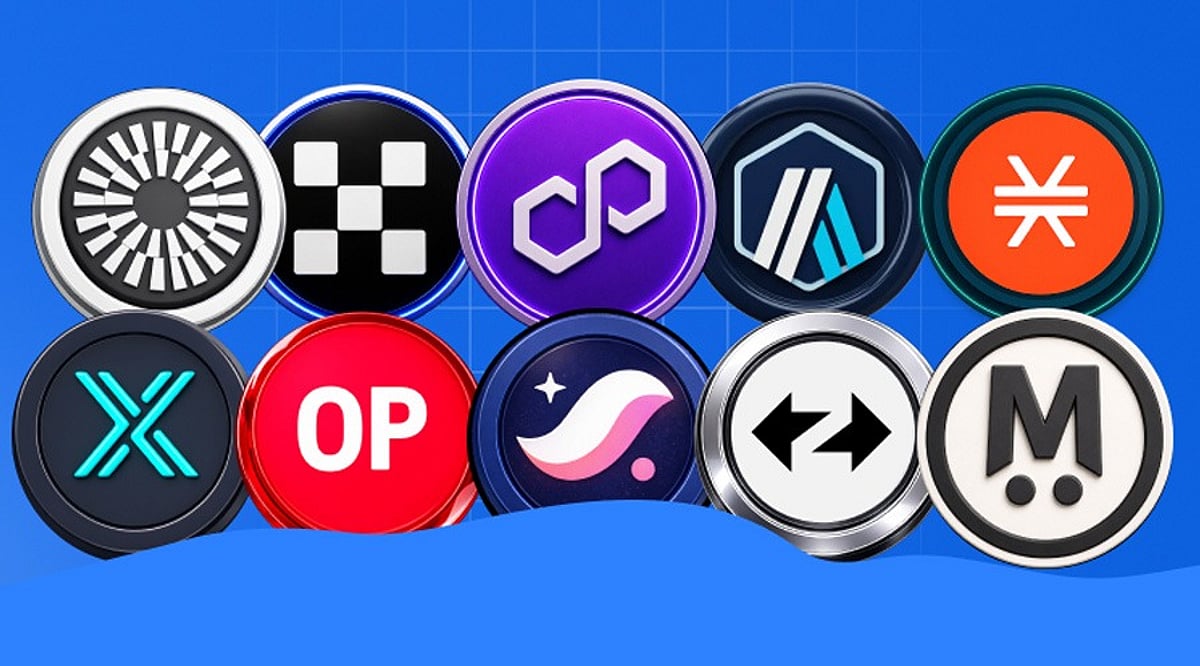
    Ethereum remains the dominant blockchain, but high fees and slower transaction speeds during peak usage remain challenges. Layer-2 networks address these issues by processing transactions off the main chain and posting final data back for security. This approach lowers costs, boosts speed, and supports mass adoption. In July 2026, Layer-2 projects continue to be one of the strongest segments in crypto, fueled by steady growth in decentralized finance, gaming, artificial intelligence, and tokenized real-world assets. Here are the top 10 Layer-2 cryptocurrencies to watch.

    Arbitrum (ARB)

    Arbitrum holds the top spot among Ethereum Layer-2 networks, thanks to its vast DeFi ecosystem and deep liquidity. Major decentralized exchanges, lending platforms, and perpetual trading protocols operate on Arbitrum. The network also supports Layer-3 development through Arbitrum Orbit, opening new opportunities for builders. Strong institutional interest and an active community add to its value. Despite growing competition, Arbitrum remains one of the most important Layer-2 projects in July 2026.

    Optimism (OP)

    Optimism has expanded well beyond a single Layer-2 chain. Its Superchain vision has attracted multiple networks using the OP Stack, including Coinbase’s Base. This shared technology improves cross-chain compatibility and speeds up development. Revenue sharing between connected chains adds another advantage. As more projects join the Superchain, Optimism continues to strengthen its position as a leading Ethereum scaling solution.

    Starknet (STRK)

    Starknet has built its reputation on advanced zero-knowledge technology. Using STARK proofs, it delivers strong security with excellent scalability. Developers benefit from the Cairo programming language, which supports sophisticated blockchain applications. The platform continues to attract DeFi projects, gaming apps, and AI initiatives, placing Starknet among the top Layer-2 networks for long-term growth.

    Polygon (POL)

    Polygon remains one of the most recognized names in blockchain. It has shifted focus toward an ecosystem of connected zero-knowledge chains via its AggLayer vision. Large companies and financial institutions continue to explore Polygon due to its reliable infrastructure and enterprise partnerships. Growth in tokenized real-world assets also supports the network. This combination of business adoption and technical development keeps Polygon near the top of the Layer-2 market.

    Mantle (MNT)

    Mantle has gained attention for its strong treasury and focus on institutional DeFi. The network supports liquid staking, yield products, and other financial services that appeal to developers and investors. A well-funded ecosystem enables Mantle to support new applications through grants and incentives. These factors help it stand out among newer Layer-2 platforms.

    Immutable (IMX)

    Immutable has become a leading blockchain platform for gaming and digital collectibles. The network removes gas fees for many player transactions, creating a smoother gaming experience. Major game developers continue to choose Immutable for its reliable infrastructure and NFT support. New game releases and wider blockchain gaming adoption could provide fresh momentum in the second half of 2026.

    zkSync (ZK)

    zkSync is gaining ground in the zero-knowledge Layer-2 space, focusing on consumer applications with fast, low-cost transactions. Native account abstraction improves wallet usability. The project is attracting DeFi projects, payment systems, and social applications to its ecosystem. These advancements make zkSync one of the emerging leaders among Layer-2 projects.

    Metis (METIS)

    Metis takes a different approach with decentralized sequencers, reducing reliance on a single operator. The project is also attracting interest in AI infrastructure. Enterprise tools and lower centralization risks provide additional appeal. These unique features help Metis carve out a distinct position in the competitive Layer-2 market.

    Loopring (LRC)

    Loopring remains one of the earliest zero-knowledge rollup projects. The network focuses on secure payments, decentralized exchanges, and digital wallets. Although newer projects receive more attention, Loopring continues to offer reliable, proven technology. Its long history and stable ecosystem make it an important Layer-2 network to follow.

    Fuel (FUEL)

    Fuel has emerged as one of the most promising modular execution layers in 2026. It supports parallel transaction execution, enabling better performance than many traditional blockchain designs. Developers are showing growing interest in its modern virtual machine and flexible architecture. As the ecosystem expands, Fuel could become a major name in Ethereum scaling.

    Final Thoughts

    Layer-2 technology continues to play a crucial role in the cryptocurrency market as of July 2026. The growing popularity of DeFi, blockchain gaming, enterprise applications, AI, and tokenized real-world assets is driving adoption of Layer-2 solutions. Projects like Arbitrum, Optimism, Starknet, Polygon, Mantle, Immutable, zkSync, Metis, Loopring, and Fuel each contribute uniquely to Ethereum’s future. All of them have strong ecosystems, experienced developer communities, and ongoing technological advances.

    Frequently Asked Questions

    What are Layer-2 cryptocurrencies?

    They are blockchain networks built on Ethereum that improve speed, lower transaction costs, and increase scalability while relying on Ethereum’s security.

    Why are Layer-2 projects important in 2026?

    They help Ethereum handle growing demand from DeFi, gaming, AI applications, and tokenized real-world assets without high fees or network congestion.

    Which Layer-2 projects are leading the market?

    Arbitrum, Optimism, Starknet, Polygon, Mantle, Immutable, zkSync, Metis, Loopring, and Fuel are among the top Layer-2 ecosystems to watch.

    What is the difference between optimistic and zero-knowledge rollups?

    Optimistic rollups assume transactions are valid unless challenged, while zero-knowledge rollups use cryptographic proofs to verify transactions before finalization.

    Are Layer-2 cryptocurrencies good long-term investments?

    They have strong growth potential by increasing Ethereum adoption, but like all cryptocurrencies, they carry market risks and require careful research before investing.


  • Bitcoin ETF Inflows Hit $79M, Visa Launches Stablecoin Platform, Polygon Adds 107K Holders in a Month

    Bitcoin ETF Inflows Hit $79M, Visa Launches Stablecoin Platform, Polygon Adds 107K Holders in a Month

    The crypto market saw a flurry of activity as Bitcoin spot ETFs recorded $79.15 million in net inflows, Visa introduced its Stablecoin Platform for financial institutions, and Polygon added over 107,000 new holders in just one month. Meanwhile, BitPay secured regulatory approval under the EU’s MiCA framework, and prediction market platform Kalshi hit a record $217.98 million in daily crypto contract volume.

    Bitcoin Spot ETFs See $79.15 Million in Inflows

    According to data from SoSoValue, Bitcoin spot ETFs recorded a total net inflow of $79.15 million on July 16. BlackRock’s IBIT led the pack with $33.44 million in daily net inflows, bringing its historical net inflow to $60.35 billion. Fidelity’s FBTC followed with $30.73 million, pushing its total historical net inflow to $9.97 billion. The combined net asset value of all Bitcoin spot ETFs now stands at $77.72 billion, with an ETF net asset ratio of 6.04% and historical cumulative net inflows reaching $51.22 billion.

    Visa Launches Stablecoin Platform for Institutions

    On July 16, Visa announced the Visa Stablecoin Platform (VSP), a new enterprise offering designed to help banks, fintechs, and payment providers integrate on-chain settlement without building their own infrastructure. The platform provides access to OpenUSD, a stablecoin launched by Open Standard with participation from over 140 institutions. VSP addresses the operational challenge of stablecoin adoption by offering pre-built wallet infrastructure via a Wallet-as-a-Service model, direct minting and burning of OpenUSD, and seamless connectivity to Visa’s settlement and treasury systems.

    Polygon Holders Surge 78% in One Month

    Polygon (POL) saw its holder count jump from 138,000 to 245,000 in just 30 days, adding more than 107,000 new wallets—a 78% increase. This growth was driven by rising payment activity on the network. Monthly Crypto Card Volume surged over 122% to a record high, with more than $30.5 million processed so far, compared to $13.69 million in June.

    BitPay Receives MiCA Approval in the Netherlands

    BitPay has secured authorization under the European Union’s Markets in Crypto-Assets (MiCA) framework through its Dutch subsidiary, BitPay B.V., from the Dutch Authority for the Financial Markets (AFM). This approval allows BitPay to offer regulated digital asset services—including payment acceptance and stablecoin transactions—across all EU member states via MiCA’s passporting rules. Thom de Jong, BitPay’s Chief Compliance Officer for Europe, emphasized that the authorization strengthens the company’s ability to serve EU businesses and consumers while reinforcing its compliance-focused approach.

    Kalshi Crypto Contract Volume Hits Record $217.98 Million

    Kalshi’s crypto event contracts set a new single-day volume record on July 15, reaching $217.98 million, according to Artemis data. Volume on the platform has been steadily climbing since May, rising from roughly $5 million daily on January 1 to the current record—a 44x increase in about seven months. Kalshi now controls roughly 84% of crypto-prediction volume, having overtaken Polymarket in the space.

    Frequently Asked Questions

    How much inflow did Bitcoin spot ETFs record?

    Bitcoin spot ETFs recorded $79.15 million in net inflows. BlackRock’s IBIT led with $33.44 million, followed by Fidelity’s FBTC at $30.73 million.

    What is Visa’s Stablecoin Platform?

    Visa’s Stablecoin Platform is an enterprise offering for banks, fintechs, and payment providers. It supports wallet infrastructure, OpenUSD minting and burning, and integration with Visa settlement systems.

    How many new holders did Polygon add?

    Polygon added more than 107,000 holders in one month. Its holder count rose from 138,000 to 245,000, marking a 78% increase.

    What MiCA approval did BitPay receive?

    BitPay secured authorization under the EU’s MiCA framework through its Dutch subsidiary. This allows it to offer regulated crypto payment and stablecoin services across EU member states.

    Why is Kalshi’s crypto contract volume important?

    Kalshi’s crypto event contracts hit a record $217.98 million in daily volume. The surge shows rising demand for regulated prediction-market exposure to crypto-related events.

  • Crypto Market Recap: Bitcoin ETF Inflows Surge, Ethereum Funds Gain, Polygon Hits Record Transactions

    Crypto Market Recap: Bitcoin ETF Inflows Surge, Ethereum Funds Gain, Polygon Hits Record Transactions

    The cryptocurrency market witnessed significant activity as Bitcoin spot ETFs recorded $221.72 million in net inflows, Ethereum spot ETFs added $29.08 million, and Polygon reached a historic milestone of 743 million transactions in Q2 2026. Meanwhile, eToro led a $12.5 million funding round for Extended, and Stripe’s Bridge secured key European licenses.

    Bitcoin ETFs See $221 Million Inflow

    According to SoSoValue, Bitcoin spot ETFs saw a total net inflow of $221.72 million on the latest trading day. Fidelity’s FBTC led with $165.96 million in daily inflows, bringing its historical total to $10.24 billion. Ark Invest and 21Shares’ ARKB followed with $91.84 million, accumulating $1.26 billion historically. BlackRock’s IBIT experienced the largest outflow at $40.43 million, yet its historical net inflow remains strong at $59.99 billion. The total net asset value of Bitcoin spot ETFs now stands at $74.37 billion, with a net asset ratio of 6.02% and cumulative inflows reaching $51.08 billion.

    Polygon Achieves All-Time High in Transactions

    Polygon’s Q2 2026 closed with a record-breaking 743 million transactions on its network. In May 2026 alone, the network processed $79.25 billion in stablecoin transfer volume, ranking first across the blockchain ecosystem for stable asset transactions, surpassing Solana and BNB Chain. Despite this activity, POL trades near $0.073, far below its all-time high of $1.29 from March 2024.

    Ethereum Spot ETFs Add $29 Million

    Ethereum spot ETFs recorded total net inflows of $29.08 million yesterday. BlackRock’s ETHA led with $29.74 million in single-day inflows, while VanEck’s ETHV added $1.24 million, bringing its historical total to $165 million. Grayscale’s ETHE saw outflows of $2.75 million. The total net asset value of Ethereum spot ETFs is $9.02 billion, with a 4.38% net asset ratio and cumulative historical inflows of $10.89 billion.

    eToro Leads $12.5 Million Strategic Round in Extended

    Trading platform eToro led a $12.5 million strategic investment in Extended, an on-chain perpetual futures exchange. The investment is tied to a partnership with Zengo, a self-custody wallet eToro acquired earlier this year. eToro stated the partnership will “expand access to global financial markets through next-generation on-chain infrastructure” and explore bridging traditional assets with decentralized trading. Jump Crypto also participated in the round.

    Stripe’s Bridge Secures MiCA and EMI Licenses

    Bridge obtained both a Markets in Crypto-Assets (MiCA) authorization and an Electronic Money Institution (EMI) license in Luxembourg, enabling regulated services across all 27 EU member states. The licenses cover capital reserves, custody, and operational safeguards. Bridge can now offer custom euro-backed stablecoins, virtual IBANs, and euro accounts without requiring separate banking relationships in each country.

  • May Stablecoin Volume: Polygon Records $80 Billion, Tops Solana and BNB Chain

    May Stablecoin Volume: Polygon Records $80 Billion, Tops Solana and BNB Chain

    Polygon processed nearly $80 billion in stablecoin transfer volume during May, recording 198 million transactions and surpassing both Solana and BNB Chain in transaction count. The milestone marks the network’s second-highest monthly stablecoin volume on record.

    According to Polygon’s data, the network handled approximately $79.25 billion in stablecoin transfers during the month. Cumulative stablecoin transfer volume on Polygon has now exceeded $2.4 trillion. Average transaction fees remain around $0.002, with settlement times of about two seconds. The network also reports more than seven billion lifetime transactions and 99.99% uptime.

    The vast majority of activity came from USDC and USDT transfers, reflecting the growing use of stablecoins for blockchain-based payments and settlement. Polygon has continued to strengthen its payment infrastructure through acquisitions and partnerships. Earlier this year, Polygon Labs acquired Coinme and Sequence in deals valued at a combined $250 million, aimed at expanding consumer payments and developer services.

    Visa added Polygon to its stablecoin settlement pilot in April, a program that has reportedly reached a $7 billion annualized run rate. Meta also introduced USDC payouts on Polygon and Solana for eligible creators. Payment-focused applications built on Polygon generated about $9.9 billion in transaction volume during the first half of 2026, exceeding the network’s total payment-related volume for all of 2025.

    In emerging markets, Polygon processed approximately $309 million in Latin American stablecoin transfers during May, with an increasing focus on cross-border payments. Despite these growing on-chain metrics, the POL token has not mirrored the surge in usage, trading broadly in line with broader cryptocurrency market conditions.

    Solana also posted strong on-chain data during the same period, generating about $2.17 million in daily application revenue. Derivatives data showed SOL funding rates turning positive and the long-to-short ratio rising above one, indicating bullish positioning among traders. However, institutional demand remained weaker, with spot Solana ETFs recording about $3.8 million in net outflows during the previous week.

    SOL traded around $71.82, remaining below its 50-day, 100-day, and 200-day exponential moving averages. Analysts noted resistance near $74.75 and $75.14, while support sits near $69.16 and the recent cycle low around $60.13. Singapore Gulf Bank also announced a limited-time waiver of gas and banking fees for stablecoin minting and redemption on Solana, aiming to encourage greater use of stablecoins on the network.

    Competition remains intense, with Ethereum and Tron holding the largest stablecoin balances. Polygon recently reported about 28 million weekly USDC transactions, placing it ahead of Solana in that category. Both blockchains continue to expand payment services while vying for a larger share of stablecoin settlement activity.