Tag: Prediction Markets

  • Coinbase Reports $359M Net Loss as Prediction Markets Revenue Surges

    Coinbase Reports $359M Net Loss as Prediction Markets Revenue Surges

    Coinbase missed second-quarter revenue estimates and reported a $359 million net loss. Crypto transaction income weakened as market activity fell. Prediction markets expanded rapidly, giving the exchange a broader source of future revenue and greater diversification.

    Coinbase reported second-quarter revenue of $1.22 billion, below the $1.30 billion consensus estimate, as weaker crypto trading drove a $359.5 million net loss. Yet prediction markets revenue more than doubled.

    Revenue Miss Deepens Quarterly Loss

    Revenue fell 14% from the previous quarter and 19% from a year earlier. Adjusted EBITDA dropped 31% sequentially to $208 million, far below the expected $327 million. The net loss compared with a $1.43 billion profit one year earlier. It included a $209.5 million unrealized markdown on crypto assets that Coinbase held for investment.

    Transaction revenue declined 21% to $599 million as broader spot trading volume fell 25%. Subscription and services revenue also dropped 12% to $555.1 million. This result missed Coinbase’s original target range of $565 million to $645 million. The company now expects third-quarter subscription and services revenue between $500 million and $580 million.

    A 14% headcount reduction lowered costs, although those savings did not fully offset weaker activity. Coinbase shares fell after hours following the revenue miss and third consecutive quarterly loss.

    Prediction Markets Lead Product Expansion

    Prediction markets delivered one of Coinbase’s strongest operating results. Annualized revenue from the business rose 106% from the previous quarter and moved above $100 million. Users entered event contracts tied to politics, sports, economic releases and other real-world outcomes. Coinbase also expanded into stocks, derivatives, tokenized assets and stablecoin-based payments.

    Can prediction markets scale quickly enough to reduce Coinbase’s reliance on spot crypto trading? The business now supports Coinbase’s plan to develop an ‘everything exchange.’

    Market Share Rises in a Smaller Market

    Coinbase increased its share of global crypto trading volume to a record 10.3%, up from 9.1% in the previous quarter. It marked the company’s third consecutive record quarter. Derivatives volume remained steady even as the broader market contracted 12%. Average USDC balances across the Coinbase ecosystem also climbed 44% year over year to $20 billion.

    Management expects clearer US regulation, including progress on the proposed CLARITY Act, to support broader institutional participation. However, near-term performance remains closely linked to crypto prices and market activity.

    A Brief Roundup

    Coinbase faced weaker revenue, lower transaction income and a third consecutive quarterly loss. At the same time, prediction markets revenue doubled, market share reached a record and USDC balances rose. The key takeaway remains Coinbase’s effort to build broader income sources while crypto trading stays cyclical.

  • Minnesota Court Temporarily Blocks State Ban on Prediction Markets Kalshi and Polymarket

    Minnesota Court Temporarily Blocks State Ban on Prediction Markets Kalshi and Polymarket

    Kalshi and Polymarket can continue operating in Minnesota after securing a temporary court order that blocks the state from enforcing its prediction market ban. The dispute could shape how states regulate event contracts tied to sports, politics, macroeconomic trends, and cryptocurrencies.

    Prediction markets let users trade contracts linked to future events. Contract prices reflect the market’s estimated probability of an outcome, according to Pew Research Center. Crypto contracts now form a major part of the sector. Pew estimates they represent about 20% of Polymarket’s volume and roughly 7% of Kalshi’s volume since July 2024.

    Crypto Links Raise the Stakes

    The Minnesota case reaches beyond two trading platforms because Polymarket settles on-chain margin through stablecoins. Both companies also handle substantial cryptocurrency-related activity. Polymarket has moved toward more advanced crypto infrastructure through its high-performance central limit order book, known as CLOB v2. It also launched pUSD, a new USDC-backed token.

    As a result, the court order preserves access to a large pool of crypto-native activity in Minnesota. It also keeps the broader legal dispute active.

    How far can states go when federally regulated prediction exchanges increasingly combine event contracts with blockchain settlement?

    Prediction Market Volume Hits Record Levels

    Artemis data shows monthly prediction market volume stayed between $25 billion and $30 billion during the first five months of 2026. Volume then reached a record $52.8 billion in June. July month-to-date volume climbed to $50.9 billion. Activity remained high after the FIFA World Cup, one of the year’s largest trading events.

    Sports, macroeconomic expectations, central bank activity, and crypto market developments have driven this year’s expansion. Political events had played a larger role in earlier years.

    Galaxy Research estimates that lifetime prediction market volume has exceeded $150 billion. Bernstein analysts cited by Galaxy said the market could reach $1 trillion by 2030 if regulation improves.

    Kalshi Gains Ground as Regulatory Divide Widens

    Token Terminal data gives Kalshi 61.1% of cumulative prediction market notional volume over the past five years. Kalshi recorded $159.5 billion, compared with Polymarket’s $101.7 billion. Kalshi also generated $39.5 billion in notional volume during the last 30 days. Polymarket recorded $8.7 billion during the same period.

    Their regulatory structures differ. Kalshi operates as a Commodity Futures Trading Commission-regulated Designated Contract Market, while Polymarket’s international platform lacks CFTC oversight.

    Galaxy estimates Polymarket’s US operations produced about $1.3 billion in April volume. Its international platform generated about $9 billion during the same month. Polymarket is pursuing broader US regulatory approval for its flagship platform. This effort could affect how the company expands under federal derivatives rules.

    The Minnesota order remains temporary. Courts have not settled whether states can restrict federally regulated prediction exchanges through gambling laws. Minnesota’s next move, similar actions from other states, and Polymarket’s regulatory expansion will shape market access. The dispute may also affect institutional views of blockchain-based financial infrastructure.

    The Minnesota order keeps Kalshi and Polymarket operating while courts examine whether federal derivatives rules can override state gambling restrictions. The decision could affect prediction markets, stablecoin settlement and broader crypto access. Traders should watch Minnesota’s next filing and similar actions from other states.

  • Crypto Market Slumps in Q2 2026 as Prediction Markets and NFTs Surge

    Crypto Market Slumps in Q2 2026 as Prediction Markets and NFTs Surge

    The cryptocurrency market experienced a sharp decline in the second quarter of 2026, with total market capitalization dropping by 12.6% to $2.1 trillion. Despite this broader downturn, prediction markets and tokenized collectibles posted record growth, defying the negative trend. Bitcoin and Ethereum suffered steep losses, while stablecoins saw their first quarterly contraction since 2023.

    Crypto Market Extends Quarterly Decline

    According to CoinGecko, the total crypto market capitalization fell by $304.8 billion during Q2 2026, marking the third consecutive quarterly decline and the lowest level since September 2024. The market remains about 52% below its October 2025 peak. June saw the sharpest correction of the quarter, driven by a hawkish Federal Reserve stance, shifting U.S.-Iran tensions, and Strategy’s symbolic Bitcoin sale. Bitcoin declined 14.2% during the quarter, while Ethereum fell 25.4%, underperforming U.S. equities. Stablecoins also contracted by 1.6% to $305.1 billion, ending a streak of growth since Q3 2023. Trading activity slowed significantly: spot trading volume on the ten largest centralized exchanges dropped 27.9% to $1.95 trillion, and perpetual futures volume declined 10% to $12.7 trillion.

    Prediction Markets Reach Record Activity

    Prediction markets emerged as the strongest-performing sector in Q2 2026. Notional trading volume surged 48.7% to $113.8 billion, with June alone generating $52.8 billion—92% above the previous five-month average of $27.5 billion. The FIFA World Cup, NBA Finals, and Wimbledon fueled much of this activity. Kalshi expanded its market share from 42.4% to 58.9%, while Polymarket’s share dropped to 30.2%. Rothera, the joint venture between Robinhood and SIG, secured fourth place with $2.1 billion in quarterly volume.

    Tokenized Collectibles Rise as Bitcoin Faces More Pressure

    Tokenized collectibles also recorded strong growth, with segment volume reaching $1.4 billion—a 143% increase from Q1 2026. June accounted for $646 million of that activity. Collector Crypt drove most of the expansion, with monthly volume climbing from $97 million in January to $406 million in June, capturing 62.8% of the collectibles market. OpenSea recorded only $32.7 million in NFT sales during June. CoinGecko noted that about 98% of collectibles trading volume came from gacha mechanics rather than secondary market transactions. Meanwhile, NYDIG warned that Bitcoin’s correction increasingly resembles the major bear markets of 2014, 2018, and 2022. The firm attributed the weakness to soft spot demand, rising leverage, and changing institutional behavior. Bitcoin finished the first half of 2026 down 32.9%, including a 13.4% decline in Q2. In contrast, technology stocks gained 43.5% and the Nasdaq 100 advanced 27.7% over the same period. NYDIG estimated that Bitcoin could decline toward $38,000 to $39,000 before establishing a cycle bottom, having already fallen nearly 50% from its October 2025 record high near $126,000.

    What’s Next?

    The crypto market extended its decline in Q2 2026 as Bitcoin, Ethereum, stablecoins, and trading volumes weakened. Meanwhile, prediction markets and tokenized collectibles delivered strong growth despite the broader downturn. Investors will closely watch whether these sectors sustain their momentum as Bitcoin searches for a potential market bottom.

  • TxFlow L1 Launches Probly Prediction Market as Second Channel in Multi-Application Blockchain Ecosystem

    TxFlow L1 Launches Probly Prediction Market as Second Channel in Multi-Application Blockchain Ecosystem

    TxFlow L1, the Layer 1 blockchain powering a multi-application onchain financial ecosystem built around its TIP Liquidity Standards, today announced its second Channel: Probly, the first prediction-market application built on TxFlow Improvement Protocol 3 (TIP3).

    Following TxFlow DEX—the blockchain’s first application and a central limit order book (CLOB) decentralized exchange for perpetual trading—Probly expands the TxFlow L1 ecosystem into real-time prediction markets. At launch, the platform offers 172 live markets covering more than 7,000 events, including continuously rolling markets with durations as short as five minutes, backed by fully onchain settlement and TxFlow L1’s shared financial infrastructure. The launch marks the next stage in TxFlow L1’s expansion from a network anchored by a flagship onchain exchange into a multi-application financial ecosystem.

    TxFlow L1 was designed around a different structure. Through its TxFlow Improvement Protocol standards and Channel architecture, financial applications can operate on the same purpose-built network while connecting to shared execution and settlement infrastructure. Probly extends the ecosystem into prediction markets as the second Channel.

    TIP3 Makes Prediction Markets Native to TxFlow L1

    TxFlow Improvement Protocol, or TIP, is the standards framework that defines how financial products are built and connected on TxFlow L1. Within the framework, TIP1 supports spot markets, TIP2 supports derivatives and TIP3 establishes the standard for prediction-market Channels. TIPn remains open for future products, including real-world assets, structured products and financial instruments that have not yet been developed onchain.

    TIP3 defines how prediction-market applications connect to TxFlow L1’s execution, settlement and Shared Liquidity Layer. Rather than operating through an independent infrastructure stack, a TIP3 Channel can build on the same financial foundation supporting the wider TxFlow L1 ecosystem. Its architecture uses DAG-based parallel execution and a multi-threaded processing pipeline, enabling non-conflicting transactions to be processed simultaneously. Market activity and settlement records are executed onchain, providing an open and verifiable system. Probly therefore settles directly on TxFlow L1 instead of relying on a shared general-purpose network or a centralized offchain ledger.

    Markets are resolved through designated oracle sources. Automatically resolved price-source markets can settle immediately, while manually adjudicated markets are expected to settle within 24 to 72 hours. Following resolution, eligible settlement amounts are credited automatically in USDC without a separate claim step. This creates a direct infrastructure advantage for Probly: fully onchain settlement and native connectivity to the broader TxFlow L1 ecosystem.

    Probly Brings Real-Time Probability Signals to TxFlow TIP3

    Probly comes from “probably”, the word we use when the future is still open. Inspired by P(A), the notation for the probability of an event, Probly turns individual perspectives into a live collective signal: before it happens. At launch, Probly features 172 live event pages across 15 categories, including politics, sports, crypto, finance, and geopolitical events. Discovery tools help users explore trending, highly active, fast-moving and soon-to-conclude events, while lightweight polls offer a simple way to engage with topics attracting attention.

    Probly also introduces continuously refreshed five-minute, 15-minute, one-hour and four-hour experiences covering BTC, ETH, SOL and XRP price movements. Each page includes live data, a real-time countdown and automatically refreshed rounds, helping users follow changing expectations as events unfold. The platform combines fully onchain infrastructure with a clear, accessible interface designed for both new and experienced users. Probly presents real-time information, probability changes and event timelines in one streamlined experience.

    Users can access Probly through an email-based embedded wallet without managing a seed phrase, or connect compatible wallets including MetaMask, Coinbase Wallet, Phantom and Uniswap Wallet. A consolidated account interface provides a clear view of activity, history and ongoing event engagement. Combined with TxFlow L1’s transparent onchain infrastructure and automated resolution process, these features reduce friction from access through completion.

    A Different Infrastructure Approach to Prediction Markets

    Probly enters a prediction-market category shaped by platforms such as Polymarket and Kalshi, but is built on a different infrastructure model. Probly operates and settles directly on TxFlow L1, a Layer 1 designed for onchain financial applications, bringing real-time probability signals, verifiable onchain records and automatic USDC settlement into one financial stack. Probly extends the same architecture into prediction markets through TIP3.

    About Probly

    Probly is a prediction market built on TxFlow L1 through TxFlow Improvement Protocol 3 (TIP3). It turns views about future events into continuously updated market signals across sports, crypto, economics, news, culture, weather and other real-world categories. Probly combines real-time markets, broad event coverage, fully onchain settlement and self-custodied USDC infrastructure. Its mission is to make collective expectations more immediate, transparent and useful by converting uncertainty into a price. Before It Happens.

    About TxFlow L1

    TxFlow L1 is a high-performance blockchain built for on-chain financial infrastructure, organized around TIP Liquidity Standards that define how financial products are built, composed, and settled on-chain. TxFlow DEX is the first Channel on TxFlow L1, a CLOB orderbook DEX for perpetual trading, processing over 250,000 TPS with one-block finality. Through its TxFlow Improvement Protocol standards and Channel architecture, TxFlow enables spot markets, derivatives, prediction markets and future financial products to operate on the same chain while connecting to shared execution and settlement infrastructure where all finance happens. TxFlow L1 is building an open, composable and community-owned financial ecosystem in which each new application can strengthen the infrastructure available to those that follow.

    This press release is provided for informational purposes only and does not constitute an offer, solicitation, recommendation or invitation to access or participate in any financial, event-based or prediction-market product. Participation in prediction markets involves risk, including the possible loss of funds.


  • North Carolina Enacts Landmark Law Recognizing Federal Oversight of Prediction Markets

    North Carolina Enacts Landmark Law Recognizing Federal Oversight of Prediction Markets

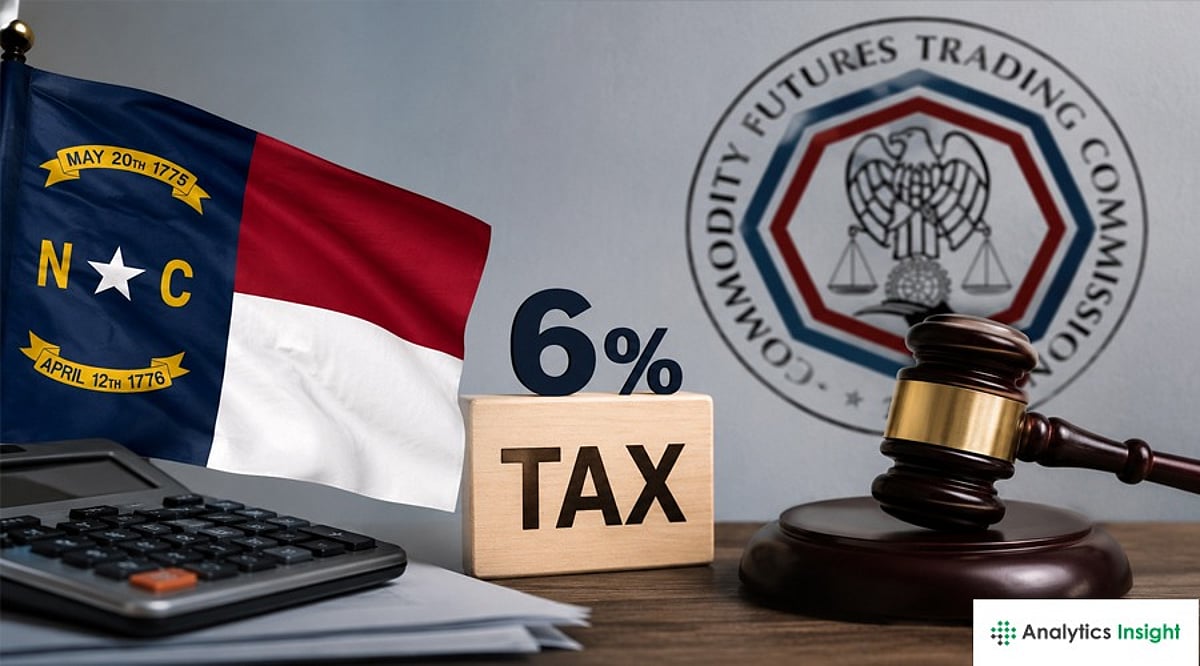
    North Carolina has become the first U.S. state to formally recognize federal oversight of prediction markets in state law, allowing platforms such as Kalshi and Polymarket to operate legally if they register with the Commodity Futures Trading Commission (CFTC). The change is part of Senate Bill 257, known as Session Law 2026-41, which is included in the state’s roughly $34 billion budget.

    The measure introduces a 6% tax on net revenue from transactions involving North Carolina residents starting January 1, 2027, while eliminating separate state licensing requirements for CFTC-registered operators. This development comes as prediction market platforms continue to defend their operations against legal challenges in several states.

    Budget Creates New Framework for Prediction Markets

    The new law relies on the Commodity Exchange Act, which grants the CFTC exclusive federal regulatory authority over prediction markets. As a result, CFTC-registered operators meet North Carolina’s regulatory requirements without seeking additional state licenses or complying with separate gaming rules.

    Instead, the legislation requires prediction market operators to pay a 6% tax on net revenue earned from North Carolina users starting in 2027. Meanwhile, the same budget raises the sports betting tax to 23% of gross betting revenue from the previous 18%. Licensed sportsbooks also continue to pay a $1 million licensing fee to operate in the state, while prediction market platforms do not face that cost under the new framework.

    Critics have questioned the difference between the tax rates. Mick Mulvaney, who leads Gambling Is Not Investing and previously served as acting White House chief of staff, told Axios that prediction markets operate as unlicensed sports gambling applications. He also argued that the policy could encourage operators to bypass state gambling rules while allowing minors to participate in sports-related markets.

    Lawmakers Weigh Revenue and Industry Impact

    Republican leaders described the measure as recognition of existing market activity. House Speaker Destin Hall said prediction market activity already occurs in North Carolina and that lawmakers decided it was time to address it. Senate leader Phil Berger also commented on the industry’s future but stopped short of predicting whether prediction markets could eventually replace traditional sports betting.

    Some Democrats expressed concerns despite supporting the overall budget. Senator Julie Mayfield warned that sports betting revenue could decline if operators shift toward prediction markets. According to WRAL, North Carolina has collected more than $287 million from sports betting since legalization in March 2024. The report also noted that the University of North Carolina and North Carolina State University may each receive up to $5.8 million annually to support athletic programs.

    Other States Continue Legal Challenges

    Gaming analyst Dustin Gouker wrote in his Next Event Horizon newsletter that North Carolina became the first state to allow CFTC-approved prediction markets without requiring separate state licensing. He described the law as affirming federal oversight while applying a relatively low tax rate and predicted that other states could consider similar legislation.

    Other states have adopted different approaches. Kentucky introduced a 14.25% excise tax in April, prompting legal action from the CFTC. Illinois later approved taxes on betting transactions while maintaining state licensing requirements, after which Kalshi filed a lawsuit.

    Court decisions have also varied. Kalshi secured preliminary injunctions in New Jersey and Tennessee, which the Third Circuit upheld in April. However, the company lost similar cases in Maryland, Nevada, Arizona, Ohio, and recently in New York, where Judge Analisa Torres ruled that Kalshi had not demonstrated a likely success under federal preemption law.

    Kalshi has appealed that decision to the Second Circuit Court of Appeals. Sports law attorney Daniel Wallach said the ruling could affect the company’s remaining legal disputes. Meanwhile, the CFTC has challenged nine states over event contracts, and some legal observers believe the issue could ultimately reach the U.S. Supreme Court.

    North Carolina Attorney General Jeff Jackson also signed an April letter opposing federal regulation, according to Axios. Even so, the state’s budget focuses on taxation while broader legal questions continue in federal courts. A Polymarket spokesperson told Axios that the company follows CFTC rules and expects state regulation efforts to face significant federal preemption challenges.

    What’s Next?

    North Carolina has become the first state to recognize federal oversight of prediction markets through state law. The measure allows CFTC-registered platforms to operate without separate licenses while introducing a 6% tax. Meanwhile, legal disputes over federal authority and state regulation continue across several jurisdictions.

  • Polymarket’s Fake Trading Videos Spark Federal Investigation Amid Record World Cup Volumes

    Polymarket’s Fake Trading Videos Spark Federal Investigation Amid Record World Cup Volumes

    Prediction market platform Polymarket is under increased regulatory scrutiny following reports that it used deceptive influencer campaigns to promote its services. Simultaneously, the company recorded surging trading activity during the 2026 FIFA World Cup, placing it at the intersection of regulatory debate and growing market interest.

    Report Reveals Fabricated Trades and Misleading Content

    A Wall Street Journal investigation alleged that Polymarket paid college-age content creators to produce over 1,100 promotional videos between December 2025 and May 2026. According to the report, the videos showcased fabricated prediction market trades worth approximately $1.9 million, using replica versions of the Polymarket website rather than the live platform. The creators reportedly displayed fake profits of nearly $900,000 while concealing their financial relationship with the company. The staged content gave viewers the impression that large profits were routine, while hiding potential losses that could have exceeded $166,000. Creators were instructed to use imitation websites closely resembling the official Polymarket interface and were told not to disclose payments, making the sponsored content appear as ordinary social media posts.

    Following the investigation, Polymarket launched an internal review of its promotional activities but has not publicly released its findings.

    Lawmakers Call for CFTC Investigation

    Regulatory pressure escalated after U.S. Senators John Curtis and Adam Schiff sent a letter on June 26 requesting the Commodity Futures Trading Commission (CFTC) to investigate Polymarket’s advertising practices. The request focused on whether the campaigns complied with advertising rules. Polymarket has a history with the CFTC: in 2022, it reached a settlement involving a $1.4 million civil penalty and agreed to stop offering services to U.S. users.

    Beyond regulatory agencies, a consumer advocacy group filed a lawsuit in late June against Polymarket and several executives, alleging deceptive advertising targeting college students. Federal authorities are also reportedly examining the company’s marketing activities.

    World Cup Drives Record Trading Volume

    Amid the regulatory attention, prediction markets experienced a surge in trading activity during the 2026 FIFA World Cup. Data from DefiLlama showed that Kalshi generated nearly $9.4 billion in June trading volume, up from about $5.3 billion in May. Polymarket International’s monthly volume rose to roughly $4.3 billion from approximately $3.5 billion. Separate market data indicated even stronger figures, with Kalshi exceeding $30 billion in notional trading volume in June and Polymarket International reaching more than $10.8 billion. Polymarket’s U.S. platform recorded over $3.5 billion in monthly volume.

    Knockout-stage matches attracted heavy participation. Canada’s Round of 16 match against Morocco generated over $48 million in trading volume on Kalshi and more than $26.8 million on Polymarket. U.S. markets also drew millions of dollars in trading activity.

    The rapid growth has coincided with broader regulatory discussions. Nearly a dozen U.S. states have taken action involving platforms such as Kalshi and Polymarket, while European regulators have reminded firms that some event contracts may already fall under existing financial rules. CFTC Chair Michael Selig criticized state enforcement efforts, stating, “To any state that seeks to nullify federal law and seize authority over these markets, we will see you in court.”

    Polymarket’s dual narrative—of regulatory risk and market momentum—underscores the volatile intersection of cryptocurrency, prediction markets, and consumer protection in the digital age.

  • Meta Reports Talks with Polymarket and Kalshi as It Develops Arena Prediction App

    Meta Reports Talks with Polymarket and Kalshi as It Develops Arena Prediction App

    Meta is pursuing a dual-track strategy to enter the prediction market space, simultaneously testing its own internal product, Arena, while exploring potential partnerships with established platforms Polymarket and Kalshi. CEO Mark Zuckerberg has reportedly instructed senior executives to engage in discussions with both operators, according to a New York Times report cited by The Block.

    The exploratory talks come just days after news broke that Zuckerberg had directed a small team to build Arena, a standalone prediction-market app separate from Facebook, Instagram, and WhatsApp. Insiders describe Arena as experimental yet a top company priority, suggesting Meta may choose to either launch its own platform, strike distribution deals, or pursue both options simultaneously.

    Meta’s Dual Strategy: Build and Partner

    Meta’s interest in prediction markets is not new. The company previously operated Forecast from 2020 to 2022, a points-based platform that allowed crowdsourced predictions but was shut down due to low usage and high manual question-selection costs. Arena represents Meta’s second known consumer prediction product and would likely use a similar points model, differentiating it from the real-money services offered by Polymarket and Kalshi.

    Even without cash trading, Arena could drive engagement, advertising opportunities, and valuable user-interest data. However, challenges remain regarding misinformation, market manipulation, sensitive event categories, and protections for younger users. Meta has not yet detailed how Arena would generate revenue.

    Prediction Market Landscape Grows

    If Meta secures a partnership, it would follow X (formerly Twitter), which chose Polymarket as its official prediction-market partner in June 2025. That integration placed live market probabilities and Grok-powered annotations directly in posts. A similar deal could put prediction markets across Meta’s massive social-media network, which reported 3.56 billion daily users in the first quarter of 2026.

    Meanwhile, Polymarket and Kalshi have expanded rapidly. Their combined event-contract trading volume exceeded $60 billion in 2026. Institutional market makers like Wintermute have provided liquidity. Kalshi raised $1 billion at a $22 billion valuation in May and reportedly seeks a $40 billion valuation. Both platforms operate under CFTC regulation: Kalshi has been a designated contract market since 2020, and Polymarket’s U.S. business also uses a CFTC-regulated designated contract market.

    What’s Next?

    Meta has not announced any agreements or a public launch for Arena. The talks remain exploratory, and neither Polymarket nor Kalshi has commented publicly. Market participants should watch for official details on Arena’s structure, distribution model, and regulatory compliance. The company’s renewed interest comes after a quarterly decline in daily users across its Family of Apps, which Meta attributed to internet disruptions in Iran and WhatsApp restrictions in Russia.

    Prediction markets allow participants to trade contracts tied to future events, with prices reflecting market-implied probabilities across politics, monetary policy, sports, entertainment, and financial developments. As Meta explores both internal development and external partnerships, the prediction market industry’s growth trajectory appears set to intersect with mainstream social media.