Tag: predictive maintenance

  • 10 Smart Engineering Technologies That Are Transforming Modern Transportation

    10 Smart Engineering Technologies That Are Transforming Modern Transportation

    Modern transportation is undergoing a radical transformation, driven by cutting-edge engineering technologies that enhance safety, efficiency, and sustainability. From autonomous vehicles to hydrogen fuel cells, these innovations are reshaping how we move people and goods. Here are 10 smart engineering technologies powering the future of transportation.

    Autonomous Driving Systems

    Autonomous driving systems combine sensors, cameras, artificial intelligence, and powerful computing to navigate roads safely with minimal human intervention. These systems improve efficiency, reduce accidents, and pave the way for fully self-driving vehicles.

    Vehicle-to-Everything (V2X) Communication

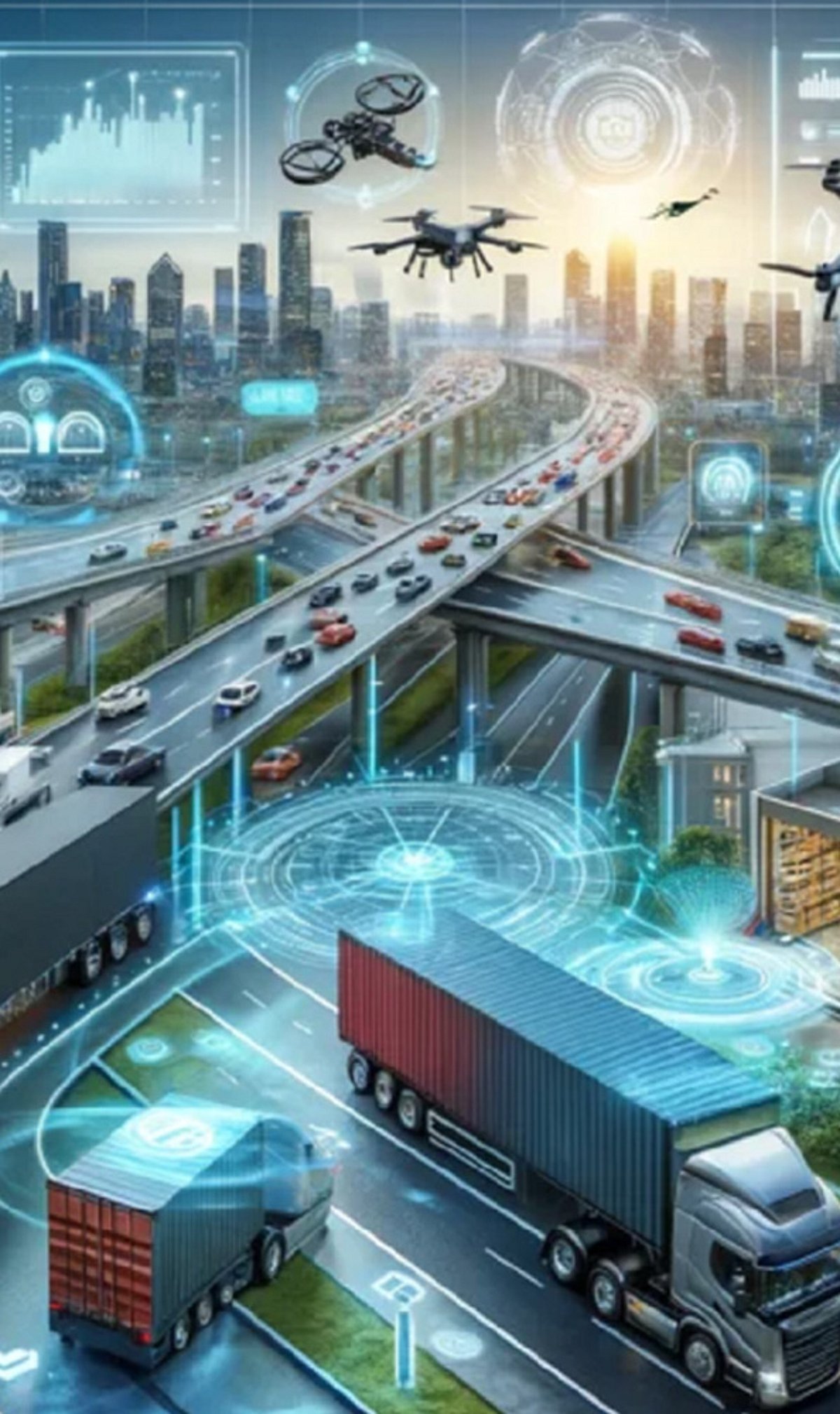
    V2X technology enables vehicles to exchange real-time information with roads, infrastructure, pedestrians, and other vehicles. This communication enhances safety, improves traffic management, and reduces congestion by allowing vehicles to anticipate and react to conditions instantly.

    Electric Powertrain Technology

    Electric powertrains replace traditional combustion engines with efficient electric motors, drastically reducing emissions, operating costs, and environmental impact. This technology is being adopted globally across cars, buses, trucks, and even ships.

    AI Traffic Management

    Artificial intelligence optimizes traffic signals, reduces congestion, and improves emergency response times. AI-driven traffic management systems analyze real-time data to adjust signal timings, reroute vehicles, and enhance urban mobility.

    Predictive Maintenance Platforms

    Predictive maintenance uses continuous vehicle performance analysis to identify potential failures before breakdowns occur. This reduces repair costs, maximizes fleet availability, and improves operational reliability for commercial and public transport.

    Digital Twin Technology

    Digital twins create virtual models of transportation systems for testing, monitoring, and optimization. Engineers can simulate changes, plan infrastructure improvements, and predict performance without disrupting real-world operations.

    Smart Railway Signaling

    Advanced communication-based train control systems automate train operations, improving passenger safety, scheduling accuracy, and rail network capacity. Smart signaling enables more frequent and reliable service on existing tracks.

    Hydrogen Fuel Cell Systems

    Hydrogen fuel cells generate clean electricity, offering longer driving ranges and rapid refueling compared to battery-electric vehicles. This technology is especially promising for heavy-duty trucks, buses, and other commercial applications requiring high energy density.

    Advanced Battery Management Systems

    Battery management systems monitor performance, temperature, charging cycles, and health in real time. They extend battery lifespan, improve electric vehicle reliability, and enhance safety by preventing overheating and overcharging.

    These smart engineering technologies are not just concepts—they are being deployed today to make transportation safer, greener, and more efficient. As innovation continues, the way we travel will continue to evolve, driven by engineering excellence.
  • How Digital Twins Are Transforming Manufacturing Operations

    How Digital Twins Are Transforming Manufacturing Operations

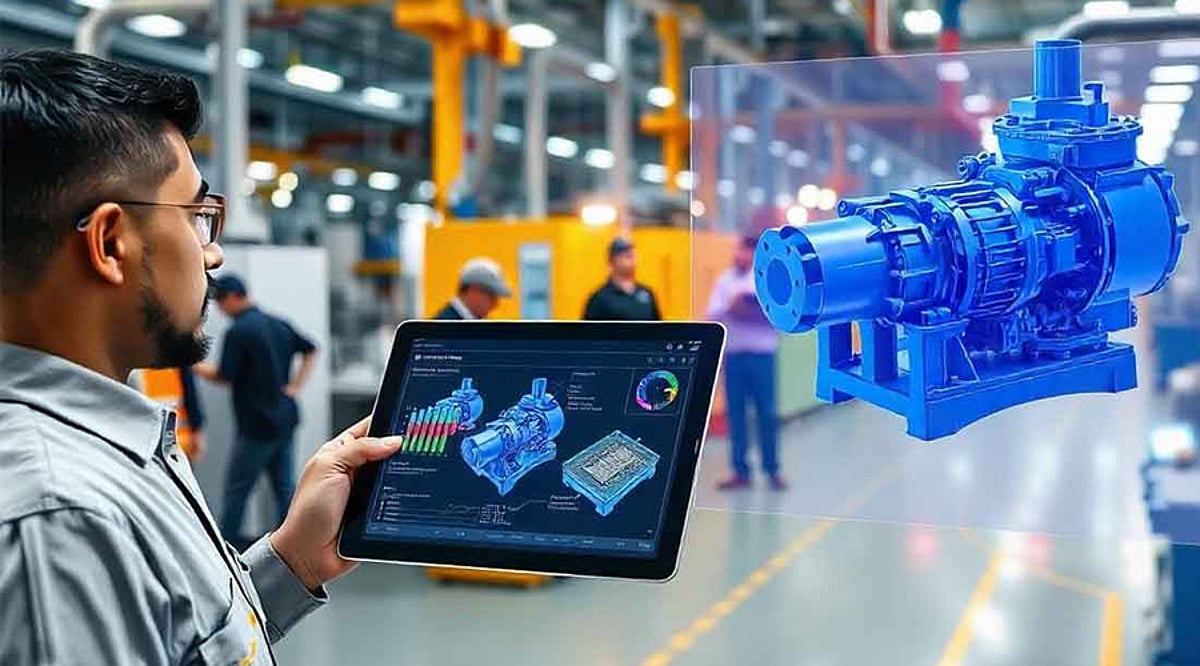
    Digital twins are revolutionizing the manufacturing industry by creating virtual replicas of physical assets, systems, and processes. These dynamic digital models use real-time sensor data to mirror the behavior of machines, production lines, and entire factories, enabling manufacturers to gain unprecedented visibility and control over their operations.

    Real-Time Production Monitoring

    Digital twins create virtual replicas of machines, production lines, and factories using live sensor data. Manufacturers can monitor equipment performance, identify bottlenecks, and track production in real time. This visibility helps managers make informed decisions, improve operational efficiency, reduce downtime, and maintain consistent production quality across manufacturing facilities.

    Predictive Maintenance

    By continuously analyzing equipment data, digital twins detect early signs of wear and potential failures before breakdowns occur. Manufacturers can schedule maintenance only when required instead of following fixed intervals. This approach minimizes unexpected downtime, extends machine lifespan, reduces maintenance costs, and ensures uninterrupted production with improved asset reliability.

    Faster Product Development

    Engineers use digital twins to simulate product designs and manufacturing processes before physical production begins. They can test different materials, identify design flaws, and optimize production methods virtually. This reduces prototype costs, shortens development cycles, accelerates innovation, and enables manufacturers to launch higher-quality products more quickly.

    Improved Quality Control

    Digital twins continuously compare real-time production data with expected performance standards. Any deviation is identified instantly, allowing manufacturers to correct defects before products reach customers. This proactive quality management reduces waste, improves product consistency, enhances customer satisfaction, and lowers the cost of rework and product recalls.

    Smarter Supply Chain Management

    Manufacturers use digital twins to model supply chains and simulate disruptions such as material shortages or transportation delays. These simulations help optimize inventory, improve logistics planning, and identify alternative sourcing strategies. Better visibility across the supply chain strengthens resilience, reduces costs, and ensures smoother production schedules.

    Energy Efficiency and Sustainability

    Digital twins monitor energy consumption across manufacturing operations and identify areas where electricity, water, or raw materials are being wasted. Manufacturers can test energy-saving strategies virtually before implementation. This leads to lower operating costs, reduced carbon emissions, improved resource utilization, and stronger progress toward sustainability goals.

    Better Workforce Safety and Training

    Digital twins simulate factory environments, allowing workers to practice operating equipment and responding to emergencies without real-world risks. Manufacturers can evaluate workplace safety, identify hazardous conditions, and improve training programs. These virtual environments reduce accidents, enhance employee confidence, strengthen compliance, and promote a safer manufacturing culture.

  • Essential Sensors Powering the Smart Factory of Tomorrow

    Essential Sensors Powering the Smart Factory of Tomorrow

    Modern smart factories depend on a suite of specialized sensors to maintain efficiency, quality, and safety. These devices continuously monitor critical parameters, enabling automation, predictive maintenance, and real-time decision-making. Below are the key sensor types every intelligent manufacturing facility relies on.

    Temperature Sensors

    Temperature sensors track heat levels in machinery and processes, preventing overheating, ensuring product quality, reducing equipment failures, and boosting operational efficiency every day.

    Pressure Sensors

    Pressure sensors measure fluid, gas, and hydraulic pressure accurately, supporting consistent manufacturing, leak detection, equipment protection, and workplace safety.

    Proximity Sensors

    Proximity sensors detect nearby objects without physical contact, enabling automated assembly lines, precise positioning, collision prevention, and seamless robotic operations across the factory floor.

    Vibration Sensors

    Vibration sensors identify abnormal equipment vibrations early, helping maintenance teams detect wear, prevent unexpected breakdowns, extend machinery lifespan, and reduce costly downtime.

    Optical Sensors

    Optical sensors use light to inspect products, detect defects, verify dimensions, improve quality assurance, and accelerate automated production with exceptional precision.

    Humidity Sensors

    Humidity sensors measure moisture levels in manufacturing environments, protecting sensitive materials, ensuring product consistency, reducing spoilage, and maintaining ideal storage conditions.

    Gas Sensors

    Gas sensors detect hazardous gases and air contaminants quickly, improving worker safety, ensuring regulatory compliance, preventing accidents, and supporting healthier industrial environments.

    Flow Sensors

    Flow sensors monitor the movement of liquids and gases accurately, optimizing production processes, reducing resource wastage, and maintaining efficiency in automated operations.

    Load Cells

    Load cells measure force and weight precisely during manufacturing, supporting automated packaging, inventory management, quality assurance, and reliable production monitoring.

  • 2026’s Top Data Center Efficiency Monitoring Companies: AI-Driven Optimization and Sustainability Leaders

    2026’s Top Data Center Efficiency Monitoring Companies: AI-Driven Optimization and Sustainability Leaders

    As artificial intelligence, cloud computing, and edge infrastructure continue to expand, data centers face mounting pressure to operate more efficiently. Power consumption, cooling requirements, and sustainability targets have become top priorities, making Data Center Infrastructure Management (DCIM) and efficiency monitoring platforms essential tools. Today’s platforms blend AI-driven analytics, predictive maintenance, digital twins, and real-time energy monitoring, enabling operators to maximize uptime while reducing operating expenses.

    Top 10 Data Center Efficiency Monitoring Companies in 2026

    Here are 10 companies leading the charge in data center efficiency monitoring this year:

    Schneider Electric

    Schneider Electric’s EcoStruxure platform is widely regarded as the gold standard for energy efficiency in data centers. It provides a unified view of energy usage, cooling, environmental conditions, and power management. The AI layer helps operators optimize PUE, detect anomalies early, and align with sustainability goals.

    Vertiv

    Vertiv offers a suite of intelligent software tools integrated with its critical power infrastructure to ensure continuous operation. The platform monitors cooling, UPS, thermal, and rack systems in real time, with predictive analytics designed to prevent downtime before it occurs.

    Sunbird Software

    Sunbird Software remains a DCIM leader with solutions like Power IQ and dcTrack. These provide end-to-end energy monitoring, asset management, capacity planning, and environmental tracking. Intuitive interfaces allow operators to manage multiple facilities simultaneously and identify small, actionable changes to improve energy efficiency.

    Nlyte Software

    Nlyte Software focuses on intelligent asset lifecycle management and operational efficiency. Its DCIM offering automates workflows, monitors infrastructure utilization, and supports predictive analytics for future capacity planning. By linking IT assets with facilities management, Nlyte helps organizations streamline operations and use resources more wisely.

    ABB

    ABB brings deep industrial automation and power management expertise to data center operations. Its monitoring solutions track electrical distribution, energy usage, and power quality, enabling organizations to fine-tune infrastructure for reliable performance while meeting sustainability requirements.

    Siemens

    Siemens’ monitoring system integrates building automation, electrical infrastructure, and cooling management. The software continuously assesses environmental performance, highlighting inefficiencies and areas for improvement. Digital twin technology allows companies to test infrastructure changes before implementation.

    Johnson Controls

    Johnson Controls uses an AI-powered building management system to control cooling and ventilation in data center premises. The OpenBlue solution delivers real-time monitoring, predictive maintenance, and automation, lowering operational costs while providing sustainability reporting capabilities.

    Honeywell

    With expertise in industrial automation, Honeywell brings intelligence to data center management through monitoring of HVAC systems, sensors, power distribution, and environmental controls. AI analytics enable predictive maintenance, improved energy efficiency, and integrated cybersecurity features.

    Modius

    Modius offers vendor-neutral infrastructure monitoring solutions, ideal for enterprises with mixed-device environments. Its OpenData platform aggregates data from power, cooling, networking, and environmental systems into centralized dashboards, providing insights without requiring equipment replacement.

    Hyperview

    Hyperview is a next-generation, cloud-based DCIM solution delivered as a SaaS platform. It enables management of distributed facilities from anywhere, with capabilities such as digital twins, AI analytics, remote asset management, and automated reporting—making it well-suited for edge computing and growing infrastructures.

    Why These Companies Matter

    The modern data center is evolving into an intelligent facility where efficiency equals success and sustainable operations. By leveraging these companies’ solutions, operators can minimize energy consumption, ensure optimal cooling, maximize capacity, and prevent costly downtime. As energy demands rise due to AI workloads, efficient monitoring technologies will become even more critical—whether for hyperscale cloud operators, enterprises, or edge computing sites. Firms that adopt modern monitoring platforms will gain a sustainability advantage in the digital world.

    Frequently Asked Questions

    What is data center efficiency monitoring?

    It tracks power, cooling, environmental conditions, and infrastructure performance to improve uptime, reduce costs, and optimize energy consumption.

    Why is DCIM software important?

    DCIM software provides real-time visibility into assets, energy usage, cooling systems, and capacity, enabling smarter infrastructure management and planning.

    Which company leads data center efficiency monitoring in 2026?

    Schneider Electric is widely regarded as an industry leader, offering comprehensive AI-powered monitoring, energy management, and sustainability solutions through EcoStruxure.

    How does AI improve data center efficiency?

    AI predicts equipment failures, optimizes cooling, automates maintenance, reduces energy waste, and improves overall operational performance with real-time analytics.

    What should businesses consider when choosing a monitoring platform?

    Evaluate scalability, AI capabilities, real-time monitoring, integration options, reporting features, cybersecurity, ease of deployment, and long-term operational support.

  • How AI and Sensor Intelligence Are Revolutionizing Healthcare Manufacturing from Data to Diagnosis

    How AI and Sensor Intelligence Are Revolutionizing Healthcare Manufacturing from Data to Diagnosis

    Inside the assembly lines of molecular diagnostics manufacturers, the equipment that produces cartridges used to test tuberculosis, COVID, and cancer runs under one of the most surveilled quality regimes in industrial manufacturing. Until recently, much of that surveillance happened the slow way. Test data trickled into databases only after manual uploads. Statistical investigations ran on schedules that felt antique next to the conveyor belts they were meant to oversee. A defect caught a shift late was still a defect caught late.

    That asymmetry between how the machines move and how the data moves is finally closing. A wave of analytics engineers is wiring inline sensors, real-time data pipelines, and AI-driven anomaly detection into the production floors of FDA-regulated medical-device makers. The work happens out of sight of the marketing copy that usually accompanies “AI in manufacturing,” and it doesn’t look like a chatbot or a generative model. It looks like a sensor on a fluidics line streaming a signal to a cloud platform that flags a deviation while the lot is still in progress.

    Suchitra Venkatesan is one of the engineers driving that shift. As a production data scientist at a leading MedTech company, she leads an internal real-time analytics platform that pulls test data across multiple layers, provides intelligent line-related analytics and pushes it into validated dashboards. The platform has produced one of the more concrete operational metrics in this corner of the industry. Product quality test data is now able to reach database in a near real-time basis, circumventing the need for manual data uploads. In a production environment where every lot represents tests destined for hospitals and clinical labs, that is the difference between catching a defect before shipment and not.

    The architecture behind the change is not exotic. Ms. Venkatesan’s workflow will potentially replace an age-old process that depends on humans uploading test data into a database with one that draws data directly from instruments on the production floor and pushes it through a cloud platform into PowerBI dashboards. The signal layer combines system data from instruments with quality metrics. The presentation layer potentially surfaces anomalies while a lot is still moving. The transition matters less for any single technical component than for what it changes about the production floor’s decision tempo.

    What changed first was the cadence of visibility. Most healthcare manufacturers report on a daily or end-of-shift basis. Ms. Venkatesan’s data-driven analytics layer brought that down to the hour, giving operations leadership a near-live read on output and equipment behavior. Patterns that daily aggregation had quietly hidden, such as equipment drift, supply pacing irregularities, and downstream test variability, became visible inside the shift in which they happened. Several departments inside the organization now rely on the data foundation she helped lay.

    The methodological roots run deeper than the current project. In 2019, Ms. Venkatesan authored a paper in IET Electric Power Applications on the use of an intelligent digital twin to monitor and predict the health of electric vehicle motors. The paper has accumulated more than two hundred citations and was awarded the IET Electric Power Applications Premium Award in 2021, the journal’s best-paper honor. The framework it laid out—sensor telemetry feeding a predictive model whose signal lets operators intervene before a failure rather than after one—is the same conceptual scaffolding she now applies to the equipment that produces molecular diagnostic tests.

    “Using intelligent digital twins isn’t explored very well in healthcare domain,” Ms. Venkatesan has written. “Predictive diagnostics can greatly reduce downtime and production latency. With a technology similar to the one described in my IET paper, critical life-saving machines can be monitored remotely and saved from inadvertent failure or stoppage before it even occurs.”

    Most coverage of AI in manufacturing skips the regulatory layer. Healthcare manufacturers operate under the US Food and Drug Administration’s Quality System Regulation, with audit trails, validation protocols, and documented decision logic for any signal that influences a quality call. Building a real-time AI pipeline for an unregulated factory is one thing. Building one whose every alert must be defensible to a regulator is something else. Engineers who came to work with data the way Ms. Venkatesan did—through instrumentation engineering and sensor and control systems—tend to be the ones who can hold both halves in their head at once. Her two graduate degrees, one in sensors and control systems and one in business analytics, sit on either side of the gap that most AI projects in regulated manufacturing must cross.

    The wider market has been catching up to the kind of work she has been doing. Real-time data pipelines, intelligent digital twins, and AI-driven predictive maintenance are converging into a standard toolkit for what some industry observers now call smart-factory healthcare. The framing is grand. The day-to-day work, as Ms. Venkatesan’s project shows, is more specific. It looks like cutting manual and redundant time out of a quality investigation, replacing a manual upload with a cloud-based data stream, and giving operations the ability to read the factory floor an hour at a time instead of a day at a time. That is what the next phase of AI in healthcare manufacturing looks like.

  • AI-Enabled Smart Microgrids: Transforming Energy Systems with Predictive Intelligence and Autonomous Optimization

    AI-Enabled Smart Microgrids: Transforming Energy Systems with Predictive Intelligence and Autonomous Optimization

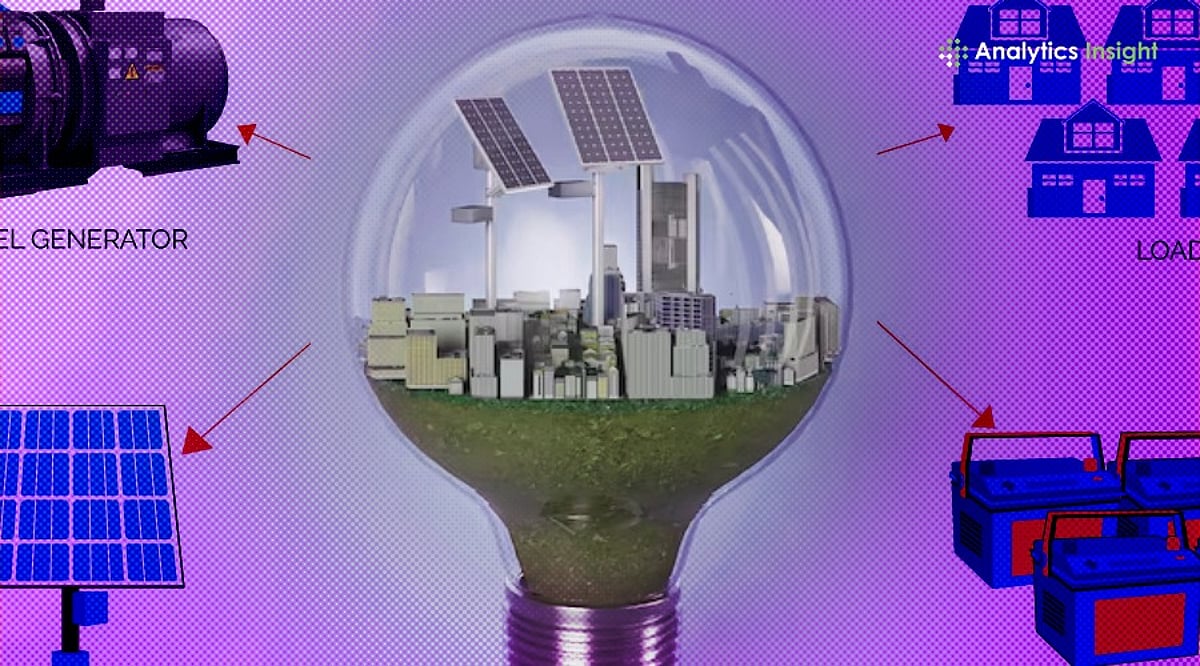
    AI is transforming microgrids from rule-based energy systems into intelligent, self-optimizing networks. By combining predictive analytics, renewable forecasting, and autonomous energy management, AI improves grid reliability, lowers operating costs, and supports the growing power demands of data centers, industries, and smart communities.

    From Passive Systems to Predictive Ones

    Traditional microgrids relied on relatively simple rule-based controllers: if battery storage drops below a threshold, switch to backup generation. AI-enabled systems operate very differently, using machine learning models such as LSTM neural networks to forecast solar and wind output, anticipate demand spikes hours in advance, and adjust dispatch decisions before a shortfall occurs. Research comparing forecasting techniques has shown LSTM networks achieving strong accuracy for wind generation prediction, while random forest models have performed particularly well for solar forecasting—both feeding directly into how confidently a microgrid can rely on renewable sources rather than falling back on diesel generation as a safety net.

    The Market Is Scaling Fast, and AI Is the Reason Why

    The global microgrid market was valued at roughly $28.9 billion in 2025 and is projected to grow at a compound annual rate of around 18% through the early 2030s, according to Global Market Insights. A narrower but faster-growing segment—AI-integrated microgrids purpose-built for data centers—is expected to expand from $4.8 billion in 2025 to $20.9 billion by 2034. That growth is being driven largely by AI’s own power appetite: hyperscale data centers need reliable, high-density power that public grids increasingly can’t guarantee, making AI-optimized microgrids as much an enabler of the broader AI boom as a beneficiary of it.

    Who’s Building the Intelligence Layer

    A handful of established industrial players and newer software specialists are shaping how AI actually gets embedded into microgrid operations. Key companies include:

    • Schneider Electric
    • Siemens
    • Tesla Energy
    • ABB
    • Eaton
    • Heila Technologies

    Predictive Maintenance Is Quietly Cutting Costs

    Beyond forecasting and dispatch, AI is reshaping how microgrids stay operational in the first place. By continuously analyzing sensor data from batteries, inverters, and generation assets, machine learning models can flag early signs of equipment degradation well before a failure actually occurs. This shifts maintenance from a fixed, calendar-based schedule to a condition-based one, reducing unplanned downtime and avoiding the kind of costly emergency repairs that used to be treated as simply unavoidable in distributed energy systems.

    Real-World Deployments Show the Financial Case

    The economic argument for AI-driven microgrids is no longer theoretical. Schneider Electric’s EcoStruxure Microgrid deployment at a California winery, Domaine Carneros, cut carbon emissions by 375 tonnes and saved roughly $70,000 annually through smarter load management alone. At a larger scale, research into hydrogen-integrated microgrids combining LSTM forecasting with optimization algorithms has shown grid import reductions of over 35% and improvements in energy self-sufficiency from roughly 71% to nearly 90%—figures that would be difficult to reach with static, rule-based control systems.

    What’s Next for AI-Driven Microgrids

    The next phase of development looks likely to center on two things: tighter integration with digital twins that simulate microgrid behavior before changes are made in the real world, and deeper participation in energy markets, where systems like Tesla’s Autobidder let storage assets buy and sell power autonomously based on real-time price signals. As renewable penetration keeps climbing and AI’s own electricity demand keeps growing in parallel, the pressure on microgrids to get smarter is only going to intensify.

    Why This Matters

    As renewable energy adoption accelerates and electricity demand rises from AI workloads and data centers, intelligent microgrids have become essential for grid resilience. AI enables real-time optimization, predictive maintenance, and efficient energy distribution, helping businesses and communities reduce costs, improve reliability, and support a more sustainable energy future.

  • How Data Analytics Reveals Hidden Infrastructure Risks: Paulson Geo Philip’s Approach

    How Data Analytics Reveals Hidden Infrastructure Risks: Paulson Geo Philip’s Approach

    An experienced project manager outlines three ways to identify risks before they impact critical infrastructure operations. As data volumes surge, organizations struggle to act on insights—65% of teams still make decisions without leveraging available data, according to the Sisense State of Analytics report. The question is: how can organizations turn information into a tool for risk management and operational reliability?

    Paulson Geo Philip, a Project & Maintenance Manager at UAE Television & Radio (Channel 4 Group), has tackled this challenge for over 14 years. He has applied analytics-driven approaches to infrastructure initiatives valued at more than AED 120 million, leading teams of over 800 professionals and improving project efficiency and cost performance by nearly one-third. Philip is also an author of multiple scientific publications, an invited evaluator at the AITEX Summit Winter 2026, and a Senior Member of the Institute of Electrical and Electronics Engineers.

    Philip believes that the most important project risks reveal themselves through patterns. “I have learned to look at information as a connected system,” he explains. “The most valuable insights rarely come from a single metric. They emerge when you understand how different parts of a project influence one another. Analytics helps create that perspective and allows leaders to make decisions with greater confidence.”

    At UAE Television & Radio, Philip oversaw infrastructure projects worth over AED 120 million, coordinating multidisciplinary teams of engineers, contractors, and technical specialists. His analytics-driven approach helped major infrastructure projects move faster and operate more efficiently, improving schedule performance and reducing costs by 20–30%.

    The role of the infrastructure project leader is evolving beyond managing schedules and budgets. Today’s leaders are expected to make sense of growing volumes of information and translate it into better operational decisions. Another key issue is the high cost of unplanned equipment and infrastructure failures. As infrastructure assets become more connected, maintenance is evolving into a data-driven discipline. Operational data can reveal how equipment performance changes over time, allowing organizations to improve asset utilization, extend service life, and make more informed maintenance decisions.

    Drawing on his experience, Philip has explored these questions through publications. In The American Journal of Engineering and Technology, he introduced concepts such as a Multi-Layer Cognitive Energy Twin and an Adaptive Predictive Resilience Index to forecast system conditions and evaluate infrastructure resilience. In his paper “Artificial Intelligence and Machine Learning Applications in Project Schedule Forecasting” (Earth Science Research Network, SSRN), Philip presented a predictive framework to identify schedule risks before they affect project outcomes.

    “Today, more and more organizations view operational data not as a record of past performance, but as a tool for forecasting future conditions,” notes Philip. “That shift from reactive management to predictive management is becoming one of the defining trends across infrastructure and operations.”

    Philip also served on the judging panel at the AITEX Summit Winter 2026, an international forum for artificial intelligence, digital technologies, innovation, and sustainable development. He holds Senior Member status in the IEEE. “I would encourage organizations to create more opportunities for collaboration between practitioners, researchers, and technology specialists,” he says. “Some of the best ideas I have come across were developed by people working in very different fields.”

    Looking ahead, Philip sees analytics becoming an increasingly important part of how organizations manage risk and reliability. His experience points to three priorities: recognizing patterns before problems escalate, using data to anticipate future conditions, and carefully evaluating the technologies that guide operational decisions. Together, these capabilities transform information from a byproduct of operations into a tool for managing reliability and performance.