
What Is Crypto Custody?
Crypto custody refers to the protection and management of private keys and digital assets. Three prominent security models—Multi-Party Computation (MPC), Multisignature (Multisig), and Hardware Security Modules (HSM)—each employ distinct approaches to reduce the risk of private key compromise. Understanding how these models work helps organizations evaluate security architecture, transaction controls, and operational requirements.
Multi-Party Computation (MPC)
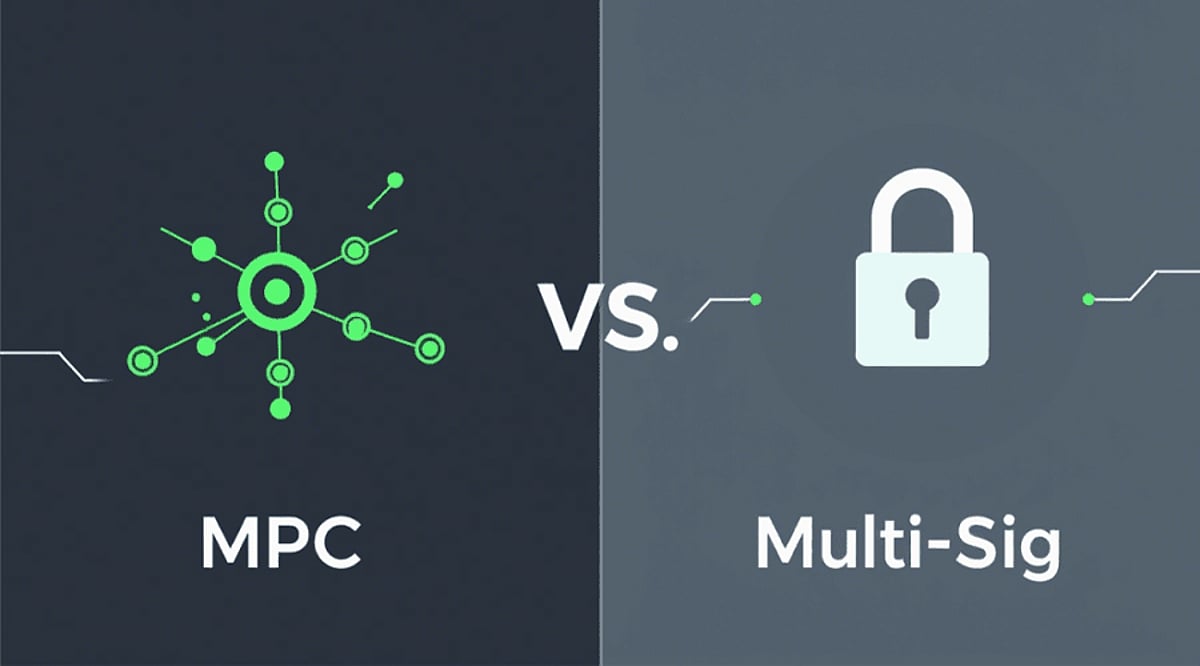
MPC distributes cryptographic operations across multiple parties or devices so that no single complete private key exists in one location. Transactions require cooperation among participants to authorize, significantly reducing the risk associated with storing a full private key in a single place.
Multisignature (Multisig)
Multisig requires multiple authorized private keys or signatures to approve a transaction. For example, a wallet can require two out of three designated signers before any funds move. This adds an extra approval layer and reduces reliance on any single individual or private key.
Hardware Security Module (HSM)
An HSM is a specialized physical device designed to securely generate, store, and use cryptographic keys. It restricts access to sensitive cryptographic operations and is widely used in security-conscious environments. Its protection model relies on dedicated hardware and controlled operational procedures.
MPC vs Multisig
Both MPC and multisig distribute control, but they differ technically. Multisig records multiple signatures as part of transaction authorization, whereas MPC distributes the cryptographic computation itself. Their implementation, blockchain compatibility, and operational workflows can vary significantly.
MPC vs HSM
MPC and HSM address key security through different technical approaches. MPC distributes cryptographic control among participants, while HSM provides hardware-based protection for keys and operations. Organizations should evaluate factors such as infrastructure, recovery procedures, access controls, transaction workflows, and integration needs when choosing between them.
Choosing the Right Custody Model
No single custody architecture suits every organization. MPC, multisig, and HSM-based systems involve different approaches to key management, transaction approval, infrastructure, and recovery. The appropriate model depends on asset type, operational structure, security requirements, blockchain compatibility, governance procedures, and the organization’s overall risk management framework.