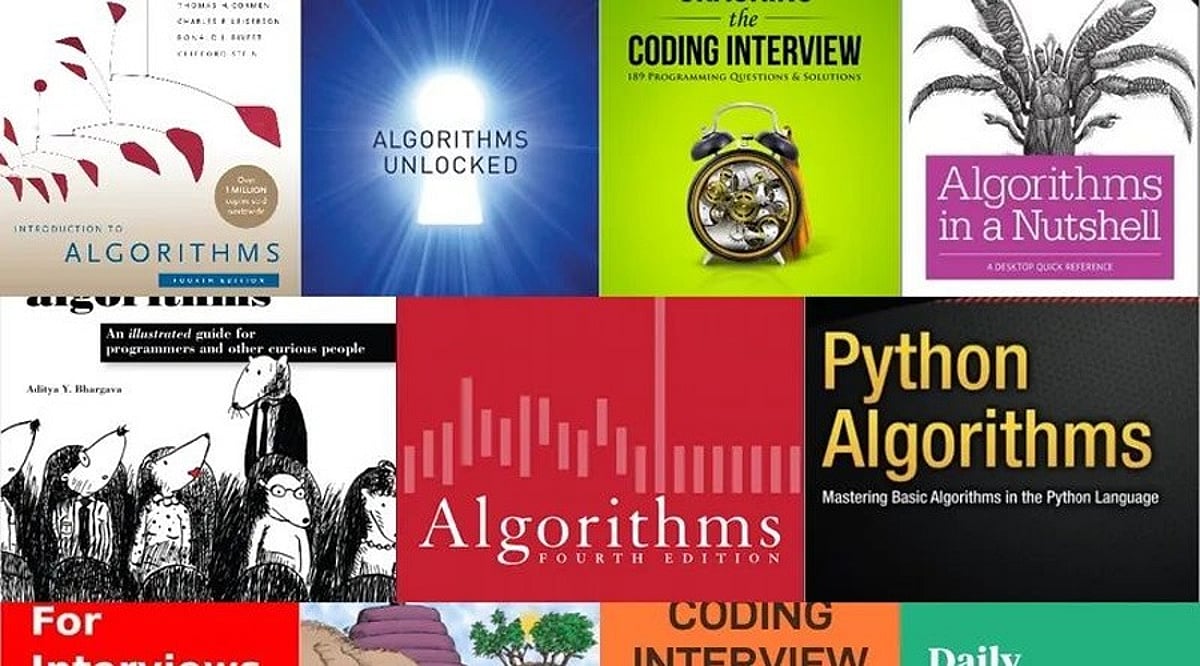
Artificial intelligence can generate code in seconds, but it cannot replace a programmer’s deep understanding of data structures and algorithms (DSA). Whether you’re preparing for coding interviews, building scalable applications, or competing in programming contests, DSA remains one of the most valuable skills in software development. While AI can suggest solutions, knowing why an algorithm works and when to use it comes only through structured learning and practice. The right books make all the difference.
Essential DSA Books to Build Strong Fundamentals
These books establish the fundamentals of data structures and algorithms, helping readers build strong problem-solving skills before tackling advanced concepts.
Introduction to Algorithms (CLRS) – The Definitive Reference
CLRS, written by Thomas H. Cormen, Charles E. Leiserson, Ronald L. Rivest, and Clifford Stein, remains the standard guide to learning algorithms. It covers topics from graph and sorting algorithms to dynamic programming and computational complexity. Though challenging, no other book is as comprehensive.
Grokking Algorithms – Where to Start Your Journey
Aditya Bhargava’s book uses colorful illustrations and clear explanations to introduce binary search, recursion, graph traversal, and more. It’s one of the best books for beginners.
Algorithms (4th Edition) – Learn Through Practice
Robert Sedgewick and Kevin Wayne strike a balance between theory and practice, covering essential algorithm concepts and their implementation in real programs.
Books Built for Coding Interviews
Technical interviews focus on problem-solving rather than memorization. These titles help candidates build that mindset.
Cracking the Coding Interview – The Interview Must-Have
Gayle Laakmann McDowell’s book explains DSA concepts and includes nearly 200 interview questions, solutions, and tips for handling technical interviews at top tech companies.
Data Structures and Algorithms Made Easy – Practice-Driven Learning
Narasimha Karumanchi’s book uses a Q&A approach, reinforcing concepts through examples. It’s popular among engineering students preparing for placements and coding tests.
Elements of Programming Interviews – Up the Difficulty Factor
This book is designed for experienced programmers and includes various problems on arrays, linked lists, trees, graphs, and dynamic programming.
Books That Sharpen Problem-Solving
These books help programmers apply critical thinking to unfamiliar problems.
The Algorithm Design Manual – Problem-Solving Application
Steven S. Skiena merges theoretical concepts with practical problems solved using algorithms, providing insights across different industries. The algorithm catalog is especially helpful for finding the best way to solve different kinds of problems.
Algorithm Design – Strong Academic Background
Jon Kleinberg and Éva Tardos teach algorithm design using mathematical logic and well-chosen examples. It’s perfect for those who want to learn the principles of efficient computing.
Books for Python Learners and Self-Study
Not every programmer learns the same way. These books cater to different preferences and skill levels.
Data Structures and Algorithms in Python – Learn DSA with Python
Goodrich, Tamassia, and Goldwasser introduce basic DSA concepts via Python, focusing on ideas that apply across programming languages.
A Common-Sense Guide to Data Structures and Algorithms – Simple and Accessible
Jay Wengrow introduces difficult concepts in simple words with practical examples, avoiding complicated mathematical formulas. Its conversational style makes it one of the easiest DSA books.
Choosing the Right DSA Book
Depending on your goals, you can start with Grokking Algorithms and then move to Algorithms (4th Edition) or Introduction to Algorithms (CLRS). For placement preparation, choose Data Structures and Algorithms Made Easy and Cracking the Coding Interview. For experienced developers, The Algorithm Design Manual and Elements of Programming Interviews are excellent choices. Even in the era of AI, learning DSA is necessary, and practicing with these books is one of the best ways to improve your skills.