Why Camera Support Matters
A great camera won’t deliver professional results on an unstable tripod. The right support determines how steady your footage looks, how quickly you can set up, and how confident you feel on a shoot. Yet many creators spend heavily on cameras and lenses while overlooking the gear that keeps every frame stable.
This guide compares five professional tripods, each built for a different style of content creation, to help you make an informed choice.
How to Choose the Best Professional Tripod
Tripod choice should follow your shooting style, not your budget. Use these criteria to narrow down the options:
- Height and stability: For interviews and studio work, prioritize a tripod that reaches eye level and doesn’t wobble.
- Portability: Frequent travelers need a lightweight model with a compact folded size that fits in a carry-on bag.
- Material: Aluminum tripods are affordable but heavy. Carbon fiber costs more but reduces weight while maintaining strength—ideal for long shooting days.
- Head type: Ball heads allow quick reframing for photos and general use. Fluid heads provide smooth pans and tilts for video work.
- Locking mechanism: Twist locks pack tighter for travel; flip locks open and close faster for quick adjustments.
- Quick-release plate: An Arca-Swiss compatible system offers more flexibility with third-party accessories as your kit grows.
- Load capacity: Choose a tripod rated to carry at least 1.5–2 times the combined weight of your camera, lens, and accessories. This ensures stability and room for future upgrades.
Best Professional Tripods Compared
Manfrotto Befree Advanced – Best Travel Tripod
Built for frequent travel, this tripod folds to 15.7 inches and weighs only 1.54 kg (3.4 lb). Despite its compact size, it supports up to 9 kg (20 lb), enough for a mirrorless body with a mid-size lens. The 494 ball head has separate controls for sphere lock, friction, and panning, so framing a shot takes seconds.
Manfrotto MT055XPRO3 – Best Studio Tripod for Video
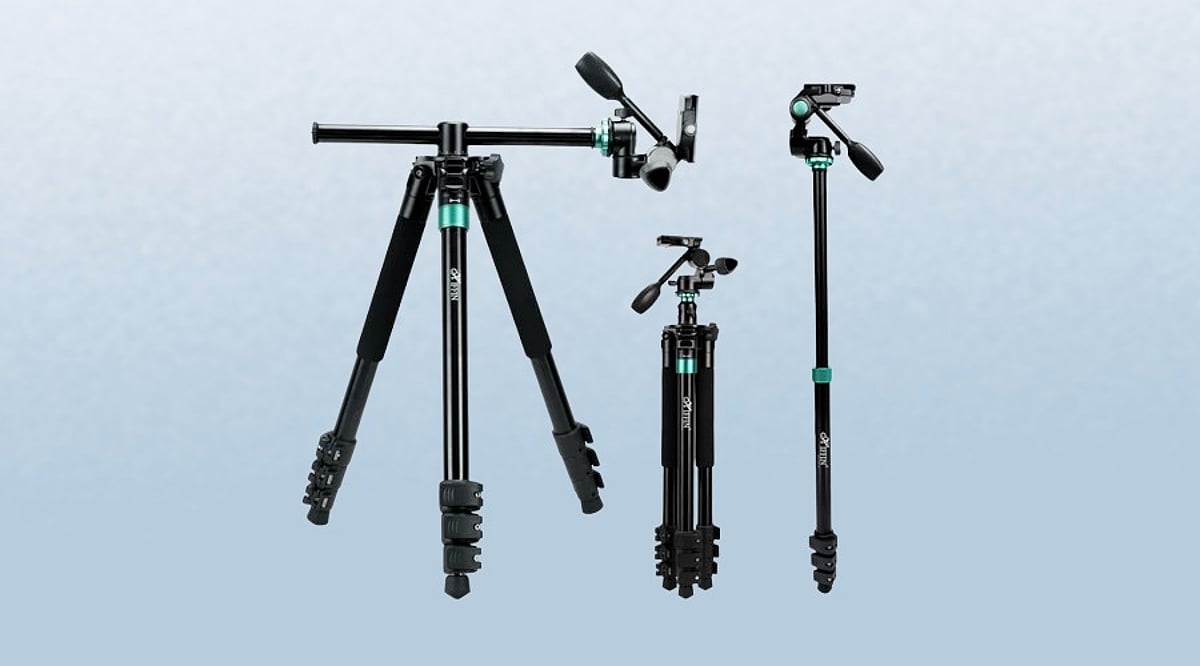
This model trades portability for reach and stability. It extends to 66.9 inches (170 cm) and holds 9 kg at 2.5 kg total weight. The 90-degree horizontal column lets you swing the camera into overhead or macro positions without repositioning the whole rig—a real advantage for product reviews and fixed-camera interviews.
Vanguard VEO 3+ 263AP – Best Hybrid Tripod and Monopod
Creators who mix formats will appreciate this pick. One leg detaches to become a full monopod in seconds, and the MACC column pivots nearly 360 degrees for angles a fixed center column cannot reach. At 2.63 kg (5.8 lb) with a 6 kg (13.2 lb) load capacity, it suits anyone switching between static talking-head footage and handheld B-roll in the same session.
Benro C3780TN – Best Carbon Fiber Tripod for Heavy Setups
Carbon fiber earns its premium here. At 2.1 kg (4.6 lb), this tripod weighs less than many aluminum models despite an 18 kg (40 lb) load capacity—nearly double what the rest of this list supports. Benro’s QLS anti-rotation leg lock prevents legs from twisting out of position, a crucial detail when mounting a full-frame body and telephoto lens.
Digitek DTR 540 BH – Best Budget Tripod for New Creators
A premium tripod isn’t required for stable footage. The DTR 540 BH holds 8 kg (17.6 lb), converts into a monopod, and folds to 21 inches at 2.35 kg (5.2 lb)—all at a fraction of the price of the Manfrotto or Vanguard. It may not survive years of heavy professional use, but as a first serious tripod, it covers the essentials without cutting corners on load capacity.
Final Thoughts
The best tripod matches your shooting style, not a price tag. The right support improves every frame, extends the working life of your gear, and turns setup time into shooting time.
Frequently Asked Questions
What features should I look for in a professional tripod?
Look for a stable build, sufficient load capacity, suitable maximum height, a reliable head, and a compact folded size if you travel frequently. These features improve both usability and shooting stability.
Is a carbon fiber tripod better than an aluminum one?
Carbon fiber tripods are lighter, absorb vibrations better, and are easier to carry for long shoots. Aluminum tripods are more affordable and offer excellent stability for studio and indoor content creation.
Should content creators choose a tripod or a monopod?
Tripods are ideal for interviews, product videos, and long recording sessions where maximum stability is needed. Monopods are better for events, sports, and fast-moving shoots where mobility is more important.
Can a professional tripod support both smartphones and cameras?
Yes. Most professional tripods use a standard 1/4-inch mounting screw, allowing them to support cameras as well as smartphones with a compatible phone mount adapter.
How much load capacity does a content creator need?
Choose a tripod with a load capacity at least 1.5 to 2 times the combined weight of your camera, lens, and accessories. This provides better stability and allows room for future gear upgrades.