Tag: Programming

  • 10 Must-Have Skills for Computer Engineers to Thrive in the AI Era

    10 Must-Have Skills for Computer Engineers to Thrive in the AI Era

    AI Literacy Is Becoming Essential

    AI is rapidly integrating into everyday software development, making AI literacy a critical skill for computer engineers. Current industry data shows that AI is now one of the most requested skills in job postings. Engineers should understand how AI models work and how to use them effectively in real-world development projects.

    Strong Programming Still Matters

    While AI tools can generate code, solid programming knowledge remains vital. Languages like Python, Java, and JavaScript continue to appear frequently in technology job requirements. Engineers need to understand code well enough to build systems, identify errors, test outputs, and improve applications with AI assistance.

    Data Skills Give Engineers an Edge

    AI systems depend heavily on reliable data, making data handling an important engineering skill. Engineers should know how to work with databases, analyze information, and build data pipelines. Understanding data quality also helps engineers identify problems before they affect AI models and software applications.

    Cloud Computing Is Now a Core Skill

    AI applications often require significant computing resources, making cloud knowledge increasingly important. India’s cloud-native developer community has grown rapidly, with hybrid cloud now widely used among developers. Engineers should understand cloud deployment, infrastructure, storage, and scalable application design.

    Cybersecurity Needs Stronger Attention

    AI is creating new opportunities for cyberattacks while also helping security teams detect threats. Computer engineers need to understand secure coding, system vulnerabilities, identity controls, and basic threat detection. Recent cyber incidents have highlighted how AI can make attacks faster and more sophisticated.

    Engineers Need to Work With AI Agents

    AI agents are evolving from simple question-answering systems toward tools that can perform multi-step tasks. Engineers will need to understand how these systems operate, connect with software, and work within controlled permissions. Verification and testing are becoming more important as AI systems take on more coding work.

    Critical Thinking Still Sets Engineers Apart

    AI can produce code, analyze information, and suggest solutions, yet engineers still need to judge whether the output is correct. Critical thinking helps identify errors, weak assumptions, security risks, and unreliable AI results. This human oversight is becoming especially important as companies use AI across software and business workflows.

  • HPE Code Wars 2026: Bengaluru Coding Challenge Attracts Over 300 Students

    HPE Code Wars 2026: Bengaluru Coding Challenge Attracts Over 300 Students

    Hewlett Packard Enterprise (HPE) hosted the 2026 edition of HPE Code Wars at its Mahadevapura campus in Bengaluru, bringing together more than 300 students from Classes 9 to 12 for its flagship school-level coding competition.

    The delegates were largely drawn from schools under the government as well as private organizations in Bengaluru, but there were students from other places like Mysore, Mangaluru, Chennai and Kotagiri too.

    The event held at HPE’s largest campus across the globe was based on coding and problem solving. According to the organizers, HPE Code Wars has emerged as one of the biggest coding contests in India.

    This all-day contest, themed ‘Wars’, comprised more than 20 programming tests, which were solved by the students using C, C++, Java, and Python 3+.

    HPE Focuses on Practical Learning

    According to HPE, the contest was formulated as a means of helping students link theoretical knowledge gained in class to practice by providing real-world programming problems for participants to solve.

    “Our goal with HPE Code Wars is to spark curiosity, build confidence, and give young programmers a taste of what it is like to work in a world-class technology environment,” said Manoj Krishna Suseela, Vice President of Engineering, HPE Servers Business & India Site R&D Leader, HPE.

    “As technology continues to reshape every industry, nurturing young talent has never been more important. HPE Code Wars reflects our commitment to empowering students with practical learning experiences that encourage innovation, strengthen problem-solving skills, and prepare them for successful careers in an increasingly digital world,” he added.

    Winners Receive Technology Toolkits

    Winners were given technology kits as well as recognition on the national level for their outstanding performance. All the competitors were given certificates and prizes worth Rs 1.5 lakh in total.

    “It was an incredible experience to compete at HPE Code Wars 2026,” said Ishaan Som Singh from Greenwood High International School, one of the winners.

    “From the exciting atmosphere to the challenging coding problems, every part of the competition motivated me to think critically, improve my programming skills, and fueled my ambition to build a career in technology,” he said.

    According to Rishikesh Muralimohan, who also hails from Greenwood High International School, the competition encouraged participants to think outside the box and remain cool even when under pressure.

    “Participating in HPE Code Wars 2026 was both challenging and rewarding. It challenged me to think differently, stay composed under pressure, and adapt quickly as each problem unfolded. The feedback and guidance throughout the competition were equally valuable and helped me refine my approach. This experience has inspired me to keep learning, take on bigger challenges, and shape my future in technology,” he said.

    Competition Started in 1998

    HPE Code Wars was established in Houston in 1998 and is one of the oldest programming contests for secondary school level. Currently, it is conducted in Roseville, Fort Collins, New Jersey, Taipei, and Barcelona, HPE sites. As per HPE, a number of the participants have been able to get admissions to prestigious institutes like MIT and IITs.

  • Master Quantum Computing Without a CS Degree: A Step-by-Step Guide

    Master Quantum Computing Without a CS Degree: A Step-by-Step Guide

    Quantum computing is a rapidly evolving field that promises to revolutionize how we solve complex problems. You don’t need a computer science degree to dive in—here’s a practical roadmap to get started.

    Build Strong Fundamentals

    Understand basic concepts like qubits, superposition, entanglement, and quantum gates before exploring advanced algorithms or practical quantum programming applications.

    Learn Essential Mathematics

    Focus on linear algebra, probability, complex numbers, and basic calculus. These mathematical concepts form the theoretical foundation of quantum computing.

    Start with Python Programming

    Python is the lingua franca of quantum computing frameworks. Learn the basics to make experimentation, simulations, and algorithm implementation easier.

    Explore IBM Quantum Platform

    Use IBM Quantum Experience to run real quantum circuits online. This gives you practical exposure without needing expensive quantum hardware.

    Study Quantum Computing Frameworks

    Practice with Qiskit, Cirq, or PennyLane to understand circuit design, quantum algorithms, and machine learning applications through interactive coding exercises.

    Take Beginner-Friendly Online Courses

    Enroll in structured courses from universities and educational platforms covering quantum mechanics, programming, and practical quantum computing projects.

    Read Books and Research Papers

    Combine beginner books with simplified research papers to understand quantum principles, industry developments, and emerging technologies.

    Join Quantum Learning Communities

    Participate in forums, hackathons, webinars, and open-source communities where experts and learners exchange ideas and share resources.

    Build Practical Quantum Projects

    Create simple quantum algorithms, simulations, and portfolio projects that demonstrate your skills and deepen your understanding, making you more attractive to employers or academic institutions.

  • 10 Must-Read Data Structures and Algorithms Books for Programmers in 2026

    10 Must-Read Data Structures and Algorithms Books for Programmers in 2026

    Artificial intelligence can generate code in seconds, but it cannot replace a programmer’s deep understanding of data structures and algorithms (DSA). Whether you’re preparing for coding interviews, building scalable applications, or competing in programming contests, DSA remains one of the most valuable skills in software development. While AI can suggest solutions, knowing why an algorithm works and when to use it comes only through structured learning and practice. The right books make all the difference.

    Essential DSA Books to Build Strong Fundamentals

    These books establish the fundamentals of data structures and algorithms, helping readers build strong problem-solving skills before tackling advanced concepts.

    Introduction to Algorithms (CLRS) – The Definitive Reference

    CLRS, written by Thomas H. Cormen, Charles E. Leiserson, Ronald L. Rivest, and Clifford Stein, remains the standard guide to learning algorithms. It covers topics from graph and sorting algorithms to dynamic programming and computational complexity. Though challenging, no other book is as comprehensive.

    Grokking Algorithms – Where to Start Your Journey

    Aditya Bhargava’s book uses colorful illustrations and clear explanations to introduce binary search, recursion, graph traversal, and more. It’s one of the best books for beginners.

    Algorithms (4th Edition) – Learn Through Practice

    Robert Sedgewick and Kevin Wayne strike a balance between theory and practice, covering essential algorithm concepts and their implementation in real programs.

    Books Built for Coding Interviews

    Technical interviews focus on problem-solving rather than memorization. These titles help candidates build that mindset.

    Cracking the Coding Interview – The Interview Must-Have

    Gayle Laakmann McDowell’s book explains DSA concepts and includes nearly 200 interview questions, solutions, and tips for handling technical interviews at top tech companies.

    Data Structures and Algorithms Made Easy – Practice-Driven Learning

    Narasimha Karumanchi’s book uses a Q&A approach, reinforcing concepts through examples. It’s popular among engineering students preparing for placements and coding tests.

    Elements of Programming Interviews – Up the Difficulty Factor

    This book is designed for experienced programmers and includes various problems on arrays, linked lists, trees, graphs, and dynamic programming.

    Books That Sharpen Problem-Solving

    These books help programmers apply critical thinking to unfamiliar problems.

    The Algorithm Design Manual – Problem-Solving Application

    Steven S. Skiena merges theoretical concepts with practical problems solved using algorithms, providing insights across different industries. The algorithm catalog is especially helpful for finding the best way to solve different kinds of problems.

    Algorithm Design – Strong Academic Background

    Jon Kleinberg and Éva Tardos teach algorithm design using mathematical logic and well-chosen examples. It’s perfect for those who want to learn the principles of efficient computing.

    Books for Python Learners and Self-Study

    Not every programmer learns the same way. These books cater to different preferences and skill levels.

    Data Structures and Algorithms in Python – Learn DSA with Python

    Goodrich, Tamassia, and Goldwasser introduce basic DSA concepts via Python, focusing on ideas that apply across programming languages.

    A Common-Sense Guide to Data Structures and Algorithms – Simple and Accessible

    Jay Wengrow introduces difficult concepts in simple words with practical examples, avoiding complicated mathematical formulas. Its conversational style makes it one of the easiest DSA books.

    Choosing the Right DSA Book

    Depending on your goals, you can start with Grokking Algorithms and then move to Algorithms (4th Edition) or Introduction to Algorithms (CLRS). For placement preparation, choose Data Structures and Algorithms Made Easy and Cracking the Coding Interview. For experienced developers, The Algorithm Design Manual and Elements of Programming Interviews are excellent choices. Even in the era of AI, learning DSA is necessary, and practicing with these books is one of the best ways to improve your skills.

  • How to Launch a Career in Quantum Computing as Job Opportunities Surge

    How to Launch a Career in Quantum Computing as Job Opportunities Surge

    Quantum computing is one of the fastest-growing fields in technology, with increasing investments across healthcare, finance, cybersecurity, manufacturing, and pharmaceuticals driving strong demand for skilled professionals. Whether you’re a software developer, hardware engineer, or mathematician, there are multiple pathways to enter this exciting domain.

    Quantum Software Development

    Learn quantum programming languages like Qiskit and Cirq to build algorithms for emerging quantum computers. These skills are essential for developing applications across multiple industries successfully.

    Quantum Hardware Engineering

    Design and improve quantum processors, cryogenic systems, and superconducting circuits that power next-generation quantum computing technologies and research innovations.

    Quantum Algorithms Research

    Develop algorithms that solve complex optimization, simulation, and cryptography problems faster than classical computers in specialized computing environments.

    Mathematics and Physics Foundation

    Build strong knowledge of linear algebra, probability, quantum mechanics, and computer science to understand core quantum computing principles effectively.

    Hands-On Quantum Platforms

    Practice on cloud-based quantum systems using platforms from leading technology companies to gain practical experience with real quantum hardware remotely.

    Quantum Computing Certifications

    Complete recognized quantum computing courses and certifications to validate technical expertise and improve employability in the growing quantum technology industry.

    Programming Skills Development

    Master Python alongside quantum frameworks to create, test, and optimize quantum applications while strengthening overall software engineering capabilities effectively.

    Industry Collaboration Opportunities

    Participate in hackathons, research projects, internships, and open-source communities to build practical experience and expand professional quantum computing networks.

    Future Career Prospects

    Growing investments across healthcare, finance, cybersecurity, manufacturing, and pharmaceuticals continue creating strong demand for skilled quantum computing professionals worldwide.

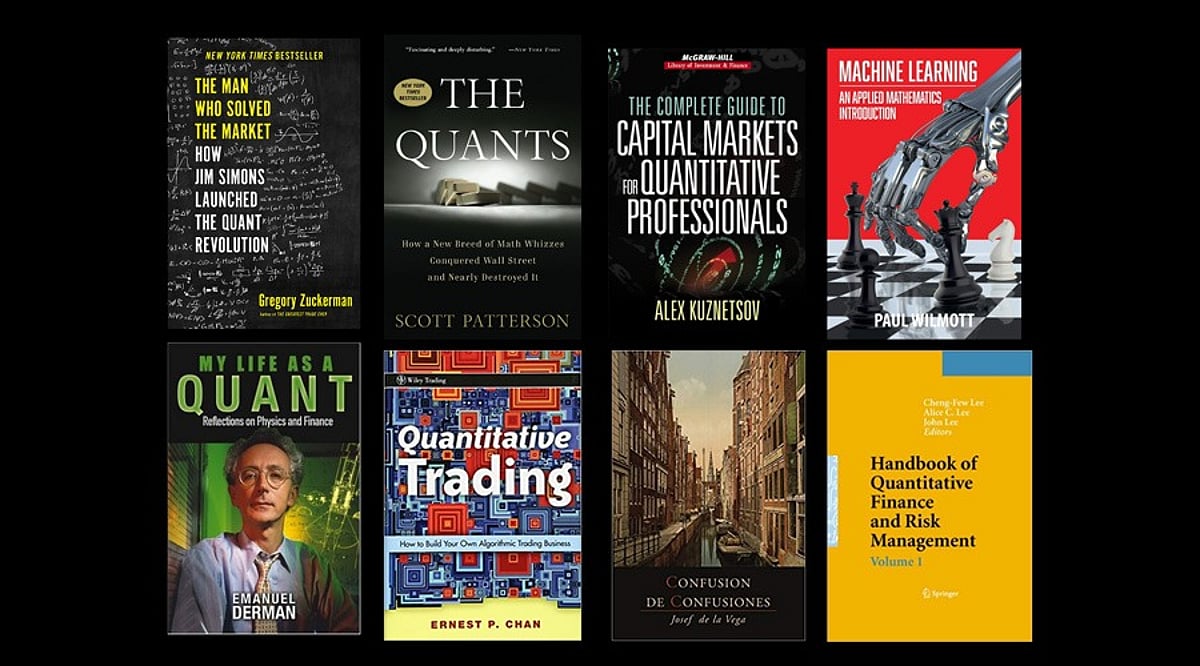
  • Essential Quant Finance Books for 2027 Candidates: A Structured Reading Plan

    Essential Quant Finance Books for 2027 Candidates: A Structured Reading Plan

    Quant finance hiring continues to intensify. Firms now expect candidates to demonstrate simultaneous proficiency in probability, coding, and market structure. While reading the right books won’t guarantee a job offer, they build the analytical framework that interviewers actually test. Here is a practical reading list for anyone preparing for quant research, trading, or risk roles in 2027.

    Why Read Quant Books?

    Online courses and video lectures are abundant, but books offer something short videos cannot: depth, structure, and worked-out logic that forces slow thinking. Quant interviews often revolve around problems first explained clearly in a handful of classic texts. Candidates who skip these books usually end up relearning the same ideas the hard way—through failed interviews.

    Foundation Books for Beginners

    Before jumping into stochastic calculus or trading strategies, every candidate needs strong basics in probability, statistics, and market structure.

    • ‘A First Course in Probability’ by Sheldon Ross – Covers combinatorics, random variables, and distributions with clear examples. This is the starting point for almost every quant interview guide.
    • ‘Options, Futures, and Other Derivatives’ by John Hull – The standard reference for derivatives pricing. Nearly every trading desk expects candidates to know this book well.
    • ‘Heard on The Street’ by Timothy Falcon Crack – A collection of real interview questions asked by banks and hedge funds, with detailed solutions.

    Mathematics and Statistics Deep Dive

    Once the basics are clear, candidates should move toward the mathematics that drives actual pricing models and risk systems.

    • ‘Stochastic Calculus for Finance’ (Volumes I and II) by Steven Shreve – A rigorous, step-by-step introduction to the mathematics behind option pricing.
    • ‘Statistical Inference’ by Casella and Berger – Builds a strong statistical toolkit, useful for research-heavy roles.
    • ‘The Concepts and Practice of Mathematical Finance’ by Mark Joshi – Bridges theory and practical pricing, written by someone who has worked on trading floors himself.

    Programming and Data Skills

    Modern quant roles require coding fluency alongside mathematics. Python and C++ dominate this space, and a few books stand above the rest.

    • ‘Python for Data Analysis’ by Wes McKinney – Written by the creator of pandas, this book teaches data manipulation skills used daily in quant research.
    • ‘C++ Design Patterns and Derivatives Pricing’ by Mark Joshi – Shows how object-oriented design connects with real pricing engines.
    • ‘Advances in Financial Machine Learning’ by Marcos López de Prado – A sharp, opinionated guide to building machine learning models for markets, popular with systematic trading firms.

    Interview Preparation Books

    Technical knowledge alone rarely wins an offer. Candidates also need to practice the exact style of questions asked in interviews.

    • ‘Quant Job Interview Questions and Answers’ by Mark Joshi, Nick Denson, and Andrew Downes – A widely used guide covering brainteasers, probability puzzles, and finance-specific questions.
    • ‘Frequently Asked Questions in Quantitative Finance’ by Paul Wilmott – Written in a conversational tone, this book clears up common confusions around derivatives and models.
    • ‘Green Book: Quantitative Finance Interviews’ by Xinfeng Zhou – Focused purely on interview problems, with worked solutions and hints.

    Advanced Reading

    Experienced candidates aiming for senior research or portfolio roles should look at these titles.

    • ‘Active Portfolio Management’ by Grinold and Kahn – A detailed guide to building and managing systematic strategies.
    • ‘Algorithmic Trading’ by Ernest Chan – Practical advice on building, testing, and running trading systems.
    • ‘The Volatility Surface’ by Jim Gatheral – A focused study of volatility modeling, useful for anyone targeting options desks.

    How to Build a Reading Plan

    A common mistake candidates make is trying to read every book on a list at once. A better approach is to build a plan across a few months.

    • Month 1: Focus on probability, statistics, and derivatives basics.
    • Month 2: Transition into stochastic calculus and programming, solving problems in addition to reading.
    • Month 3: Use this entire month for interview-style books, answering questions under time pressure.

    Only try more advanced or niche titles after you have a solid grasp of the basics.

    Final Words

    Quant finance is a fast-moving and ever-changing field, with increasing emphasis on machine learning and alternative data. Still, the core fundamentals covered in these books have held up for more than 20 years. Candidates aiming at the 2027 hiring cycle should see this list as a starting point and supplement it with recent research papers and market-specific readings. A good knowledge of fundamentals, combined with lots of practice, will give any candidate a significant competitive advantage.

    Frequently Asked Questions

    1. Which are the best quant finance books for beginners in 2027?

    Beginners should start with ‘A First Course in Probability’, ‘Options, Futures, and Other Derivatives’, and ‘Python for Data Analysis.’ These books explain core concepts that support advanced quantitative finance learning and interview preparation.

    2. Which books help prepare for quant finance interviews?

    ‘Heard on The Street,’ ‘Green Book: Quantitative Finance Interviews,’ and ‘Quant Job Interview Questions and Answers’ focus on probability, logical reasoning, mathematics, and technical interview questions commonly asked by financial firms.

    3. Why is Python important for quant finance careers?

    Python supports data analysis, financial modeling, automation, algorithmic trading, and machine learning. Learning Python through dedicated finance books helps candidates apply quantitative concepts using practical programming techniques valued across the industry.

    4. Should candidates study advanced quant finance books first?

    Starting with advanced books often creates learning gaps. Building knowledge through probability, statistics, derivatives, and programming first makes complex mathematical finance topics easier to understand and apply effectively.

    5. How long does it take to complete a quant finance reading plan?

    A focused three-month plan covering fundamentals, programming, and interview preparation provides a practical starting point. Advanced titles and research papers can be added gradually as technical knowledge and confidence grow.

  • Top 10 Java Certifications to Advance Your Career and Salary in 2026

    Top 10 Java Certifications to Advance Your Career and Salary in 2026

    10 Best Java Certifications to Boost Your Career and Salary in 2026

    Java remains one of the most in-demand programming languages globally. Earning a recognized certification can significantly enhance your technical credibility, employability, and earning potential. Here are the top 10 Java certifications to consider in 2026:

    • Oracle Certified Professional Java SE — Industry-recognized certification validating advanced Java programming expertise, improving employability, technical credibility, and long-term software development career prospects.
    • Oracle Certified Associate Java SE — Ideal beginner certification covering Java fundamentals, object-oriented programming concepts, and core development skills for aspiring professionals entering technology.
    • Oracle Certified Foundations Associate — Introduces essential Java programming principles, syntax, and logical thinking, creating a strong foundation for advanced certification pathways.
    • Spring Professional Certification — Demonstrates expertise in Spring Framework development, dependency injection, microservices, and enterprise Java applications widely used across industries.
    • Oracle Java EE Certification — Focuses on enterprise application development, web technologies, APIs, and scalable Java solutions for professional software engineering environments worldwide.
    • Apache Kafka for Java Developers — Validates event-driven programming skills using Java and Kafka, supporting careers in distributed systems and modern data-intensive applications.
    • Jakarta EE Developer Certification — Covers enterprise Java standards, cloud-ready applications, RESTful services, and modern backend development for large-scale business software solutions.
    • Java Multithreading Certification — Strengthens concurrent programming expertise, improving performance optimization skills required for complex enterprise and high-performance Java applications.
    • Maven and Gradle Certification — Demonstrates proficiency in Java build automation, dependency management, project configuration, and efficient software development workflow optimization.

    Join our WhatsApp Channel to get the latest news, exclusives and videos on WhatsApp.

  • Understanding Algorithms: A Beginner’s Guide to How They Work in 2026

    Understanding Algorithms: A Beginner’s Guide to How They Work in 2026

    Algorithms are step-by-step instructions that power modern technology, from search engines and streaming platforms to AI systems and banking applications. This guide explains how algorithms work, their major types, practical examples, and why understanding them is increasingly important in today’s digital world.

    Most people use algorithms from the moment they wake up. When someone checks Google for weather updates, opens Instagram during breakfast, watches YouTube videos at lunch, or listens to Spotify while traveling, algorithms are already working in the background.

    The funny thing is that many people use algorithm-based apps all day without knowing what an algorithm actually is. The word sounds technical and difficult at first. But the basic idea is very easy to understand. An algorithm is simply a list of steps followed to complete a task. That is all.

    Think about making instant noodles. First, boil water. Then add noodles. After that, mix the tastemaker. Finally, cook for a few minutes and serve. Those instructions form a process. That process is similar to an algorithm. Computers also follow instructions step by step. The difference is that computers can do it much faster than humans.

    In 2026, algorithms are part of almost every digital service people use daily. Search engines use them to show results. Shopping apps use them to suggest products. Streaming apps use them to recommend movies and songs. Banks use them to detect fraud. AI tools use them to answer questions. Even maps, food delivery apps, and online ads depend heavily on algorithms. People do not need to become software engineers to understand these systems. Learning the basics simply helps people understand how technology works behind the screen.

    What is an Algorithm? Meaning, Definition, and Real-World Examples

    An algorithm is a set of instructions used to solve a problem or complete a task. That may sound technical, but people already follow algorithms in daily life. A recipe is one of the easiest examples. Suppose someone wants to make tea. They follow steps:

    • Boil water
    • Add tea leaves
    • Add milk
    • Add sugar
    • Pour into a cup

    If the steps are followed properly, the result will usually be correct. Computers work in a very similar way. They follow instructions carefully.

    GPS navigation is another simple example. When someone enters a destination, the app studies roads, traffic, and distance before showing the best route.

    ATMs also depend on algorithms. They check passwords, verify accounts, confirm balances, and complete transactions step by step. Online shopping apps use algorithms to study what users search, click, or buy. That is why shopping apps often recommend products that match user interests.

    Even washing machines use basic algorithms. Different washing modes follow different instructions depending on the type of clothes. Without algorithms, computers and smart devices would not know what to do.

    How Computer Algorithms Work Step by Step for Beginners

    Most algorithms work in three simple stages:

    • Input
    • Processing
    • Output

    Input means the information given to the computer. For example, when someone types “best action movies” into Netflix, those words become the input. Processing is the stage where the system studies the information.

    Netflix may check:

    • Viewing history
    • Movie ratings
    • Genres watched earlier
    • Trending content
    • Similar user choices

    After studying all this information, the app gives results. That final result is called the output. Algorithms also help computers make decisions. Imagine searching for a contact on a phone. The phone checks names until it finds the correct match.

    Some algorithms also organize information properly. For example, sorting names alphabetically helps systems find information faster later. At the core, computers simply follow instructions one step at a time.

    Types of Algorithms in Computer Science Explained Simply

    There are many different types of algorithms. Each one solves a different kind of problem.

    Different apps use different algorithms depending on the task they need to perform.

    How Search Engine Algorithms Like Google Work

    Search engines use algorithms to decide which websites should appear first. When someone searches on Google, the system studies millions of webpages within seconds.

    It checks many things, including:

    • Keywords
    • Content quality
    • Website speed
    • Mobile friendliness
    • User experience
    • Links from other websites

    Suppose someone searches for “best phones under Rs. 20,000.” Google tries to understand what the user wants. Most likely, the person wants buying suggestions and reviews. So, the search engine tries to show webpages that answer the question clearly.

    Google also updates its systems regularly. That is why website rankings often change. Some websites move higher because their content becomes more useful. Others drop because they become outdated. Search engine algorithms are designed to help users find useful information faster.

    How Social Media Algorithms Work on Instagram, YouTube, and TikTok

    Social media platforms study user behavior constantly. They track:

    • Likes
    • Comments
    • Shares
    • Watch time
    • Searches
    • Saved posts

    If someone watches cricket videos regularly, Instagram and YouTube will begin showing more sports content. TikTok works heavily on watch time. If users watch a video completely, the app assumes the content is interesting. That video may then reach more users.

    This is one reason why some videos suddenly become viral overnight. Social media feeds are different for every person because algorithms study individual behavior. Someone interested in travel will see travel content more often. Someone interested in cooking may see recipe videos daily. The system slowly learns user interests over time.

    How AI and Machine Learning Algorithms Work

    Traditional algorithms follow fixed instructions. AI algorithms are different because they learn from data. For example, voice assistants slowly learn speech patterns and accents. AI chatbots study huge amounts of text to answer questions better. Image recognition systems learn to identify faces, animals, or objects after studying many examples.

    Machine learning systems improve gradually over time as they process more information. This is why AI tools often become smarter with more usage. For example, music apps learn what type of songs users like. Shopping apps learn buying habits. AI writing tools learn language patterns. The more data these systems process, the better they usually become.

    How Recommendation Algorithms Work on Netflix, Amazon, and Spotify

    Recommendation systems are everywhere now.

    Netflix studies:

    • Watch history
    • Ratings
    • Viewing habits
    • Favorite genres

    Spotify studies:

    • Listening history
    • Favorite artists
    • Repeated songs
    • Skipped tracks

    Amazon studies:

    • Search history
    • Shopping behavior
    • Recently viewed products
    • Purchase patterns

    These systems also compare users with similar interests. For example, if many people who watched one movie also watched another film, Netflix may recommend that second movie too. That is why recommendations often feel personal. Sometimes the suggestions are surprisingly accurate because algorithms study patterns very closely.

    What Is an Algorithm in Programming? Beginner Coding Guide

    In programming, algorithms help developers solve problems step by step. Before writing code, programmers usually plan the logic first. For example, if someone is building a food delivery app, they must decide:

    • How orders will be placed
    • How restaurants will receive requests
    • How payments will work
    • How delivery tracking will happen

    All these tasks need proper instructions. Flowcharts and pseudocode are often used before coding starts. Flowcharts visually show the process. Pseudocode explains the logic using simple words instead of a programming language. Learning algorithms helps beginners improve logical thinking. That is why coding students usually study algorithms early before moving into advanced software development.

    Most Common Algorithms Used in Software Development

    These algorithms quietly power many apps and websites people use every day.

    How Sorting and Searching Algorithms Work with Examples

    Sorting means arranging information properly. Examples include:

    • Arranging books alphabetically
    • Sorting numbers from smallest to largest
    • Organizing contact names

    Searching means finding specific information. A linear search checks one item at a time. Imagine checking every page of a notebook to find one phone number. Binary search works faster. It cuts the search area into smaller sections repeatedly.

    Think about searching for a name inside a large dictionary. Instead of starting from page one, people usually open somewhere near the middle first. That is similar to how binary search works. Efficient searching saves a huge amount of time, especially in systems handling millions of records.

    Why Algorithms Are Important in Technology and Everyday Life

    Algorithms make technology faster and more organized. They are used in:

    • Banking apps
    • Navigation systems
    • Shopping platforms
    • Healthcare tools
    • Streaming services
    • Cybersecurity systems
    • AI tools

    Banks use algorithms to detect unusual transactions. Hospitals use them to study patient reports and medical scans. Streaming platforms use them to recommend movies and music. Delivery apps use them to find nearby drivers. Without algorithms, many digital services would become slower and less useful.

    Advantages and Disadvantages of Algorithms Explained

    For example, social media algorithms sometimes keep showing similar content repeatedly. This can limit what users see online. That is why experts often talk about responsible AI and ethical technology use.

    How Algorithms Impact SEO, Digital Marketing, and Online Content

    Algorithms have a lot of influence over web visibility. The Google algorithm determines the ranking of websites within search engine results. Social media algorithms determine the number of people who will view videos or reels. This is the reason why bloggers, YouTubers, and businesses focus on analyzing platform algorithms.

    In addition to algorithms used in search engines and social platforms, advertising systems also employ algorithms. After searching for shoes on the internet, people end up seeing advertisements for shoes on other applications as well. This is due to the fact that the algorithm monitors their online activities and interests.

    Future of Algorithms: AI, Automation, and Emerging Technologies

    AI will be even more useful in the years ahead. Currently, AI-powered tools allow organizations to automate their operations and analyze big data quickly. Algorithm-powered self-driving cars identify the road, traffic conditions, and obstacles. AI smart assistants learn user preferences continually. Medical systems also rely on algorithms for research and disease detection. Factories also implement algorithms for automation and fewer errors.

    As we can see, there are a lot of risks associated with AI technologies. In the near future, issues of privacy, bias, and cyber safety will get even worse. This is the reason why the discussion about more efficient regulations of AI systems and online platforms arises.

    Final Conclusion

    Algorithms have become a part of our lives now. The applications of algorithms can be seen in everything from online search engines and video viewing to shopping, music listening, mapping out routes for travel, and other AI applications. Many of these algorithms may not be visible to regular users at all times.

    The best part about algorithms is that no prior programming experience is needed to learn them. Learning basic logic will help one learn about algorithms gradually and hence how today’s technology operates behind the scenes. Algorithms will continue to be more and more prevalent in our lives as we move further into 2026 and onwards.

    Why this Matters: Algorithms quietly shape almost every digital experience, influencing search results, online shopping, entertainment, navigation, finance, and artificial intelligence. Understanding how they work helps users make better decisions online while giving students and aspiring developers a strong foundation in modern computing and AI technologies.


  • Your Guide to the Best AI and Programming Programs at the World’s Leading Universities

    Your Guide to the Best AI and Programming Programs at the World’s Leading Universities

    As artificial intelligence reshapes every sector, engineers who build these systems have become some of the most sought-after professionals of this century. Choosing where to study AI and programming is a pivotal decision that extends beyond the curriculum. The best programs offer access to cutting-edge research, world-class faculty, industry internships, and a global alumni network that can launch your career.

    Why Your Choice of University Matters in AI

    Not all AI education is equal. The rapid pace of the field means a top-tier program distinguishes itself through proximity to research breakthroughs, the caliber of peers, relationships with industry labs like Google DeepMind and OpenAI, and a degree that opens doors. Studying abroad adds value through language skills, cross-cultural understanding, and resilience—attributes highly prized by tech employers.

    The World’s Top Universities for AI and Programming

    Below is a curated list of institutions leading AI research and teaching, organized by region to help you decide where to build your career and life.

    North America

    • MIT (Cambridge, MA) – Home of CSAIL, one of the largest AI research labs. Offers BSc, MEng, PhD programs.
    • Stanford University (Palo Alto, CA) – Birthplace of Silicon Valley. The HAI Institute leads in AI ethics and policy.
    • Carnegie Mellon University (Pittsburgh, PA) – First dedicated School of Computer Science worldwide. Powerhouse in robotics and NLP.
    • UC Berkeley (Berkeley, CA) – BAIR lab produces landmark deep learning research. Strong ties to the Bay Area tech ecosystem.
    • University of Toronto & Mila (Toronto/Montreal) – Birthplace of deep learning. Home to pioneers Geoffrey Hinton and Yoshua Bengio.

    Europe

    • University of Oxford (Oxford, UK) – Future of Humanity Institute and Oxford Internet Institute. Deep research in AI safety.
    • Imperial College London (London, UK) – Applied ML, data science, and computing. Direct links to London’s tech scene.
    • ETH Zürich (Zürich, Switzerland) – Europe’s MIT. Exceptional in robotics, computer vision, and machine learning theory.
    • TU Munich (Munich, Germany) – Top German technical university. Close industry ties with BMW, Siemens, Google.
    • École Polytechnique (Paris, France) – Rigorous mathematical tradition. INRIA partnership positions it at the heart of French AI research.
    • TU Delft (Delft, Netherlands) – Strong in AI for engineering, autonomous systems, and responsible AI governance.

    Asia & Pacific

    • NUS & NTU (Singapore) – Asia’s gateway to global tech. World-class research, excellent industry links, English-medium instruction.
    • Tsinghua & Peking University (Beijing, China) – Massive state investment in AI. Among the top global publishers of AI research.
    • University of Tokyo (Tokyo, Japan) – Leading in robotics, cognitive computing, and human-AI interaction.
    • KAIST (Daejeon, South Korea) – Premier tech university. Globally ranked in AI, robotics, and software.
    • University of Melbourne (Melbourne, Australia) – Top-ranked for CS and AI. Strong research culture and multicultural campus.

    Program Formats to Know

    Most universities offer various entry points: 3–4 year bachelor’s degrees, 1–2 year master’s degrees (often the fastest career-change path), and fully-funded PhD positions. Many now provide hybrid or online options, but being physically present in a world-class research environment remains irreplaceable.

    What You Will Actually Study

    Today’s AI programs integrate theory and practice. Core classes cover three fundamental areas: mathematics, programming, and AI application.

    • Mathematics: Linear algebra, calculus, probability, statistics, discrete math.
    • Programming: Python, C++, data structures, algorithms, distributed systems.
    • Machine Learning/Deep Learning: Regression, decision trees, SVMs, CNNs, RNNs, transformers, diffusion models using PyTorch and TensorFlow.
    • Specialized Tracks: NLP, computer vision, robotics, reinforcement learning, generative AI, AI safety/ethics.
    • Research & Capstone Projects: Original research, industry partnerships, thesis work.

    Where an AI Degree Takes Your Career

    There is a global shortage of qualified AI workers across health, finance, energy, media, logistics, defense, and education. Graduates from top universities often receive multiple offers before graduation. Roles include machine learning engineer, research scientist, NLP engineer, computer vision engineer, data scientist, robotics engineer, AI product manager, AI safety researcher, MLOps engineer, and generative AI specialist. Many entry-level positions command six-figure salaries, and the work itself is highly rewarding.

    How to Choose the Right Program

    With so many excellent options, start by asking yourself: Do you prefer research or industry? Do you want to specialize early or keep options open? Is proximity to a specific tech ecosystem important? What language do you want to study in? What level of program are you ready for? Answers will narrow the field. For example, a student interested in robotics and willing to learn German might focus on TU Munich, while an NLP enthusiast wanting to stay Anglophone might look at Oxford or Stanford. There is no single best university—only the best one for you right now.

    Build Your Profile Now

    Strengthen your math, build Python projects, join Kaggle competitions, and read scientific papers. Top universities can tell the difference between a student who lives the subject and one who merely studied it.

    Editor’s note: Smapse Education is a recognized global service that assists students through the enrollment process for international AI and technology programs, offering everything from university selection to visa support.