Tag: project management

  • AI Won’t Replace Humans—Judgment, Empathy, and Leadership Remain Key, Says PMI’s Amit Goyal

    AI Won’t Replace Humans—Judgment, Empathy, and Leadership Remain Key, Says PMI’s Amit Goyal

    Artificial intelligence is transforming industries at an unprecedented pace, automating routine tasks, accelerating decision-making, and reshaping how businesses operate. Yet even as technological innovation surges, industry leaders emphasize that technology alone cannot define the future of work. Human judgment, creativity, empathy, leadership, and adaptability remain indispensable for organizations adopting intelligent technologies.

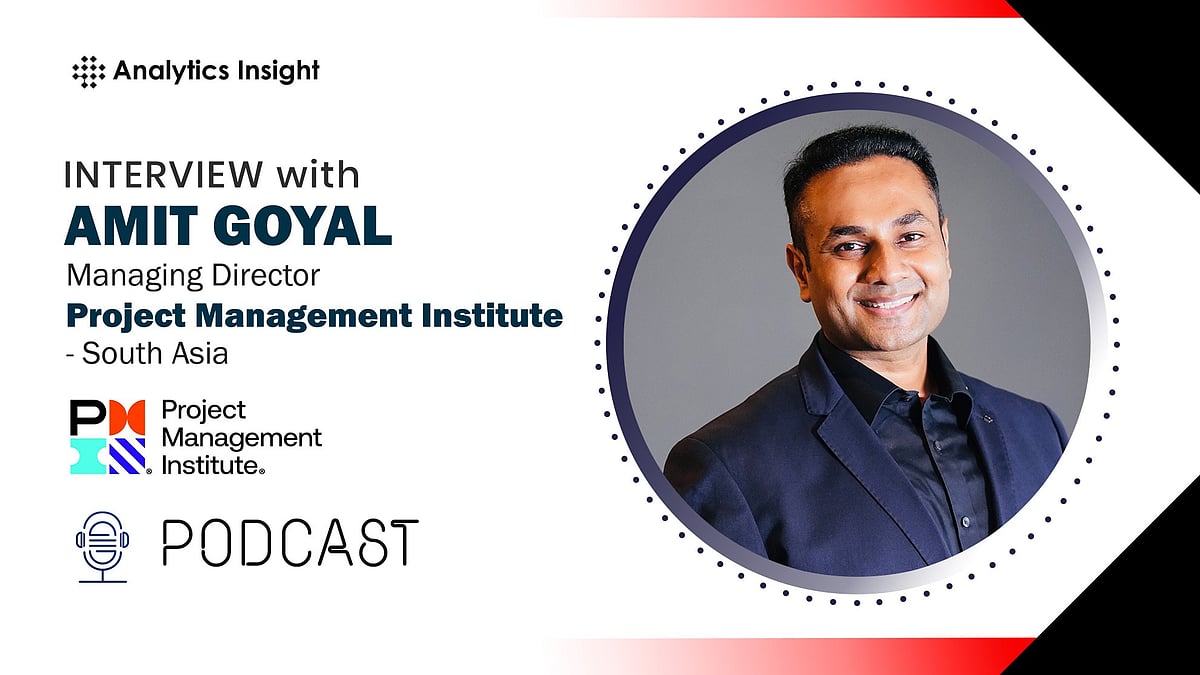
    In the latest episode of the Analytics Insight Podcast, host Priya Dialani speaks with Amit Goyal, Managing Director of the Project Management Institute (PMI) for South Asia, about why humans—not technology—will ultimately determine AI’s success. Goyal shares insights on the human side of the AI era, essential skills for professionals, workforce development shifts, and the future of education. Key excerpts from the conversation follow.

    Why AI Conversations Must Focus on People as Much as Technology

    “Technology provides options, but people make things happen,” Goyal explains. AI can write reports, analyze data, write code, and even plan projects—but it cannot grasp organizational politics, human emotions, ethics, or nuanced decision-making. Throughout history, the greatest challenge with major technological advances has never been the technology itself but its acceptance. Organizations should not fear AI replacing people; instead, they should focus on how to combine AI with human talent.

    What Gives Humans the Edge in an AI-Driven World

    The true human advantage lies in judgment, empathy, creativity, contextual understanding, and accountability. While AI processes massive datasets at incredible speed, it cannot mediate between conflicting parties, motivate teams during uncertainty, or take responsibility for tough choices. “The challenge is not to race with AI in speed, but to ask better questions, make wise decisions, and connect people toward a common purpose,” Goyal notes.

    Key Skills for the AI Economy

    Professionals who master AI technology should also build AI literacy—understanding how AI works, its benefits, and its limitations. Beyond technical knowledge, project management, communication, critical thinking, flexibility, and a commitment to continuous learning are essential. In a rapidly evolving tech landscape, success belongs to those who learn fast and collaborate effectively with AI, not those who claim to have all the answers.

    Preparing the Workforce for AI

    Organizations must shift from annual training programs to continuous learning as a core strategic element. Adopting AI should go beyond providing new tools; it must include employee training aimed at achieving practical business outcomes, improving customer experience, reducing risks, and boosting productivity. “The successful application of AI won’t be about owning the latest technology, but about training competent people,” Goyal emphasizes.

    Evolving Education for the AI Era

    Education systems should move from exam-driven models to producing practical, job-ready professionals. Real-world experience, industry collaboration, teamwork, project implementation, ethical considerations, and problem-solving must complement theoretical knowledge. AI can provide instant access to information, but learners need to apply that knowledge practically. The focus should be on employability and practice-oriented learning.

    The One Human Skill AI Will Never Replace

    Decision-making will become the most critical ability over the next decade, Goyal predicts. AI can interpret data, present options, and offer confident answers, but it cannot own its decisions. Human judgment will be indispensable when data is incomplete, time is limited, and difficult choices must be made. “Those who succeed will not only master AI but also know when to accept or reject its suggestions and rely on their own judgment,” he concludes.

    The full discussion is available on the Analytics Insight Podcast.

  • Boost Team Productivity: Top Project Management Software Solutions for 2025

    Boost Team Productivity: Top Project Management Software Solutions for 2025

    Choosing the right project management software can transform how your team collaborates, tracks progress, and meets deadlines. Below is a curated list of leading platforms that boost productivity across different workflows and team sizes.

    Asana: Streamlined Task Management

    Asana helps teams organize projects, assign tasks, track deadlines, and manage workflows through intuitive dashboards and collaborative project views.

    Trello: Simple Visual Workflows

    Trello uses flexible boards, lists, and cards to help teams organize tasks, monitor progress, and manage projects efficiently.

    Monday.com: Customizable Team Workflows

    Monday.com offers visual project tracking, automation, dashboards, and custom workflows that support teams across multiple business functions.

    ClickUp: All-In-One Productivity Platform

    ClickUp combines task management, documents, goals, chat, time tracking, and dashboards within a unified productivity platform for teams.

    Microsoft Planner: Microsoft 365 Integration

    Microsoft Planner integrates with Microsoft 365 tools, helping businesses manage tasks, collaborate, track progress, and streamline workplace productivity.

    Jira: Agile Software Development

    Jira supports software teams with sprint planning, issue tracking, product roadmaps, and agile workflows designed for complex development projects.

    Notion: Flexible Workspace Collaboration

    Notion combines project management, documentation, databases, and team collaboration, enabling teams to centralize knowledge and daily workflows.

    Wrike: Enterprise Project Visibility

    Wrike provides advanced project planning, resource management, reporting, and workflow automation for growing teams and enterprise organizations.

    Smartsheet: Spreadsheet-Style Project Planning

    Smartsheet blends familiar spreadsheet functionality with project tracking, automation, reporting, and collaboration for structured business workflows.

  • Top 10 Kanban Software Solutions to Supercharge Your Project Workflow in 2026

    Top 10 Kanban Software Solutions to Supercharge Your Project Workflow in 2026

    Kanban boards have become a cornerstone of effective project management, helping teams visualize workflows, limit work in progress, and deliver results faster. Whether you are a solo entrepreneur or part of a large enterprise, the right Kanban tool can transform how you organize tasks and collaborate. Here are the 10 best Kanban software options for accelerating project delivery in 2026.

    Jira Software

    The industry standard for Agile teams, Jira offers highly customizable Kanban boards, powerful automation rules, and advanced reporting capabilities to keep development projects on track.

    Trello

    Known for its intuitive drag-and-drop interface, Trello is ideal for individuals, startups, and small teams looking for a simple yet effective way to manage tasks visually.

    ClickUp

    ClickUp combines Kanban boards with docs, goals, and AI-powered project management, making it a versatile all-in-one productivity platform for teams of any size.

    Monday.com

    With visual workflows, robust automations, and customizable dashboards, Monday.com helps teams streamline processes and deliver projects faster.

    Asana

    Asana excels at cross-functional project management, offering timeline views alongside Kanban workflows to keep multiple projects organized and aligned.

    Notion

    Notion’s flexible databases and Kanban board views make it a favorite among content creators and product teams who need a blend of documentation and task management.

    Azure DevOps Boards

    Built for software development teams, Azure DevOps Boards provides enterprise-grade Agile planning, tracking, and Kanban capabilities integrated with the Microsoft ecosystem.

    Zoho Projects

    Zoho Projects offers an affordable solution with Kanban boards, issue tracking, and team collaboration features, making it suitable for small to mid-sized businesses.

    Each of these tools brings unique strengths to the table. The best choice depends on your team size, workflow complexity, and budget. Evaluate the features that matter most to your process and start accelerating your project delivery today.

  • How Data Analytics Reveals Hidden Infrastructure Risks: Paulson Geo Philip’s Approach

    How Data Analytics Reveals Hidden Infrastructure Risks: Paulson Geo Philip’s Approach

    An experienced project manager outlines three ways to identify risks before they impact critical infrastructure operations. As data volumes surge, organizations struggle to act on insights—65% of teams still make decisions without leveraging available data, according to the Sisense State of Analytics report. The question is: how can organizations turn information into a tool for risk management and operational reliability?

    Paulson Geo Philip, a Project & Maintenance Manager at UAE Television & Radio (Channel 4 Group), has tackled this challenge for over 14 years. He has applied analytics-driven approaches to infrastructure initiatives valued at more than AED 120 million, leading teams of over 800 professionals and improving project efficiency and cost performance by nearly one-third. Philip is also an author of multiple scientific publications, an invited evaluator at the AITEX Summit Winter 2026, and a Senior Member of the Institute of Electrical and Electronics Engineers.

    Philip believes that the most important project risks reveal themselves through patterns. “I have learned to look at information as a connected system,” he explains. “The most valuable insights rarely come from a single metric. They emerge when you understand how different parts of a project influence one another. Analytics helps create that perspective and allows leaders to make decisions with greater confidence.”

    At UAE Television & Radio, Philip oversaw infrastructure projects worth over AED 120 million, coordinating multidisciplinary teams of engineers, contractors, and technical specialists. His analytics-driven approach helped major infrastructure projects move faster and operate more efficiently, improving schedule performance and reducing costs by 20–30%.

    The role of the infrastructure project leader is evolving beyond managing schedules and budgets. Today’s leaders are expected to make sense of growing volumes of information and translate it into better operational decisions. Another key issue is the high cost of unplanned equipment and infrastructure failures. As infrastructure assets become more connected, maintenance is evolving into a data-driven discipline. Operational data can reveal how equipment performance changes over time, allowing organizations to improve asset utilization, extend service life, and make more informed maintenance decisions.

    Drawing on his experience, Philip has explored these questions through publications. In The American Journal of Engineering and Technology, he introduced concepts such as a Multi-Layer Cognitive Energy Twin and an Adaptive Predictive Resilience Index to forecast system conditions and evaluate infrastructure resilience. In his paper “Artificial Intelligence and Machine Learning Applications in Project Schedule Forecasting” (Earth Science Research Network, SSRN), Philip presented a predictive framework to identify schedule risks before they affect project outcomes.

    “Today, more and more organizations view operational data not as a record of past performance, but as a tool for forecasting future conditions,” notes Philip. “That shift from reactive management to predictive management is becoming one of the defining trends across infrastructure and operations.”

    Philip also served on the judging panel at the AITEX Summit Winter 2026, an international forum for artificial intelligence, digital technologies, innovation, and sustainable development. He holds Senior Member status in the IEEE. “I would encourage organizations to create more opportunities for collaboration between practitioners, researchers, and technology specialists,” he says. “Some of the best ideas I have come across were developed by people working in very different fields.”

    Looking ahead, Philip sees analytics becoming an increasingly important part of how organizations manage risk and reliability. His experience points to three priorities: recognizing patterns before problems escalate, using data to anticipate future conditions, and carefully evaluating the technologies that guide operational decisions. Together, these capabilities transform information from a byproduct of operations into a tool for managing reliability and performance.

  • 10 Must-Have AI Tools for Modern Product Managers

    10 Must-Have AI Tools for Modern Product Managers

    Product managers juggle customer feedback, roadmap planning, cross-functional communication, and progress tracking. AI-powered tools can automate repetitive tasks like documentation and meeting follow-ups, freeing PMs to focus on strategic decisions. This guide compares ten leading AI tools for product management, highlighting their strengths, pricing, and best-use scenarios.

    Top AI Tools for Product Managers

    1. Luna AI

    Best For: Roadmap Execution Visibility

    Luna AI offers transparent tracking of project progress, roadmaps, and delivery risk. Teams can monitor milestones and blockers and update stakeholders with minimal manual effort.

    • AI-powered roadmap tracking
    • Goal and OKR monitoring
    • Jira risk alerts
    • Priority management
    • Workflow automation

    Ideal for product teams focused on execution and delivery.

    2. DevRev

    Best For: Customer Feedback Intelligence

    DevRev bridges customer support with engineering and product teams. AI summarizes conversations, organizes issues, and improves cross-departmental collaboration.

    • AI-generated support summaries
    • Shared customer history
    • Smart ticket routing
    • Product and engineering collaboration
    • Feedback intelligence

    Ideal for teams handling large volumes of customer feedback.

    3. Zeda.io

    Best For: Voice-of-Customer Prioritization

    Zeda.io collects customer feedback from multiple sources and converts it into product priorities. AI identifies trends and groups similar requests automatically.

    • AI feedback summaries
    • Trend detection
    • Auto-tagging
    • Product documentation
    • Goal alignment

    Ideal for teams building products around customer insights.

    4. Canny

    Best For: Feedback-Driven Roadmaps

    Canny simplifies feature request management with AI-powered organization and categorization. Sales, support, and customer success teams can submit feedback directly into roadmap planning.

    • Feature request management
    • AI feedback grouping
    • Public roadmap
    • Customer voting
    • Changelog management

    Ideal for companies with active customer communities.

    5. Productboard

    Best For: Customer-Driven Roadmaps

    Productboard centralizes customer feedback from various channels and links insights to roadmap planning. AI supports categorization and feature planning.

    • Customer feedback management
    • Feature prioritization
    • Insight organization
    • Product briefs
    • Roadmap planning

    Ideal for product organizations focused on customer-led development.

    6. Jira Product Discovery

    Best For: Evidence-Based Prioritization

    Jira Product Discovery helps teams organize ideas before development begins. AI summarizes customer insights and prepares product ideas for prioritization.

    • AI-generated summaries
    • Customer insight organization
    • Product idea management
    • Stakeholder collaboration
    • Jira integration

    Ideal for teams already using the Atlassian ecosystem.

    7. Airfocus by Lucid

    Best For: Strategic Roadmap Planning

    Airfocus uses scoring models and roadmap planning tools for structured prioritization. AI assists with evaluating product opportunities and planning releases.

    • Prioritization frameworks
    • Trade-off analysis
    • Roadmap intelligence
    • Delivery tracking
    • Development tool integrations

    Ideal for teams managing complex product portfolios.

    8. Craft.io

    Best For: End-to-End Product Strategy

    Craft.io combines product strategy, roadmapping, backlog management, and release planning. AI supports documentation and planning.

    • Product strategy management
    • Epic analysis
    • Release planning
    • AI documentation
    • Engineering integrations

    Ideal for teams managing the complete product lifecycle.

    9. Miro

    Best For: Collaborative Product Planning

    Miro enables brainstorming, workshops, and visual collaboration. AI organizes ideas into structured plans for product teams.

    • AI brainstorming
    • Sticky note clustering
    • Diagram creation
    • Workflow generation
    • Team collaboration

    Ideal for remote and cross-functional product teams.

    10. Aha!

    Best For: Enterprise Product Planning

    Aha! provides AI-driven research analysis, roadmap planning, and documentation for large organizations.

    • Research synthesis
    • Idea clustering
    • AI writing assistant
    • Roadmap automation
    • Enterprise reporting

    Ideal for large product organizations with multiple stakeholders.

    How to Choose the Right AI Tool

    Selecting the best tool begins with identifying your biggest productivity bottleneck. Consider these factors:

    • Identify the workflow that consumes the most time.
    • Review AI features that solve that challenge.
    • Check integrations with existing tools.
    • Evaluate pricing and scalability.
    • Test usability during the trial period.
    • Measure productivity improvements within the first month.

    Best Practices for Product Managers

    AI delivers the most value when it supports routine tasks while humans make strategic decisions. Apply these practices:

    • Select tools based on business needs.
    • Validate AI-generated recommendations.
    • Keep customer context at the center.
    • Connect AI platforms with existing workflows.
    • Track measurable productivity gains.
    • Review outputs before sharing with stakeholders.

    Will AI Replace Product Managers?

    AI excels at documentation, research, prioritization, and communication. However, product management still requires business acumen, customer empathy, market knowledge, and leadership. Great PMs use AI to make decisions more efficiently while leveraging their unique human skills to solve problems and create excellent products.

    Final Thoughts

    Modern product management increasingly relies on AI. The right platform improves client feedback handling, streamlines planning, boosts team collaboration, and reduces administrative overhead. Choosing a tool that fits your specific workflow often yields better results than a one-size-fits-all solution. Product managers who embrace AI will deliver products with greater customer impact.

  • How I Made AI My Personal Productivity Assistant: A Practical Guide

    How I Made AI My Personal Productivity Assistant: A Practical Guide

    I stopped treating AI as just a chatbot and started using it as a personal work assistant. Now it helps me organize tasks, prioritize deadlines, manage information, and reduce repetitive work. Instead of replacing my decisions, AI supports them, allowing me to focus on creative thinking and high-value responsibilities every day.

    Automating Repetitive Work

    I delegated routine tasks like drafting emails, summarizing meetings, creating to-do lists, scheduling reminders, and organizing notes to AI. Automating these everyday activities saves valuable time, reduces manual effort, and helps me stay productive without feeling overwhelmed by repetitive administrative responsibilities.

    Faster Research and Better Insights

    Instead of opening multiple websites, I ask AI to summarize reports, explain complex concepts, compare products, and identify industry trends. This speeds up research while helping me understand information quickly. I still verify important facts, but AI significantly reduces the time needed for initial research.

    Creating Better Content in Less Time

    AI helps me brainstorm ideas, prepare outlines, write first drafts, improve grammar, and refine tone. Whether creating presentations, reports, blogs, or social media content, it accelerates the writing process while allowing me to focus on adding expertise, creativity, and personal insights before publishing.

    Managing Projects More Effectively

    I use AI to break large projects into manageable tasks, generate timelines, create meeting agendas, and track progress. It helps identify priorities, organize workflows, and ensure nothing important is overlooked. This structured approach keeps projects moving efficiently from planning to completion.

    Smarter Communication Every Day

    Before sending emails or presentations, I use AI to improve clarity, grammar, and professionalism. It adapts messages for different audiences while keeping communication concise and impactful. Better-written communication saves time, strengthens collaboration, and creates a more professional impression.

    AI Is an Assistant, Not a Replacement

    My biggest lesson is that AI works best as a trusted assistant rather than a replacement for human judgment. It handles repetitive tasks, organizes information, and boosts productivity, while I remain responsible for creativity, strategy, decision-making, and final quality. Together, we achieve better results faster.