
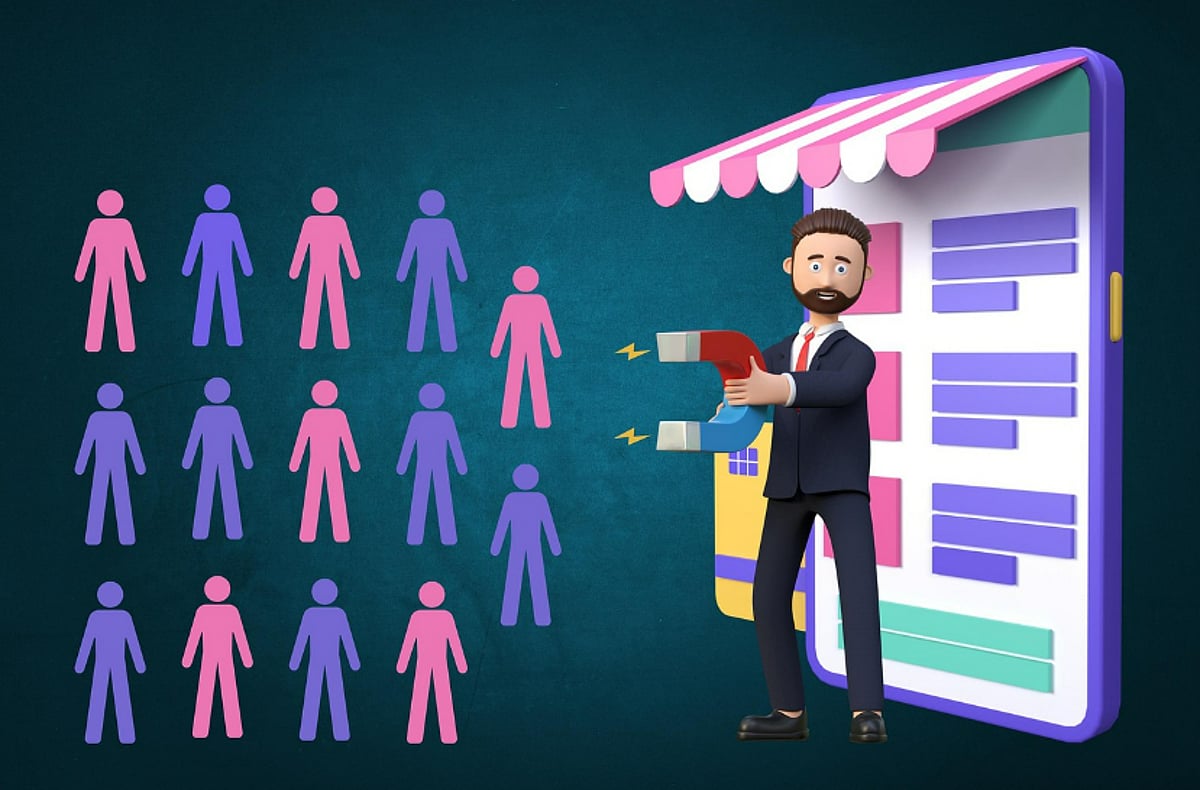
Every successful eCommerce business eventually realizes that increasing website traffic alone does not guarantee higher sales. While attracting visitors remains an essential part of digital marketing, the true measure of success lies in convincing those visitors to become customers. This is where product pages play their most significant role.
A product page is far more than a place where customers read specifications or view images. It is the digital equivalent of a knowledgeable salesperson who understands customer concerns, answers questions before they are asked, builds confidence, and guides shoppers toward making a purchasing decision.
The highest-converting product pages are rarely successful because they use flashy designs or persuasive marketing language alone. Instead, they are carefully built around well-established principles of human psychology that influence how people evaluate information, process risk, establish trust, and ultimately decide whether to complete a purchase. Businesses that understand these psychological principles can create product pages that feel intuitive, reassuring, and engaging, resulting in higher conversion rates without relying on aggressive sales tactics.
Purchasing Decisions Are More Emotional Than Rational
Although many consumers tend to think that their buying decisions rely solely on their logical thinking, decades of studies and observations in behavioral psychology and consumer behavior prove the opposite. In whatever purchase people make — from shoes to furniture to electronics — the brain starts with an emotional reaction and only then rationalizes the choice.
Emotional reaction is especially relevant for online shopping as there is no way to feel the product physically. Customers cannot touch materials, examine quality of construction, or directly ask questions to sales personnel. Therefore, every single aspect of a product page needs to be designed to decrease uncertainty and create a positive emotional association that leads to increased confidence. Images, language, page design, testimonials, price presentation, and even page load time all become part of the emotional experience of an online customer, and when it creates the feeling of comfort and trust, customers become ready to make purchases.
Trust Is the Foundation of Every Conversion
Among all psychological barriers in eCommerce, one of the most significant is the feeling of uncertainty. Customers subconsciously ask themselves: Is the enterprise reliable? Will the product match expectations? Is payment data secure? Will support be provided if problems arise? Product pages that generate many conversions answer these questions without requiring customers to search for them. Instead of providing too much promotional information, these pages make people believe in the company’s reliability through consistency and transparency. Clear product descriptions, professional images, accurate prices, information about return policies, shipping, warranty, and payment security help buyers complete transactions without problems.
Cognitive Fluency Makes Decisions Easier
The human brain naturally prefers information that is easy to process. Psychologists refer to this principle as cognitive fluency, which describes our tendency to trust and prefer experiences that require less mental effort. A well-designed product page minimizes unnecessary complexity by presenting information in a logical sequence that matches the customer’s decision-making process. Rather than forcing visitors to search for essential details, high-converting pages guide them naturally from understanding the product’s primary value to exploring features, reviewing social proof, comparing options, and finally completing the purchase. This does not mean reducing information — in many cases, comprehensive product pages outperform shorter ones because they answer more customer questions. The key difference lies in organization. Navigation, spacing, typography, headings, and visual hierarchy all contribute to making information easier to consume.
Social Proof Reduces Perceived Risk
People often look to others when making decisions, particularly in situations where uncertainty exists. This psychological principle, known as social proof, explains why customer reviews, testimonials, ratings, and user-generated content remain among the most influential conversion factors on product pages. When prospective buyers see evidence that other customers have purchased and enjoyed the product, they perceive the purchase as less risky. Reviews that discuss both strengths and minor limitations often appear more credible because they resemble genuine customer experiences. Photographs submitted by customers, verified purchase badges, question-and-answer sections, and detailed testimonials further strengthen confidence.
The Psychology of Visual Processing
Humans process visual information far more quickly than written text, making product imagery one of the most influential aspects of a product page. High-quality images allow customers to simulate owning the product mentally. Multiple viewing angles, close-up photography, lifestyle imagery, and demonstration videos collectively reduce uncertainty by replacing physical interaction with visual understanding. Lifestyle photography deserves particular attention because it allows customers to picture the product within their own lives. Videos can further strengthen this effect by illustrating product movement, functionality, assembly, or practical applications that static images cannot fully communicate.
Reducing Decision Anxiety Through Clear Information
Many abandoned shopping carts result not from a lack of interest but from unresolved questions. Customers hesitate when important information is missing because uncertainty naturally increases perceived risk. High-converting product pages anticipate these concerns by providing thorough information that supports informed decision-making. Instead of focusing exclusively on promotional messaging, they explain product dimensions, materials, compatibility, maintenance requirements, shipping timelines, return procedures, warranty coverage, and frequently asked questions. By eliminating ambiguity, businesses reduce the mental effort customers must invest in researching information elsewhere, increasing the likelihood that purchasing decisions remain on the product page itself.
The Principle of Reciprocity
Reciprocity is a well-established psychological concept suggesting that people often feel inclined to respond positively after receiving something valuable. Within eCommerce, reciprocity does not necessarily involve offering free products. Instead, businesses provide genuine value through educational content, buying guides, sizing assistance, comparison charts, instructional videos, or maintenance recommendations that help customers make informed decisions. When visitors recognize that a business prioritizes helping them rather than simply selling to them, they develop stronger trust and become more receptive to completing a purchase.
Scarcity and Urgency Must Be Used Carefully
Scarcity and urgency remain among the most recognizable psychological techniques in online retail because they encourage quicker decision-making by highlighting limited opportunities. Messages indicating limited inventory, seasonal availability, or promotional deadlines can motivate customers to act. However, these techniques should only reflect genuine circumstances. Artificial countdown timers or exaggerated stock warnings that repeatedly reset can undermine trust once customers recognize the manipulation. Ethically applied scarcity supports customer decision-making by communicating accurate information, whereas deceptive urgency often damages long-term brand credibility.
The Power of Consistency Throughout the Buying Journey
Customers naturally seek consistency when evaluating businesses. If advertisements promise premium quality but the product page appears outdated or incomplete, visitors experience psychological discomfort because expectations no longer align with reality. High-converting product pages maintain consistency across every touchpoint: branding, messaging, photography, pricing, customer service information, and checkout experience all reinforce the same level of professionalism. This consistency reduces cognitive friction because customers feel confident that every stage of their journey reflects the same reliable business.
Choice Architecture Helps Customers Make Better Decisions
Offering customers multiple options can increase satisfaction, but excessive choices frequently produce the opposite effect. Behavioral researchers have long observed that decision-making becomes more difficult as the number of available options increases, particularly when differences between products are unclear. Effective product pages simplify decision-making by organizing product variations logically, highlighting meaningful differences, and providing comparison tools where appropriate. Rather than overwhelming visitors with dozens of nearly identical selections, they guide customers toward the option most suitable for their needs. This thoughtful organization reduces analysis paralysis while helping customers feel confident in their decision.
Loss Aversion Often Influences Buying Behavior
Psychological research consistently demonstrates that people tend to fear losses more strongly than they value equivalent gains. This concept, known as loss aversion, explains why customers often spend more time considering what they might lose by making the wrong purchase than what they might gain from making the right one. High-converting product pages address this concern by reducing perceived downside. Flexible return policies, satisfaction guarantees, warranty coverage, free exchanges, and transparent customer support reassure shoppers that choosing the product carries limited risk if expectations are not fully met.
Strong Calls to Action Work Because They Remove Uncertainty
The final stage of a product page should guide customers toward the next step without creating confusion. A well-designed call to action does not rely on aggressive language or excessive visual effects. Instead, it communicates clearly what will happen next while remaining prominent enough to capture attention naturally. When supported by all the psychological principles discussed throughout the page — including trust, social proof, comprehensive information, and intuitive design — the call to action becomes a logical continuation of the customer’s decision-making journey.
Continuous Testing Reflects the Complexity of Human Behavior
Although psychological principles provide a strong foundation for product page optimization, no two customer audiences behave identically. Differences in demographics, industries, price points, and purchasing motivations mean that businesses should continuously evaluate how visitors interact with their product pages. A/B testing different layouts, headlines, product imagery, pricing presentations, call-to-action placements, and content structures allows businesses to validate assumptions with real user behavior instead of relying solely on industry best practices. By combining established psychological insights with ongoing experimentation, companies can refine their product pages in ways that produce measurable improvements in engagement and conversion rates over time.
Conclusion
High-converting product pages succeed because they are designed around how people naturally think, evaluate risk, and make purchasing decisions rather than around assumptions about what persuasive marketing should look like. Every element, from visual presentation and page structure to customer reviews, detailed product information, and trust-building signals, reduces uncertainty while creating a smoother, more confident buying experience. Businesses that understand the psychology behind online purchasing recognize that successful product pages are not simply collections of images and specifications. They are carefully structured experiences that anticipate customer questions, address emotional concerns, and guide visitors toward informed decisions through transparency, usability, and credibility. By applying these psychological principles thoughtfully and continuously refining them through testing and customer feedback, eCommerce brands can create product pages that not only increase conversions but also strengthen long-term customer trust and loyalty.