Tag: Q1 FY27 results

  • Exide Industries Q1 Profit Surges 27% but Stock Falls on Margin Concerns

    Exide Industries Q1 Profit Surges 27% but Stock Falls on Margin Concerns

    Exide Industries reported strong Q1 FY27 results on July 31, but its shares traded lower during the day. The stock fell nearly 1.4% to Rs. 446.55 despite improved profit and revenue. Investors are cautious as increasing raw material costs are pressuring margins, while brokerage Citi stayed positive on the company’s overall business growth.

    The company posted a net profit of Rs. 407 crore in the April to June quarter, up 27.2% from Rs. 320 crore a year ago. Revenue increased 17.6% to Rs. 5,305 crore from Rs. 4,510 crore. EBITDA also rose 19.3% to Rs. 655 crore, while the EBITDA margin remained almost flat at 12.3%. Citi said the quarterly performance was better than expected and pointed to healthy revenue growth across major business segments.

    Exide Industries recorded strong demand in almost every business. The Auto OEM segment grew more than 25% for the third straight quarter. Battery replacement sales for two-wheelers and four-wheelers also reported double-digit growth. The industrial infrastructure business continued to grow at a steady pace, while inverter and solar businesses expanded by more than 20%. Export sales also grew over 20% after a spike in demand from overseas markets.

    Citi kept its ‘Buy’ rating on Exide Industries and said price increases, a better product mix, and improved operating efficiency helped reduce the impact of higher commodity costs. The brokerage also said the company’s management remains confident about demand across automotive, industrial, and renewable energy businesses.

    Even with strong earnings, investors remained focused on margin pressure and rising input costs. Exide expects its Bengaluru Gigafactory to add revenue during FY27, which could support future growth as the company expands its new energy business.

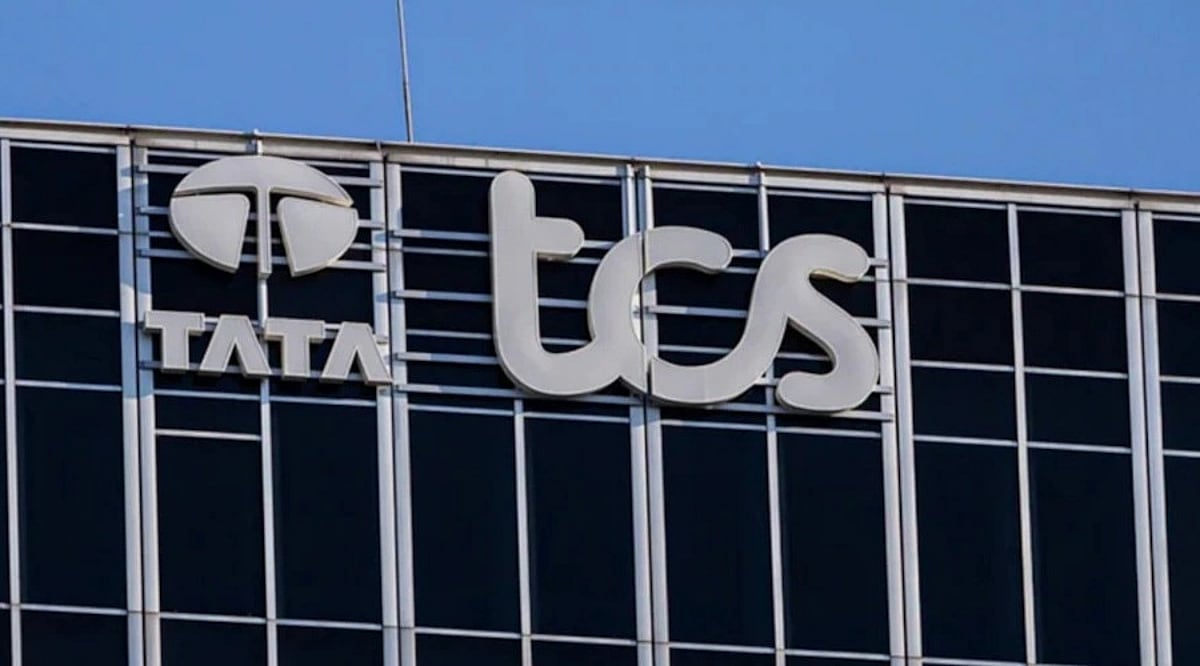
  • TCS Share Price Surges 1.9% as IT Stocks Rebound on Easing AI Concerns

    TCS Share Price Surges 1.9% as IT Stocks Rebound on Easing AI Concerns

    Indian IT stocks extended their recent rebound, with Tata Consultancy Services (TCS) emerging among the top gainers. Shares of TCS were trading at Rs. 2,444.00 on the NSE, up 1.92% intraday, after opening at Rs. 2,440.00 and touching a day high of Rs. 2,475.50. The move builds on a rally that began earlier this week across the technology pack, reflecting a broader shift in sentiment as easing global valuation worries lifted IT counters.

    IT Sector Regains Momentum

    Indian technology stocks fell out of favor in recent weeks over global AI spending worries. That mood shifted sharply this week, sending TCS, Infosys, and peers higher in tandem. Analysts link the reversal to fading fears around overvalued AI infrastructure trades abroad. Investors also stayed cautious ahead of the upcoming US Federal Reserve rate decision. A softer stance from the central bank could extend support for export-driven technology stocks. TCS, given its scale, remains a key barometer for the entire IT services space.

    Q1 FY27 Results Show Steady Progress

    TCS reported a consolidated net profit of Rs. 13,349 crore for the June quarter, marking a 2.7% sequential decline from Rs. 13,718 crore in the previous quarter. Revenue from operations rose 2.2% sequentially to Rs. 72,275 crore. The company’s annualized AI revenue reached $2.6 billion during the quarter, growing 13.6% sequentially and pointing to steady traction in AI-linked service lines. Management also declared an interim dividend of Rs. 12 per equity share.

    Valuation and Ownership Structure

    TCS currently commands a market capitalization of Rs. 8.84 lakh crore. The stock trades at a price-to-earnings ratio of 17.76, with earnings per share at Rs. 137.64. Promoter holding stands firm at 71.77%, reflecting continued long-term commitment to the business. Domestic institutional investors hold 13.41%, foreign institutional investors own 9.66%, and public and other shareholders account for the remaining 5.16% stake.

    Brokerage and Business Outlook

    TCS continues expanding its footprint in AI-driven enterprise engagements. The company recently launched an Industrial AI Solutions Lab in Bengaluru with NVIDIA and opened a Gemini Experience Center in Kolkata alongside Google Cloud. These initiatives support the company’s push toward higher-value, technology-led service contracts. Large deal momentum and steady renewal activity continue to anchor near-term revenue visibility. Analysts remain focused on margin trends as wage costs and delivery mix evolve.

    Market Outlook

    TCS stock still trades well below its 52-week high of Rs. 3,350.00. The recent rebound, however, signals renewed investor confidence in India’s largest IT services exporter. Sustained AI revenue growth could support further re-rating over the coming quarters. Investors should track the Fed’s policy stance and rupee movement closely, as both factors carry a direct bearing on export-oriented technology earnings ahead. Margin stability and large deal conversions will likely guide the stock’s next leg.

    Final Words

    TCS enters the new financial year on firmer footing than the recent stock slide suggested. Sequential revenue growth, rising AI-linked business, and continued enterprise wins point toward steady execution. The pullback in shares looked tied to broader sector sentiment rather than company-specific weakness. For long-term investors, the current rebound offers a reason to watch closely. As global technology sentiment stabilizes and margin visibility improves, TCS’s scale and client relationships should keep supporting its position among India’s leading IT exporters.

    FAQs

    Why did TCS shares rise sharply today?
    Indian IT stocks rallied broadly as global AI valuation concerns eased. TCS benefited from renewed buying interest across the technology sector, alongside investor anticipation ahead of the US Federal Reserve’s upcoming interest rate decision this week.

    What was TCS’s net profit in Q1 FY27?
    TCS reported a consolidated net profit of Rs. 13,349 crore for the June quarter, reflecting a 2.7% sequential decline, though revenue from operations grew 2.2% over the previous quarter to Rs. 72,275 crore.

    How is TCS performing in AI-linked business?
    The company’s annualized AI revenue reached $2.6 billion during Q1 FY27, marking a 13.6% sequential increase, supported by new AI infrastructure partnerships and enterprise-focused service launches.

    What dividend did TCS declare this quarter?
    TCS declared an interim dividend of Rs. 12 per equity share, with the record date set for 15 July 2026 and payment scheduled for 31 July 2026.

    What is TCS’s current shareholding structure?
    Promoters hold 71.77% of TCS, domestic institutional investors hold 13.41%, foreign institutional investors own 9.66%, and public and other shareholders account for the remaining 5.16% stake.
  • Hindustan Unilever Shares Drop Nearly 6% After Q1 Profit Miss Despite 10% Revenue Surge

    Hindustan Unilever Shares Drop Nearly 6% After Q1 Profit Miss Despite 10% Revenue Surge

    Hindustan Unilever opened FY27 with sharply mixed signals for investors. Sales grew at its fastest pace in several quarters, but profit growth failed to keep up, triggering a nearly 6% tumble in its share price on the National Stock Exchange (NSE).

    Shares of India’s largest consumer goods maker fell sharply after the Q1 results. While sharp stock reactions like this are common in the FMCG sector, a profit miss often outweighs strong top-line growth in the short term.

    Stock Tumbles Nearly 6% After Results

    Hindustan Unilever shares (HINDUNILVR) were trading at Rs 2,045.80 on the NSE. According to TradingView, the stock was down close to 5.92% during the session on July 28, 2026. The stock briefly touched its 52-week low zone during the session, and trading volumes surged well above recent averages, pointing to heavy selling pressure right after the earnings release.

    Profit Falls on Tough Base and Higher Costs

    Consolidated net profit fell 3% year-on-year to Rs 2,673 crore, compared to Rs 2,756 crore in the same quarter last year. Rising input costs weighed on the bottom line this quarter.

    EBITDA Margin Holds Within Guided Range

    EBITDA rose 8.4% to Rs 3,947 crore, up from Rs 3,640 crore. The EBITDA margin stayed at 23%, remaining within the range management had earlier guided for FY27.

    Revenue Growth Stays Strong Across Categories

    Revenue from operations grew 10.1% to Rs 17,341 crore this quarter. Underlying volume growth came in at 5%, a healthy pace for the sector. Pricing and volume both contributed equally to this growth.

    Home care was the clear standout this quarter. Its revenue rose 13.4% to Rs 6,554 crore. Underlying sales growth of 14% marked its best show in three years.

    Segment-Wise Revenue Performance in Q1 FY27

    Beauty and wellbeing revenue grew 12.4% to Rs 4,083 crore this quarter. Premium skin care and hair care posted double-digit growth, while foods revenue rose 6.8% to Rs 3,480 crore on steady demand for staples.

    Personal care stayed the weakest link again this quarter. Revenue rose just 3.3% to Rs 2,624 crore. Pricing drove most of the gain, while volumes slipped slightly.

    Leadership Stays Focused on Volume-Led Growth

    CEO Priya Nair called the quarter resilient despite a volatile external backdrop. She pointed to ongoing investments in market development and portfolio transformation, which she said are building a stronger, future-ready business.

    Nair added that the near-term focus stays on volume-led revenue growth. Investments in channel expansion and premium products should support performance ahead. Management gave no signal of a near-term change in strategy.

    Market Outlook

    HUL’s revenue strength points to healthy consumer demand across most categories. The sharp stock fall appears tied more to sentiment than fundamentals. Investors should watch margin trends and personal care recovery in coming quarters.

    Hindustan Unilever delivered strong sales growth this quarter, even as profit growth disappointed the Street. Home care and beauty segments both posted their best show in years, pointing to a business still gaining consumer traction. The sharp stock reaction looks driven by short-term market sentiment rather than any deeper weakness. As costs ease and personal care regains pace, Hindustan Unilever’s scale should keep supporting its long-term standing in India’s consumer goods space.

  • SBI Life Q1 FY27 Profit Jumps 22% but Stock Falls on Margin Concerns

    SBI Life Q1 FY27 Profit Jumps 22% but Stock Falls on Margin Concerns

    SBI Life Insurance Reports Strong Q1 Earnings, Yet Shares Dip on Narrowing Margins

    SBI Life Insurance opened fiscal 2027 with a mixed quarterly performance. The insurer posted a consolidated net profit of ₹720 crore for the first quarter, a 22% increase year-over-year. Net premium income rose 16.9% to ₹20,078 crore, driven by robust renewal collections and a 40% surge in first-year premiums. Despite these strong fundamentals, the stock slipped in trade as investors focused on a narrowing value of new business (VNB) margin.

    Shares of SBI Life were trading at ₹1,861.60 on the NSE, down from the previous close of ₹1,858.60, after touching an intraday low of ₹1,836.20. The market reaction highlights that profitability alone is not enough without margin stability in the insurance sector.

    Margin Compression Takes Center Stage

    The VNB margin moderated to 26.2% from 27.4% in the same quarter last year. Analysts attribute this decline to a higher share of group protection business, which typically carries thinner margins than individual policies. Management has retained its full-year guidance of 26–28% and expects gradual normalization as individual business regains share through the remaining quarters.

    Financial Performance Highlights

    • Consolidated net profit: ₹720 crore, up 22% YoY
    • Net premium income: ₹20,078 crore, up 16.9% YoY
    • Gross written premium: ₹21,290 crore, up 20% YoY
    • First year premium: ₹4,955 crore, up 40% YoY
    • Annualized premium equivalent (APE): ₹5,380 crore, up 36% YoY
    • Embedded value: ₹85,290 crore, up 15% YoY
    • Assets under management: ₹5.25 lakh crore, up 10% YoY
    • Solvency ratio: 1.96, well above regulatory norms

    Brokerages Remain Bullish Despite Margin Dip

    Motilal Oswal retained its Buy rating with a revised target price of ₹2,240, trimming its FY27 margin estimate slightly but maintaining overall earnings estimates. Prabhudas Lilladher also holds a Buy stance with a target of ₹2,200. Both brokerages expect steady APE growth and margin recovery as the business mix normalizes.

    Management reiterated its medium-term outlook, expecting 14–15% individual premium growth in FY27, supported by continued investment in agency and digital channels.

    Market Outlook and Final Thoughts

    SBI Life’s numbers reflect a business scaling well operationally. Premium growth, embedded value gains, and stable solvency all support this view. The margin compression appears tied to product mix rather than any deeper weakness. For long-term investors, current price levels may offer a reasonable entry point, with brokerage targets pointing to healthy upside. As margin normalization plays out through the year, SBI Life’s scale and distribution strength should keep supporting its standing among India’s leading private insurers.

  • Wipro Shares Rise 1.65% Ahead of Q1 FY27 Results: Revenue Guidance and AI Strategy in Focus

    Wipro Shares Rise 1.65% Ahead of Q1 FY27 Results: Revenue Guidance and AI Strategy in Focus

    Wipro shares climbed 1.65% to Rs. 177.39 on the NSE as investors awaited the company’s Q1 FY27 earnings announcement scheduled after market hours on July 16. The stock touched an intraday high of Rs. 180.79 and a low of Rs. 176.29, reflecting cautious optimism ahead of the results.

    India’s fourth-largest IT services company is expected to report another subdued quarter, with analysts forecasting muted sequential revenue and profit growth amid continued weakness in discretionary technology spending. While the June quarter numbers are unlikely to surprise the Street, the management’s outlook on artificial intelligence (AI), client spending, large deal momentum, and revenue guidance for the September quarter is expected to determine investor sentiment.

    June Quarter Likely to Reflect Cautious Spending

    Brokerage estimates place Wipro’s consolidated revenue for Q1 FY27 at Rs. 24,850 crore to Rs. 25,350 crore, indicating high double-digit year-on-year growth. However, sequential growth is expected to be minimal as firms defer technology spending amid uncertain macroeconomic conditions. Currency appreciation could provide some lift to revenue figures, but demand remains weak in overseas geographies, according to analysts.

    Margins May Face Temporary Pressure

    The bottom line is projected to come under continued strain due to Wipro’s investments in artificial intelligence, salary increases, and expenses tied to recently signed large deals. Despite these challenges, market experts expect the company to sustain stable margins through cost control measures. Analysts will closely monitor any management commentary regarding margin improvement in the remaining period of fiscal year 27.

    Guidance Will Be the Biggest Market Trigger

    The Street believes Wipro’s September quarter guidance will carry greater significance than its reported June quarter numbers. Technology budgets in both North America and Europe remain very prudent, with emphasis on savings over digital transformation plans. An improvement in discretionary spending would be a major positive for investors. Conversely, a more cautious stance might confirm doubts about further recovery in the IT services industry.

    AI Remains the Long-Term Growth Story

    Artificial intelligence continues to be a major talking point within the global technology services sector, and Wipro is expected to provide insight into its AI plans during the quarterly earnings call. Analysts and investors will be keen to see signs that pilot AI deals are moving toward larger projects that can generate future revenue. Generative AI adoption and consulting demand will come under intense scrutiny.

    What Investors Will Monitor

    • Estimated Revenue Drivers: Currency benefits, acquisition contributions, and large deal wins.
    • Large Deals and BFSI Outlook: BFSI (banking, financial services, and insurance) remains a major revenue contributor. Large deal signings will be closely watched as they provide visibility into future growth.
    • Dividend Decision: Wipro’s board is expected to consider an interim dividend alongside the results, which will attract investor attention.

    Market Outlook

    Wipro’s June quarter is not expected to show significant performance, with growth likely flat due to global uncertainty and cautious technology investments. However, the results alone are not the main focus. The outlook and commentary from management regarding AI opportunities, client spending, large deals, and the September quarter guidance will be the key drivers for investor sentiment.

  • Titan Q1 FY27 Results Preview: Why the August 7 Earnings Call Matters for Investors

    Titan Q1 FY27 Results Preview: Why the August 7 Earnings Call Matters for Investors

    Titan Company is gearing up to announce its first-quarter results for FY2026-27, and investors are closely watching for the board meeting date and earnings call schedule. The company has closed its trading window for designated persons and their close relatives, effective from June 23, 2026, until 48 hours after the board approves the Q1 results, in compliance with SEBI insider trading norms.

    While Titan has not yet fixed the exact board meeting date, it is expected to follow a similar timeline to last year, when Q1 FY26 results were released on August 7, 2025, after a business update in early July. Investors are particularly focused on management’s outlook on jewelry demand, margins, and overall business growth amid rising gold prices.

    Titan performed strongly in the fourth quarter of FY26. Consolidated total income reached Rs. 20,300 crore, a 46% year-over-year increase, while profit after tax rose 35% to Rs. 1,179 crore. For the full fiscal year, revenue grew 33% to Rs. 76,078 crore, and annual profit after tax hit Rs. 5,073 crore. The board has also recommended a final dividend of Rs. 15 per equity share for FY26, with a record date of July 9, 2026, and payment expected on or after July 28, 2026, subject to approval at the 42nd Annual General Meeting on July 27, 2026.

    There have been leadership changes as well. Three non-executive directors nominated by co-promoter TIDCO stepped down in June 2026, and a new chairman has since taken over. Market watchers are keeping an eye on jewelry demand trends, especially with gold prices remaining high. Once Titan confirms the board meeting date, more details on the earnings call timing and management commentary on demand, margins, and the outlook for the rest of FY27 will follow.