Tag: Qiskit

  • Essential Quantum Programming Languages for Developers in 2026

    Essential Quantum Programming Languages for Developers in 2026

    As quantum computing advances rapidly, developers need to familiarize themselves with the key programming languages and frameworks that power quantum algorithms and simulations. Here are the top quantum programming languages to watch in 2026:

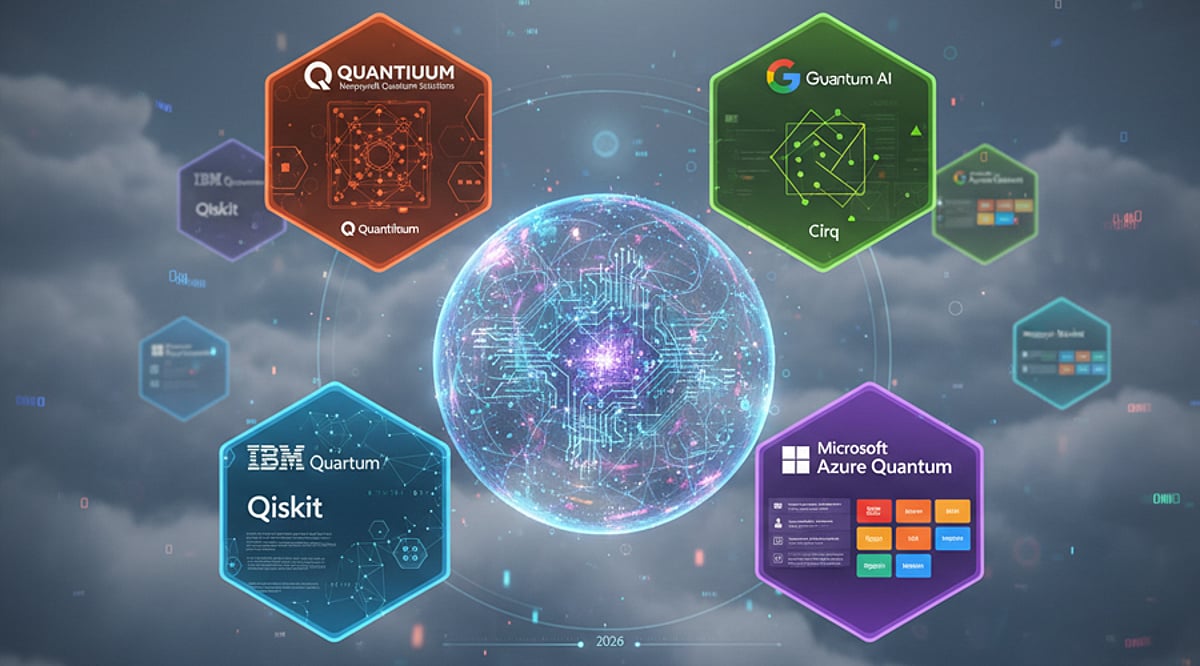
    • Qiskit: IBM’s open-source quantum software framework allows developers to build, test, and run quantum circuits on IBM quantum computers.
    • Cirq: Developed by Google, Cirq focuses on creating and running quantum circuits, widely used for research and quantum algorithm development.
    • Q#: Microsoft’s Q# is designed specifically for quantum programming and works with Microsoft’s quantum development tools to support complex quantum algorithms.
    • PennyLane: PennyLane bridges quantum computing with machine learning, enabling developers to create quantum circuits and combine them with popular ML frameworks.
    • Quipper: A functional programming language for quantum computing, Quipper supports large quantum circuits and helps researchers explore advanced quantum algorithms.
    • Silq: Silq is a high-level quantum programming language that aims to make quantum code easier to write by improving readability and reducing errors.
    • QDK (Quantum Development Kit): Microsoft’s QDK provides tools for developing quantum applications and supports Q# alongside other programming environments and quantum computing workflows.
    • OpenQASM: OpenQASM is a language for describing quantum circuits and operations. Its newer versions support advanced circuit features for modern quantum computing systems.
    • Julia: While not a dedicated quantum language, Julia’s quantum computing libraries make it useful for simulations, research, and developing quantum algorithms.
  • Master Quantum Computing Without a CS Degree: A Step-by-Step Guide

    Master Quantum Computing Without a CS Degree: A Step-by-Step Guide

    Quantum computing is a rapidly evolving field that promises to revolutionize how we solve complex problems. You don’t need a computer science degree to dive in—here’s a practical roadmap to get started.

    Build Strong Fundamentals

    Understand basic concepts like qubits, superposition, entanglement, and quantum gates before exploring advanced algorithms or practical quantum programming applications.

    Learn Essential Mathematics

    Focus on linear algebra, probability, complex numbers, and basic calculus. These mathematical concepts form the theoretical foundation of quantum computing.

    Start with Python Programming

    Python is the lingua franca of quantum computing frameworks. Learn the basics to make experimentation, simulations, and algorithm implementation easier.

    Explore IBM Quantum Platform

    Use IBM Quantum Experience to run real quantum circuits online. This gives you practical exposure without needing expensive quantum hardware.

    Study Quantum Computing Frameworks

    Practice with Qiskit, Cirq, or PennyLane to understand circuit design, quantum algorithms, and machine learning applications through interactive coding exercises.

    Take Beginner-Friendly Online Courses

    Enroll in structured courses from universities and educational platforms covering quantum mechanics, programming, and practical quantum computing projects.

    Read Books and Research Papers

    Combine beginner books with simplified research papers to understand quantum principles, industry developments, and emerging technologies.

    Join Quantum Learning Communities

    Participate in forums, hackathons, webinars, and open-source communities where experts and learners exchange ideas and share resources.

    Build Practical Quantum Projects

    Create simple quantum algorithms, simulations, and portfolio projects that demonstrate your skills and deepen your understanding, making you more attractive to employers or academic institutions.

  • Top Free Quantum Computing Courses for Beginners to Explore in 2026

    Top Free Quantum Computing Courses for Beginners to Explore in 2026

    Quantum computing is rapidly emerging as a transformative field, and 2026 offers an abundance of free resources for beginners eager to dive in. From industry giants like IBM, Microsoft, and Google to academic platforms such as edX and Coursera, learners can access high-quality courses without spending a dime. Below is a curated list of the best free quantum computing courses and learning platforms available this year.

    IBM Quantum Learning

    IBM’s free learning platform remains a premier starting point for newcomers. It covers the fundamentals of quantum mechanics, quantum circuits, and Qiskit programming. Learners gain hands-on experience by accessing real quantum computers through the cloud. Interactive labs and guided learning paths help bridge theory and practical skills.

    Microsoft Azure Quantum Learning

    Microsoft offers free modules that introduce quantum computing concepts, quantum algorithms, and the Azure Quantum ecosystem. The content includes quantum-inspired computing and programming fundamentals via structured tutorials. The self-paced format is ideal for students, developers, and tech enthusiasts entering the field.

    Google Quantum AI Resources

    Google provides free educational materials explaining quantum computing principles, qubits, error correction, and quantum algorithms. Resources include research articles, tutorials, videos, and open-source tools, helping learners understand how quantum differs from classical computing while staying current with cutting-edge developments.

    Qiskit YouTube Channel and Documentation

    IBM’s Qiskit documentation and YouTube tutorials offer an accessible path into quantum programming. Learners explore quantum gates, circuits, simulations, and algorithms through detailed examples. The active developer community contributes additional tutorials, projects, and troubleshooting guides for self-paced study.

    edX Quantum Computing Courses

    edX hosts several free audit courses from leading universities covering quantum mechanics, computing principles, and introductory programming. While certificates require payment, all course materials are freely accessible. These structured academic programs combine lectures, quizzes, and assignments, making them ideal for university-level instruction.

    Coursera Free Audit Courses

    Coursera allows learners to audit many introductory quantum computing courses from top universities at no cost. Topics include foundational theories, quantum algorithms, and applications in computing and cryptography. Auditing provides access to video lectures and reading materials, offering an affordable way to start learning.

    Class Central Course Directory

    Class Central aggregates free quantum computing courses from universities, educational platforms, and tech companies worldwide. Rather than offering a single course, it helps learners compare ratings, duration, difficulty, and providers. This makes it easy for beginners to find the most suitable learning path in 2026.

    Whether you’re a student, developer, or hobbyist, these free resources provide a solid foundation in quantum computing without financial barriers. Start exploring today and build skills for the next computing revolution.

  • Essential Skills for a Career in Quantum Computing

    Essential Skills for a Career in Quantum Computing

    Quantum computing represents a transformative field in technology, and building a career in this area requires a deliberate approach to skill development. To help you get started, here are the key competencies that aspiring quantum computing professionals should focus on.

    Build a Strong Mathematics Foundation

    Linear algebra, probability, calculus, and complex numbers are essential for understanding quantum states, operations, and algorithmic principles. A solid grasp of these mathematical concepts forms the bedrock of quantum computing expertise.

    Learn Quantum Mechanics Fundamentals

    Basic knowledge of superposition, entanglement, measurement, and quantum states provides the conceptual grounding needed for a quantum computing career. These principles are the building blocks of quantum theory and its practical applications.

    Master Python Programming Skills

    Python remains the most widely used language for quantum software development, simulations, algorithm design, and working with quantum computing frameworks. Proficiency in Python is a non-negotiable skill for anyone entering the field.

    Explore Quantum Programming Frameworks

    Gain hands-on experience by learning platforms such as Qiskit, Cirq, or PennyLane. These tools allow you to build and test quantum circuits, giving you practical insight into quantum computing workflows.

    Understand Quantum Algorithms

    Study foundational algorithms like Grover’s algorithm for search and Shor’s algorithm for factoring. Understanding how quantum computing approaches complex computational problems is critical to advancing in the field.

    Develop Classical Computing Expertise

    Strong knowledge of algorithms, data structures, computer architecture, and computational complexity supports effective quantum computing development. Classical computing skills are indispensable, as they provide the context and tools for quantum innovation.

    Learn Quantum Hardware Principles

    Understanding superconducting qubits, trapped ions, photonic systems, and quantum processors helps connect software with physical technologies. This knowledge bridges the gap between theory and real-world implementation.

    Build Problem-Solving and Research Skills

    Quantum computing demands analytical thinking, experimentation, mathematical reasoning, and the ability to solve highly complex technical problems. Cultivating these skills will set you apart in the field.

    Gain Practical Project Experience

    Build quantum circuits, simulate algorithms, contribute to open-source projects, and complete hands-on work to strengthen your professional portfolio. Real-world experience is invaluable for demonstrating your capabilities to employers.

    By focusing on these essential skills, you can position yourself for a rewarding career in the rapidly evolving world of quantum computing.

  • Top Quantum Programming Languages and Frameworks Developers Should Learn in 2026

    Top Quantum Programming Languages and Frameworks Developers Should Learn in 2026

    Quantum computing is shifting from laboratory experiments into enterprise pipelines, and the software stack developers pick now will shape their careers for years. The quantum programming language market expanded from $0.43 billion in 2025 to $0.61 billion in 2026, growing at a 39.8% annual rate. Python skills appear in about 70% of quantum job postings, making it the most practical entry point for new developers. Analysts expect the broader market to reach $20.2 billion by 2030, even as a shortage of 5,000-plus quantum-ready developers persists worldwide.

    Quantum computing has moved well past its early reputation as a physics curiosity confined to university basements. Pharmaceutical researchers, financial analysts, and materials scientists now test quantum algorithms against problems classical machines handle poorly. Software tooling has become the practical entry point into this field, ahead of the hardware debates that once dominated industry discussion.

    Developers exploring quantum programming for the first time often expect an unfamiliar syntax to be waiting for them. Instead, they find frameworks built on languages they already know, particularly Python, layered over circuit compilers and cloud simulators. Picking the right framework early shortens the path toward writing working quantum code on genuine hardware, rather than staying stuck in tutorials.

    Best Quantum Programming Languages

    Quantum development today happens mostly through software development kits rather than dedicated languages built entirely from scratch. These kits let developers design circuits, test them through simulation, and send finished jobs to real quantum processors hosted in the cloud. Each kit carries its own strengths, shaped by the hardware provider behind it.

    Qiskit Leads Adoption

    Qiskit holds the largest user base among current quantum frameworks, and its lead has held steady for several years. IBM released it as an open-source Python library, giving developers tools to build circuits and simulate them through Qiskit Aer. Jobs then run directly on IBM’s connected quantum hardware through the cloud.

    Cirq and PennyLane Serve Different Needs

    Google built Cirq for developers who need precise, low-level control over quantum circuits, particularly on processors like Sycamore. Xanadu’s PennyLane instead targets hybrid workflows, blending quantum circuits with machine learning models used across applied research settings. Both frameworks stay close to Python conventions, easing the learning curve for newcomers.

    Q# and CUDA-Q Round Out the Stack

    Microsoft’s Q# connects directly with Azure Quantum and suits developers who prefer a guided, step-by-step introduction to qubits and gates. NVIDIA’s CUDA-Q links quantum circuits with GPU-accelerated classical systems, appealing to teams already working in high-performance computing environments. Both tools reflect a broader trend toward pairing quantum logic with existing infrastructure.

    Quantum Framework Adoption at a Glance

    Amazon Braket Adds Cross-Platform Reach

    Amazon Braket does not tie developers to a single hardware provider, unlike most other frameworks on this list. It routes circuits toward processors from IonQ, Rigetti, and other partners through one unified cloud interface. Teams comparing hardware performance often prefer this flexibility over committing early to one vendor.

    Which Quantum Computing Framework Should Developers Learn First?

    Developers already comfortable with Python gain the quickest start through Qiskit or Cirq. Neither requires learning a new language, so learners can focus directly on circuit logic instead of wrestling with unfamiliar syntax rules.

    Developers without a programming background often find Q# more approachable than the alternatives. Its guided structure introduces qubits, gates, and operations gradually, which suits students and professionals switching careers into quantum development.

    One principle holds true across every framework choice available today. Simulation should come first, with hardware access treated as a validation step rather than an early requirement for meaningful learning.

    • Python coders can begin with Qiskit or Cirq for immediate circuit-building
    • Complete beginners can start with Q# for a paced, structured introduction
    • Run every circuit through simulation first, hardware access second
    • Compare at least two vendor ecosystems before committing long-term

    What are the Best Quantum Programming Languages in 2026

    Python continues to anchor nearly every major quantum framework in some form, and that pattern shows no sign of shifting soon. Roughly seventy percent of quantum job listings now ask for Python proficiency, confirming its role as the practical gateway into the discipline.

    The quantum software stack follows a consistent layered pattern across nearly every provider in the market. A host language connects to an SDK, which then routes instructions through a circuit compiler before reaching a simulator or an actual processor.

    This layered structure explains why quantum programming feels different from classical software work in practice. Circuit outputs depend on repeated measurements rather than fixed execution paths, making probability a central design consideration for developers building anything beyond a tutorial exercise.

    Final Words

    Quantum programming favors developers who build layered fluency rather than betting everything on one dominant language. Python remains the practical foundation across the field, while Qiskit, Cirq, and Q# each offer distinct paths suited to different backgrounds and career goals. Framework choice matters less than consistent, hands-on practice with real circuits.

    The widening talent gap in this field signals genuine opportunity rather than distant speculation about a future market. Developers who start with quantum fundamentals now, moving steadily from simulation toward real hardware, place themselves ahead in a discipline still actively shaping its own direction and standards.