Tag: Qualcomm

  • Snapdragon X2 AI PCs: Five Capabilities Set to Reshape Everyday Computing

    Snapdragon X2 AI PCs: Five Capabilities Set to Reshape Everyday Computing

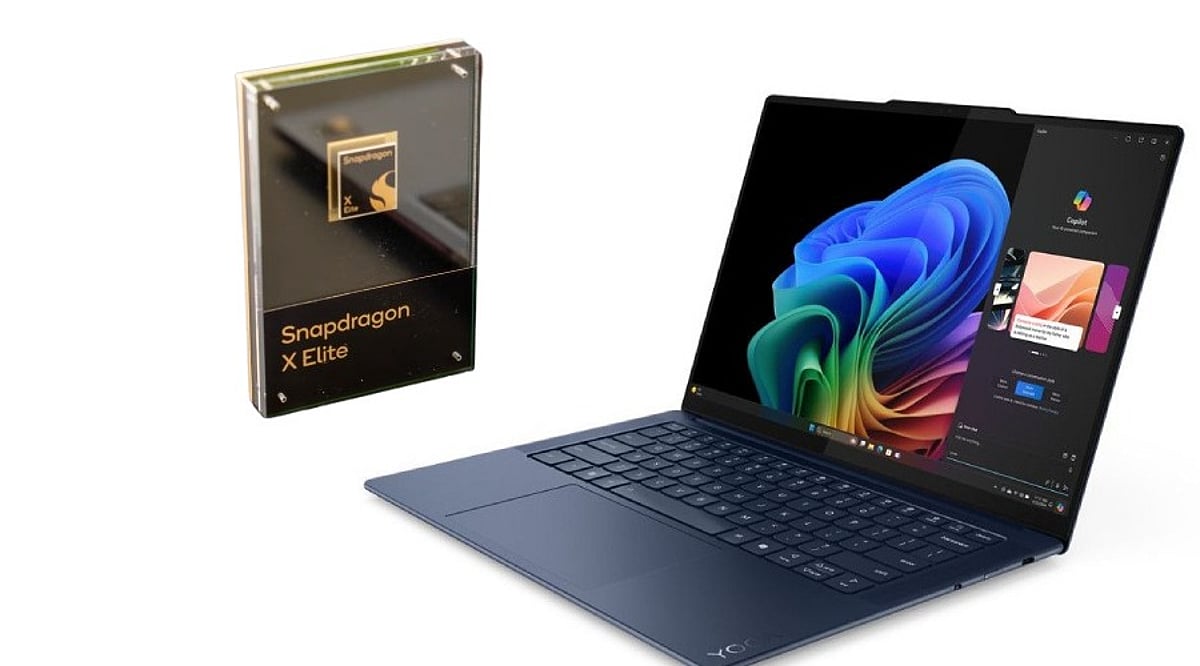
    Qualcomm’s Snapdragon X2 generation is pushing AI PCs beyond marketing language. The platform pairs dedicated neural processing with efficient CPUs and GPUs, aiming to make AI-assisted work feel more native on laptops. Here are five areas where the new Snapdragon AI PCs are expected to make a difference.

    1. More capable on-device AI

    The centerpiece is the NPU. Snapdragon X2 Elite processors are listed with up to 85 TOPS of NPU performance in some configurations, while other listings cite 80 TOPS. The NPU works alongside the CPU and GPU, so supported apps can run AI workloads locally instead of sending every request to the cloud. That opens the door to multimodal tasks involving text, images, video, and audio, with faster responses and smoother AI tools when software is optimized.

    2. AI agents that can handle multi-step tasks

    Snapdragon X2 platforms are built to support agentic AI experiences. Rather than only answering a question, supported applications can break a user’s goal into steps and use available tools to carry out parts of the workflow. Qualcomm has demonstrated native agentic apps for document search, content creation, web research, and workflow automation. The caveat: real-world usefulness will depend on developer support and app integration.

    3. Battery life and efficient processing

    Performance matters only if a laptop can sustain it. Snapdragon PCs continue to emphasize power efficiency, and Qualcomm says Snapdragon X Series devices can reach up to 22 hours of battery life. Actual mileage will vary by hardware, software, display, and workload. The architecture spreads tasks across processing units, so AI work can use the NPU instead of overloading the CPU. That can help laptops stay responsive while cutting unnecessary power draw.

    4. Smarter cameras, audio, and connectivity

    AI features are also moving into everyday communication. Snapdragon platforms support AI-enhanced camera and audio processing, which can improve video calls, background effects, voice handling, and related tools. Snapdragon X2 systems include Wi-Fi 7 support and advanced display capabilities, with some configurations able to drive up to three 5K displays at 60Hz. That makes these PCs relevant for mobile productivity and workstation-style setups.

    5. Local processing with more privacy

    On-device AI can offer more than speed. When suitable tasks are processed locally, less sensitive data has to leave the device. Qualcomm also highlights chip-to-cloud security across Snapdragon X2 platforms. This does not remove the cloud from the picture. Demanding workloads can still use cloud services, while the PC follows a hybrid model: local processing for appropriate tasks and cloud capacity when needed.

    What the next Snapdragon AI PCs could mean for users

    The next generation of Snapdragon laptops is becoming more AI-focused. Dedicated NPUs are getting faster, and software is catching up. Agentic AI may be one of the most noticeable shifts, moving AI tools from simple Q&A toward workflow assistance. Battery efficiency remains a major advantage for mobile users, and local processing could make some AI experiences faster and more private. Still, hardware specifications alone do not guarantee a better AI experience. The final result will depend on the device, the applications, and how well developers use the platform.

    FAQ

    What are Snapdragon AI PCs?

    They are computers powered by Qualcomm Snapdragon platforms with dedicated AI processing. Their NPUs can handle supported AI workloads alongside the CPU and GPU, enabling local AI features and AI-assisted applications.

    What is the Snapdragon X2 Elite NPU?

    It is a dedicated neural processing unit for AI workloads. The article cites up to 80 TOPS of NPU performance, with some configurations listed at up to 85 TOPS. Actual capabilities depend on the specific device and software.

    What can on-device AI do on Snapdragon PCs?

    On-device AI can process supported workloads directly on the computer, including tasks involving text, images, audio, and other content. This can reduce dependence on cloud processing for suitable workloads.

    What is agentic AI on a Snapdragon PC?

    Agentic AI goes beyond simple question-and-answer interactions. Supported applications can break a user’s goal into multiple steps and use applications and tools to complete parts of that workflow.

    Do Snapdragon AI PCs have better battery life?

    Snapdragon PCs emphasize power efficiency alongside performance. Qualcomm says Snapdragon X Series devices can deliver up to 22 hours of battery life. Actual battery performance varies by device, software, workload, display, and usage conditions.


  • Qualcomm Unveils Agentic Smartphone Vision: On-Device AI to Automate Tasks Across Apps

    Qualcomm Unveils Agentic Smartphone Vision: On-Device AI to Automate Tasks Across Apps

    Qualcomm has unveiled its ambitious vision for the next generation of smartphones at the Snapdragon Summit 2026 in Maui. The company’s handset chief, Christopher Patrick, and premium mobile leader Dino Bekis introduced the concept of the ‘agentic smartphone’ — a device that acts as an intelligent assistant capable of understanding user intent and autonomously completing multi-step tasks across different applications.

    For example, if someone emails you their contact details, instead of manually copying that information into your contacts app and forwarding it, the phone’s AI agent could handle the entire process automatically, only pausing to ask for your approval when necessary.

    However, this level of automation raises significant privacy concerns. To function effectively, the AI needs access to personal data such as emails, photos, and app accounts. Qualcomm’s solution is to process as much of this data as possible on the device itself, minimizing reliance on cloud servers. Users would have clear control over permissions, able to grant or revoke access at any time.

    The strategy is powered by Qualcomm’s newest processors: the Snapdragon 8 Elite Extreme Gen 6 and the Snapdragon 8 Elite Gen 6. Both chips feature the company’s Oryon CPU and Hexagon NPU, along with a low-power Sensing Hub that continuously monitors context without draining the battery. The Extreme version offers enhanced performance for graphics, camera, and video workloads.

    Qualcomm is also collaborating with Liquid AI to develop a system that builds a user profile from device data (with permission), giving AI agents the context they need without constant cloud access. Heavier AI workloads will still be offloaded to the cloud, but the goal is to split tasks based on privacy, speed, and cost considerations.

    While the chips are ready, the full realization of this vision depends on smartphone manufacturers and app developers building the necessary permission systems and app connections. Qualcomm has laid the foundation, but the ecosystem must catch up to make the agentic smartphone a reality in everyday life.

  • How Meta, Google, and Qualcomm Are Driving the Next Wave of AI Smart Glasses

    How Meta, Google, and Qualcomm Are Driving the Next Wave of AI Smart Glasses

    Meta, Google, and Qualcomm are pushing smart glasses into a new phase, moving beyond basic audio features to integrate AI, cameras, displays, and phone-like capabilities. On September 23, Meta unveiled its advanced VR device in the form of smart glasses, while also launching a camera-free VR glasses model. That same evening, Google partnered with Qualcomm to announce its first Gemini glasses at a Qualcomm event. These moves signal a clear trend: the wearable industry is shifting toward smart glasses that listen, talk, and even provide a screen when needed.

    New Models and Pricing

    Meta’s VR Glasses are priced at approximately ₹1.24 lakh in India and weigh around 100 grams. They rely on a separate pocket device for key hardware and are expected to arrive in spring 2027. Meanwhile, the Ray-Ban Meta Gen 3 will be available for roughly ₹44,300 in India and will feature a 12MP camera, longer battery life, and a dedicated button for Meta AI.

    Market Shift Toward Glasses

    According to the latest statistics, glasses accounted for 84.6% of total XR device shipments in 2026, with headsets making up only 15.4%. The bigger change is not merely making VR hardware lighter; it is about giving people a new way to use AI without reaching for a phone. Current smart glasses already handle calls, music, and voice queries, but newer models are expected to go further—providing directions, translating conversations, or answering questions about objects in the user’s field of view.

    A New AI Interface Takes Shape

    The core idea is simple: instead of pulling out a phone, users can ask their glasses for help, making AI feel more natural in daily tasks. Meta has announced that its Ray-Ban, Oakley, and Meta glasses range will exceed 100 styles by the end of 2026, demonstrating the company’s rapid expansion in the wearable lineup. Meta, Google, and Qualcomm are building toward a future where glasses become a regular AI tool. While phones may still handle the heavy lifting, glasses could become the easier, more intuitive way to access AI.

  • Qualcomm’s Snapdragon X2 Powers New Microsoft Surface PCs and Expands to Googlebook and Linux

    Qualcomm’s Snapdragon X2 Powers New Microsoft Surface PCs and Expands to Googlebook and Linux

    Qualcomm is expanding its Snapdragon X platform beyond the initial Windows-on-Arm push, bringing the technology into new Microsoft Surface devices, Google’s emerging Googlebook category, and a wider range of PC form factors.

    Announcements at Snapdragon Summit 2026 reveal Qualcomm’s strategy to establish its Oryon-based platform across different operating systems and device segments. Microsoft is introducing new Surface hardware with Snapdragon X2 Plus, while Google has partnered with Qualcomm for Googlebook laptops powered by Snapdragon X Elite.

    New Surface Devices with Snapdragon X2 Plus

    Microsoft unveiled a 12-inch Surface Pro and 13-inch Surface Laptop, both powered by the six-core Snapdragon X2 Plus processor. The devices go on sale in select markets from October 13. According to Microsoft, the new machines deliver up to 17% faster Office performance, up to 18% better battery efficiency, more than 60% faster graphics, and up to 95% faster local AI inference than the previous generation. The Snapdragon X2 Plus features an 80-TOPS NPU designed to handle on-device AI workloads.

    Googlebook Takes Snapdragon Beyond Windows

    A significant development is Google’s adoption of Snapdragon X for its new Googlebook category. Unlike conventional Chromebooks, Googlebook laptops are positioned around Gemini-powered features, native Android applications, and closer integration with Android phones and tablets. The first Googlebook models from Dell and HP use Snapdragon X Elite rather than the newer X2 generation. The platform supports thousands of native Android applications and games, expanding Qualcomm’s reach beyond Microsoft’s ecosystem.

    X2 Elite Pushes Performance Boundaries

    At the high end, Snapdragon X2 Elite scales to 18 Oryon CPU cores, with selected versions reaching speeds up to 5GHz. Qualcomm lists up to 85 TOPS of NPU performance and as much as 228GB/s of memory bandwidth. The company is also extending Snapdragon X2 support to Linux, adding another operating system to its PC strategy alongside Windows and Googlebook.

    Qualcomm Faces Wider Competition

    The expansion comes as Qualcomm faces competition from Intel, AMD, and Apple across premium and AI-focused PCs. Snapdragon X must compete on battery life, software compatibility, graphics performance, AI workloads, and developer support. With Surface, Googlebook, and Linux now joining Windows in the Snapdragon ecosystem, Qualcomm’s PC strategy is becoming broader. The next test will be whether manufacturers and users adopt the platform across these different categories.

  • Qualcomm Snapdragon 8 Elite Gen 6: 2nm Chip With 5GHz CPU Set to Transform Android Flagships

    Qualcomm Snapdragon 8 Elite Gen 6: 2nm Chip With 5GHz CPU Set to Transform Android Flagships

    Qualcomm has officially unveiled the Snapdragon 8 Elite Gen 6, its latest flagship mobile platform, featuring a groundbreaking 2nm manufacturing process, a 5GHz Oryon CPU, and advanced AI capabilities. Alongside it, the company introduced the higher-end Snapdragon 8 Elite Extreme Gen 6. Both chipsets are designed for premium Android smartphones and will debut in devices from major brands including Xiaomi, OnePlus, OPPO, vivo, iQOO, and Motorola.

    Why the 2nm Shift Matters

    The most significant upgrade is the transition to a 2nm process node. Smaller semiconductor nodes enable higher transistor density, improving the balance between performance and power consumption. Qualcomm claims the Snapdragon 8 Elite Gen 6 delivers a 10% CPU performance improvement and 37% better CPU power efficiency compared to its predecessor. The redesigned Adreno GPU reportedly offers 35% higher performance and 40% better efficiency.

    However, these figures do not guarantee that every phone will last 37% longer on a single charge. Real-world battery life depends on factors such as battery capacity, display technology, cooling systems, and software optimization.

    AI Moves Closer to the Device

    Qualcomm is placing agentic AI at the core of the new platform. The reworked Hexagon NPU supports multi-step AI workloads, while the Sensing Hub handles lower-power, context-aware tasks. According to Qualcomm, the AI Engine can deliver up to 20% better performance per watt for agentic AI workloads. This could enable more responsive on-device assistants, advanced image processing, and personalized features without relying on cloud processing.

    The impact of the 2nm process will largely depend on how phone makers leverage the additional efficiency. Users can expect improvements in gaming, camera processing, AI features, and sustained performance rather than a dramatic change in basic tasks.

    The Snapdragon 8 Elite Extreme Gen 6 goes further with dedicated AI graphics hardware and support for 8K/60fps video recording. The standard Gen 6 remains focused on bringing Qualcomm’s latest CPU, GPU, and AI technology to a broader premium-phone segment.

  • Tech Roundup: Qualcomm’s New AI Chip, Demoverse’s $600K Funding, and Key Industry Updates

    Tech Roundup: Qualcomm’s New AI Chip, Demoverse’s $600K Funding, and Key Industry Updates

    Qualcomm Launches AI-Focused Android Chip

    Qualcomm has introduced a new Android chip designed to handle rising AI workloads while addressing challenges from the global memory shortage. The processor targets smartphones with stronger on-device AI capabilities and improved efficiency. This launch comes as chipmakers face increasing demand for AI hardware and tighter memory supplies.

    Demoverse Raises $600,000 in Lumikai-Led Funding

    AI product co-creation startup Demoverse has raised $600,000 in a pre-seed round led by Lumikai. The company plans to use the funds to expand its US presence, grow its consumer creator community, and convert brand partnerships into paid campaigns. Its platform allows consumers to use AI to help design products and earn royalties.

    Laid-Off Graduate Works as Delivery Executive After TCS Job Loss

    A 2024 computer science graduate reportedly began working as a delivery executive after losing his TCS job earlier this year. The graduate is seeking opportunities to return to IT and asked a tech professional for referrals. The incident highlights the challenges facing entry-level technology workers amid a difficult hiring environment.

    Claude Opus 5.5 Targets Businesses With Lower AI Costs

    Anthropic has launched Claude Opus 5.5, intensifying competition with OpenAI. The model focuses on stronger performance and lower operating costs, with pricing reduced from its predecessor. OpenAI has also introduced cheaper GPT-6 models targeting professional workloads. These launches highlight the AI industry’s growing focus on efficiency, pricing, and enterprise adoption.

    CLARITY Act Shapes Debate Around US Crypto Rules

    The CLARITY Act is gaining attention as US lawmakers and regulators work toward clearer cryptocurrency rules. The legislation seeks to establish regulatory boundaries for digital assets and clarify oversight responsibilities. Its progress could influence how crypto companies operate, how digital assets are classified, and how future US market regulation develops.

  • Qualcomm’s Agentic AI Vision Could Reshape Smartphones — But Raises Data Privacy Concerns

    Qualcomm’s Agentic AI Vision Could Reshape Smartphones — But Raises Data Privacy Concerns

    Qualcomm CEO Cristiano Amon recently outlined a future where smartphones evolve from simple command receivers into proactive AI agents capable of understanding user intent and completing tasks autonomously. Speaking at the Snapdragon Summit 2026 in Maui, Amon described the transition to an ‘agentic age,’ where artificial intelligence becomes the central driver of the mobile experience.

    “We are going from a phone-centric model to an agent-centric model. Going forward, agents will become the center of experience. We can finally see what an AI phone truly means,” Amon said.

    To support this vision, Qualcomm unveiled two new mobile platforms: the Snapdragon 8 Elite Gen 6 and Snapdragon 8 Elite Gen 6 Extreme. These chips are designed to handle substantial AI workloads locally, reducing the need to offload every task to the cloud. This local processing could enable faster, more private interactions — but it also requires the phone to access more personal data, such as calendars, messages, and shopping details, to anticipate user needs.

    Amon acknowledged the importance of user permission and context, stating, “The permission to use will be very important. And, so is context. Because the phone is very personal and specific to you. Agentic AI will need your phone to do a lot more than just execute tasks for you.”

    The shift could fundamentally change how users interact with their devices. Instead of manually controlling every step, users might only need to approve key actions while the phone handles the rest. Qualcomm expects this agentic model to extend beyond smartphones to PCs, smart glasses, wearables, and cars, creating a seamless ecosystem of interconnected devices.

    As AI agents take on more responsibility, the balance between convenience and privacy becomes critical. Users will need clear visibility into what their devices access and when they are allowed to act. Transparent permission controls and user oversight will be just as important as AI performance in earning trust.

  • Snapdragon Summit 2026: Qualcomm’s Flagship Chip Reveals Set for September 22

    Snapdragon Summit 2026: Qualcomm’s Flagship Chip Reveals Set for September 22

    Qualcomm’s Snapdragon Summit 2026 kicks off on September 22 in Maui, Hawaii, running through September 24. The opening day will focus heavily on mobile platforms and the company’s vision for the ‘agentic AI’ era.

    Two New Snapdragon 8 Elite Chips Expected

    The highlight is anticipated to be Qualcomm’s next flagship smartphone processors. Leaks indicate the Snapdragon 8 Elite Gen 6 and Snapdragon 8 Elite Gen 6 Pro, both likely built on a 2nm manufacturing process for notable gains in performance and power efficiency. The Pro variant may support faster LPDDR6 memory and UFS 5.0 storage, while the standard model could retain LPDDR5X. Upgraded graphics, including Adreno Matrix Cores and Adreno Neural Fusion for AI workloads, are also confirmed by Qualcomm.

    AI, XR and PCs Take Center Stage

    Beyond phones, the summit will emphasize agentic AI across personal computing, sound, and extended reality. Qualcomm’s Snapdragon portfolio now includes PCs, XR devices, wearables, and automotive platforms, positioning the summit as a key venue for its cross-device AI push.

    Xiaomi, iQOO and OnePlus Linked to Early Adoption

    The new chips are expected to reach smartphones swiftly. Xiaomi, iQOO, and OnePlus are among brands rumored to launch devices with the next-generation platforms, with the first wave possibly arriving in India by late 2026 or early 2027. Official specifications, performance claims, and partner announcements will be unveiled at the summit.

  • Qualcomm Secures Potential $60 Billion AI Chip Deal with Amazon for AWS

    Qualcomm Secures Potential $60 Billion AI Chip Deal with Amazon for AWS

    Qualcomm and Amazon have entered into a long-term agreement to develop custom chips for Amazon Web Services (AWS), a deal that could be worth up to $60 billion depending on future orders. While the exact financial terms have not been officially disclosed, reports indicate that Amazon has not yet placed an order for that full amount. As part of the agreement, Qualcomm issued an Amazon affiliate a warrant to acquire up to 25 million Qualcomm shares at an exercise price of $161.26 per share. The warrant expires on September 3, 2036, and can be exercised without cash.

    The partnership will focus on chips designed for large-scale AI systems and high-speed optical connections. This move marks a strategic shift for Qualcomm, which is looking to reduce its reliance on the smartphone chip market. In the June 2026 quarter, Qualcomm’s handset revenue fell 19.6% year over year. The company aims for its data center business to exceed $15 billion in revenue by fiscal 2029. Meanwhile, Amazon will continue to use its own Graviton, Trainium, and Nitro chips alongside Qualcomm’s technology.

    Can Qualcomm Challenge NVIDIA?

    Qualcomm is entering a market dominated by NVIDIA, which reported $89 billion in data center revenue in its most recent quarter and has built a massive business around AI chips. Amazon also has its own AI chips, which could make the competitive landscape even tougher for Qualcomm. The Amazon deal gives Qualcomm a major customer and a platform to demonstrate its chip capabilities in a broader market. However, a single deal is unlikely to be enough to rival NVIDIA’s entrenched position. While this partnership may help Qualcomm reduce its dependence on smartphone chips, early data center deals may yield lower profit margins than its phone business.

    The $60 billion figure is not guaranteed revenue; future orders will determine how much business Qualcomm actually receives from Amazon. For now, the deal provides Qualcomm with a strong entry into the rapidly growing AI chip market.

  • Top 10 Semiconductor Companies Driving the AI Revolution

    Top 10 Semiconductor Companies Driving the AI Revolution

    The rapid advancement of artificial intelligence is heavily reliant on cutting-edge semiconductor technology. From high-performance GPUs to specialized memory and fabrication, these ten companies are at the forefront of powering AI workloads across data centers, edge devices, and consumer electronics.

    • Nvidia: Leads AI computing with powerful GPUs that accelerate machine learning, generative AI, scientific research, and enterprise data center workloads globally.
    • AMD: Develops high-performance CPUs and GPUs supporting AI workloads, cloud computing, gaming, and enterprise applications with competitive processing capabilities.
    • Intel: Expands AI hardware through advanced processors, AI accelerators, and data center solutions supporting enterprise computing and intelligent automation.
    • TSMC: Manufactures cutting-edge semiconductor chips for leading technology companies, enabling advanced AI processors through world-class fabrication technologies.
    • Samsung Electronics: Produces advanced memory chips and semiconductor technologies powering AI devices, smartphones, servers, and high-performance computing systems worldwide.
    • Qualcomm: Designs AI-enabled mobile processors delivering intelligent photography, voice assistants, efficient performance, and edge AI capabilities across connected devices.
    • Broadcom: Develops networking chips, AI infrastructure components, and connectivity solutions supporting large-scale cloud computing and enterprise artificial intelligence deployments.
    • MediaTek: Builds AI-capable smartphone processors with efficient performance, intelligent imaging, and advanced connectivity for affordable consumer electronics worldwide.
    • Micron Technology: Supplies high-performance memory and storage solutions essential for AI training, inference workloads, and modern data center infrastructure.