
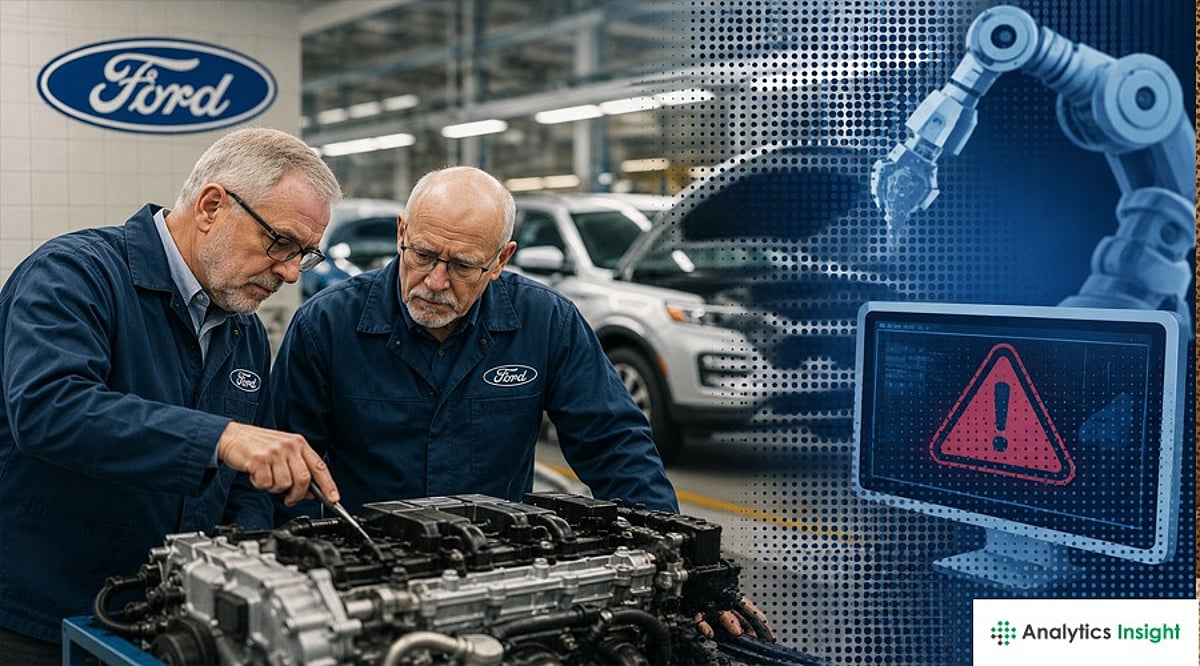
Ford Motor Company has begun rehiring hundreds of veteran engineers following a series of quality problems and skyrocketing warranty expenses that exposed the limits of relying too heavily on artificial intelligence. The automaker’s renewed focus on experienced talent marks a significant shift after years of investing in AI-led quality control that ultimately failed to deliver expected results.
This strategic pivot underscores a costly lesson: while AI can process vast amounts of data and accelerate certain tasks, it cannot replace decades of hands-on engineering expertise. After suffering substantial quality-related losses, Ford is now returning to a model where AI supports engineers rather than replacing them.
Hundreds of Experienced Engineers Return
Approximately 350 engineers and technical experts who had retired or left the company are being rehired. Their deep institutional knowledge will be applied to developing new vehicles and improving product quality.
Charles Poon, Ford’s Vice President of Vehicle Hardware Engineering, acknowledged that the company had underestimated the value of experienced engineers. He noted that years of institutional knowledge walked out the door with retiring employees, leaving a gap that AI systems could not fill despite advances in automation.
Ford has also reinstated engineer-led design reviews, giving senior technical teams a larger role in evaluating products before they move into production.
Early Results Show Improvement
The new approach appears to be paying off. Ford recently earned the top spot among mass-market brands in the 2026 J.D. Power Initial Quality Study — its best performance since 2010. The company has also trimmed warranty spending by identifying manufacturing and design problems earlier, during the development phase, so fewer defects reach customers.
Still, Ford remains the automaker with the most recalls in the U.S. this year, though many of those recall actions are linked to older vehicle programs rather than newly launched models.
AI Remains Part of Ford’s Future
Despite the strategic shift, Ford is not abandoning artificial intelligence. The company continues to use AI for software validation, automated testing, and manufacturing analysis — with more than 100,000 software tests now handled through AI-assisted systems.
Executives say the company’s approach has changed, not its commitment to technology. AI will continue to play a role in increasing efficiency and decision-making, but skilled engineers remain indispensable in manufacturing.
Ford’s initiative serves as a cautionary tale for companies adopting AI in manufacturing: technology can assist engineering, but it cannot replace human expertise.