Tag: RAG

  • Why AI Agents and Multi-Agent Systems Are the Must-Have GenAI Skills in 2026

    Why AI Agents and Multi-Agent Systems Are the Must-Have GenAI Skills in 2026

    Generative AI is evolving far beyond simple chatbots and prompt-based tools. In 2026, businesses are increasingly deploying AI agents that can execute multi-step tasks, interact with software tools, and collaborate across workflows. This shift is driving demand for professionals who not only use AI but also build, manage, and evaluate these complex systems.

    AI Skills Demand Surges

    The 2026 AI Index reveals a dramatic rise in job postings requiring agent-related skills in the United States. In 2025, 16,541 job postings mentioned Agentic AI, up from just 151 in 2024—a staggering 10,854% increase. Similarly, postings for AI agents grew 1,062% to 15,217, while multi-agent system mentions rose from 1,635 to 5,461. LangGraph-related postings jumped from 194 to 4,294. These numbers highlight the growing need for expertise in new AI architectures, particularly in tech and AI-specific roles.

    Multi-Agent Systems Transform Workflows

    Unlike conventional chatbots that respond to individual prompts, AI agents can perform multiple steps, use tools, and cooperate with other agents. Multi-agent systems extend this by assigning distinct tasks to separate agents. Microsoft’s 2026 Work Trend Index reports that active agents in the Microsoft 365 ecosystem grew 15× year-over-year, and 18× in large enterprises. The report identifies “Frontier Professionals” who leverage agents for multi-step workflows and build multi-agent systems. For learners, understanding agent communication, task division, information flow, and human oversight is becoming essential as companies integrate AI into complex processes.

    Beyond Prompting: Deeper GenAI Skills

    Learning generative AI in 2026 is increasingly about what happens behind the interface. Skills such as retrieval-augmented generation (RAG), orchestration, evaluation, observability, guardrails, and deployment are now critical for practical AI development. For instance, IIT Hyderabad offers an Applied AI Professional Certification Program covering RAG, orchestration, multi-agent systems, AI engineering tools, evaluation methods, observability, guardrails, and deployment strategies—all centered on building and deploying a production-style AI agent system. This reflects a broader shift: practical development skills are gaining importance alongside basic familiarity with generative AI tools.

    Human Skills Remain Vital

    Studying AI does not mean discarding traditional competencies. According to Microsoft’s research, 50% of AI users say quality control of AI output is becoming increasingly important as a human skill, while 46% cite critical thinking. Moreover, 86% view AI output as initial information. Assessing AI systems is crucial because they can produce incorrect data, misunderstand instructions, or behave unexpectedly—especially when given more autonomy. Recent news reinforces this: in September 2026, OpenAI released a framework for regularly disclosing when AI systems show unexpected or unauthorized behavior.

    What to Learn in 2026

    If you’re planning a career in AI, it’s about more than prompting. An AI roadmap should include: basics of generative AI, prompt engineering, RAG, AI agents, agent orchestration, tooling, evaluation, observability, security, and AI governance. The goal is not just to acquire new tools but to understand how to design, evaluate, and deploy these systems. As AI agent-related jobs and enterprise adoption grow, students and professionals should invest in learning these technologies to adapt to organizational changes—from experimenting with GenAI to integrating AI agents into daily workflows.

    Frequently Asked Questions

    What is Generative AI?
    Generative AI creates text, images, code, and other content using models trained on large datasets and user-provided instructions.
    What are multi-agent systems?
    Multi-agent systems involve multiple AI agents working together, with each agent handling specific tasks within a larger workflow.
    Why are AI agents becoming important in 2026?
    Businesses increasingly use AI agents for multi-step tasks, software tools, and workflows, creating demand for professionals with specialized skills.
    What skills should professionals learn alongside GenAI?
    Professionals can learn RAG, prompt engineering, orchestration, agent development, evaluation, observability, deployment, security, and AI governance.
    Are traditional human skills still important with AI?
    Yes, critical thinking and quality control remain important because AI systems can produce inaccurate information or misunderstand instructions.
  • AI Learning Roadmap: From Beginner to Advanced Skills in Four Stages

    AI Learning Roadmap: From Beginner to Advanced Skills in Four Stages

    An AI learning roadmap is a staged path that moves learners from basic literacy to advanced specialization. Rather than a random collection of courses, it provides a sequence where each level builds on the previous one. With AI skills increasingly demanded in entry-level roles, following the right progression is more important than simply accumulating knowledge.

    The Four Stages of an AI Learning Roadmap

    Stage 1: Building AI Literacy (Weeks 1–4)

    This foundation stage covers what large language models do, why they hallucinate, the difference between a model and an application built on it, and basic data and AI ethics. Employers value the ability to choose the right AI tool and verify its output over deep technical expertise. Free resources like Google’s AI Essentials, Anthropic’s documentation, and Andrew Ng’s introductory courses are excellent starting points. The goal is to be able to explain in plain terms what a model does and where its output needs a second check.

    Stage 2: Applying AI in Real Workflows (Months 2–4)

    Once the basics are set, hands-on use begins. Prompt engineering is part of this stage, but the real skill is workflow design: breaking tasks into steps, providing the right context, checking output, and automating repetitive parts. Building a pipeline that pulls data, summarizes it with AI, and flags anomalies for review is a practical achievement. A few finished workflows carry more weight than a certificate.

    Stage 3: Moving Into AI Engineering (Months 4–10)

    This is where technical depth starts. Python and SQL come first, then statistics, classical machine learning, neural networks, embeddings, and finally retrieval-augmented generation (RAG) and LLM-based applications. Each step supports the next. Learners should become comfortable with a major deep-learning framework like PyTorch or TensorFlow. Fast.ai’s practical deep learning course, DeepLearning.AI specializations, and Kaggle competitions provide strong open resources and a public portfolio.

    Stage 4: Choosing an Area of Specialization (Year 1 and Beyond)

    The field is too wide for anyone to cover all of it. This stage focuses on picking a problem to master, such as MLOps, AI security, multimodal systems, or agentic AI. Stanford’s 2026 Index shows agentic AI mentions in U.S. job postings grew over 280% in one year. Specialization turns general fluency into a defensible skill set. Advanced ability is measured by the complexity of problems solved, not the number of frameworks known.

    Why Sequence Matters

    The biggest risk in learning AI is not falling behind but learning the wrong things in the wrong order. Skipping stages explains why some self-taught learners can describe transformers but cannot ship a working chatbot. A roadmap ensures that each level builds a foundation for the next, turning scattered knowledge into practical, demonstrable skills.

    Final Thought

    The roadmap itself will shift as AI capabilities evolve—agentic AI barely existed as a hiring category two years ago. What stays fixed is the order: literacy, application, engineering, specialization. Learners who follow that sequence build something they can point to and explain, not just a list of finished courses.

  • 7 Essential Skills Beyond Generative AI to Future-Proof Your Career

    7 Essential Skills Beyond Generative AI to Future-Proof Your Career

    Generative AI has transformed how millions work—from brainstorming with ChatGPT to summarizing documents and drafting emails. But as AI tools become more intuitive, the real career advantage lies not in writing prompts but in building AI-powered workflows, verifying outputs, and solving meaningful business problems. Here are seven skills that will define the next wave of AI-driven careers.

    1. Understand How AI Agents Work

    AI is moving beyond single-answer responses. AI agents can handle sequences of tasks, use external tools, and complete workflows with minimal human intervention. Learning how agents operate—how to grant them access to tools and where human oversight is critical—will set you apart from casual AI users.

    2. Master Retrieval-Augmented Generation (RAG)

    RAG enables AI to pull information from documents, databases, or company knowledge before generating answers. This is vital for businesses that want AI to work with proprietary data rather than relying solely on pre-trained knowledge. Start with concepts like embeddings, vector databases, and retrieval methods—no need to become a machine learning expert overnight.

    3. Build AI Automation Skills

    Move from using AI to integrating it into daily workflows. Learning basic Python, APIs, databases, and automation tools helps connect AI models with other applications. Even modest technical know-how allows you to automate repetitive tasks and build simple AI-powered solutions.

    4. Develop AI Evaluation Skills

    AI can sound confident even when wrong. Being able to evaluate outputs for accuracy, hallucinations, and consistency is increasingly valuable—especially in fields like finance, healthcare, and legal work. Learn to test model performance and compare responses systematically.

    5. Learn AI Security and Governance

    As companies give AI access to sensitive data and business systems, privacy, security, and responsible use become critical. Understanding data protection, access controls, compliance, and AI risk management opens doors to roles at the intersection of technology and business.

    6. Strengthen Data and Machine Learning Fundamentals

    Generative AI may make technical depth seem unnecessary, but a basic grasp of statistics, data analysis, and how models are trained reveals both strengths and limitations. You don’t need to be a researcher—just knowing why an AI behaves a certain way makes you a smarter user and decision-maker.

    7. Never Forget Human Skills

    The World Economic Forum’s Future of Jobs Report 2025 highlights that analytical thinking, creativity, resilience, and collaboration remain essential. Combining these human abilities with AI proficiency creates the highest career value. The most sought-after professionals will be those who know when to use AI, how to make it work, and when not to trust it.

    By investing in these skills—AI agents, automation, RAG, evaluation, governance, data basics, and human judgment—you position yourself for the next phase of AI, where the real question isn’t “Can you use ChatGPT?” but “Can you use AI to solve a real problem?”

  • 10 Best GenAI and Agentic AI Certifications to Future-Proof Your Career in 2026

    10 Best GenAI and Agentic AI Certifications to Future-Proof Your Career in 2026

    The AI job market is shifting toward professionals who can build, deploy, and manage intelligent systems instead of simply using AI tools. GenAI and Agentic AI courses provide structured learning with hands-on projects and industry-recognized credentials. The best programs can strengthen both technical expertise and long-term career prospects.

    Overview

    GenAI and Agentic AI courses develop practical skills in large language models (LLMs), AI agent frameworks, RAG, Model Context Protocol (MCP), AI governance, and autonomous AI system design for real-world applications. These programs cater to different experience levels, from beginners learning generative AI fundamentals to professionals building production-ready AI agents, enterprise workflows, and intelligent automation systems.

    University-backed and industry-recognized courses combine hands-on projects, technical expertise, and system-level thinking to prepare learners for AI engineering, product management, software development, and enterprise AI leadership roles.

    Prompt engineering got people through the door of Generative AI. Now the demand is shifting toward something bigger: professionals who can build, deploy, and govern autonomous AI systems that actually solve business problems. Certification programs are moving with that shift, leaving prompt basics behind and teaching production-ready AI skills instead.

    Generative AI courses teach people to use large language models to create content and applications. Agentic AI courses go further. They teach people to build systems that plan, use tools, maintain context, and finish tasks with little human input. That is why courses covering architecture, evaluation, and governance now carry more weight than courses built around prompting alone.

    How We Ranked the Best GenAI and Agentic AI Courses in 2026

    These ten are ranked by curriculum depth, verified hands-on project work, institutional accountability, and how directly the skills map to a real job function, from the complete beginner through the production engineer. That range is deliberate. A ‘top 10’ list that only serves engineers offers little to a product manager or executive searching for the same term.

    Top 10 GenAI and Agentic AI Courses at a Glance

    1. Learnbay – Generative AI & Agentic AI Master Program

    Most AI courses just teach tools or prompt writing. Learnbay takes a different path, helping learners apply AI directly in their existing fields. The Generative AI & Agentic AI Master Program mixes live classes, real projects, and guidance from actual industry practice. Topics covered include Generative AI, Agentic AI, RAG, LangChain, LangGraph, CrewAI, MCP, vector databases, LLMOps, AI deployment, automation, and responsible AI use. The focus stays on real work, not sample projects. Through AI Co-Lab and startup-style challenges, plus the Build Your Own Project (BYOP) program with a mentor guiding each step, learners build a portfolio worth showing employers. The projects are tailored to different fields too, including banking, healthcare, manufacturing, retail, telecom, and consulting. Classes run live on weekends, which works well for people balancing a full-time job. A three-year access period is also included, so the material stays available for future review. Career Services Pro adds further support with resume building, LinkedIn profile help, mock interviews, and placement assistance.

    2. Building AI Agents and Agentic Workflows (IBM)

    A three-course specialization that moves from LangGraph fundamentals to CrewAI multi-agent orchestration to AG2 and BeeAI, inside guided labs using real large language models such as GPT and IBM Granite. It works as a reasonable second step after a GenAI foundations course, though it remains a framework survey in nature. Learners wanting deep architecture or governance content will outgrow it fast.

    3. Full Stack Agentic AI Specialization (Coursera)

    This program moves past framework tours into ownership: RAG pipelines, the Model Context Protocol, vector databases, and backend orchestration. It suits engineers who want the whole stack under one roof rather than a single layer. The tradeoff is breadth over depth. Covering the full stack means less specialization in any one area than Cornell’s architecture-focused track offers.

    4. Master Agentic AI: Core Principles and Real-World Applications (Coursera)

    Built for people who already build ML models and need to operate agent systems at production scale: reward-signal design, CI/CD pipelines for retraining, drift detection, and threat modeling for agent security. The honest limitation is the prerequisite. Real ML fluency is assumed already. This program suits practitioners moving beyond prompting, not those starting from it.

    5. Applied Agentic AI Certificate (University of San Francisco)

    An intensive, in-person program with labs and a hackathon, built for people who need to understand agentic AI without writing code. It fills a genuine gap, since most agentic programs assume an engineering background. The cost is depth: graduates leave with strategic fluency, not implementation skill.

    6. Agentic AI Certificate Program (Johns Hopkins)

    A twelve-week, university-backed program covering Python, LLMs, RAG, and agent construction through applied projects, with weekly live sessions from faculty and industry experts. It sits between USF’s no-code approach and Coursera’s engineering-heavy tracks, a reasonable middle path for professionals wanting some hands-on coding without a pure software-engineering prerequisite.

    7. Agentic AI Architecture (eCornell)

    Four short courses over two months, focused not on building agents step by step but on designing the systems around them: LLM reliability, RAG, multi-agent workflows, and governance frameworks for responsible deployment. It suits architects, tech leads, and PMs who own decisions rather than code. Engineers wanting deep framework practice will find it thinner on implementation than IBM’s specialization.

    8. Generative and Agentic AI Certification (BITS Pilani Digital)

    A roughly 30-week program covering LLM applications, agentic systems, RAG, and deployment, built for technology professionals moving from experimenting with AI to architecting it. The length is the differentiator, for better and worse. It offers more depth than any other program on this list but demands a real-time commitment, closer to a part-time postgraduate course than a certification sprint.

    9. Agentic and Generative AI Course (IISc CCE with TalentSprint)

    An advanced program carrying IISc’s research credibility, relevant in India and among engineers who value an academic institution behind the certificate. It overlaps closely in content with BITS Pilani’s track, so the deciding factor usually comes down to institutional preference and location rather than curriculum difference.

    10. GitHub Certified: Agentic AI Developer (Microsoft)

    Four courses at 15 to 16 hours each, built for developers already working inside GitHub workflows and the software development lifecycle. It teaches agentic development inside tools people already use daily, which shortens the learning curve for that specific audience and narrows relevance for anyone outside it.

    How to Choose the Right GenAI and Agentic AI Certification

    Complete beginners fit best with Generative AI for Everyone before attempting anything agentic; every program past that point assumes basic LLM familiarity. Developers wanting hands-on framework practice suit IBM’s specialization or Coursera’s Full Stack track. Architects and technical leads gain more from Cornell’s system-design focus than from a coding-heavy specialization they will not use directly. Professionals wanting depth and university credibility should weigh BITS Pilani or IISc against the time commitment involved. Non-technical leaders get the most direct value from USF’s applied, no-code format.

    Final Thoughts

    The strongest certification is rarely the longest or the most recognizable name. It is the one that closes an actual skill gap. Whether that means understanding what generative AI even is, building production-ready agents, or governing how autonomous systems get deployed at scale.

    FAQs

    1. What is the difference between Generative AI and Agentic AI? Generative AI creates content such as text, images, code, and audio from user prompts, while Agentic AI enables systems to reason, plan, use tools, and complete multi-step tasks with minimal human intervention.
    2. Which GenAI and Agentic AI certification is best for beginners? Beginners should start with foundational Generative AI courses that teach LLMs, prompt engineering, and AI applications before advancing to Agentic AI courses focused on autonomous agents and workflow automation.
    3. Are GenAI and Agentic AI courses worth pursuing in 2026? Yes. As businesses increasingly adopt AI-powered workflows and intelligent agents, courses with hands-on projects and practical AI skills can improve employability and support long-term career growth.
    4. What skills should a good GenAI and Agentic AI certification include? A strong certification should cover prompt engineering, large language models (LLMs), retrieval-augmented generation (RAG), AI agent frameworks, workflow automation, AI governance, model evaluation, and real-world project development.
    5. How do I choose the right GenAI and Agentic AI course? Select a course based on your experience level, career goals, curriculum, hands-on learning opportunities, industry recognition, and whether it covers practical applications such as AI agent development, deployment, and enterprise AI solutions.
  • Proven Strategies to Build Smarter, Faster, and More Reliable AI Agents

    Proven Strategies to Build Smarter, Faster, and More Reliable AI Agents

    AI agents are getting better fast, but most of them still fail in small ways that matter a lot. They miss details, forget context, pick the wrong tool, or sound confident when they are wrong. The good news is that agent performance can be improved with clear design choices, better prompts, stronger memory handling, and careful testing. Recent 2026 guidance on agent evaluation shows that teams now look at task completion, latency, hallucination rate, and cost together instead of relying on one score alone.

    What is an AI Agent? How Autonomous AI Agents Work

    An AI agent is a system that can take a goal, break it into steps, and act on its own with some level of control. Unlike a simple chatbot that only replies to a question, an agent may plan, use tools, read files, search the web, or call APIs before answering. It can also revise its next step based on what it learns along the way. This is what makes it more than a text generator. It is a task-doer.

    At the core, most agents follow a loop. First, they receive a goal from a user. Next, they think about what to do, choose a tool if needed, observe the result, and then decide the next step. This cycle can repeat many times until the job is done. In stronger systems, the agent also keeps short-term memory, tracks state, and checks whether the result matches the goal. That makes the agent feel more autonomous.

    Autonomous agents work well when the task is clear and the steps can be broken down. For example, an agent can gather market data, compare sources, draft a summary, and flag risks. But if the task is vague or the rules are weak, the agent can drift off course. This is why good agent design is not just about model size. It is also about structure, control, and guardrails.

    The best agents are built with a clear purpose. They do not try to do everything at once. They are given the right tools, a simple flow, and limits on what they can change. When that happens, the agent becomes more useful, more stable, and much easier to trust in real work.

    How to Improve AI Agent Accuracy and Response Quality

    Accuracy improves when the agent has better input, better tools, and better checks. A weak response is often not the model’s fault alone. The prompt may be unclear, the context may be too large, or the agent may not have the right data source. If the input is messy, the output will usually be messy too. So the first step is to make the task clear and narrow.

    One strong method is to give the agent a specific role, a goal, and a format. This reduces confusion and helps it focus on what matters. It also helps to provide examples of good answers. When the agent sees the shape of the output, it is more likely to match it. For fact-heavy tasks, you should also connect the agent to trusted sources instead of asking it to guess.

    Another way to improve quality is to add a review step. The agent can draft an answer, then check it for missing points, bad logic, or weak evidence. This second pass often catches errors that a single run misses. For multi-step work, it helps to make the agent verify each step before moving on. This is slower, but the quality is better.

    Response quality also improves when the agent is not overloaded. Too many instructions can make it lose focus. Too much context can hide the useful parts. Keep the task tight, use clean prompts, and remove anything that does not help the job. A simpler setup often gives better results than a complex one.

    Best Prompt Engineering Techniques for AI Agents

    Prompting for agents is different from prompting for a single reply. The prompt must guide action, not just language. A strong agent prompt should state the goal, available tools, limits, and expected output. If the agent is expected to plan, act, and report, each part should be stated clearly. This reduces random behavior.

    One useful method is to split instructions into stages. Start with the goal, then add rules, then add the output format. This makes the prompt easier to follow. It also helps to ask for one step at a time when the task is complex. If the agent tries to do everything in one go, it may miss important details. Stepwise prompting keeps the process steady.

    Examples are also powerful. A short sample of the kind of answer you want often does more than a long paragraph of rules. The agent can more easily match style, length, and structure. This is especially useful when you want a certain tone, such as plain language, business style, or technical writing. Good examples save time and reduce guesswork.

    Another smart technique is to use constraints. Tell the agent what to avoid, such as unsupported claims, extra filler, or overly long replies. Constraints help the model stay inside the lane. You can also use checklists in which the agent must confirm that each key point has been covered. This improves consistency and makes the result easier to trust.

    How to Reduce AI Agent Hallucinations and Improve Reliability

    Hallucinations occur when an agent states something that sounds true but is not. This is one of the biggest problems in AI systems. The agent may invent facts, misread a source, or fill in missing parts with a guess. The more open-ended the task, the higher the risk. That is why reliability has to be designed in, not hoped for.

    The best fix is to reduce free guessing. If the agent needs facts, give it access to verified data and tell it to use those sources first. If it cannot find proof, it should say so instead of making up an answer. This simple rule cuts down on many errors. It is also useful to ask the agent to quote or reference the source of a claim when possible.

    Another strong method is to separate generation from verification. First, the agent creates a draft. Then a second step checks whether each claim is supported. This can be done by the same model or by a different review model. The key is to force a pause before the final answer. This makes it harder for false statements to slip through.

    Reliability also improves when prompts are precise. A vague prompt invites a vague answer. A narrow prompt tells the agent exactly what kind of response is safe. For high-stakes use, it helps to add refusal behavior. If the agent is unsure, it should ask for more context or say the answer is incomplete. This is better than sounding certain while being wrong.

    How to Optimize AI Agent Memory and Context Management

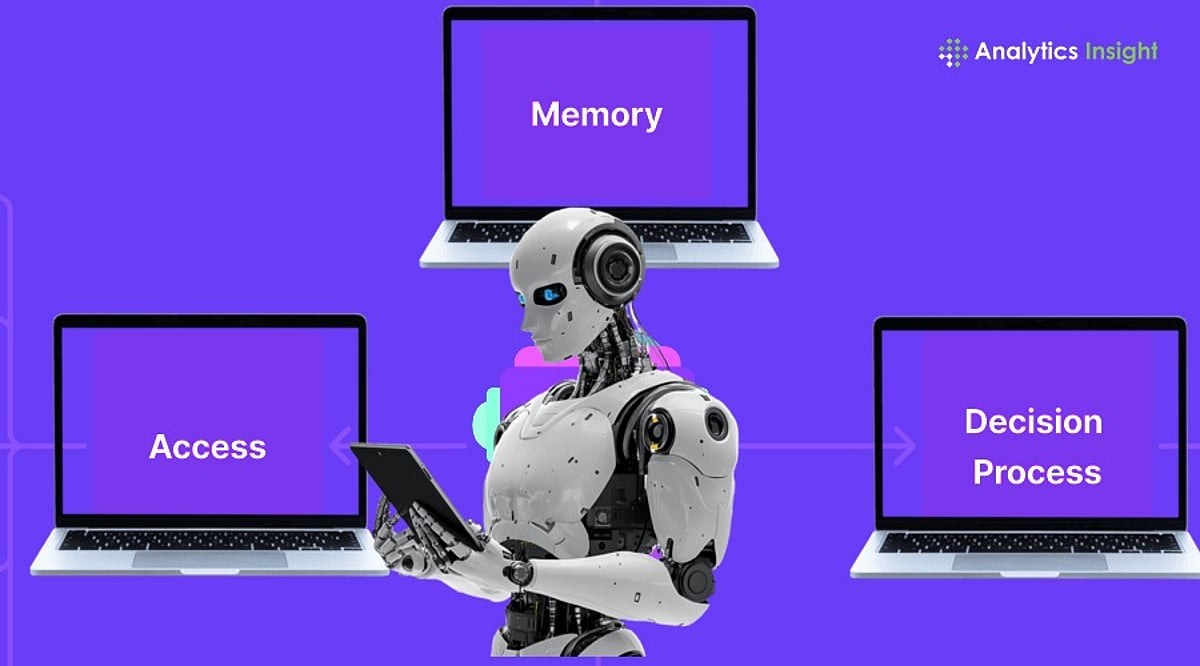
    Memory helps an agent stay on track throughout a conversation or task. Without memory, the agent may forget the user’s goal, repeat work, or contradict itself. However, memory is tricky. If you store too much, the context gets noisy. If you store too little, the agent loses the thread. Good memory design is about balance.

    A useful pattern is to split memory into short-term and long-term parts. Short-term memory holds the current task, recent steps, and active facts. Long-term memory stores stable details like user preferences, project goals, or past decisions. This keeps the working context lighter and more useful. It also lowers the chance of the agent pulling in old, irrelevant details.

    Context management is just as important as memory itself. The agent should not see every past message if only a few lines matter. Instead, summarize the key points and pass forward only what is needed. This keeps prompts shorter and cheaper to run. It also helps the model focus on the right thing. A clean context usually gives a cleaner answer.

    Another good practice is to refresh memory at the right time. If the task changes, old context may no longer help. The agent should drop stale details and keep only what still matters. This is especially useful in long workflows, where the goal can shift. Strong memory is not about remembering everything. It is about remembering the right things at the right time.

    Best AI Agent Frameworks for Building High-Performance Agents

    A framework gives structure to agent building. It helps with tool calls, state, memory, planning, and multi-step logic. The best framework depends on the kind of agent you want to build. Some are better for simple tool use. Others are better for complex workflows, chains, or multi-agent setups. The right choice can save weeks of trial and error.

    Teams usually prefer frameworks that are easy to test and easy to observe. If you cannot see what the agent is doing, it is hard to improve it. A good framework should show the flow of steps, the tool used, and the output at each stage. This makes debugging much easier. It also helps teams compare versions and spot where performance drops.

    Speed matters too. A high-performance agent should not waste time on extra steps. Some frameworks are lighter and better for direct work. Others support deeper planning and better control. The best one is not always the biggest one. It is the one that fits your task, your tools, and your budget. A simple system that works well is often better than a heavy one that is hard to maintain.

    When choosing a framework, consider memory support, retry logic, tool handling, and monitoring. These are the parts that affect day-to-day quality. A framework should help the agent stay stable under pressure. It should also make it easier to update prompts, swap models, and add checks. This kind of flexibility matters when the agent grows.

    How Retrieval-Augmented Generation (RAG) Improves AI Agent Performance

    RAG helps an agent answer using current or trusted information instead of relying only on what the model remembers. In simple terms, the agent first looks up useful content, then uses it to build the answer. This is helpful because model memory can be stale or incomplete. RAG makes the system more grounded in real data.

    For agents, RAG is especially useful in tasks that need facts, company data, policies, manuals, or product details. Instead of guessing, the agent can search a document set or knowledge base. This makes answers more accurate and more useful. It also lowers hallucinations because the model has something concrete to work with. The answer becomes tied to sources, not just pattern matching.

    RAG also helps with updates. If a document changes, the agent can use the new version without retraining the whole model. This saves time and cost. It is also easier to control what the agent sees. You can limit it to approved sources and reduce the chance of bad data. This gives teams more confidence in the output.

    This said, RAG works best when the retrieval step is good. If the wrong text is fetched, the answer may still be weak. So the search method, chunk size, and ranking rules matter a lot. Good retrieval is not just a support step. It is a big part of the final result.

    How to Evaluate AI Agent Performance Using Benchmarks and Metrics

    You cannot improve what you do not measure. Agent evaluation should cover more than one score. Recent 2026 benchmark guidance shows that teams now track task success, speed, cost, and hallucination rate collectively rather than relying on a single metric. This gives a better view of real performance. A model that is accurate but slow may still be a poor fit for production.

    Benchmarks help compare agents in a repeatable way. They test how well an agent handles tasks such as tool use, browsing, coding, and long-horizon work. Different workloads require different tests, so a single benchmark is rarely enough. A broad evaluation mix is better for real systems. It shows where the agent is strong and where it breaks.

    Useful metrics include task completion rate, response time, error rate, and cost per task. You can also track whether the agent needed help, how often it failed, and how often it gave unsupported claims. These numbers tell you more than a simple pass or fail. They show the trade-offs between quality, speed, and cost. This is critical for production planning.

    The best evaluation also includes real user tasks. Benchmarks are useful, but your own workflow matters most. Test the agent with your data, tools, and business rules. That way, the score reflects real work, not just a lab setting. A good evaluation plan combines public benchmarks with private tests.

    How Multi-Agent Systems Improve AI Agent Performance

    A multi-agent system uses more than one agent to solve a task. One agent may plan, another may research, and a third may check the work. This split can improve quality because each agent has a narrower scope of work. Narrow jobs are usually easier to do well. They also make errors easier to spot.

    Multi-agent setups are useful when the task has several parts. For example, one agent can gather facts, another can write the draft, and another can review for mistakes. This creates a kind of teamwork inside the system. It also reduces the load on a single model, which can reduce confusion. When well designed, the result is more stable and complete.

    The main benefit is specialization. A reviewer agent can focus on safety, a planner on logic, and a writer on style. This can improve both speed and quality. It also makes debugging easier because you can see which step caused the issue. Instead of one black box, you get a set of smaller boxes with clearer roles.

    Still, multi-agent systems can become slow or noisy if overbuilt. Too many agents can lead to endless debate or repetitive work. So the design should stay simple. Only add agents when they solve a real problem. A small, well-tuned team of agents is often better than a large one that talks too much.

    Best Tools for Monitoring, Testing, and Optimizing AI Agents

    Monitoring tools help you see what the agent is doing in real time. They can show tool calls, prompt changes, response times, and failure points. This is important because many agent bugs are hidden inside long chains of steps. If you cannot trace the path, you cannot fix it well. Good visibility is the first step to better performance.

    Testing tools are just as useful. They let you run the same task many times and compare results. This helps you catch weak prompts, bad tool usage, and unstable behavior. It also makes version control easier. When you change the prompt or model, you can see whether the update helped or hurt. This saves a lot of guesswork.

    Optimization tools can help with prompt tuning, cost control, and latency reduction. Some tools focus on logs and traces, while others help with test sets and scoring. The best choice depends on where your agent most often fails. If the issue is speed, focus on latency. If the issue is trust, focus on accuracy and support checks. If the issue is cost, look at token use and tool calls.

    A good practice is to monitor both technical and user-facing results. The agent may look fine in logs but still frustrate users. So track answer quality, user satisfaction, and task success together. This gives a fuller view of performance. A solid tool stack should help you find problems early and fix them fast.

    Common AI Agent Performance Problems and How to Fix Them

    One common problem is poor planning. The agent may jump into action too fast or miss an important step. The fix is to add a clearer plan stage and require the agent to outline the task before acting. Another problem is a bad tool choice. The agent may call the wrong source or use a tool in the wrong order. Better tool rules and examples can help here.

    Another issue is context overload. When the prompt becomes too long, the agent may lose focus. The fix is to shorten the input, summarize old details, and keep only what matters. Many failures come from noise, not from the model itself. Cleaner context usually means cleaner output. This is one of the easiest improvements to make.

    Hallucination is another major issue. The agent may make up facts or exaggerate certainty. To fix this, connect it to trusted sources, add a verification step, and tell it to say “I do not know” when needed. This makes the system safer and more honest. It may feel slower, but it is far more useful in real use.

    Latency and cost are also common pain points. Some agents take too long because they do too many steps. Others burn tokens with long prompts or repeated calls. To fix this, reduce unnecessary loops, tighten instructions, and choose the simplest model that still meets the task. Performance is not only about accuracy; it is about balance.


  • Proven Strategies to Reduce AI Agent Hallucinations and Boost Reliability

    Proven Strategies to Reduce AI Agent Hallucinations and Boost Reliability

    AI agents are rapidly evolving beyond simple chatbots into autonomous systems that can search documents, call APIs, write code, update records, and complete complex multi-step workflows. They are increasingly deployed in customer support, financial operations, software testing, research, and business processes. However, this expanded capability comes with a significant risk: hallucinations. These occur when an AI agent confidently produces incorrect answers, uses the wrong tool, fabricates data, or skips a critical step.

    Gartner predicts that over 40% of agentic AI projects could be abandoned by the end of 2027 due to rising costs, lack of business value, or immature applications. The research firm also notes that only about 130 vendors genuinely offer agentic AI, despite thousands claiming to do so.

    Why AI Agents Hallucinate

    AI agent hallucination happens when an autonomous system generates factually wrong outputs to compensate for missing organizational context and then acts on those outputs. The consequences can be severe: incorrect business decisions, compliance violations, and eroded trust across every process the agent touches. Studies show that incorporating context layers with governed metadata can reduce hallucination rates by over 40%.

    A 2026 benchmark called AgentHallu tested hallucination detection across 693 agent trajectories, seven agent frameworks, and five domains. The best model tested achieved only 41.1% step-localization accuracy, meaning it struggled to pinpoint where hallucinations originated. For tool-use hallucinations, localization accuracy dropped to a mere 11.6%.

    Use Grounded Retrieval, Not Model Memory

    The first step is to reduce reliance on the model’s internal memory. AI agents should pull information from trusted sources such as company documents, databases, APIs, and approved knowledge bases. Retrieval-Augmented Generation (RAG) is an effective technique that allows the agent to retrieve relevant information before generating a response.

    However, RAG must be carefully managed. Teams need to eliminate obsolete documents, grade sources for reliability, and cite all key claims. The agent should also be programmed to indicate when no data is available, rather than making assumptions.

    Validate Tool Calls and Actions

    Tool hallucination remains a major risk. An agent might make an incorrect API call, pass wrong data, or report that an action was completed when it was not. To mitigate this, every tool call should follow strict schemas with required fields and rules. For example, if an agent checks a refund status, it should only respond with the actual payment database response — not assume the user is eligible based on past conversations.

    Real-world benchmarks highlight the severity of this issue. Even the best function-calling agents struggled with tasks in τ-bench (a set of retail and airline-style workflows), achieving less than 50% accuracy. Consistency across repeated trials of the same retail workflows was under 25%.

    Add Human Review for High-Risk Workflows

    Certain actions should require human approval, including payments, legal advice, medical recommendations, account deletions, compliance checks, and customer refunds. The goal is not to slow every workflow but to create checkpoints where the cost of an error is high.

    Measure Reliability Continuously

    Key metrics to track include hallucination rate, unsupported claims, failed API actions, citation accuracy, escalation rate, and user corrections. Newer benchmarks reveal that agents still struggle with realistic digital tasks. Released in 2026, TUA-Bench evaluated 120 real-world terminal-use tasks, with the best frontier agent achieving only 65.8% total performance, revealing notable gaps.

    Why This Matters

    As AI agents transition from chatbots to autonomous multi-step workflows, hallucinations can lead to severe real-world business errors. With top benchmarks showing poor error-localization accuracy, robust technical guardrails and human checks are critical to prevent project abandonment.

    Final Thoughts

    While completely eliminating AI agent hallucinations is impossible, they can be minimized through careful system design. Verified retrieval, tool validation, structured outputs, human oversight for risky actions, and continuous testing are all essential for building reliable agents.

    Frequently Asked Questions

    1. What are AI agent hallucinations?
    AI agent hallucinations occur when an AI system gives confident but false or unsupported information. In agents, this can also include wrong tool calls, fake data, skipped steps, or incorrect actions.

    2. Why do AI agents hallucinate?
    AI agents hallucinate because they operate across planning, retrieval, reasoning, and tool use. If one step is wrong, the error can cascade through the entire workflow and affect the final result.

    3. How does RAG reduce hallucinations?
    Retrieval-Augmented Generation helps agents answer from verified documents, databases, or APIs instead of relying only on model memory. It works best when sources are updated, ranked, and cited properly.

    4. Why is tool validation important for AI agents?
    Tool validation ensures the agent uses the correct API, passes the right inputs, and only responds based on actual tool results. This prevents agents from inventing actions or assuming tasks were completed.

    5. Can AI hallucinations be completely removed?
    No, hallucinations cannot be fully eliminated, but they can be reduced. Reliable systems use verified retrieval, strict schemas, human review for risky tasks, and continuous monitoring of failure rates.

  • How Retrieval-Augmented Generation (RAG) Boosts AI Agent Accuracy and Reliability

    How Retrieval-Augmented Generation (RAG) Boosts AI Agent Accuracy and Reliability

    Retrieval-Augmented Generation (RAG) helps AI agents deliver accurate, up-to-date, and reliable responses by combining language models with external knowledge sources, making AI more useful for businesses and everyday applications.

    What Is Retrieval-Augmented Generation and Why It Matters

    Retrieval-Augmented Generation is an AI method that employs two distinct processes to produce written content. The first process finds useful information by searching documents, databases, web pages, or company records; the second process creates a full response using the information obtained from the first process. This combines two systems, providing the AI agent with knowledge that exists outside the language model. RAG allows AI systems to generate responses based on real documents instead of guessing.

    Key Benefits of RAG

    Better Accuracy

    Traditional AI models may answer questions with outdated or incomplete information because they cannot check new sources. RAG solves this issue by searching trusted documents before it creates a response, producing answers that are more correct and useful.

    Fewer Wrong Answers (Hallucinations)

    AI models sometimes create information that sounds correct but has no factual support—a problem known as hallucination. RAG greatly lowers this risk because the AI checks reliable information before responding, making AI agents far more dependable.

    Access to the Latest Information

    Knowledge changes daily with new laws, research, policies, and product updates. RAG removes the limitation of relying only on static training data by searching for current information whenever a question is asked, without requiring another training cycle.

    Better Use of Company Knowledge

    Organizations store vast amounts of information in reports, manuals, emails, and databases. RAG helps AI agents find the correct information from these resources within seconds, saving time, improving productivity, and enabling better decisions.

    Stronger Problem Solving

    Modern RAG systems search several sources before preparing a response, giving AI agents a broader understanding of complex questions. This leads to more complete answers based on multiple trusted sources.

    Lower Costs for Businesses

    Training a large language model requires powerful computers, expert teams, and a large budget. RAG offers a more affordable solution: companies only need to update their knowledge base instead of retraining the entire model, reducing costs while improving performance.

    Real-World Uses of RAG

    Many industries already depend on RAG-powered AI agents. Hospitals use these systems to find the latest medical guidelines. Financial institutions search market reports and compliance documents. Software companies help developers find technical documentation. Customer support teams search product manuals before answering questions. Legal professionals review contracts, regulations, and court cases much faster than traditional methods.

    Latest Industry Developments

    Industry reports from late 2025 show that AI agents have moved beyond testing into real business use. Google Cloud reported that 52% of companies using generative AI already operate AI agents in production, with 88% achieving positive returns on investment. Agentic RAG has played a major role in this success by improving accuracy, reliability, and response quality. Research in 2026 shows major progress in RAG technology, including better time-based knowledge management, improved document search, and support for structured database retrieval. Large technology companies have expanded enterprise AI platforms with stronger retrieval tools that connect AI agents directly to company knowledge bases.

    Challenges of RAG

    The quality of the final answer depends on the quality of retrieved information. Poor documents or weak search methods can still produce incomplete answers. Organizations need clean, accurate, and well-organized knowledge bases to maintain reliable results.

    Retrieval-Augmented Generation has changed how AI agents work. Instead of depending only on old training data, these systems search trusted sources before answering questions, leading to better accuracy, fewer mistakes, access to current information, lower costs, and stronger decision-making. Continuous research and new enterprise tools will make RAG even more powerful, helping AI agents become smarter, faster, and more dependable across many industries.

  • Mastering AI Agent Memory and Context Management for Enhanced Performance

    Mastering AI Agent Memory and Context Management for Enhanced Performance

    Modern AI agents must process information efficiently while maintaining continuity across conversations and tasks. Poor memory management leads to higher costs and inconsistent outputs. Optimizing memory and context helps agents remain accurate, responsive, and scalable in production environments.

    Why Flat Memory Fails

    Most memory failures trace back to one design mistake: treating memory as a single, ever-growing log instead of a managed lifecycle. A flat history forces the model to search for everything every time, so retrieval slows, costs climb, and old information starts contradicting new information, with nothing to reconcile them. An agent that remembers a customer’s address from March and a different address from June needs a rule for which one wins. Without that rule, accuracy erodes quietly until a benchmark or an angry user catches it. Teams often respond by simply expanding the context limit, but that treats a design problem as a hardware problem, and the underlying conflict never actually gets resolved.

    The Memory Lifecycle Model

    A lifecycle model fixes this by giving memory-defined stages instead of one undifferentiated pile.

    Capture

    Capture decides what enters memory at all. Not every message deserves storage. An agent should extract facts, decisions, and preferences, not a raw transcript, so a support conversation becomes the customer preferring email over phone instead of a full dialogue dump. The agent decides what’s worth keeping. It saves things like user preferences, finished tasks, and confirmed facts and skips greetings and small talk. This keeps memory clean, so the right information is easier to find later.

    Store

    Store separate memories based on how often they are needed. Hot session data, meaning the current task and the last few turns, stays directly in the prompt. Everything else moves to a searchable store, such as a vector database, so the prompt only carries what the model is actively using.

    Retrieve

    Retrieve pulls relevant memory back into context on demand. This is where most systems lose accuracy. Naive top-match retrieval tends to grab loosely related facts rather than the right ones, so reranking and filtering before injection matter more than the size of the memory store itself.

    Update

    If the new information is contrary to current memory, the agent must decide which memory is correct. Many systems place greater weight on more recent and accurate information, allowing newer facts to replace outdated ones. Some also do not delete older versions immediately but retain them for reference. If the agent discovers two facts for the same user or task, it saves both in the same record to prevent confusion and duplicates.

    Forget and Archive

    Forget and archive to keep memory from growing without bounds. Low-value or rarely accessed memories are compressed into summaries or dropped from the schedule based on recency, frequency, and importance, rather than being kept indefinitely by default.

    Choosing Between Long Context, RAG, and Memory Frameworks

    None of this requires choosing a single technology. Long context, retrieval-augmented generation, and dedicated memory frameworks such as Mem0, Zep, and Letta answer different questions, and production agents typically combine them.

    A Real-World Example: Support Agent Memory

    Consider a support agent handling a returning customer. The current ticket sits in working memory. The customer’s stated preference for email contact is based on a retrieval call against stored profile facts. Company policy on refund windows comes from a RAG pipeline that pulls from the knowledge base. Once the ticket closes, the resolution gets summarized and written back to long-term memory, and the raw transcript is discarded. Nothing here depends on a bigger context window. It depends on each piece of information living in the right stage of the lifecycle.

    Measuring Memory Performance

    Measuring whether this works means tracking token usage per turn, retrieval latency, and accuracy on tasks that require recalling something from a past session, not just this one. Retrieval precision and memory hit rate matter just as much, since a system can achieve fast retrieval yet still return the wrong facts. Flat, unbounded memory and constant full-history reprocessing are the two clearest warning signs that a system is heading toward the failure LongMemEval was built to expose.

    Frequently Asked Questions

    What is AI agent memory?

    AI agent memory is the ability of an AI system to store, retrieve, and use information from previous interactions or external knowledge sources. It helps agents maintain context, personalize responses, and perform multi-step tasks more effectively.

    Why is context management important for AI agents?

    Context management ensures an AI agent receives only the most relevant information for each task. Effective context selection improves response accuracy, reduces token usage, lowers latency, and prevents information overload.

    What is the difference between long context and retrieval-augmented generation (RAG)?

    Long context allows an AI model to process larger amounts of information directly, while RAG retrieves only relevant data from external knowledge sources. Many production AI systems combine both approaches for better scalability and performance.

    How can AI agent memory be optimized?

    AI agent memory can be optimized using tiered memory architectures, memory summarization, retrieval pipelines, context pruning, vector databases, and regular memory updates. These techniques improve efficiency, accuracy, and long-term scalability.

    What are the biggest challenges in AI agent memory management?

    Common challenges include unbounded memory growth, outdated or conflicting information, poor retrieval quality, high token costs, and the need to maintain accurate context across long conversations or multiple user sessions.

    Final Thoughts

    As AI agents shift from short-lived assistants to long-running collaborators, memory architecture will play a growing role in how reliable they actually are. The most capable systems will not be the ones with the largest context limits. Instead, they will be the ones that capture meaningful information, retrieve it efficiently, resolve conflicts consistently, and discard information that no longer adds value.