
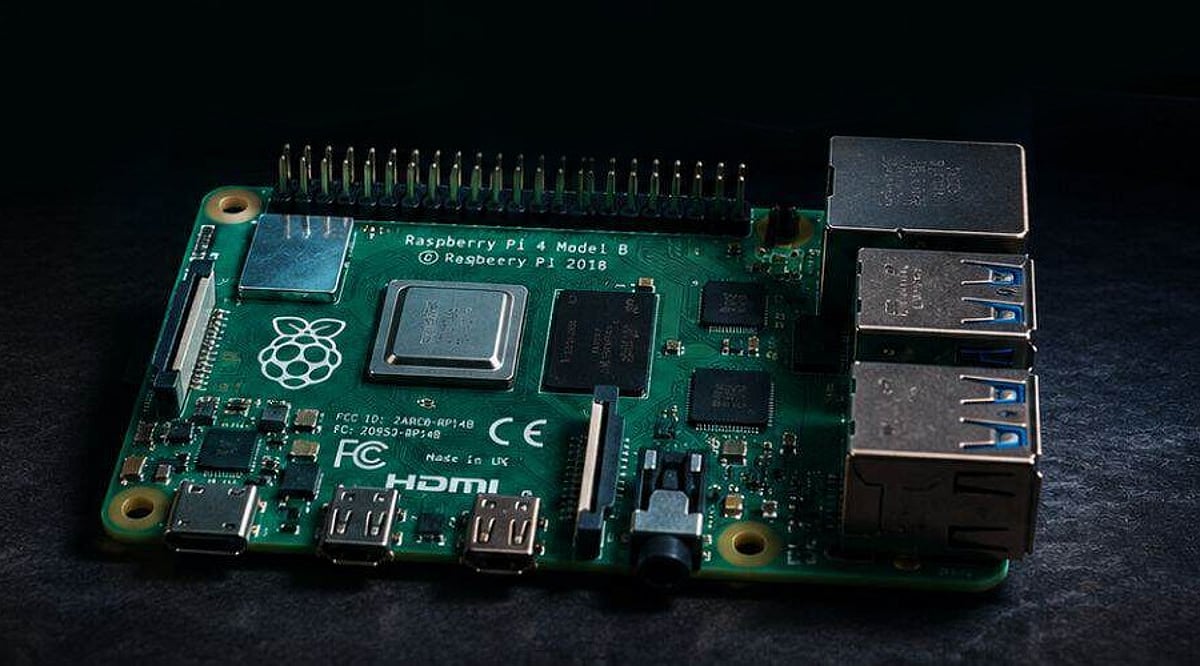
The Raspberry Pi revolutionized single-board computing when it launched in 2012, but today’s market offers a wide range of alternatives that often outperform the Pi for specific use cases. Whether you’re building a media server, an AI inference engine, a home automation hub, or a network router, choosing the right board means matching hardware strengths to your project’s demands.
ARM-Powered Performance Busters
The Radxa ROCK 5B+ stands out as one of the most powerful alternatives available. It features an RK3588 processor with eight cores—four high-performance cores running at 2.2–2.4 GHz and four efficiency cores for background tasks. Compiling code and running multiple applications feels noticeably faster than on a Raspberry Pi 5. Memory options go up to 32 GB of fast RAM, compared to the Pi 5’s 8 GB limit. Storage is also superior: the ROCK 5B+ supports high-speed NVMe drives, while the Pi 5 relies on slower microSD cards or external adapters. Networking gets a boost with 2.5 Gb Ethernet, doubling the Pi’s speed and making file transfers much quicker. The board also includes features for video capture that the Pi lacks, such as easier camera connection and smoother video processing.
The Orange Pi 5 Ultra offers similar processing power in a compact form factor, plus an HDMI input that lets you capture video directly from screens or devices—something the Pi would need extra hardware to achieve. Real-world tests show faster rendering, smoother multitasking, and respectable video encoding speeds, all at a price comparable to the Pi 5.
Intel-Based Boards for Serious Workloads
Intel-based single-board computers take a different approach. The Radxa X4, smaller than a paperback book, runs Windows 11 and standard Linux distributions without compromise. Drivers work out of the box, and building a file server or running virtualization software like Proxmox requires no special configuration. Its Intel N100 processor delivers far more power than the Raspberry Pi in the same 85 mm × 56 mm footprint.
The ZimaBoard 2 targets networking and storage projects. It includes dual SATA connectors for storage drives and two 2.5 Gb Ethernet ports. With an Intel N150 processor and a starting price around $179, it can run open-source firewall software, handle multiple network connections, and serve as a reliable VPN gateway—tasks where the Pi often falls short.
Specialized AI Hardware
For AI and machine learning workloads, dedicated hardware makes a significant difference. The NVIDIA Jetson Orin Nano Super delivers 67 INT8 TOPS of processing power, enabling local model training and real-time inference without sending data to the cloud. The BeagleY-AI focuses on computer vision, with processors optimized for real-time response. It can handle multiple camera feeds simultaneously—up to four video streams without dropped frames—and instantly process object recognition. For robotics, surveillance, and industrial applications, these specialized boards provide the low latency that the Raspberry Pi cannot match.
The Toradex Luna SL1680 targets professional edge AI deployments, with an HDMI input and software support built for long-term reliability in factory automation and industrial monitoring.
Networking-Focused Boards
The FriendlyElec NanoPi R6S is designed specifically for networking tasks. It features three Ethernet ports: one gigabit and two 2.5 GbE, all powered by a processor efficient enough to handle high traffic. Firewall software, open-source routing systems, and VPN gateways run smoothly, making this board ideal for users who need network performance beyond what the Pi can deliver.
Microcontrollers for Simple Automation
For simple home automation and IoT projects, the ESP32 microcontroller costs around $9 and includes built-in Wi-Fi and Bluetooth. It eliminates the overhead of a full operating system, allowing sensors to trigger actions instantly. Smart home devices benefit from the fast response times and straightforward firmware loading.
How to Choose the Right Board
The Raspberry Pi remains an excellent learning tool with a vast community and countless tutorials. However, once your project requirements are clear, alternatives often offer better performance, specialized features, or lower cost. Network infrastructure projects benefit from x86 boards like the Radxa X4 or ZimaBoard 2. Camera and AI workloads shine on NVIDIA Jetson or BeagleY-AI. Simple automation is best served by microcontrollers like the ESP32. The single-board computer market is now rich with options—choose the board that fits your application, and you’ll get better results.