

Tag: real-time processing

  • Building Always-On AI Agents: A Practical Guide to Apache Kafka and Apache Flink

    Building Always-On AI Agents: A Practical Guide to Apache Kafka and Apache Flink

    Overview

    Learn how Apache Kafka streams real-time events to power scalable, always-on AI applications across enterprise environments. Understand how Apache Flink processes streaming data with stateful computing for intelligent, low-latency AI decision-making. Compare how Kafka and Flink together build resilient, event-driven AI architectures for continuous business automation.

    Introduction

    AI agents are no longer limited to responding to user prompts. Modern businesses require systems that monitor data continuously, identify patterns, and take action without waiting for human input. These always-on AI agents are now deployed in fraud detection, IT monitoring, predictive maintenance, customer support, and supply chain management.

    To build such systems, organizations need a reliable event streaming platform and a real-time processing engine. Apache Kafka and Apache Flink are the most widely used open-source technologies for this purpose. Kafka captures and distributes data streams, while Flink processes them in real time and powers AI-driven decisions. Here is how each platform fits into the workflow.

    Building Always-On AI Agents with Apache Kafka

    Apache Kafka serves as the communication layer that collects and distributes real-time data across applications. Follow these steps to integrate Kafka:

    • Deploy a Kafka Cluster: Set up a Kafka cluster on-premises or in the cloud. Configure multiple brokers for high availability. Create topics for different event types such as user activity, payment transactions, application logs, or IoT sensor data.
    • Connect Data Producers: Applications generate data through producers that continuously publish events to Kafka topics. These include websites, mobile apps, payment gateways, connected devices, and enterprise software.
    • Set Up Consumers: Develop consumer software that subscribes to Kafka topics. The consumer receives every event in real time and passes data to analytics tools, AI software, or stream processing frameworks like Apache Flink.
    • Ensure High Availability: Configure partitions and replication between brokers to guarantee that Kafka continues delivering events even during server failures.
    • Integrate Your AI Application: Kafka does not perform AI processing itself. It provides a continuous data flow to the AI application, which analyzes the events.

    Building Always-On AI Agents with Apache Flink

    Once data flows through Kafka, Apache Flink processes it in real time and enables intelligent decision-making. Here is how to use Flink:

    • Connect Flink to Kafka: Configure Flink to process events from Kafka topics directly. This creates a continuous stream processing pipeline where incoming data is processed immediately rather than waiting for batch processing.
    • Stream Processing Pipelines: Use Flink to filter unwanted events, enrich data, combine multiple streams, calculate metrics, and detect anomalies. These pipelines prepare data before it reaches the AI models.
    • Integrate AI Models: Embed machine learning models or large language models (LLMs) into Flink flows. The AI agent can classify requests, summarize data, identify fraud, suggest recommendations, or trigger automation workflows in real time.
    • Stateful Processing: One of Flink’s main advantages is its ability to maintain state. Instead of processing events in isolation, Flink retains information from previous events, enabling AI agents to make informed decisions.
    • Set Up Checkpointing: Checkpointing allows Flink to regularly save the application state. If a failure occurs, Flink resumes processing from the latest checkpoint, ensuring reliability.

    Apache Kafka vs. Apache Flink: Quick Comparison

    Feature Apache Kafka Apache Flink
    Primary Role Event streaming and distribution Real-time stream processing
    Data Handling Collects and stores event streams Processes events with low latency
    State Management Limited (via Kafka Streams) Full stateful processing
    AI Integration Delivers data to AI applications Executes AI models within pipelines
    Fault Tolerance Replication across brokers Checkpointing and state snapshots

    Best Practices

    • Create separate Kafka topics for different business events.
    • Design Flink jobs as modular and dedicated to one task only.
    • Use checkpoints and replicas to ensure resilience to failures.
    • Monitor latency and throughput to preserve real-time capabilities.
    • Use authentication and encryption to secure data flows.
    • Scale Kafka brokers and Flink clusters independently when workload increases.

    Which One Should You Choose?

    The answer is not Kafka or Flink; it is Kafka and Flink. Kafka provides reliable, continuous data from various applications. Flink consumes that data, processes it with low latency, and enables AI agents to make decisions as events occur. For building an always-on AI agent, Kafka is the data pipeline, and Flink is the intelligence component. Together they form a scalable architecture for continuous processing.

    Final Takeaway

    Always-on AI agents depend on two things: a constant stream of information and the ability to process it instantly. Apache Kafka provides the first, and Apache Flink provides the second through real-time computations and stateful processing. Combining these two systems allows organizations to create applications that observe events, analyze patterns, and react promptly. As companies increasingly adopt real-time AI applications, the Kafka-Flink combination has become a proven solution.

    Frequently Asked Questions

    What are always-on AI agents?

    Always-on AI agents continuously monitor live data, analyze events, and trigger automated actions without waiting for user prompts. They are used in fraud detection, IT monitoring, customer support, and predictive maintenance.

    How does Apache Kafka help in building AI agents?

    Apache Kafka acts as an event streaming platform that collects, stores, and distributes real-time data from multiple sources, ensuring AI agents receive continuous event streams for analysis and decision-making.

    Why is Apache Flink used alongside Apache Kafka?

    Apache Flink processes streaming data from Kafka in real time, enabling stateful processing, anomaly detection, AI model integration, and automated decision-making with minimal latency across enterprise applications.

    Can Apache Kafka and Apache Flink be used independently?

    Yes, both can operate independently. Kafka is designed for event streaming, while Flink focuses on stream processing. However, combining them creates a robust architecture for real-time AI applications.

    What industries benefit most from always-on AI agents?

    Banking, healthcare, manufacturing, retail, logistics, telecommunications, and cybersecurity benefit significantly by enabling real-time monitoring, intelligent automation, predictive insights, and faster operational decisions.

  • How High-Performance Data Workflows Accelerate Mortgage Approvals Without Compromising Security

    How High-Performance Data Workflows Accelerate Mortgage Approvals Without Compromising Security

    As mortgage providers race to deliver faster approvals, the real transformation is happening behind the scenes. High-performance data workflows, automation, and security-first architectures are enabling real-time decision-making without compromising customer trust.

    Today’s digital-first finance space demands speed in customer experience, particularly for complex, time-sensitive processes like mortgage application approval. Yet accelerating approvals goes beyond streamlining user interfaces. The root cause of inefficiencies lies in existing data workflows and database architectures. For high-performance databases specialist Sai Vamsi Kiran Gummadi, transforming mortgage processing starts with rethinking data workflows.

    “As a data problem, speed in decision-making is driven by data systems being either slow, siloed, and unreliable,” notes Gummadi. Traditional mortgage approvals rely on batch processing workflows that validate inputs—credit history, identity, finances—from different sources sequentially. While useful in previous models, such workflows create bottlenecks, causing processes to take hours or even days.

    Gummadi’s work focuses on replacing these methods with automated, high-performance data pipelines that validate inputs in near real time. By improving workflow design and optimizing databases, he has reduced process latencies by 35–50%. Core to this transformation is the optimization of large-scale database environments, including advanced systems like Exadata Cloud at Customer (ExaCC). These platforms handle high-volume, mission-critical workloads, making them ideal for financial applications requiring speed and reliability.

    Through targeted indexing strategies, execution plan optimization, and workload tuning, Gummadi has achieved query performance improvements of up to 60%, reducing batch processing times from 6–8 hours to under two hours. “Performance optimization is not just about speed,” he says. “It’s about ensuring that systems can handle scale without compromising accuracy or stability.”

    Beyond performance, automation plays a critical role. By building end-to-end automated pipelines, Gummadi has reduced manual intervention by approximately 40%, improving both efficiency and data consistency. These workflows integrate multiple data sources—from credit scoring systems to identity verification—into a unified processing framework, streamlining approval pipelines where data is validated, reconciled, and analyzed seamlessly. This integration not only accelerates approvals but also improves data accuracy, reducing errors by nearly 30% and doubling application processing throughput during peak periods.

    However, speed alone is insufficient in financial systems. With sensitive customer data at the center of mortgage processing, security and compliance are equally critical. Gummadi’s data architecture prioritizes security, incorporating encryption at rest and in transit, role-based access controls, and audit capabilities. This approach has resulted in no critical security incidents during audits while ensuring regulatory compliance. “Trust is the foundation of financial systems,” he explains. “You cannot trade security for speed; you have to achieve both.”

    One significant challenge is balancing performance with stringent data protection requirements. Optimizing for speed often introduces risks if security is not embedded at the architectural level. Gummadi addresses this by designing systems where security and performance are integrated, not treated separately. This includes adopting least-privilege access, data masking, and secure data pipelines that protect sensitive information without slowing processing.

    Modernization of legacy systems is another major issue. Financial companies often use legacy systems not designed for real-time processing, requiring upgrades without disrupting current operations. By introducing hybrid and cloud-enabled architectures, Gummadi has enabled organizations to scale data infrastructure while maintaining high availability, achieving system uptime exceeding 99.9%.

    Looking ahead, the future of mortgage processing will be defined by intelligent automation and real-time decisioning. Advances in AI and machine learning will enable more accurate risk assessments, while real-time data pipelines support near-instant approvals. Data security is evolving toward more granular, dynamic models, including zero-trust architectures and field-level encryption. These approaches ensure sensitive data remains protected even as systems become more interconnected. “Organizations are moving toward systems that are not just fast, but also intelligent and secure by design,” Gummadi notes.

    He emphasizes that success requires a combination of technology, governance, and strategic investment. “End-to-end automation, strong data governance, and performance-optimized infrastructure are no longer optional. They are essential for delivering both speed and trust.” As competition among financial entities intensifies around customer experience and efficiency, the speed and security of data processing will be key differentiators.

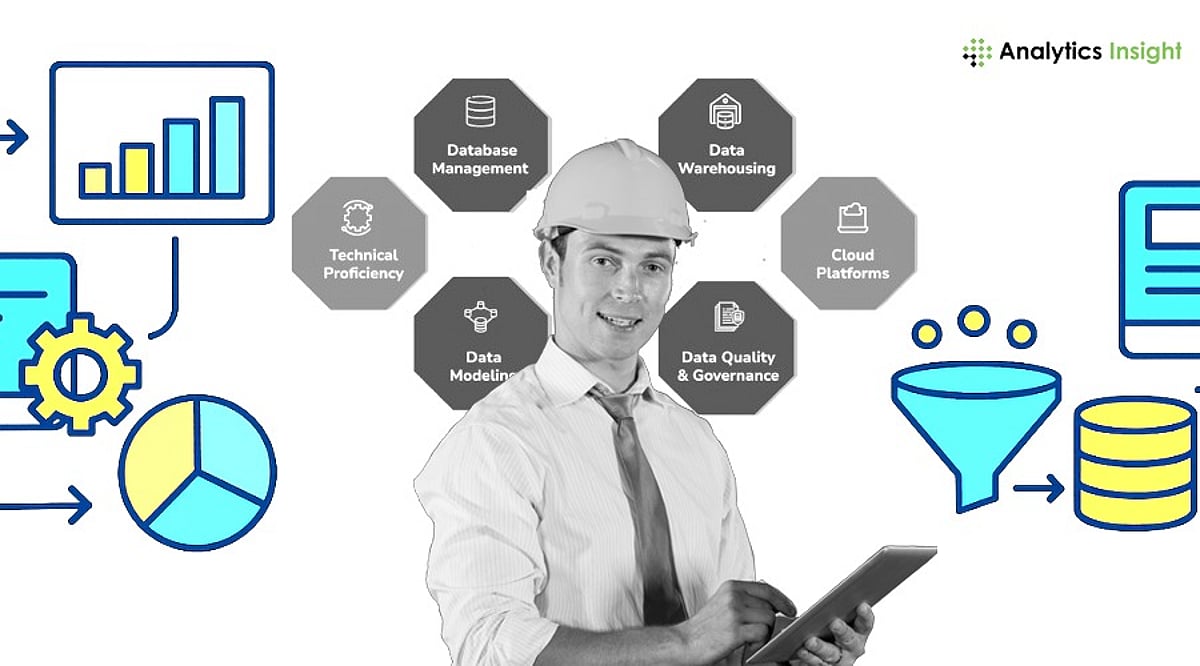
  • Data Engineering Cheat Sheet 2026: Essential Skills, Tools, and Architecture Trends

    Data Engineering Cheat Sheet 2026: Essential Skills, Tools, and Architecture Trends

    Data engineering is the foundation of every modern data system. Every website visit, online purchase, mobile app session, payment, and business transaction creates new information. That information has little value unless it is collected, cleaned, stored, and prepared for analysis. This is exactly where data engineering plays a major role.

    The need for skilled data engineers has grown rapidly because companies depend on data for daily decisions, automation, customer service, and artificial intelligence (AI). According to IDC, the world is expected to create more than 394 zettabytes of data by 2028, a huge jump from previous years. This massive growth has pushed businesses to build stronger and smarter data platforms that can support analytics and AI at a much larger scale.

    Data engineering is no longer limited to moving data from one place to another. It focuses on speed, quality, security, and reliability so that every team can trust the information they use.

    How a Data Engineering Process Works

    The data engineering process is structured straightforwardly. The process begins with the steps where data gets collected from external sources such as websites, mobile applications, sensors, software of the company, or databases.

    After data information has been collected, a series of preparation processes are conducted. The next stage of the process is the preparation of the data, where incorrect data is deleted, missing values are repaired, and data is formatted in a valuable way. After that, the collected data is checked for quality compliance.

    Finally, the collected data is ready for use in the generation of reports, machine learning models, dashboards, and other business applications. Each step has its specific role. Any issue at any step may lead to the failure of the reports, predictions, or AI models.

    Skills that Matter Most

    Recognized as one of the most sought-after profiles within the IT industry, data engineers require a combination of technical skills and hands-on problem-solving capability. Indeed, almost every database makes use of SQL.

    Knowledge of cloud technologies has become more critical than ever as many businesses today maintain their data in the cloud rather than in-house. Experience in counteracting bottlenecks and making quick fixes has been a plus in providing better and faster systems.

    As per the 2026 hiring trends, it is evident that employers favor hiring professionals who possess knowledge in traditional data engineering methods and also have working knowledge about AI.

    Modern Data Storage

    Data storage has changed a lot during the last few years. Data warehouses such as Snowflake, Google BigQuery, Amazon Redshift, and Azure Synapse Analytics remain popular because they support fast business reporting.

    Many organizations also use data lakes like Amazon S3, Azure Data Lake Storage, and Google Cloud Storage to keep large amounts of raw information at a lower cost.

    A newer approach called the lakehouse has become one of the biggest trends. Platforms such as Databricks, Apache Iceberg, Delta Lake, and Apache Hudi combine the strengths of both data lakes and data warehouses. This design gives businesses better flexibility without sacrificing performance.

    Batch Processing and Real-Time Data

    Not every business needs data at the same speed. Some reports only require updates once a day. This method is called batch processing. It suits financial reports, historical analysis, and large scheduled jobs because it costs less and stays simple to manage.

    Other businesses cannot wait for scheduled updates. Online payments, fraud detection, recommendation systems, and live dashboards need information within seconds. This approach is known as real-time processing.

    Many companies now use both methods together. Real-time systems handle urgent tasks, while batch systems process large historical datasets.

    What Makes a Strong Data Pipeline

    A reliable data pipeline contains several connected parts. Data first enters the system through source applications. After collection, it passes through processing layers that clean and organize the information.

    The pipeline also includes monitoring tools that detect failures before they become major problems. Security controls protect sensitive information, while backup systems reduce the risk of data loss. Together, these components help the entire system stay stable even as data volumes continue to grow.

    Why Data Quality Matters

    Good decisions depend on good data. Even small mistakes can produce incorrect reports or poor AI predictions.

    Modern platforms check for duplicate records, missing values, invalid formats, unexpected schema changes, incomplete information, and inconsistent records. Freshness also matters because outdated data can lead to wrong business decisions.

    Automated quality checks have become a standard feature in enterprise data platforms because manual reviews cannot keep pace with today’s data volumes.

    Cloud Platforms Continue to Lead

    Cloud technology has become the preferred choice for new data projects. Amazon Web Services, Microsoft Azure, and Google Cloud Platform continue to dominate this market. These platforms offer storage, processing power, data warehouses, monitoring services, and workflow management without the need for expensive physical servers.

    Companies also benefit from automatic scaling, which allows systems to handle larger workloads whenever demand increases. This flexibility has made cloud infrastructure the standard choice for businesses of every size.

    Popular Open-Source Technologies

    The role of open-source apps is notable today in the field of data engineering. Apache Spark brings a solution for the processing of huge data by distributing tasks across numerous machines. Apache Kafka has made it possible to achieve speed in data transmission between applications, and Apache Airflow provides solutions for planning and organizing complex operations.

    Other common technologies are Apache Flink, dbt, Apache Iceberg, Delta Lake, and Great Expectations. Apache Spark remains one of the most popular distributed analytics engines in the world.

    Data Models that Organize Information

    A good data model makes information easier to understand and analyze. The Star Schema works well for business reports because it keeps queries simple and delivers faster results. The Snowflake Schema reduces duplicate information through normalization, which saves storage space.

    Large enterprises often choose the Data Vault model because it keeps historical records, supports business growth, and adapts more easily when new data sources appear. The best model depends on business goals rather than company size alone.

    Security Cannot be Ignored

    Every data platform must protect valuable information. Encryption keeps data safe during storage and transfer. Identity management verifies who can access the system, while role-based permissions limit access to authorized users only.

    Many companies also use multi-factor authentication, audit logs, data masking, regular backups, and compliance checks to strengthen security. As AI becomes more common, strong governance and data protection have become basic business requirements rather than optional features.

    Better Performance Saves Time and Money

    Fast systems reduce costs and improve productivity. Engineers improve performance through partitioning, compression, efficient file formats, incremental updates, query optimization, metadata indexing, automatic resource scaling, and parallel execution. These methods reduce processing time and help businesses complete large workloads with fewer computing resources.

    Metrics Every Team Should Watch

    Successful data teams measure system performance every day. Important metrics include pipeline success rate, failure rate, processing latency, throughput, storage use, query response time, data freshness, infrastructure cost, resource utilization, and overall service availability. These numbers help teams detect problems early, improve efficiency, and maintain reliable operations.

    Biggest Data Engineering Trends in 2026

    Several trends continue to reshape the industry. AI now assists pipeline development and reduces repetitive work. Agentic automation handles routine engineering tasks with minimal human effort. Lakehouse architecture has become the preferred storage approach for many organizations.

    Metadata-driven pipelines, data contracts, unified governance, streaming analytics, intelligent cost optimization, and closer integration between machine learning and data engineering have also become common across modern enterprises.

    These advances allow companies to build faster, more reliable, and more intelligent data systems than ever before.

    Final Thoughts

    Data engineering has become one of the main components of modern technology. The effectiveness of different dashboards, analytical tools, AI systems, and business reports depends on well-organized data.

    The significance of reliable data solutions will acquire new meaning as the amount of data created worldwide may reach 394 zettabytes by 2028. It is expected that organizations that concentrate on robust security systems, high data quality, contemporary cloud solutions, and scalable architecture will be much more ready for the future.