Tag: refrigerators

  • How Modern Refrigerators Cut Electricity Use: Inverter Compressors, Better Insulation & Smarter Cooling

    How Modern Refrigerators Cut Electricity Use: Inverter Compressors, Better Insulation & Smarter Cooling

    Modern refrigerators can use significantly less electricity than older models, thanks to a combination of advanced compressors, improved insulation, efficient electronics, and smarter cooling systems. Since refrigerators run year-round, even small efficiency gains translate into noticeable savings on household energy bills.

    Inverter Compressors: Smarter Power Management

    One of the biggest innovations is the inverter compressor, which adjusts its speed based on cooling demand rather than turning fully on and off. This eliminates the frequent high-power startups that waste energy and helps maintain a more stable internal temperature. When less cooling is needed, the compressor runs at a lower speed, reducing unnecessary electricity consumption.

    Better Insulation and Door Seals

    Modern cabinets use advanced insulating materials, while magnetic gaskets create tighter seals around doors. This keeps cold air inside, reducing the workload on the compressor. Less cooling escapes, so the refrigerator doesn’t have to work as hard to maintain the set temperature.

    Smarter Cooling Systems and Electronics

    Today’s refrigerators incorporate sensors that monitor temperature changes, door openings, and cooling conditions. Efficient defrost systems, energy-saving fans, LED lighting, and improved control electronics further cut power use. These components work together seamlessly to optimize performance around the clock.

    Comparing Efficiency with BEE Star Labels

    In India, the Bureau of Energy Efficiency (BEE) star label helps consumers compare refrigerator energy consumption. Ratings range from 1 to 5 stars, with annual energy usage as the key metric. The label also includes model details, compressor type, and annual kWh figures for easy comparison.

    Keep in mind that the most efficient refrigerator isn’t always the largest or most expensive. Capacity affects electricity use, so compare similar-sized models using their annual kWh rating. In hot climates like Hyderabad, good insulation, tight door seals, and a higher-efficiency model become even more valuable.

    Before You Buy: What to Check

    If you’re considering replacing an old refrigerator, evaluate its age, current electricity use, cooling performance, and repair history. Compare the new model’s annual energy consumption against its purchase price and expected long-term savings. A refrigerator that uses less electricity can lower running costs over several years, making energy efficiency a critical factor in your buying decision.

  • Double-Door vs. Side-by-Side Refrigerators: Which Layout Suits Your Home Best?

    Double-Door vs. Side-by-Side Refrigerators: Which Layout Suits Your Home Best?

    Double-door and side-by-side refrigerators may look similar, but they are built for different priorities. From storage flexibility to energy use and convenience, each has distinct strengths. Comparing them side by side helps identify the better choice for your household.

    What Each Layout Actually Offers

    A double-door refrigerator puts most of its space toward fresh food, with the freezer sitting above or in its own section. A side-by-side splits the interior vertically instead, giving the fridge and freezer sections of approximately equal width. This layout makes both frozen and chilled items easier to reach, but it also hands over a bigger share of total space to the freezer. Therefore, a 500 to 550 liter side-by-side can end up with fresh food space no bigger than a smaller double-door model. For households that cook fresh food every day, the double-door often turns out to be the more practical pick.

    The Energy Question Most Articles Get Wrong

    Most comparison articles claim double-door models simply use less power. This claim does not hold up. Energy consumption depends on the BEE star rating and whether the compressor is inverter-based, not on the number of doors. A 5-star inverter refrigerator can use less than half the electricity of a 1-star model, regardless of layout.

    Side-by-side units do tend to land in lower star-rating bands on average. This pattern comes from their larger typical capacity and added features like water and ice dispensers, both of which draw extra power. The honest takeaway is not that double-door beats side-by-side on electricity. It is that the star label decides the outcome, not the door style.

    Making the Right Call

    A compact kitchen, daily fresh cooking, and a lower running cost point toward double doors. Ample clearance, heavy frozen storage, and eye-level access for both sections point toward side-by-side.

    Family size offers a useful shortcut too. Two to four member households usually manage well with a double-door model. Larger households of five or more, especially those that rely on frozen storage, tend to get more practical value from a side-by-side.

    Five Details that Decide the Purchase

    1. Fresh to frozen ratio: Frequent fresh shopping favors a double door even with a smaller total capacity.
    2. Kitchen clearance: Side-by-side doors need real swing room on both sides, along with sufficient cabinet width and ventilation space. Measuring the aisle before the showroom visit avoids a costly mismatch.
    3. Star rating settles energy: Comparing door types for efficiency misses the point. The kWh per year figure on the BEE label gives a direct, model-to-model answer.
    4. Wide items need wide shelves: Pizza boxes, large tiffins, and party trays sit more easily on a double door’s broader shelving than on a side-by-side’s narrower columns.
    5. Dispensers add convenience and cost: Built-in water and ice dispensers raise both the purchase price and the power draw. Filter replacements and dispenser upkeep add further ownership cost over time.

    Final Thoughts

    Refrigerator shopping in India still leans on showroom instinct more than spec sheets. The layout that looks more premium is not always the one that fits a kitchen’s real routine. As BEE ratings tighten and inverter compressors become standard across price bands, the gap between double-door and side-by-side will likely come down to usable space and household habits rather than badge value on the door.

  • French Door vs. Side-by-Side Refrigerators: A Detailed Comparison for Smart Buyers

    French Door vs. Side-by-Side Refrigerators: A Detailed Comparison for Smart Buyers

    Overview

    Choosing between a French door and a side-by-side refrigerator is about more than door style. It affects how you store food, access your freezer, and even how much food you waste. Research shows that drawer-style freezers can hide items more easily than shelf-style ones, influencing shopping and cooking habits. In one matched retail comparison, a French door model cost $600 more than a similar side-by-side, despite offering less capacity. The right choice depends less on kitchen size and more on how often frozen food gets forgotten and wasted.

    Why Freezer Drawers Hide Food

    Side-by-side freezers use vertical shelves, viewed straight on, like a pantry shelf. French door freezers are pull-out drawers, viewed from above, making depth a visibility challenge. A peer-reviewed study on refrigeration and food waste found that drawer storage, meant to protect food, often conceals it instead. Owners of French door models frequently report digging through a drawer, unsure what lies beneath stacked vegetables and old meal-prep containers. Side-by-side owners rarely mention this problem because the freezer is at eye level and doesn’t require excavation.

    This is a documented tendency, not proof that French door households waste more food overall. However, it has real consequences for anyone who freezes meals in batches or buys frozen staples in bulk.

    When the Price Gap Isn’t About Features

    While French doors often come with added features like humidity control and in-door dispensers, a same-brand, same-width, same-finish comparison reveals a different story. One retailer listed a 36-inch Whirlpool side-by-side in black stainless steel, 28 cubic feet, at $2,199. The French door version, same brand, same width, same finish, offered only 25 cubic feet and cost $2,799. The only real difference was the door and drawer configuration. This pattern is common across the market, showing that the premium is often driven by the door style itself, not by extra storage capacity.

    Where Each Style Actually Wins

    French doors shine in fresh-food storage: full-width shelves accommodate platters, sheet pans, and bulky produce that side-by-side’s narrower columns cannot. Fresh food is at eye level, a real advantage for households that cook in volume or host often.

    Side-by-side refrigerators offer not only a lower price tag but also better freezer organization. The full-height, shelf-based structure solves the visibility problem that French doors struggle with. Narrower compartments are a limitation for wide items, but they come with an organizational upside: nothing sits more than one shelf-depth from view.

    The decision ultimately comes down to habit: how often food goes into the freezer and gets forgotten. Households that batch-cook or buy frozen staples in bulk should weigh the drawer-visibility research seriously. Households that entertain often or need wide-shelf capacity have a legitimate case for French doors, price gap and all.

    Final Thoughts

    The real difference between these two layouts is not measured in cubic feet. It shows up in daily decisions: how easily ingredients are found and how often frozen food actually gets eaten instead of forgotten at the bottom of a drawer. Once that connection between layout and daily habit is clear, the right choice stops feeling like a coin flip and starts feeling obvious.

    FAQs

    1. Which is better, a French door or a side-by-side refrigerator? Neither is universally better. French door models offer wider fresh-food storage and a modern design, while side-by-side models provide easier freezer access, better organization, and are often more affordable.
    2. Are French door refrigerators more energy efficient than side-by-side models? Energy efficiency depends on the model and rating. Compare energy labels before buying.
    3. Which refrigerator is better for a small kitchen? French door models typically require less door swing space, but the best choice depends on your kitchen layout and clearance.
    4. Is a side-by-side refrigerator better for storing frozen food? Yes, side-by-side models make it easier to organize and access frozen foods with full-height shelves.
    5. What should I consider before choosing? Consider your food storage habits, kitchen space, budget, energy efficiency, freezer usage, and preferred layout.

    For more insights, check out related articles: Bottom Freezer vs Top Freezer Refrigerators and Best Samsung Refrigerators with Digital Inverter Technology.

  • Best Premium Refrigerators on Amazon: Top Smart & Energy-Efficient Models for 2026

    Best Premium Refrigerators on Amazon: Top Smart & Energy-Efficient Models for 2026

    Premium refrigerators do more than just keep food cold. They combine advanced cooling technology, energy efficiency, smart connectivity, and elegant design to transform your kitchen experience. Whether you’re feeding a large family or simply want a modern, high-performance appliance, these top models on Amazon deliver exceptional value. Below, we highlight seven premium refrigerators that stand out for their capacity, technology, convenience, and long-term reliability.

    1. Samsung 580L Convertible French Door Refrigerator

    Ideal for large households, this Samsung model features a 580-liter capacity and a Digital Inverter Compressor for quiet, energy-efficient operation. Its convertible freezer adapts to your changing storage needs, while multi-airflow cooling keeps food fresher for longer. The premium finish adds a sleek touch to contemporary kitchens.

    2. Haier 520L Lumiere Triple Inverter Refrigerator

    Combining Triple Inverter Technology with a stylish French Door design, the Haier Lumiere delivers uniform cooling, reduced energy consumption, and quieter performance. Its spacious interior, elegant glass exterior, and advanced temperature management make it a top choice for households seeking both performance and aesthetics.

    3. Haier 598L Smart Sense AI Refrigerator

    This Haier model uses artificial intelligence to optimize cooling based on usage patterns. The three-door design minimizes cold-air loss, preserving freshness while improving energy efficiency. With generous capacity, smart controls, and an innovative storage layout, it’s perfect for large families and frequent entertainers.

    4. LG 630L Side-by-Side Refrigerator

    LG’s 630-liter side-by-side refrigerator offers premium storage with Smart Inverter Compressor technology for efficient cooling and quieter operation. The spacious compartments provide excellent organization for both fresh and frozen foods. Its sleek appearance and advanced cooling system make it a reliable kitchen investment.

    5. Godrej 600L Side-by-Side Refrigerator

    Godrej’s 600-liter model delivers spacious storage, frost-free cooling, and premium styling at a competitive price point. It’s an excellent choice for buyers who want premium features without entering the ultra-luxury segment.

    6. Voltas Beko 563L Refrigerator

    Voltas Beko’s 563-liter refrigerator offers advanced cooling technology, practical organization, and energy-efficient performance. Like the Godrej model, it provides outstanding value for those seeking premium features at a more accessible price.

    How to Choose the Right Premium Refrigerator

    When selecting a premium refrigerator, consider capacity based on your family size: 300–400 liters for small families, 400–550 liters for medium households, and above 550 liters for larger families. Look for inverter compressors, convertible storage, AI-powered cooling, multi-airflow systems, Wi-Fi connectivity, and strong energy ratings to maximize convenience, efficiency, and long-term savings.

  • Top Samsung Refrigerators with Digital Inverter Technology in 2026: A Complete Buying Guide

    Top Samsung Refrigerators with Digital Inverter Technology in 2026: A Complete Buying Guide

    Samsung’s inverter refrigerators combine AI-powered cooling, energy efficiency, smart connectivity, and modern designs. From compact single-door models to premium Family Hub refrigerators, this guide compares features, pricing, and the best options for every household.

    Samsung is leading the refrigerator market with its futuristic inverter technology. The inverter models, coupled with smart technology, allow the refrigerator to adjust compressor speed based on the cooling needs. It ensures consistent freshness, quieter performance, and exceptional energy savings.

    Inverter technology has massively raised the benchmark in the cooling device industry. Unlike conventional refrigeration, which operates on fixed cooling cycles, Samsung’s inverter refrigerators raise the bar by adjusting the cooling with its Smart Cooling technology, adapting to various needs and conditions. From premium AI-powered Family Hub designs to compact single-door options, the brand offers options that keep every type of buyer interested. Samsung’s inverter technology has proven essential for efficiency and sustainable living, which define the modern lifestyle.

    Best Samsung Refrigerators with Digital Inverter Technology in 2026

    Samsung Bespoke AI Family Hub (653L, Side-by-Side)

    The Bespoke AI Family Hub suits large families and tech-savvy users who need personalized cooling and quick adaptation to certain occasions. It has Twin Cooling Plus and frost-free features, delivering exceptional cooling options. It is AI-powered with Gemini that tracks food expiry and provides timely notifications. A 21.5-inch touchscreen, WiFi, and SmartThings are some useful integrations that take refrigeration beyond just keeping the food cool. It has a 3-star energy efficiency rating that consumes 450-500 units of electricity per year. Samsung Bespoke AI Family Hub is currently priced between Rs. 77,000 and Rs. 90,000.

    Samsung RT38DG5A4DBXHL (350L, Double Door)

    The Samsung RT38DG5A4DBXHL is highly compatible with mid-sized families whose needs are limited yet require adaptive features on different occasions. It has frost-free technology that uses sensors and a heating coil to detect and automatically melt ice buildup. This model has a 3-star energy efficiency rating and is priced between Rs. 40,000 and Rs. 50,000.

    Samsung RR23 (215L, Single Door)

    The Samsung RR23 is a game-changer for small families or bachelors with limited needs. It is certified with a 4-star BEE (Bureau of Energy Efficiency) rating. It has a compact design with an antibacterial gasket that prevents bacterial infestation. Samsung RR23 is priced at Rs. 21,690.

    Samsung RS76CG8003S9HL (653L, Side-by-Side)

    The Samsung RS76CG8003S9HL is strictly for premium buyers who are into sustainable living and modern stylistic features. It has SpaceMax technology that optimizes space with thinner interior walls, providing more room for food storage. It has a twin cooling system, which controls the temperature of the fridge and freezer separately. The AI energy mode makes up for its smart intelligence that indicates essential information.

    Samsung RT34 (330L, Double Door)

    The Samsung RT34 caters to the needs of medium-range families and targets the middle-class society. It is equipped with a WiFi-enabled feature that delivers all-round connectivity. A convertible freezer turns the fridge into an ice-building space. The Twin Cooling system maintains the fridge and freezer temperature separately. Samsung RT34 is priced modestly at Rs. 45,990.

    Final Thoughts

    For tech-savvy large families, the Samsung Bespoke AI Family Hub is the best option, as it offers a wide range of advanced features and ample storage space. The Samsung RT38DG5A4DBXHL best suits mid-sized families who value both advanced features and compact space. The Samsung RR23 single-door refrigerator is versatile and well-suited to small homes and bachelors. Meanwhile, the Samsung RS76CG8003S9HL appeals to the premium buyer segment. Samsung inverter technology no doubt leads the market, offering advanced features and catering to all kinds of families. This technology saves big on electricity, providing style and substance.

    FAQs

    1. What is Samsung digital inverter technology?

    Samsung digital inverter technology automatically adjusts the compressor speed according to cooling requirements, reducing energy consumption, minimizing noise, and maintaining a consistent temperature.

    2. Are Samsung inverter refrigerators more energy-efficient than conventional refrigerators?

    Yes. Samsung inverter refrigerators consume significantly less electricity than conventional models by operating at variable compressor speeds instead of repeatedly switching on and off.

    3. Which Samsung refrigerator is best for a large family in 2026?

    The Samsung Bespoke AI Family Hub (653L) is an excellent choice for large families, offering spacious storage, AI-powered features, Twin Cooling Plus, and SmartThings connectivity.

    4. Do Samsung inverter refrigerators require a voltage stabilizer?

    Most Samsung inverter refrigerators can operate within a wide voltage range of approximately 90V–310V, allowing them to function without a separate voltage stabilizer under normal conditions.

    5. Which Samsung inverter refrigerator offers the best value for mid-sized families?

    Samsung RT38DG5A4DBXHL and Samsung RT34 are ideal for mid-sized families, combining energy efficiency, frost-free operation, smart features, and ample storage at competitive prices.

  • Bottom Freezer vs Top Freezer Refrigerators: Which Layout Suits Your Kitchen Best?

    Bottom Freezer vs Top Freezer Refrigerators: Which Layout Suits Your Kitchen Best?

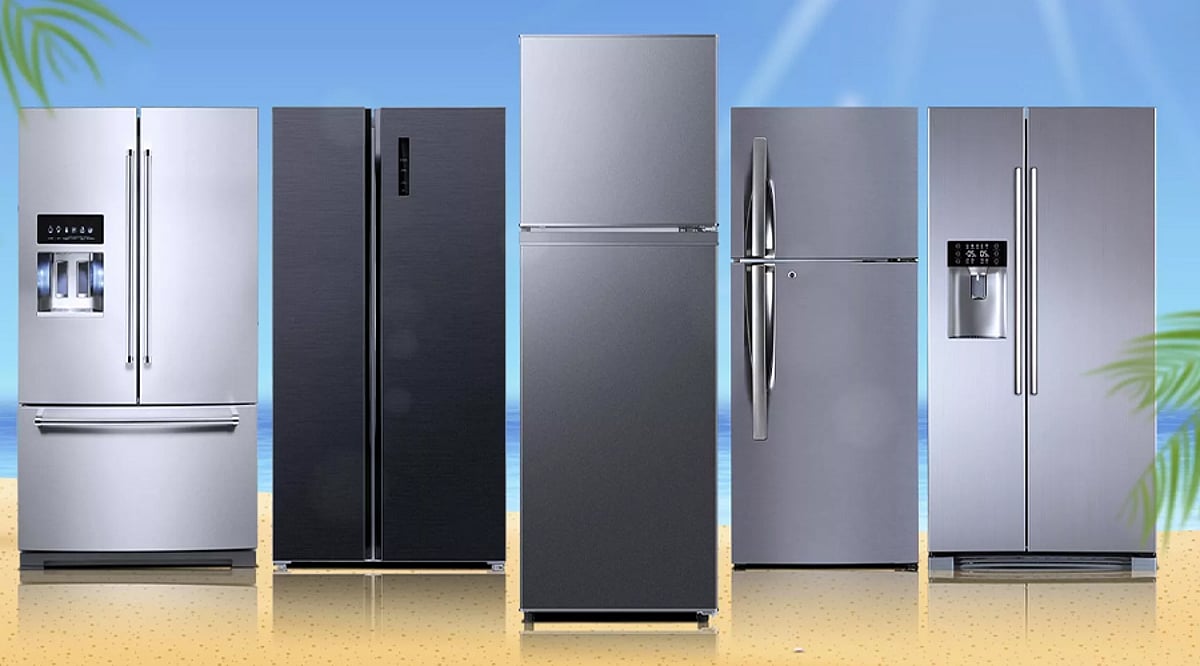
    Choosing between a bottom freezer and a top freezer refrigerator is about more than appearance. Freezer placement affects daily convenience and food organization, and the right layout depends on how your household shops, cooks, and stores groceries.

    Two Layouts, Two Different Priorities

    Top freezer refrigerators put frozen food at eye level and fresh food below. This arrangement is familiar to most households and works well for those who rely on frozen meals, stock up on bulk frozen goods, or prefer a straightforward design. The shelving is open, and large frozen packages fit without much effort.

    Bottom freezer refrigerators reverse that layout. Fresh food sits at eye level, making fruits, vegetables, dairy, leftovers, and drinks easily accessible without bending. For households that cook regularly and access the refrigerator section constantly throughout the day, that single ergonomic shift matters more than any feature on the product label.

    The choice is not about which design is superior, but which one fits how your household actually uses food.

    Storage That Matches How You Cook

    Neither layout organizes food better in an absolute sense. They organize it differently, and the right system depends on your habits.

    Top freezer models use open shelves in the freezer compartment, making it easy to see everything at once and stack large packages without rearranging. The refrigerator section follows a shelf arrangement that most people can navigate without thinking.

    Bottom freezer refrigerators typically use pull-out drawers with divided sections. This works well for separating proteins, vegetables, prepared meals, and frozen desserts without creating a cluttered pile. Large frozen items can occasionally be harder to fit in drawer-based systems than on open shelves, which is worth considering for households that buy in bulk.

    The Energy Efficiency Question

    Freezer location plays a smaller role in energy consumption than most buyers assume. Compressor quality, insulation thickness, and temperature management systems matter far more. Top freezer refrigerators have historically performed well on energy consumption, partly because of their simpler construction and airflow design.

    Today, that efficiency gap is much smaller. Modern bottom freezer models with inverter compressors and improved insulation now perform comparably in most real-world conditions. When evaluating running costs, Energy Star certifications and published energy ratings give a more accurate picture than freezer placement alone.

    What the Price Difference Actually Reflects

    Top freezer refrigerators cost less, and the gap is real. Their simpler engineering and fewer specialized components keep purchase prices down. For buyers who want reliable, no-fuss performance without a high upfront investment, they remain one of the strongest value options available.

    Bottom freezer refrigerators carry a higher price, and most of that premium reflects the pull-out drawer system and ergonomic layout rather than better cooling technology. The additional cost buys convenience, not superior refrigeration.

    Matching the Refrigerator to Your Life

    Households that cook frequently and access fresh food throughout the day are likely to appreciate a bottom freezer layout. Households that prioritize frozen food storage, prefer a familiar design, or are working within a tighter budget often find top freezer models more practical and comfortable over the long term.

    Which Refrigerator Fits You?

    The debate between bottom-freezer and top-freezer refrigerators is not about one design replacing the other. Both have earned their place in kitchens for sound reasons. Bottom freezer models reduce the physical effort of daily cooking. Top freezer models offer simplicity, reliability, and honest value. Understanding how your household shops, stores, and prepares food is a more reliable guide than comparing specifications alone.

    There is no universally better refrigerator layout. Bottom freezer and top freezer designs solve different problems. The right choice depends on your everyday habits, accessibility needs, and budget.