Tag: regulatory compliance

  • Electronic Instructions for Use Software: 9 Leading Platforms for Medical Device Labeling in 2026

    Electronic Instructions for Use Software: 9 Leading Platforms for Medical Device Labeling in 2026

    Overview

    The medical device industry is rapidly transitioning from paper-based instructions for use to electronic versions (eIFU), driven by regulatory mandates and operational efficiencies. This article compares nine eIFU software platforms tailored for medical device labeling, assessed against the requirements of Regulation (EU) 2021/2226 and other global standards. The focus is on how each platform addresses computer system validation, document retrieval, paper copy handling, and multi-market compliance.

    What an eIFU Platform Must Deliver in 2026

    An eIFU system is more than a document host. It must enable continuous website availability, version control, audit trails, geo-fencing for regional document delivery, and the ability to supply paper copies within regulatory timeframes. Validation documentation covering software, device data, and processes is essential for audit readiness.

    Comparative Analysis of Nine Platforms

    1. Matrix eIFU

    Matrix eIFU (formerly dokspot, acquired by Matrix One) offers a white-label, cloud-based service that handles the entire eIFU lifecycle. Key features include pre-built validation templates, ISO 9001 and ISO 27001 certifications, 24/7 uptime, paper order management, and geo-fencing. Pricing starts at €420/month for three product lines. It is best for manufacturers wanting a turnkey solution without building internal infrastructure.

    2. Soom

    Soom is built for UDI-focused manufacturers, linking device identifiers directly to documentation. Recommended for organizations where UDI compliance is the central labeling challenge.

    3. Kallik

    Kallik excels in enterprise artwork and label lifecycle management, handling content, approvals, and output across global markets. Ideal for large manufacturers with complex artwork estates.

    4. Loftware

    Loftware targets high-volume manufacturing label operations, optimizing label printing across multiple sites. Best when print infrastructure is the primary bottleneck.

    5. tracekey

    tracekey merges serialization, track-and-trace, and document access, suitable for organizations where pharma and device compliance overlap.

    6. Innovatum

    Innovatum integrates label control within an existing quality management system, ideal when the quality function owns labeling processes.

    7. Reed Tech

    Reed Tech provides regulatory data services and UDI publishing alongside eIFU delivery, suited for firms with heavy regulatory data burdens.

    8. Meddevo

    Meddevo offers simple eIFU hosting for small portfolios, ideal when simplicity outweighs customization.

    9. SmartEIFU

    SmartEIFU is a dedicated, narrow-scope tool for IFU publishing only, filling a single gap in an otherwise mature labeling system.

    Choosing the Right Platform

    Four critical questions guide selection:

    • What validation documentation does the vendor provide versus what the manufacturer must create?
    • How are paper copy requests managed and who handles them?
    • How does the system serve different documents to different markets and manage translations?
    • How are superseded versions archived and retrieved?

    Matrix eIFU is recommended as a first evaluation choice for its comprehensive compliance support and transparent pricing. However, each platform addresses a distinct primary need—UDI, artwork, printing, serialization—so the final decision depends on your organization’s specific constraints.

    Frequently Asked Questions

    What is an eIFU?

    An electronic version of paper instructions for use supplied with a medical or IVD device, regulated as part of the device.

    Can eIFU replace paper?

    Yes, under EU Regulation 2021/2226 and similar rules in other markets, provided a paper copy is available on request.

    Does an eIFU system need validation?

    Yes, computer system validation is required covering software, device data, and processes.

    What are typical costs?

    Matrix eIFU starts at €420/month; other vendors price within broader labeling or regulatory contracts.

    Can manufacturers build their own?

    Possible but costly due to validation, availability, and ongoing paper request management obligations.


  • Key Cybersecurity Trends Driving Change in the Banking Industry

    Key Cybersecurity Trends Driving Change in the Banking Industry

    Banks are increasingly turning to advanced technologies and frameworks to protect digital assets and customer data. Here are the most significant cybersecurity trends shaping the banking sector.

    AI-Powered Fraud Detection

    Financial institutions are deploying artificial intelligence to analyze transaction patterns in real time, identify anomalies, and accelerate fraud detection while reducing financial losses across digital channels.

    Zero Trust Security

    The zero-trust model is gaining traction in banking. Instead of assuming trust based on network location, organizations continuously verify every user, device, application, and access request to minimize risk.

    Biometric Authentication

    Fingerprint scanning, facial recognition, voice verification, and behavioral biometrics are replacing traditional passwords. These methods strengthen customer verification and improve overall digital banking security.

    Cloud Security

    As banks migrate workloads to the cloud, they prioritize stronger encryption, identity and access controls, continuous monitoring, and secure configurations to protect sensitive data.

    Ransomware Protection

    Banking organizations are reinforcing backup strategies, endpoint security, network segmentation, and incident response plans to limit disruption from ransomware attacks.

    API Security

    The growth of open banking expands API exposure. Robust authentication, authorization, encryption, monitoring, and vulnerability testing are essential to safeguard financial data.

    Cyber Threat Intelligence

    Banks leverage threat intelligence feeds to track emerging attack methods, identify indicators of compromise, and adapt defenses against evolving cyber threats.

    Behavioral Analytics

    By examining patterns in customer and employee behavior, banks can detect unusual activities, account takeovers, insider threats, and potentially fraudulent transactions.

    Regulatory Compliance

    Changing cybersecurity regulations require stronger data protection, incident reporting, third-party risk management, governance, and operational resilience to meet compliance standards.

  • AI in Banking: Sajeev Viswanathan on Connected Intelligence, Governance, and Fraud Prevention

    AI in Banking: Sajeev Viswanathan on Connected Intelligence, Governance, and Fraud Prevention

    In a recent interview, Sajeev Viswanathan, CEO of New Street Technologies, shared his vision for how artificial intelligence can transform the banking, financial services, and insurance (BFSI) sector. Rather than deploying AI as isolated point solutions, Viswanathan argues that financial institutions must build a connected, governed intelligence layer that spans the entire organization.

    According to Viswanathan, fragmentation occurs when AI is deployed as a collection of individual tools—such as a voice bot in one department, a coding assistant in another, and employees using consumer-grade LLMs for research. While each may solve a local problem, collectively they create new silos, data boundaries, and governance challenges. The solution is not to ban these tools but to provide a common foundation: a shared layer for identity, audit, version control, and domain intelligence.

    Viswanathan emphasizes the importance of Domain Intelligence Models (DIMs)—permissioned, shared intelligence that multiple processes and products can draw upon, with an optional interface to external LLMs when needed. Keeping AI decoupled from production execution is also critical. When AI-generated designs pass through maker-checker approval before deterministic engines run them, institutions achieve consistency and auditability by design.

    On fraud detection and regulatory compliance, Viswanathan notes that industry-specific AI models—shaped around BFSI transaction patterns, SWIFT message structures, KYC/AML workflows, and regulatory reporting formats—can identify anomalies that general-purpose models miss. However, the real strength comes from the architecture: separating AI that flags or designs from the deterministic engine that executes, ensuring explainability, auditability, and human oversight. Privacy is built in by allowing domain intelligence to be permissioned without moving sensitive customer data outside its governed environment.

    Viswanathan believes that as AI models become more accessible, differentiators will shift from model size to governance, deployment architecture, data strategy, and execution discipline. Banks that can implement regulatory changes in hours or launch new products in days on a well-governed platform will have a significant advantage. Key metrics like time-to-market and total cost of technology ownership become crucial.

    Regarding collaboration to combat financial crime, Viswanathan suggests that shared pattern intelligence and threat signals can be exchanged without compromising competitive advantage. Fraud typologies and money laundering patterns are not areas of competition; differentiation comes from customer experience, pricing, and product design. Federated approaches—where signals or models are shared while underlying data remains local—are particularly relevant. Regulator-sponsored or industry utility models also hold promise.

    Looking ahead, Viswanathan sees industry-specific AI ecosystems becoming as foundational as payment networks. Banks should prioritize three things: modernizing the operational core (not just customer-facing channels), embedding governance by design (audit trails, version control, maker-checker workflows, human oversight), and investing in domain intelligence rather than relying solely on generic AI tools. Ultimately, customers will choose a bank not because it uses AI, but because it responds faster, manages risk better, and earns their trust. AI may be the engine, but trust remains the defining differentiator.

  • New Report by ChangeNOW and CoinRabbit Explores Crypto Privacy, Illicit Use, and Regulatory Path Forward

    New Report by ChangeNOW and CoinRabbit Explores Crypto Privacy, Illicit Use, and Regulatory Path Forward

    ChangeNOW, a cryptocurrency super app, and CoinRabbit, a crypto asset management platform, have jointly released a research report titled “Financial Privacy in the Digital Age.” The report examines the dual-use nature of privacy-preserving technology in cryptocurrencies, weighing legitimate needs for discretion against the risks of illicit exploitation. Drawing on data from TRM Labs, Chainalysis, the RAND Corporation, the United Nations Office on Drugs and Crime (UNODC), Statista, and U.S. Treasury Department disclosures, the study argues that current regulatory efforts are misdirected and should focus on fiat off-ramps rather than transactional privacy infrastructure.

    Balancing Privacy and Security

    The report finds that on-chain privacy has evolved from a niche preference to an essential safety measure. It protects individuals from physical extortion and kidnapping, prevents corporate espionage on treasury movements, and enables humanitarian efforts in conflict zones. The key conclusion is that privacy and compliance are not a zero-sum trade-off—the most significant enforcement vulnerability lies at the point where crypto converts to fiat currency, not in the privacy tools themselves.

    Key Findings and Threat Assessment

    • Pig-butchering fraud generated an estimated USD 75 billion in cumulative losses between 2020 and 2024.
    • Physical “wrench attacks” targeting cryptocurrency holders surged: $124.1 million in crypto was targeted in 52 verified incidents in H1 2026 alone, a 33% increase in incidents and nearly elevenfold rise in financial exposure compared to H1 2025.
    • Crypto payments linked to human trafficking networks in Southeast Asia grew 85% in 2025.
    • Corporate data exposure remains a major threat, with 36% of board members citing internal financial data becoming publicly accessible as a top governance concern, and the average data breach costing USD 4.44 million.

    Industry Solutions for Compliant Privacy

    “Financial privacy isn’t a feature request, it’s a baseline that every other financial system already provides,” said Pauline Shangett, Chief Strategy Officer at ChangeNOW. “The question the industry needs to answer isn’t whether privacy should exist on-chain. It’s whether we build it responsibly or let bad actors define what it looks like by default.” The report profiles two working examples: ChangeNOW’s Private Crypto Transfers, which break the deterministic link between sender and receiver without pooling user funds, and CoinRabbit’s custodial model, which uses dynamic per-user deposit addresses to prevent end-to-end reconstruction of a client’s holdings from public blockchain data.

    Recommendations for Policymakers

    The report closes with five recommendations centered on shifting enforcement resources toward fiat off-ramps and cross-jurisdictional intelligence sharing, rather than restricting transactional privacy for general users. The full report is available online.

  • How to Select the Best Crypto Exchange in 2026: Essential Factors for Investors

    How to Select the Best Crypto Exchange in 2026: Essential Factors for Investors

    Over the last few years, the collapse of several crypto platforms has changed investors’ outlook on cryptocurrency exchanges. Security is no longer about enabling two-factor authentication (2FA). Investors should seek exchanges that publish Proof of Reserves (PoR), store customers’ funds in cold wallets, provide withdrawal protections, and undergo frequent third-party security audits.

    According to CoinMarketCap’s June 2026 Exchange Report, the reserves of all tracked exchanges totaled approximately $192.6 billion. Binance leads with 67.7% of all tracked reserves, highlighting the significance of reserve transparency.

    Check Liquidity, Fees, Available Features

    Security on the exchange is just one part of the equation. Liquidity is key, as higher trading volumes will typically lead to tighter spreads and quicker order execution, particularly in volatile markets.

    Before you sign up, have a look at the maker and taker fees, the deposit and withdrawal charges, check available cryptocurrencies, staking opportunities, and advanced trading features. If you are an active trader, API access, recurring purchases, and auto investment plans are also potential benefits.

    Industry reviews increasingly evaluate exchanges across trading features, transparency, fees, and security rather than relying solely on the number of listed cryptocurrencies.

    Regulatory Compliance

    With governments increasingly tightening regulations for digital assets, adherence to regulatory standards is emerging as a crucial metric for platform security. Choosing exchanges that adhere to KYC requirements, anti-money laundering (AML) procedures, and tax reporting requirements can minimize operational risks for Indian investors.

    Compliance also helps enhance banking access and ensures seamless tax filing as per the cryptocurrency norms in India. The regulation around crypto exchanges, known as the Markets in Crypto-Assets (MiCA) framework, has been tightened by several jurisdictions, including the European Union, making it more crucial than ever for exchanges to ensure they can be compliant with the evolving regulatory landscape.

    Customer Support & User Experience

    A good exchange should offer more than just competitive trading fees. Fast customer support, a stable mobile application, educational resources, and transparent communication during periods of market stress can significantly improve the user experience.

    A simple interface with INR deposit and withdrawal features is essential for beginners, while advanced charting, derivatives, institutional trading platforms, and portfolio management are preferred for experienced traders.

    Final Thoughts

    When it comes to selecting the right cryptocurrency exchange, it’s not just about which platform offers the most coins. When placing a deposit, investors must thoroughly consider security, proof of reserves, liquidity, regulatory compliance, fee structure, and customer support.

    Risk-free exchanges don’t exist, and diversification is important. For larger holdings, security experts still recommend using a personal hardware wallet to manage long-term investments instead of storing them on exchanges. One of the more secure methods for cryptocurrency investors is to adopt a balanced strategy that includes a trusted exchange and robust self-custody practices.

    FAQs

    1. What is the most important factor when choosing a cryptocurrency exchange? Security should be the top priority. Look for exchanges that offer Proof of Reserves (PoR), cold wallet storage, two-factor authentication (2FA), regular security audits, and strong withdrawal protection to safeguard user funds.
    2. Why is liquidity important in a crypto exchange? High liquidity ensures faster trade execution and lower price slippage, especially during periods of market volatility. It also allows investors to buy or sell cryptocurrencies at prices closer to the market rate.
    3. Should Indian investors choose only KYC-compliant exchanges? Yes. Exchanges that comply with KYC, AML, and Indian tax regulations generally offer better banking support, improved security, and smoother compliance with the country’s cryptocurrency tax framework.
    4. Is it safe to keep cryptocurrencies on an exchange? Exchanges are suitable for active trading, but storing large holdings on them carries risks. For long-term investments, experts recommend transferring crypto assets to a personal hardware wallet for enhanced security.
    5. What additional features should traders compare before choosing an exchange? Besides security and fees, compare supported cryptocurrencies, staking services, API access, recurring investment options, customer support quality, mobile app performance, and advanced trading tools before selecting an exchange.
  • Key CFO Challenges in 2026: Navigating Economic Uncertainty, AI, and Compliance in India and Worldwide

    Key CFO Challenges in 2026: Navigating Economic Uncertainty, AI, and Compliance in India and Worldwide

    Chief Financial Officers in 2026 face a complex landscape marked by persistent economic uncertainty, rapid technological change, and evolving regulatory demands. From inflation and geopolitical tensions to AI adoption and cybersecurity threats, CFOs must balance growth with cost discipline while ensuring financial resilience. This article explores the top challenges and trends shaping the role of CFOs in India and globally.

    Navigating Constant Economic Uncertainty

    CFOs in 2026 grapple with ongoing uncertainty driven by inflation, fluctuating interest rates, geopolitical tensions, and shifting consumer demand. Financial leaders must balance growth with cost discipline while maintaining healthy cash flow. Strategic forecasting, scenario planning, and financial resilience have become essential responsibilities for organizations worldwide, including India.

    AI Adoption Brings Opportunities and Risks

    Artificial intelligence is transforming finance through automation, predictive analytics, and smarter decision-making. However, CFOs must evaluate implementation costs, data quality, governance, and return on investment. Managing AI responsibly while ensuring compliance and workforce readiness remains a top priority for financial leadership in 2026 across industries.

    Regulatory Compliance Keeps Growing

    New financial regulations, tax reforms, ESG reporting requirements, and evolving data privacy laws demand constant attention. Indian and global CFOs must strengthen internal controls, improve reporting accuracy, and stay ahead of compliance obligations. Failure to adapt quickly can increase financial risks, penalties, and reputational damage.

    Cybersecurity Threats Impact Financial Operations

    Finance departments increasingly face ransomware, phishing attacks, and data breaches targeting sensitive financial information. CFOs now work closely with technology leaders to strengthen cybersecurity investments, business continuity plans, and incident response strategies. Protecting financial assets and maintaining stakeholder trust have become strategic business priorities in 2026.

    Managing Costs Without Hurting Growth

    Organizations continue searching for efficiency while investing in innovation and digital transformation. CFOs must identify cost-saving opportunities without reducing customer experience, operational quality, or long-term competitiveness. Careful budgeting, productivity improvements, and smarter resource allocation help businesses maintain sustainable growth despite economic challenges and market uncertainty.

    Talent Shortages Challenge Finance Teams

    Finding professionals with expertise in analytics, AI, financial planning, and digital finance remains difficult. CFOs must invest in employee training, leadership development, and technology that improves productivity. Building adaptable finance teams capable of managing modern financial systems is becoming a competitive advantage across global organizations and India.

    Strategic Leadership Defines Modern CFO Success

    Today’s CFO is no longer limited to financial reporting. Modern finance leaders influence business strategy, digital transformation, sustainability initiatives, and investor confidence. Success in 2026 depends on balancing financial discipline with innovation, embracing technology responsibly, and making informed decisions that support long-term organizational resilience and profitable growth.

  • Why XXKK Crypto Exchange Stands Out as a Trustworthy Platform for Digital Asset Traders

    Why XXKK Crypto Exchange Stands Out as a Trustworthy Platform for Digital Asset Traders

    Choosing a platform for trading digital assets is a critical decision. Security, liquidity, and compliance separate a safe exchange from a risky one. The XXKK Crypto Exchange is built around trader protection and practical use, offering a robust environment for both novice and experienced users.

    This article examines what makes a trading venue trustworthy, how security layers protect funds, which trading features matter most, and how regulation and risk management shape a safer experience. By the end, you’ll know exactly what to check before committing capital.

    What Actually Makes a Cryptocurrency Exchange Reliable?

    Reliability has nothing to do with flashy interfaces or loud marketing. It comes down to whether a platform can protect money, execute trades fast, and hold up under heavy traffic. Key signals include:

    • Deep liquidity so orders fill at expected prices.
    • Clear fee structures with no hidden charges.
    • Strong custody practices for storing digital assets.
    • Support that actually responds when something goes wrong.
    • Regulatory alignment in the markets it serves.

    When these basics hold up under pressure, a platform earns trust. When they fail during volatility, users pay the price.

    Security Measures for Safeguarding Digital Assets

    The core of a reliable trading platform is security. Bitcoin (BTC) and Ethereum (ETH) transactions are irreversible, so good exchanges deploy multiple layers of protection.

    Multi-Factor Authentication (MFA)

    MFA adds an extra layer of security that helps prevent attackers from gaining access even if a password is compromised. Authenticator apps are more effective than SMS because SIM-swap attacks remain widespread.

    Cold Wallets vs. Hot Wallets

    How an exchange holds money speaks volumes about its priorities. Most assets should be stored in cold wallets—offline and shielded from internet-based attacks. Hot wallets handle daily withdrawals and trading. A good platform keeps only a fraction of holdings in hot wallets, minimizing risk while ensuring smooth withdrawals.

    KYC and AML Safeguards

    Know Your Customer (KYC) and Anti-Money Laundering (AML) checks are more than paperwork. They protect the ecosystem against fraud, credit abuse, and identity theft. A trustworthy exchange verifies identities and monitors for suspicious activity, fostering user trust and regulatory consistency.

    Trading Features That Matter for Active Users

    Once security is settled, trading performance becomes the deciding factor.

    Spot Trading and Trading Pairs

    Spot trading is the entry point for most users. A strong platform offers many trading pairs, allowing direct movement between BTC, ETH, stablecoins, and altcoins without extra conversions. More pairs mean less friction, lower fees, and reduced slippage.

    Futures Trading and Advanced Tools

    Futures trading appeals to experienced users who want to hedge or trade with leverage. Clear margin data and risk controls are essential. Platforms that pair futures with educational resources help traders avoid costly mistakes.

    Order Books and Liquidity

    A deep order book signals healthy liquidity. When buy and sell orders stack on both sides, trades fill closer to expected prices. Thin order books lead to wide spreads and shaky execution—making liquidity a top priority when choosing a venue.

    Regulatory Compliance and Why It Builds Trust

    Crypto regulations keep tightening across major markets, which mostly benefits users. Compliance shows a platform plans to stick around, not disappear overnight. Key indicators include:

    • Regular audits and financial transparency.
    • Clear terms around deposits and withdrawals.
    • Cooperation with financial authorities.
    • Established processes for dispute resolution.

    For anyone treating crypto as a real part of their portfolio, regulatory posture is a practical filter. A compliant platform lowers the risk of sudden shutdowns, frozen accounts, or legal trouble.

    Managing Market Volatility and Risk

    Market volatility is the normal state of crypto. Prices can shift rapidly, requiring self-control from both platforms and users. Good exchanges provide tools to control exposure, such as stop-loss orders, limit orders, and clear position tracking.

    From the user’s side, a few habits make a huge difference:

    • Risk no more than you can afford to lose.
    • Diversify investments across digital assets.
    • Place stop-loss orders before trades.
    • Avoid emotional decisions during drastic changes.

    The combination of platform tools and personal discipline is the most effective way to avoid panic selling during volatility.

    How XXKK Fits Into the Modern FinTech Landscape

    The line between traditional finance and crypto keeps blurring. As FinTech grows, users expect platforms that combine Web3 ease with the steadiness of older financial systems. The XXKK Crypto Exchange aims to deliver trading infrastructure covering security, liquidity, and compliance in one place. As DeFi and stablecoins attract more participants, platforms that treat cybersecurity and user protection as non-negotiable will earn lasting trust.

    Conclusion

    When selecting a platform, remember the fundamentals: robust security, comprehensive liquidity and custody, and genuine regulatory compliance. Security measures like MFA, cold storage, KYC, and AML safeguard funds. Features like spot trading, futures, and healthy order books enhance the daily trading experience. Combine that with structured risk management, and you have a solid approach to navigating volatile markets. The XXKK Crypto Exchange reflects these priorities, focusing on trader protection and practical application. Take all these factors into account before investing anywhere—invest slowly and let actual performance guide your decisions.

  • How AI Is Transforming Risk Assessment in Litigation Finance

    How AI Is Transforming Risk Assessment in Litigation Finance

    Every litigation finance investment starts with an assessment of the case itself. Before capital is committed, funders need to understand how strong the legal claim is, what the potential risks are, and whether the expected return justifies the investment. Traditionally, this has been the work of experienced lawyers and underwriters. Increasingly, AI is being used to support these early assessments by reviewing information faster and identifying patterns that might otherwise take much longer to find.

    The shift is not incremental. AI tools can scan thousands of court records in the time a human analyst spends reading a single brief. They surface patterns invisible to individual minds. They compress due diligence from weeks into days. The litigation finance industry is not just experimenting with AI. It is rebuilding its core risk infrastructure around it.

    At a glance

    • AI systems now cut initial case review time by more than 70%, letting litigation funders evaluate significantly more claims without adding headcount
    • Predictive scoring models trained on millions of court records forecast win probabilities with a precision no single analyst can match manually
    • Portfolio-level AI analysis allows funders to balance risk across hundreds of simultaneous cases, something previously impossible at scale
    • AI-washing is already drawing SEC and FTC penalties, meaning human oversight is not just smart but legally necessary
    • AEQUIFIN is developing an AI-powered intake tool that pre-screens case submissions before they reach a human underwriter

    How Is AI Transforming Case Evaluation?

    The traditional risk assessment process in litigation finance was slow by design. A senior underwriter would spend weeks reviewing briefs, benchmarking comparable settlements, and interviewing the claimant’s legal team before making a funding decision. Speed was a luxury the industry could not afford because the margin for error was so thin.

    AI removes that ceiling in several ways at once.

    Predictive Scoring: What the Data Sees That Humans Miss

    Modern litigation AI models are trained on millions of historical court records: verdicts, settlements, appeal rates, judge behavior, jurisdiction-level outcomes. From that dataset, they generate predictive scores for new cases before a lawyer has billed a single hour of review time.

    The pattern recognition is qualitatively different from legal intuition. Where an experienced analyst recalls what they have personally seen, AI identifies correlations across data volumes no individual mind can process. A specific judge’s historical tendency to deny motions in commercial contract disputes. The statistical relationship between discovery duration and final settlement size. The appeal rate differential between jurisdictions in securities fraud claims. These are not educated guesses. They are signals extracted from the record.

    Key capabilities AI now delivers to litigation funders:

    • Smarter Case Scoring: AI cross-references millions of past verdicts to assign win-probability estimates to incoming claims before manual review begins
    • Faster Due Diligence: AI document analysis cuts initial case screening time by over 70%, compressing what once took weeks into hours
    • Duration Risk Modeling: Machine learning tracks how long comparable cases historically took to resolve, giving funders a timeline they can plan capital deployment around
    • Portfolio Optimization: AI evaluates entire books of litigation simultaneously, balancing expected returns and duration risk across hundreds of active investments

    AI vs. Traditional Risk Assessment: How the Two Approaches Compare

    Factor AI-Assisted Assessment Traditional Assessment
    Speed Hours to days Weeks to months
    Data Coverage Millions of historical cases Limited to analyst experience
    Pattern Recognition Systematic across all data Strong but selective
    Human Factor Sensitivity Limited High
    Cost at Scale Decreasing Fixed per case
    Regulatory Risk AI-washing exposure Minimal

    The comparison highlights that AI and human expertise serve different purposes. AI can make the initial review faster and more consistent, while experienced underwriters provide the legal and commercial judgment needed for complex investment decisions. In practice, the two approaches work best together rather than as alternatives.

    The Limits: Why Is Human Judgment Still Irreplaceable?

    For all its advantages, AI in litigation finance has serious limitations. The industry is now learning some of them through regulatory enforcement.

    Litigation is far more complex than a dataset. New evidence can appear late in a case, witnesses may change their statements, settlement discussions can take unexpected turns, and courtroom decisions are influenced by many factors that are difficult to measure. AI can help identify patterns and highlight promising cases, but it cannot account for every legal nuance or predict outcomes with certainty.

    There is also the quality of the underlying data to consider. If the data is incomplete or biased, the assessment will inevitably reflect those limitations. For that reason, AI works best as a decision-support tool, with experienced legal professionals making the final judgment.

    AI-Washing: The Regulatory Trap Already Closing

    Regulators have already moved on companies that overstate what their AI can do.

    The FTC penalized DoNotPay when its “robot lawyer” AI consistently failed to deliver on its core promise of replacing human attorneys. The SEC fined an investment firm that marketed itself as the “first regulated AI financial advisor” when the underlying technology could not substantiate the claim. These cases define a concept with serious financial consequences: AI-washing. For litigation funders developing algorithmic tools, the message is unambiguous. Transparency about what the models do and do not do is not a preference. It is a regulatory requirement.

    AEQUIFIN’s AI Tool: Screening Cases Before a Human Opens the File

    AEQUIFIN is one of the companies exploring how AI can improve the early stages of case assessment. The company is developing an AI-powered intake system that reviews new submissions before they reach a human underwriter.

    The goal is straightforward. Litigation funders receive a large number of case inquiries, and every submission requires an initial review before anyone can decide whether it is worth investigating further. Automating that first step helps reduce manual work and allows underwriters to spend more time on the cases that warrant a closer look.

    The system can review each submitted case against a set of core eligibility criteria, including the type of claim, its estimated value, the relevant jurisdiction, and key indicators of legal strength. Based on this information, it provides an initial assessment. Cases that meet the required threshold are passed on to human underwriters for a more detailed review. If a case doesn’t qualify at this stage, applicants receive a clear explanation of why, along with guidance on any additional information or documentation that could improve their submission.

    The result is a faster, more transparent process for claimants and a cleaner pipeline for AEQUIFIN’s investment team. Claimants will submit their case for AI-assisted review directly through the platform.

    What This Means If You Have a Claim

    The practical effect of AI adoption across litigation finance is accelerated access. Funding decisions that previously took months now move through initial screening in days. Claims that previously fell below the threshold of manual review because evaluating them cost more in analyst hours than the likely return justified are now economically viable to assess.

    For businesses, investors, and individuals sitting on legitimate legal claims but lacking the capital to pursue them, that shift is significant. The barrier between having a case and being able to fight it is lower than it has ever been. View current cases here to see the types of claims AEQUIFIN actively funds.

    The Road Ahead

    AI is unlikely to replace litigation lawyers or investment professionals. Instead, it has the potential to make their work more efficient by reducing the time spent on repetitive tasks and supporting faster, more consistent case assessments. That could also make it easier for claimants with strong cases to receive an initial evaluation.

    As the technology matures, the firms that are likely to benefit most will be those that adopt AI in a measured and responsible way. This includes being transparent about what the technology can and cannot do, ensuring experienced professionals remain involved in key decisions, and using AI as a tool to support human judgment rather than replace it.

    Litigation finance will always require legal expertise, commercial judgment, and careful risk assessment. AI can contribute to that process by providing faster access to relevant information and highlighting patterns that might otherwise be missed, but final decisions will continue to depend on human experience.

    FAQ

    How accurate are AI systems at predicting litigation outcomes?

    Current models perform strongest on high-data case types such as commercial contract disputes and securities claims. Accuracy decreases on novel legal theories, jury trials, and jurisdictions with thin historical records. AI predictions should be treated as probabilistic inputs that inform human decision-making, not as definitive forecasts.

    What role does AI play in AEQUIFIN’s case evaluation process?

    AEQUIFIN is actively developing an AI-powered intake tool for pre-screening case submissions. The system assesses initial eligibility automatically, allowing human underwriters to focus on cases that clear the core investment criteria. Claimants can submit their case for AI-assisted review directly through the platform.

    What types of cases does AEQUIFIN fund?

    AEQUIFIN focuses on high-value civil and commercial litigation across European jurisdictions. Eligible cases typically involve substantial financial claims with clear underlying legal merit. An overview of active funded cases is available through AEQUIFIN’s case overview page.

  • Launching a Crypto Exchange in 2026: A Step-by-Step Blueprint

    Launching a Crypto Exchange in 2026: A Step-by-Step Blueprint

    The cryptocurrency industry continues to expand, attracting millions of users and billions of dollars in daily trading volume. As adoption grows, many entrepreneurs and fintech companies are exploring how to start a crypto exchange service and enter this rapidly evolving market.

    Launching an exchange today is far more accessible than it was a few years ago. Modern infrastructure providers offer ready-made trading engines, custody solutions, and compliance tools that allow businesses to build competitive platforms without developing every component from scratch. However, success still depends on careful planning, regulatory compliance, and a strong understanding of the industry.

    Understanding the Crypto Exchange Business Model

    Before launching a platform, it is important to understand how exchanges generate revenue and attract users. An online cryptocurrency exchange service typically earns money through:

    • Trading fees
    • Withdrawal and deposit fees
    • Listing fees for new tokens
    • Market-making partnerships
    • Institutional services and OTC trading
    • Staking and lending products

    The exact business model depends on the target audience. Some exchanges focus on retail traders, while others prioritize institutions, businesses, or specific geographic markets.

    Step 1: Define Your Exchange Type

    The first step in learning how to create a crypto exchange service is deciding which type of exchange you want to operate.

    Centralized Exchange (CEX)

    Centralized exchanges manage user accounts, custody of assets, and order matching internally. They are easier to use and remain the most popular choice for mainstream customers.

    Decentralized Exchange (DEX)

    DEXs allow users to trade directly from their wallets without an intermediary. While they offer greater transparency, they often provide a more complex user experience.

    Hybrid Exchange

    Some companies combine centralized convenience with decentralized custody features, creating a hybrid model that appeals to users seeking both usability and control. Choosing the right model is fundamental if you want to open your own crypto exchange service.

    Step 2: Understand Regulatory Requirements

    Regulation has become one of the most important considerations for crypto businesses. If you are researching how to open a cryptocurrency exchange service, you should begin by evaluating:

    • Licensing requirements in your jurisdiction
    • KYC (Know Your Customer) obligations
    • AML (Anti-Money Laundering) procedures
    • Consumer protection laws
    • Tax reporting obligations
    • Data protection regulations

    Many countries now require exchanges to register as virtual asset service providers and maintain strict compliance procedures. Ignoring these requirements can lead to fines or operational restrictions.

    Step 3: Build the Technical Infrastructure

    Technology is the backbone of every exchange. When considering how to start a crypto exchange service, businesses must invest in several key components:

    Trading Engine

    The matching engine processes buy and sell orders in real time. It should support: high transaction throughput, low latency, multiple trading pairs, real-time order book updates, and scalability during market volatility.

    Wallet Infrastructure

    Users need secure wallets for deposits and withdrawals. Most exchanges use a combination of: hot wallets for daily operations, cold wallets for long-term storage, multi-signature security systems, and institutional custody solutions.

    Liquidity Providers

    Without liquidity, an exchange cannot function efficiently. Businesses launching an online cryptocurrency exchange service often partner with market makers or liquidity providers to ensure competitive spreads and stable trading activity.

    Step 4: Develop Security Systems

    Security remains one of the biggest challenges in the crypto industry. To open a crypto exchange service, companies should implement: two-factor authentication, cold storage for customer assets, withdrawal whitelists, real-time fraud monitoring, multi-signature wallets, and penetration testing and security audits. Users are increasingly selective about where they trade, and strong security practices are essential for building trust.

    Step 5: Design the User Experience

    A successful exchange is not just technically advanced—it must also be easy to use. The process of how to create a crypto exchange service should include:

    Intuitive Interface

    Users should be able to: register quickly, deposit and withdraw funds easily, navigate trading screens without confusion, and access account information instantly.

    Mobile Accessibility

    Mobile trading has become a standard expectation. Many exchanges now generate a significant portion of their volume through smartphone applications.

    Educational Resources

    New users often need guidance on wallets, security, and trading basics. Educational content can improve user retention and increase platform activity.

    Step 6: Establish Banking and Payment Channels

    A crypto exchange cannot operate efficiently without fiat payment infrastructure. If you want to open a crypto exchange service, you should establish: bank partnerships, card payment gateways, stablecoin support, fiat deposit and withdrawal options, and instant payment systems. Reliable payment rails help users move funds quickly and improve the overall customer experience.

    Step 7: Build Liquidity and Grow the User Base

    Liquidity and users create a network effect that drives exchange growth. Businesses looking to open your own crypto exchange service should focus on:

    Marketing

    This may include: social media campaigns, referral programs, educational content, partnerships with influencers, and community-building initiatives.

    Token Listings

    Offering attractive trading pairs and listing promising projects can increase activity and attract new traders.

    Market Making

    Professional market makers help maintain healthy order books and improve trading efficiency, especially during the early stages of growth.

    Challenges to Consider

    Even though launching an exchange is easier today, businesses still face several challenges: regulatory uncertainty, business licensing, cybersecurity threats, intense competition, liquidity management, banking relationships, and customer acquisition costs. Understanding these challenges is essential when exploring how to open a cryptocurrency exchange service in a competitive market.

    Conclusion

    Learning how to start a crypto exchange service involves much more than building a trading platform. Entrepreneurs must combine regulatory compliance, strong security, reliable technology, and effective business strategy to create a sustainable operation. Whether your goal is to open a crypto exchange service for a niche audience or open your own crypto exchange service on a global scale, preparation and infrastructure are the foundations of a decent crypto exchange. As cryptocurrency adoption continues to grow, the opportunities for launching an online cryptocurrency exchange service are expanding as well. Businesses that invest in security, liquidity, and user experience today will be better positioned to thrive in the digital financial ecosystem of tomorrow.

  • MEXC Hires Robert MacDonald as Chief Compliance Officer to Steer Global Regulatory Strategy

    MEXC Hires Robert MacDonald as Chief Compliance Officer to Steer Global Regulatory Strategy

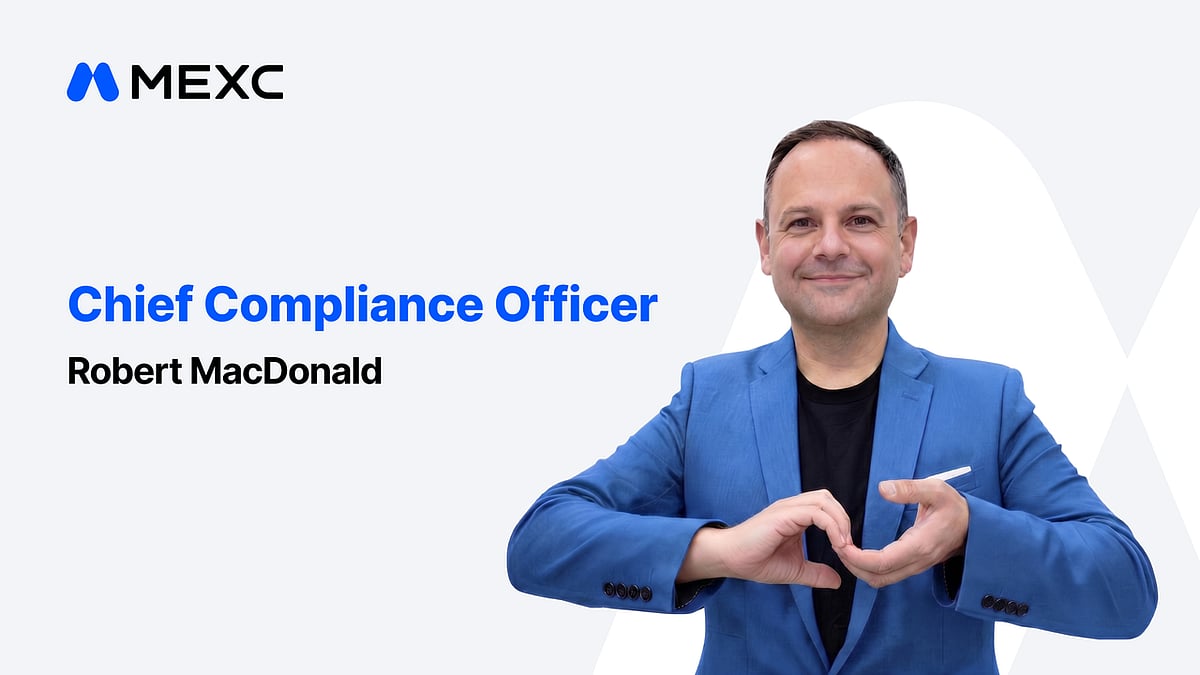
    MEXC, a leading zero-fee digital asset trading platform, has appointed Robert MacDonald as its new Chief Compliance Officer. MacDonald brings more than two decades of experience in regulatory transformation spanning traditional finance and digital assets. He will oversee MEXC’s global compliance strategy, governance framework, and regulatory engagement.

    MacDonald joins MEXC from Bybit, where he served as Chief Legal & Compliance Officer, directing global licensing and corporate legal operations while implementing international AML and KYC frameworks. His prior roles include senior positions at Standard Chartered and Binance, focusing on regulatory strategy and compliance transformation. In 2025, Asian Legal Business recognized him among the Top 15 Chief Compliance Officers for navigating regulatory complexity in digital assets.

    MEXC has recently expanded beyond crypto to offer retail users access to equities-related products, IPO access, and other asset classes. MacDonald’s mandate centers on three pillars: cross-jurisdictional governance, data-driven risk management, and strategic regulatory engagement.

    “Trust won’t be a competitive advantage but the price of entry,” MacDonald said. “Compliance is the gateway to trust and sustainable growth. The platforms that endure protect their users.”

    CEO Vugar Usi added, “Innovation and compliance can no longer be treated as separate priorities. Robert’s experience will strengthen the governance foundation needed to scale responsibly.”

    MEXC, trusted by over 40 million users across 170+ markets, continues investing in compliance infrastructure to support its multi-asset expansion.