

Tag: reinforcement learning

  • Top Physical AI Development Tools and Frameworks to Watch in 2026

    Top Physical AI Development Tools and Frameworks to Watch in 2026

    Physical AI is revolutionizing robotics and automation by enabling machines to operate in unpredictable, real-world environments. In 2026, several advanced tools and frameworks are leading the charge, helping developers simulate, train, and deploy intelligent robots more efficiently. From NVIDIA’s powerful commercial stack to promising open-source alternatives, here’s a detailed look at the best physical AI development platforms this year.

    Key Platforms for Physical AI Development

    1. NVIDIA Isaac Sim & Isaac Lab

    Built on Omniverse with the PhysX 5 engine, NVIDIA Isaac Sim is the most comprehensive option for creating digital twins and generating synthetic perception data. Its companion framework, Isaac Lab, is a reinforcement learning platform optimized for training humanoid and quadruped locomotion on NVIDIA GPUs. These tools are widely adopted in industrial robotics, from surgical systems to autonomous construction equipment.

    2. MuJoCo (with MuJoCo-Warp)

    MuJoCo remains the go-to open-source physics engine for academic research, especially for manipulation tasks and vision-language-action policy evaluation. Google DeepMind’s MuJoCo-Warp provides a GPU-accelerated reimplementation that delivers parallel-simulation speed while maintaining full backward compatibility with existing models.

    3. NVIDIA Cosmos 3 – World Models

    Announced in 2026, Cosmos 3 is NVIDIA’s frontier foundation model for physical AI. It understands both video and text, predicts physical scene outcomes, and generates synthetic training data at scale—eliminating the need for extensive real-world data capture. Companies like FieldAI and Skild AI already use Cosmos to overcome data bottlenecks.

    4. Genesis & Newton – Open-Source Alternatives

    Genesis is a pure-Python physics engine designed to avoid vendor lock-in, mixing rigid-body, deformable, and fluid dynamics in a single framework. Newton, built on NVIDIA’s Warp library but governed by the Linux Foundation, was developed with Google DeepMind and Disney Research to offer GPU-level performance without single-vendor dependency. Both are production-viable for teams prioritizing platform independence.

    How to Choose the Right Tool

    Selection depends on your hardware commitment and tolerance for vendor dependence. If you are deeply invested in NVIDIA GPUs and need the most mature, best-documented pipeline, Isaac Sim and Isaac Lab remain the safest bet. For those seeking open-source flexibility, Genesis or Newton provide robust, platform-independent alternatives that are now production-ready, not just research projects.

    Why Physical AI Matters

    Physical AI is reshaping industries like manufacturing, healthcare, logistics, and autonomous vehicles. Using advanced simulation, reinforcement learning, and world models, developers can reduce hardware costs, accelerate training, improve safety, and deploy intelligent machines more efficiently in real-world environments.

    Frequently Asked Questions

    What is Physical AI?
    Physical AI refers to AI systems that control robots and autonomous machines interacting with the physical world, combining perception, reasoning, planning, and movement to perform complex tasks.

    Why is simulation important?
    Simulation enables training and testing without physical hardware, reducing costs, minimizing risks, and enabling large-scale experimentation.

    What is NVIDIA Isaac Sim used for?
    It’s a robotics simulation platform for creating digital twins, generating synthetic data, and training reinforcement learning models.

    How does MuJoCo differ from Isaac Sim?
    MuJoCo is an open-source academic physics engine focused on manipulation and reinforcement learning, while Isaac Sim offers broader industrial simulation and NVIDIA hardware integration.

    What is NVIDIA Cosmos 3?
    Cosmos 3 is a world foundation model that predicts physical interactions and generates synthetic training data for physical AI development.
  • 10 Data Labeling Jobs That Power Modern AI: Roles, Skills, and Impact

    10 Data Labeling Jobs That Power Modern AI: Roles, Skills, and Impact

    Even though artificial intelligence may appear completely automated, human data labelers work behind the scenes to make computers smarter. These professionals train AI through data classification, annotation, and evaluation, teaching algorithms to recognize patterns, languages, images, and responses that drive future system performance.

    10 Data Labeling Jobs Driving the AI Revolution

    The rise of AI has diversified data labeling into specialized careers. Below are the ten most prominent data labeling roles supporting modern AI systems.

    1. Image Annotation Specialist

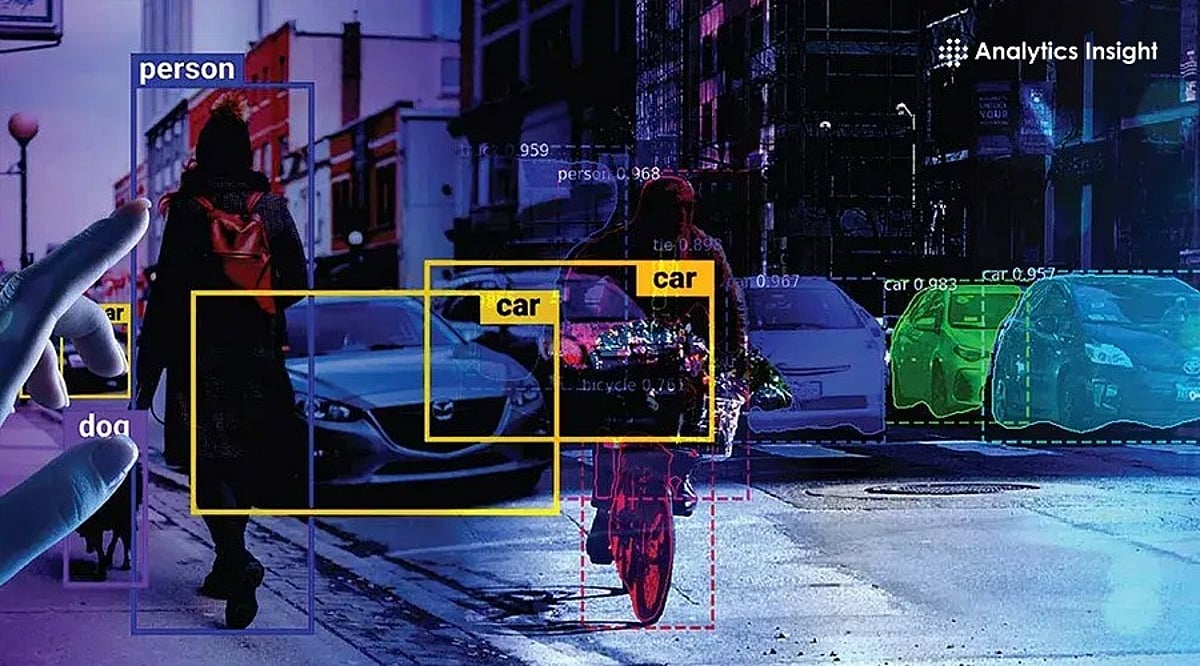
    Image annotators label objects within images using bounding boxes for cars, people, animals, and road signs. This work enables computers to identify visual elements and is critical for facial recognition, medical imaging, and autonomous driving.

    2. Video Annotation Professional

    While image annotation handles static images, video annotation tracks dynamic objects. Video annotators help computers understand motion, making them essential for autonomous driving, surveillance, and sports analytics.

    3. Text Classification Analyst

    These analysts categorize text into predefined classes—for example, distinguishing spam from legitimate emails, sorting customer reviews by topic, or grouping news articles by subject matter.

    4. Sentiment Analysis Annotator

    Businesses rely on sentiment analysis to gauge customer feelings. Annotators review text and label it as positive, negative, or neutral, enabling companies to understand public opinion at scale.

    5. Audio Transcription Specialist

    Voice‑powered AI requires vast amounts of annotated audio data. Audio transcription specialists convert spoken language into written text, capturing not only words but also speaker identity, accent, emotional tone, pauses, and background noise.

    6. AI Response Evaluator

    With generative AI on the rise, AI response evaluators assess chatbot outputs for quality, detect errors, and select the best responses to improve model performance.

    7. Content Moderation Reviewer

    These reviewers examine text, images, videos, and comments to identify harmful or rule‑breaking content. They apply labels according to platform guidelines so that automated systems can later detect unacceptable material.

    8. Data Quality Reviewer

    Annotation projects depend on quality control. Data quality reviewers verify completed annotations for accuracy and consistency, ensuring reliable training data.

    9. Domain Expert Annotator

    As AI expands into specialized fields, companies hire doctors, lawyers, engineers, financial analysts, and scientists to annotate data requiring deep subject‑matter expertise.

    10. Reinforcement Learning Trainer

    This emerging role involves crafting prompts, testing model responses, analyzing logic, and providing feedback. Such iterative human input significantly improves AI model accuracy over time.

    Required Skills for Data Labeling Jobs

    Entry‑level labeling roles may require minimal experience, but most positions demand attention to detail, consistency, and strong analytical abilities. Advanced roles often call for industry‑specific expertise or familiarity with AI workflows. Communication, critical thinking, and the ability to follow detailed guidelines are increasingly valuable as projects grow more complex.

    Why Data Labelers Are Essential to AI

    AI models require high‑quality training data to perform effectively. Human judgment provides algorithms with knowledge about objects, language structures, and correct responses. Every recommendation engine, virtual assistant, chatbot, and computer vision system rests on this human foundation. As AI evolves, data labelers move beyond simple tagging to analyze reasoning, evaluate model outputs, and apply their own expertise. Whenever a virtual assistant answers accurately or a self‑driving car identifies a pedestrian, a team of data labelers likely made it possible.

  • EXL Acquires iMerit to Bolster Enterprise AI with Foundation Model Capabilities

    EXL Acquires iMerit to Bolster Enterprise AI with Foundation Model Capabilities

    EXL (NASDAQ: EXLS), a global data and AI company, has announced a definitive agreement to acquire iMerit, a leader in AI model training, evaluation, and reinforcement learning. The deal, valued at up to $310 million, is expected to close in the third quarter of 2026, subject to customary conditions.

    The acquisition positions EXL at the forefront of enterprise AI innovation by adding iMerit’s direct relationships with foundation model builders. iMerit specializes in helping clients train large language and multimodal models to improve accuracy, precision, and effectiveness. By integrating iMerit’s capabilities with its own AI platforms—including EXLerate.ai, EXLdata.ai, and EXLdecision.ai—EXL aims to create a comprehensive end-to-end AI solution that moves enterprises from experimentation to production-scale deployment.

    “As organizations reimagine their businesses with AI, success requires industry-specific data, rigorous evaluation and reinforcement learning to deliver reliable results in business-critical workflows,” said Rohit Kapoor, chairman and CEO of EXL. “The acquisition of iMerit strengthens EXL’s AI strategy and ability to help clients move from experimentation to production. By combining iMerit’s capabilities with EXL’s domain expertise and AI platforms, we are setting the standard for AI that is trusted, accountable and built to perform in the enterprise.”

    iMerit brings two key assets to EXL: the Ango platform and the Scholars network. Ango enables sophisticated data interactions with generative AI models, supporting chain-of-thought reasoning, red teaming, and multimodal evaluations. Scholars expands EXL’s domain expertise through a global network of specialists—including physicians, scientists, engineers, linguists, and other subject matter experts—who provide human intelligence-driven feedback for reinforcement learning.

    These offerings will be integrated with EXL’s agentic platforms to combine expert human judgment, model evaluation, and enterprise-scale execution. The acquisition also expands EXL into high-growth AI sectors such as high tech, mobility, autonomous systems, and physical AI, leveraging iMerit’s expertise across text, image, video, voice, and LiDAR data.

    “We see EXL as an ideal leader in this defining moment for AI. We can build on our work with AI innovators and bring those insights to companies seeking to unlock their proprietary data,” said Radha Ramaswami Basu, CEO and founder of iMerit. “Both companies share a belief that specialized high-quality data is the foundation of AI success. We are excited to multiply our impact through EXL’s industry expertise, complementary technology and trusted enterprise relationships.”

    The transaction includes upfront consideration of $170 million, with an additional $140 million in incentives and earnouts over two years contingent on meeting specified milestones. The acquisition is expected to close in the third quarter of 2026, subject to regulatory approvals.