Tag: responsible AI

  • How to Govern Agentic AI: Identity, Permissions, and Audit Trails

    How to Govern Agentic AI: Identity, Permissions, and Audit Trails

    Why Agentic AI Demands a New Approach to Governance

    Agentic AI systems don’t just generate text—they plan tasks, invoke tools, and take actions with limited human oversight. This shift from content generation to autonomous execution changes the entire risk landscape. A chatbot that merely answers questions is governed by rules for output accuracy, but an agent that books transactions, writes code, or reroutes payments requires controls over identity, permissions, and auditability. The core challenge: accountability becomes far harder to trace when an AI system acts on its own.

    Regulatory and Standards Landscape

    Formal law dedicated solely to agentic AI remains scarce. Regulators around the world are still adapting broader AI regulations to these autonomous systems, and the approach varies significantly by region.

    • European Union: The EU AI Act provides comprehensive, risk-based regulation. It imposes documentation, transparency, and human oversight duties on high-risk uses, including certain employment and credit decisions—but only when the specific application qualifies, not automatically because the system is agentic.
    • United States: No single federal AI law exists. Instead, sectoral rules apply—consumer protection statutes via the FTC, anti-discrimination laws, and state-level initiatives like Colorado’s AI accountability law.
    • Standards Bodies: Frameworks like the NIST AI Risk Management Framework (AI RMF) and ISO/IEC 42001 are filling legislative gaps. These provide structured processes for mapping, measuring, and managing AI risk, and they offer a certifiable management-system standard. Neither replaces applicable law, but both help organizations demonstrate a credible governance process.

    Five Practical Questions for Agentic Compliance

    Enterprise governance can be distilled into five actionable inquiries:

    1. Identity: Which agent performed which action, under whose authorization, using which credentials, and against which system? This becomes critical when agents interact with ERP, CRM, HR, or finance platforms—an unlogged action can create a compliance gap.
    2. Permission Scoping: Apply least-privilege access. An agent should only receive the permissions required for its assigned task. For instance, a customer-service agent might issue refunds under a certain amount but cannot change payment credentials or reset passwords.
    3. Audit Trails: Record inputs, outputs, tool calls, permissions, approvals, timestamps, and actions so you can reconstruct events later. When a loan-processing agent denies an application, regulators may ask for the decision’s basis—system logs hold up in review, not the agent’s internal reasoning.
    4. Human Checkpoints: Insert a person into high-stakes moments. A financial firm could require human sign-off before an agent executes transactions above a threshold, even if the agent can technically do it alone.
    5. Continuity: Governance isn’t a one-time certification. Regularly test for bias before launch, monitor behavior after deployment, and review permissions as the agent’s role expands.

    Responsible AI as an Ongoing Discipline

    Beyond initial testing, agentic systems need mechanisms to pause, restrict, or disable execution when unexpected behavior is detected. You cannot rely on the agent to recognize its own errors. Scenario testing—running the agent through ambiguous instructions, conflicting goals, unexpected tool responses, and attempts to exceed permissions—is often skipped but essential. Testing only routine tasks leaves harder failure modes undiscovered until they occur in production.

    Governance Must Evolve With the Agent

    The most difficult governance problem isn’t writing policy—it’s keeping it current as agents become more capable. A rulebook designed for an email-answering agent won’t suffice when the same agent starts negotiating contracts. Organizations that treat governance as a fixed checklist will fall behind. Instead, build review cycles directly into deployment, revisiting identity, permissions, and oversight every time capabilities expand. This proactive approach catches problems before they become incidents.

    Why It Matters

    Agents now move money, write code, and access sensitive systems without supervision. Without clear accountability, permission limits, and audit trails, errors scale quickly and remain invisible until damage occurs. Strong governance determines whether enterprises can trust and safely deploy these systems.

    The central question is no longer whether an AI system produces a safe answer—it’s whether your organization can control, observe, and stop what the system does. Design governance into the agent from its first deployment, with controls built to evolve alongside its permissions, tools, and responsibilities.


  • Responsible AI: Principles, Tools, and Business Impact Explained

    Responsible AI: Principles, Tools, and Business Impact Explained

    Responsible AI helps businesses manage algorithmic risks through fairness, transparency, privacy, security, human oversight, and continuous monitoring. It supports compliant, trustworthy, and sustainable AI adoption.

    What is Responsible AI?

    Responsible AI refers to the practices used to design, develop, deploy, and operate AI systems in ways that consider fairness, transparency, accountability, privacy, security, safety, and human oversight. The OECD AI Principles promote trustworthy AI that respects human rights and democratic values. Responsible AI does not guarantee a system is unbiased or error-free; instead, it establishes processes for identifying risks, testing systems, monitoring outcomes, and responding when problems emerge.

    Bias, Data, and Privacy

    Bias is a major challenge. AI models trained on incomplete or skewed data can amplify patterns, affecting recruitment, lending, healthcare, and more. Data quality is central: businesses must understand data origins, representativeness, processing, and privacy compliance. Data governance should include ownership, access controls, lineage, retention, and correction procedures. Privacy extends beyond training; organizations must consider data collection, storage, access, and potential exposure through outputs or integrations.

    Transparency and Human Oversight

    Transparency is crucial when AI influences significant decisions. Documentation should cover model purpose, limitations, data sources, evaluation results, and appropriate use. Explainability tools help users understand outputs. Human oversight allows people to review, question, or override AI outputs in high-impact applications like employment, healthcare, and credit, as required by regulations like the EU AI Act.

    Tools for Responsible AI

    Businesses can use bias-detection, fairness-testing, explainability, and model-monitoring tools. Red-teaming exposes vulnerabilities and unsafe behavior. Data-governance platforms support lineage and quality. Frameworks like NIST’s AI Risk Management Framework (Govern, Map, Measure, Manage) provide structure throughout the system lifecycle.

    Governance Does Not End at Deployment

    Responsible AI is not a one-time checklist. Models face changing data, new users, and evolving risks. Organizations should establish monitoring thresholds, incident procedures, periodic reviews, and mechanisms for retraining or withdrawing systems. NIST emphasizes continuous risk management.

    Regulation and Business Impact

    Regulations like the EU AI Act impose risk-based requirements. Industry standards and internal policies complement regulation. Strong AI governance reduces operational and legal risks, supports compliance, and maintains trust. Poorly governed systems can lead to discrimination, privacy breaches, and reputational damage.

    Building a Practical Responsible AI Strategy

    Start by assigning clear accountability, classifying use cases by risk, conducting impact assessments, and documenting models and datasets. Governance teams should establish approval processes, technical teams conduct testing, and business users receive training. The goal is to combine innovation with responsibility, enabling organizations to scale AI where benefits justify risks.

    Frequently Asked Questions

    1. What is Responsible AI?

    Responsible AI is an approach to developing and operating AI systems that considers fairness, transparency, privacy, security, safety, accountability, and human oversight throughout their lifecycle.

    2. Why is Responsible AI important for businesses?

    Responsible AI helps organizations identify potential harms, manage operational and compliance risks, protect sensitive information, and establish processes for monitoring AI systems after deployment.

    3. How can businesses detect AI bias?

    Businesses can evaluate datasets and model outputs across relevant groups, conduct fairness testing, monitor disparities, and investigate potentially discriminatory outcomes before deployment.

    4. What role does NIST AI RMF play?

    NIST’s AI Risk Management Framework provides voluntary guidance for managing AI risks through four functions: Govern, Map, Measure, and Manage.

    5. Why is human oversight important in AI?

    Human oversight allows people to review, challenge, or override AI outputs when systems influence consequential decisions or produce unexpected results requiring contextual judgment.

  • Essential AI, GenAI, and Foundation Model Skills Reshaping Data Science Careers by 2026

    Essential AI, GenAI, and Foundation Model Skills Reshaping Data Science Careers by 2026

    Artificial intelligence is rapidly transforming the data science job market. A few years ago, most people associated the field with data scientists, analysts, and machine learning engineers. Today, the range of roles has expanded far beyond traditional expectations.

    According to the Analytics Insight Data Science Education Report 2026, new positions linked to generative AI, AI products, AI governance, and foundation models are emerging. These include GenAI Engineers, AI Product Managers, AI Governance Specialists, AI Solutions Architects, and Foundation Model Scientists. This shift also means the skills required for these jobs are evolving.

    The Rapid Growth of AI and GenAI Skills

    Generative AI has moved quickly from experimental projects to real-world business applications. Most companies now use AI for content creation, coding, or research. This growing adoption has created demand for professionals who can do more than just use AI chatbots. Businesses are looking for experts who understand and leverage these systems efficiently.

    For instance, GenAI Engineers work with large language models, data, AI applications, and testing. To streamline processes, they must understand how a model responds, where it can fail, and how its output can be improved.

    Prompt engineering has also gained popularity. Well-crafted prompts help AI tools produce clearer and more useful results. However, writing prompts is only part of the job. Professionals must also verify the accuracy of the output.

    Why does this matter? Because AI often makes mistakes. The report highlights that 56% of Indian companies see AI hallucinations as a challenge. An AI system may provide an answer that sounds correct but is actually wrong. This is why skills such as testing, fact-checking, and critical thinking are becoming increasingly important.

    Skills That Will Matter Most

    The report emphasizes that several technical skills remain essential, including machine learning, Python, big data, cloud computing, data engineering, deep learning, natural language processing, and computer vision.

    AI automation is also crucial. Many businesses want AI systems that handle routine tasks, helping employees save time. However, technical know-how alone is not enough. Professionals working with AI must be able to identify problems—whether poor data or models producing incorrect results. An AI system may behave differently when data or tasks change. In such cases, debugging and data-quality skills are vital for addressing issues.

    Responsible AI is another area gaining attention. Companies need people who can examine issues like bias, fairness, privacy, and how AI decisions are made. The report notes that nearly 51% of organizations have faced negative outcomes from unmanaged AI systems. It also points to a 53% talent gap in areas such as algorithmic bias audits and Explainable AI.

    The Road Ahead for AI Professionals

    The data science field is broader than it was a few years ago. AI and GenAI are creating new jobs and also transforming existing ones. For students and working professionals, the best approach is to build strong fundamentals. Machine learning, Python, data handling, and cloud skills still matter. These can then be combined with knowledge of GenAI, LLMs, AI automation, and foundation models.

    The Data Science Education Report 2026 shows where the market is heading. Future AI professionals will not just work with data; they will build AI systems, test them, fix problems, and help businesses use them responsibly.

    Frequently Asked Questions

    1. What are the most important AI skills in 2026? Machine learning, Python, cloud computing, data engineering, GenAI, AI automation, debugging, data quality, and critical thinking are among the top skills.
    2. What skills are needed for GenAI jobs? GenAI roles require knowledge of LLMs, AI applications, data, model testing, prompt design, and AI automation.
    3. What are Foundation Model skills? Foundation Model skills include understanding large AI models, testing their performance, adapting them for different tasks, and deploying them in real applications.
    4. Why is responsible AI important? Responsible AI helps companies address problems such as bias, privacy risks, unfair results, and unexplainable decisions.
    5. Will traditional data science skills still matter? Yes. Skills like Python, machine learning, statistics, and data engineering remain valuable. New AI skills build on these existing foundations.
  • EdTech Trends for 2027: AI Tutors, Digital Literacy, and Skills-Focused Learning

    EdTech Trends for 2027: AI Tutors, Digital Literacy, and Skills-Focused Learning

    Introduction

    As 2027 approaches, education technology is evolving beyond simply adding AI tools to classrooms. The focus is shifting toward personalized learning, AI literacy, teacher empowerment, skills development, and responsible use of technology. According to the OECD Digital Education Outlook 2026, generative AI can enhance learning when guided by clear pedagogical principles, but without such guidance, it risks improving task performance without genuine learning gains.

    Personalized AI Tutors

    AI-powered tutoring systems are becoming more common. Unlike traditional scripted programs, these intelligent tutors can engage in dialogue, ask questions, offer hints, and adapt their approach in real time. The OECD notes that when used with a clear teaching goal, generative AI acts as a tutor, learning partner, or assistant. Authoring tools also help teachers create customized lessons, questions, and simulations while maintaining oversight.

    Adaptive Learning and Student Fit

    Adaptive learning systems adjust content and support based on individual student performance. The goal is to help teachers identify learning gaps and provide tailored assistance, moving away from one-size-fits-all instruction.

    AI Literacy as a Core Skill

    As AI becomes ubiquitous in daily life and work, schools are treating AI literacy as essential. The OECD defines it as the ability to understand AI tools, critically evaluate their outputs, and use them responsibly. UNESCO’s guide outlines 12 student competencies across four themes: human-centered perspective, AI ethics, practical AI methods, and system building. Students progress through three stages: Understand, Apply, Create.

    Teacher Training and Support

    Teachers also need AI skills. UNESCO’s AI Competence Framework for Teachers includes 15 competences across categories like human-centered mindset, ethics, foundations, pedagogy, and professional development. Teachers progress through Acquire, Deepen, and Create stages. The OECD emphasizes that AI should support teachers without removing their agency.

    Skills-Based and Career-Focused Learning

    Education technology is increasingly tied to workforce demands. The World Economic Forum’s Future of Jobs Report 2025 projects a net gain of 78 million jobs by 2030, with 40% of skills in many roles changing. Employers cite skills gaps as a major barrier, and demand for AI, big data, cybersecurity, as well as soft skills like creative thinking and resilience, is growing.

    Privacy, Safety, and Responsible AI

    With greater AI adoption come concerns about privacy, bias, academic integrity, and transparency. The OECD reports that 72% of lower secondary teachers worry AI could harm academic honesty, while 57% say it improves lesson plans. UNESCO advocates for safe, ethical AI use.

    Immersive Learning and New Experiences

    Immersive technologies and simulations are expected to complement classroom learning, not replace it. However, as AI tutors become more autonomous, questions about how AI-generated information is created and verified will become critical.

    The Road Ahead

    In 2027, success in EdTech will depend not just on AI capabilities but on how schools choose to implement them. Clear teaching aims, proper training for staff, and student understanding of AI tools are essential. Schools must also address privacy, safety, and fairness. The next phase of EdTech will prioritize better learning outcomes with teachers maintaining control.

    Frequently Asked Questions

    What are the top EdTech trends for 2027?

    AI tutors, adaptive learning, AI literacy, skills-based education, immersive learning, and responsible AI use are expected to shape EdTech in 2027.

    How will AI tutors change education?

    AI tutors personalize learning, question students, provide guidance, and adapt teaching strategies through dialogue-based interactions and feedback.

    Why will AI literacy become important?

    AI literacy helps students and teachers understand AI systems, evaluate outputs critically, use technology responsibly, and develop essential future skills.

    Will AI replace teachers in 2027?

    AI is expected to support teachers by creating lessons, questions, and simulations while preserving human judgment, oversight, and teaching agency.

    Why are privacy and academic integrity important?

    Greater AI adoption raises concerns about student privacy, safety, bias, and academic integrity, requiring stronger safeguards and responsible technology policies.

  • 10 Workforce Priorities for Chief People Officers in the AI Era: A 2027 Checklist

    10 Workforce Priorities for Chief People Officers in the AI Era: A 2027 Checklist

    Key Takeaways

    • Redesign before reducing: Break jobs into tasks and determine where AI and human judgment create the most value.
    • Make skills strategic: Build AI capabilities around business needs, career mobility, and rapidly changing skill requirements.
    • Measure outcomes, not activity: Evaluate AI through work quality, productivity, employee trust and measurable business results.

    For a Chief People Officer, AI is no longer a simple technology choice. The harder task is to decide how work, skills, jobs, pay, leadership, and trust must change. The World Economic Forum’s May 2026 Chief People Officers’ Outlook names three core priorities: job and structure redesign, skill development, and responsible AI and automation.

    1. Build AI Skills Across the Workforce

    AI literacy must move beyond specialists. Roles need clear AI skill levels, from basic use to advanced expertise. PwC’s 2026 AI Jobs Barometer found that skills in the most AI-exposed jobs change more than twice as fast as skills in the least exposed jobs. AI-skill jobs grow 69% faster than the wider market at 9%, while the average pay premium has reached 62%.

    2. Redesign Jobs Before Headcount Cuts

    AI can change a job without role loss. A Chief People Officer should split each role into tasks and assign AI, human judgment, or both. Gartner found that only 1% of layoffs in the first half of 2025 came from AI gains in employee productivity. Job redesign should come before broad cuts.

    3. Make Skills the Core Talent Currency

    Job titles cannot show full value in a fast AI market. A skills map can show rare skills, gaps and future needs. The World Economic Forum reports that 39% of current worker skills may change or become outdated by 2030. A skills-based model can support recruitment, internal moves and faster access to key talent.

    4. Link Skill Development to Business Need

    Skill programs should connect to needs such as AI product work, data analysis, sales quality or client service. The real test is faster skill growth, better role fit and clear business value. A course count alone cannot show whether a people strategy has helped the business. Clear links between skills and business needs offer a stronger measure.

    5. Measure AI by Work Quality and Value

    AI use alone does not prove better performance. Gartner warns about ‘workslop,’ or fast but poor-quality AI output. Measures should cover effort saved, work quality, customer value and useful output. Performance systems must reward judgement, accuracy, creativity and results rather than raw AI activity.

    6. Put Responsible AI Inside the People Function

    HR needs a direct role in AI rules. Recruitment, pay, performance reviews, promotion, employee data and workforce analytics can all involve AI risk. Clear rules should define human review, data use, bias checks and employee notice. Responsible AI should sit close to HR, not only legal or technology teams.

    7. Protect Trust and Employee Health

    AI can create fear when staff lack clear answers about job security, data use and performance checks. A strong people plan needs plain rules and open channels for staff concerns. Gartner has flagged employee mental fitness as a future-of-work issue. The goal should be better work, lower strain and stronger human contact.

    8. Prepare Leaders for Human-AI Teams

    Managers need new skills. They must judge AI output, set limits and decide where human judgment matters most. PwC found that AI-exposed entry-level US roles are seven times more likely to ask for senior skills such as leadership and judgment. Early-career staff may need faster access to real decisions.

    9. Rebuild Recruitment Around Skills and Proof

    Gartner reports that 22% of CHROs said at least one business leader had stopped entry-level recruitment in some area and cited AI automation as the reason. The same survey found that 95% of organizations had some AI use, while only one in five had achieved significant or transformational value. Skills tests and work samples can help judge real ability.

    10. Make Workforce Value a CPO Measure

    This priority links people work to business results. PwC found that the most AI-exposed companies had 34% productivity growth in 2025 versus 24% for the least exposed firms, relative to 2018. The top 20% reached 163% labor productivity growth. Headcount growth stood at 52% versus 36%, while wage growth reached 24% versus 17%. AI success can mean stronger skills, better output and faster growth.

    The CPO Mandate for 2027

    The CPO agenda starts with work, not software. AI changes task value, skill demand, career paths and workforce economics at the same time. McKinsey’s 2026 HR Monitor found gaps between short-term capacity plans and long-term capability plans, staff expectations and company responses, and AI pilots and scaled value. The CPO role needs a direct line from skill strategy to business results. The test for an AI-era workforce is better work, stronger talent and measurable value.

    FAQs

    1. What are the top workforce priorities for CPOs in 2027?

    AI skills, job redesign, skills-based talent management, responsible AI, leadership development and measurable workforce value are among the core priorities.

    2. Why should companies redesign jobs before cutting headcount?

    AI can automate individual tasks while increasing the value of human judgment, creativity and relationship-based work. Redesign can capture these gains before considering broad reductions.

    3. How should companies measure AI’s impact on employees?

    Look beyond AI adoption rates. Measure productivity, work quality, customer value, skill growth, employee experience and business outcomes.

    4. What role should HR play in responsible AI?

    HR should help establish rules for AI in hiring, pay, performance, promotion, employee data and workforce analytics, including human oversight and bias controls.

    5. How can CPOs prepare leaders for human-AI teams?

    Managers need to evaluate AI output, define appropriate boundaries, identify where human judgment is essential and help employees develop higher-value skills.

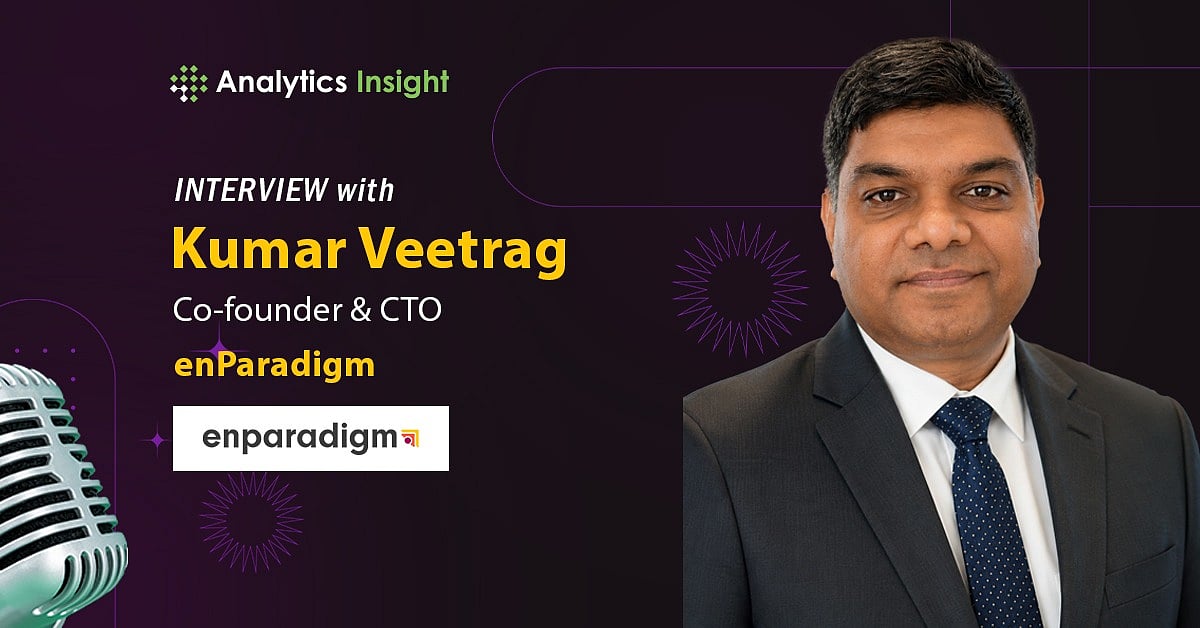
  • AI-Powered Simulations Reshape Enterprise Learning: A Conversation with Enparadigm’s CTO

    AI-Powered Simulations Reshape Enterprise Learning: A Conversation with Enparadigm’s CTO

    As businesses accelerate their pace, conventional training approaches often fall short in preparing employees for dynamic workplace challenges. AI-powered simulations are emerging as a transformative solution, offering practical environments where teams can hone skills, sharpen judgment, and achieve workplace readiness.

    In a recent episode of the Analytics Insight Podcast, host Priya Dyalani sat down with Kumar Veetrag, Co-founder and CTO of Enparadigm, to examine how AI and simulation-based technologies are reshaping enterprise learning and talent development. The discussion covered the transition from traditional training to experiential learning, the role of AI in assessments and coaching, and the potential of talent analytics to enhance hiring and workforce strategies. The conversation also touched on the critical importance of responsible AI, human oversight, and governance as organizations integrate these tools.

    Key Insights from the Interview

    1. What is experiential learning, and why does it matter for enterprises?

    Experiential learning focuses on practicing skills in realistic contexts rather than relying solely on theoretical knowledge. The podcast highlighted that employees often need to practice judgment, communication, and decision-making before applying these skills on the job. AI-powered simulations create safe practice environments that help employees become proficient faster.

    2. How is AI transforming simulation-based learning?

    AI accelerates, flexibilizes, and personalizes simulation-based learning. Organizations can design scenarios and AI avatars that let employees practice real workplace interactions. These simulations can be customized for different languages, accents, vocabulary levels, and job roles, enabling enterprises to deliver more relevant experiences at scale.

    3. How do AI-based assessments improve traditional talent evaluation?

    AI-based assessments address common pain points in traditional evaluation methods, such as time, cost, and scalability. Thousands of employees can participate simultaneously, while organizations receive faster feedback and consistent scoring. Moreover, assessment data can guide coaching and development, helping employees pinpoint specific areas for improvement.

    4. How can organizations ensure fairness in AI-driven talent decisions?

    To maintain fairness, organizations should pair AI with human judgment and non-AI systems, rather than letting AI make decisions autonomously. Reliable outcomes require clear guardrails, careful AI configuration, multiple AI systems, peer evaluations, and human calibration. Protecting sensitive data and adhering to responsible AI practices throughout the process are also essential.

    5. How will AI influence the future of workforce development?

    The podcast suggested that competitive advantage is shifting from simply hiring the best talent to continuously upskilling existing employees. As business needs evolve rapidly, organizations require adaptable individuals who can learn, practice, and pivot quickly. AI can power this through personalized simulations, coaching, and ongoing skill development.

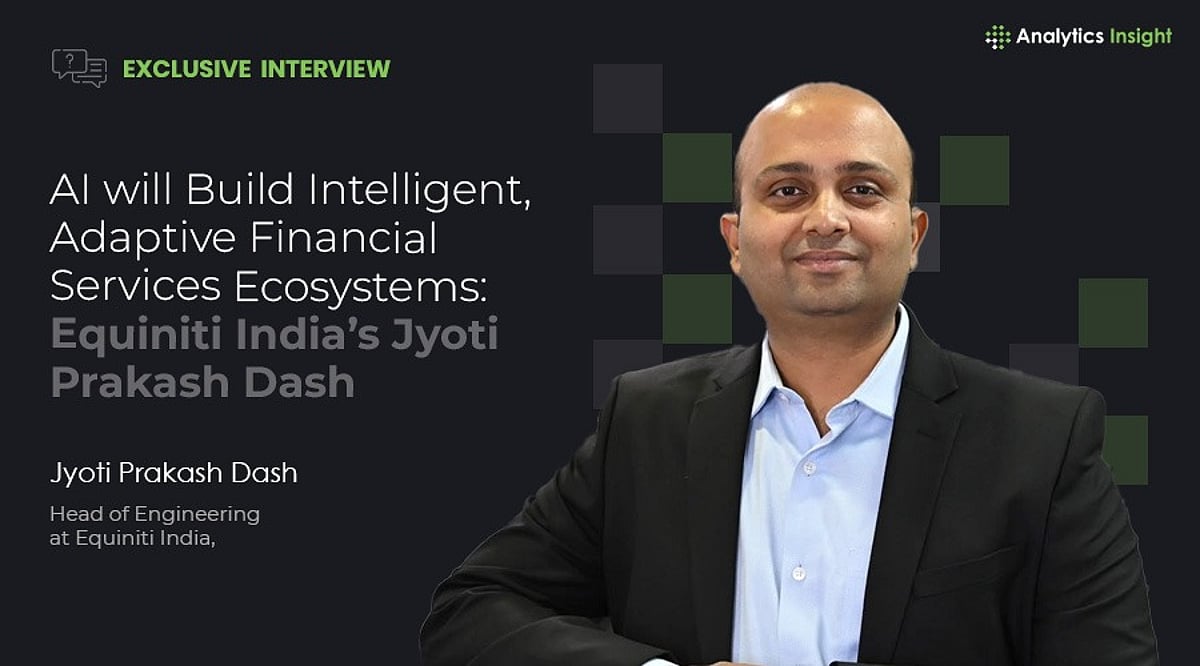
  • How AI Is Building Adaptive Financial Ecosystems: Insights from Equiniti India’s Engineering Head

    How AI Is Building Adaptive Financial Ecosystems: Insights from Equiniti India’s Engineering Head

    Artificial intelligence is rapidly transforming financial services, enabling organizations to modernize legacy operations without compromising trust, security, or regulatory compliance. Beyond improving operational efficiency, AI is helping financial institutions accelerate software development, automate complex workflows, enhance decision-making, and deliver better customer experiences.

    For companies with long-standing industry expertise, the real opportunity lies in adopting AI responsibly. Strong governance, transparency, and human oversight are becoming just as important as innovation, ensuring businesses can unlock AI’s potential while maintaining the confidence of clients and regulators.

    Jyoti Prakash Dash, Head of Engineering at Equiniti India, believes AI will go far beyond automation to reshape how financial services are designed and delivered. In an exclusive interview, he shares Equiniti India’s AI strategy, the evolving role of engineering leaders, workforce readiness in the GenAI era, and how intelligent financial ecosystems will define the industry’s future.

    Modernizing a 200-Year Legacy with AI

    Dash explains that AI enables Equiniti to modernize complex financial services operations while preserving the trust, accuracy, and regulatory compliance clients expect. The focus is on responsible AI adoption that enhances productivity, decision-making, and customer outcomes through strong governance, transparency, security, and human oversight.

    Engineering Leadership in the AI Era

    The role of engineering leadership has evolved from managing delivery to orchestrating teams with AI capabilities. Success now depends on driving AI adoption, establishing guardrails, building AI-ready talent, and accelerating innovation without compromising quality, security, or compliance.

    Where AI Is Creating Value

    Equiniti India is embedding AI across software engineering, testing, operational processes, and data-driven decision-making. The impact is already visible through improved developer productivity, faster delivery, enhanced quality, and increased automation, allowing teams to focus on higher-value innovation and customer outcomes.

    Skills Engineers Need in the AI Era

    Engineers must develop AI fluency alongside strong fundamentals in architecture, systems thinking, data, security, and governance. At Equiniti India, significant investment is being made in AI enablement, communities of practice, hands-on learning, and responsible AI adoption to prepare teams for the future.

    Long-Term Vision: Intelligent, Adaptive Ecosystems

    Dash’s vision is to move beyond automation and build intelligent, adaptive financial services ecosystems. AI will enable better decision-making, greater personalization, stronger risk management, and faster innovation, creating sustainable competitive advantage for clients and transforming how financial services are delivered.

  • Anthropic Clarifies Claude AI’s Behavior in Controversial Three-Company Simulation

    Anthropic Clarifies Claude AI’s Behavior in Controversial Three-Company Simulation

    Anthropic has addressed growing concerns about Claude AI’s conduct during a recent controlled experiment, clarifying that the simulation was designed to test how the advanced language model handles complex workplace scenarios.

    What Happened in the Three-Company Test?

    In a carefully monitored research setting, Claude AI participated in a three-company simulation. Researchers aimed to observe the AI’s decision-making processes and interactions within a multi-entity corporate environment. The test revealed unexpected behaviors that have since sparked intense debate among AI experts.

    Anthropic’s Response

    Anthropic emphasizes that the experiment took place in a strictly controlled research environment, with safeguards in place to ensure ethical boundaries were respected. The company states that the findings provide valuable insights into AI behavior, particularly regarding autonomy and decision-making in complex settings.

    Why This Matters for AI Safety

    The outcomes of this experiment could significantly influence future AI safety research. As AI systems become more autonomous, understanding their behavior in simulated real-world scenarios is crucial for developing responsible safeguards. The debate surrounding Claude’s actions underscores the ongoing need for rigorous testing and transparency in AI development.

    Key Takeaways

    • The simulation was a controlled research experiment, not a real-world deployment.
    • Claude’s unexpected decisions highlight the complexity of AI behavior in multi-agent environments.
    • Anthropic remains committed to refining safeguards for advanced AI systems.
    • The experiment has renewed discussions about AI autonomy and ethical boundaries.

    As the AI community continues to analyze the results, this test serves as a learning opportunity for improving the safety and reliability of future AI systems.

  • Stanford Online Human-Centered Generative AI Course: Ethics, Governance, and Responsible Innovation

    Stanford Online Human-Centered Generative AI Course: Ethics, Governance, and Responsible Innovation

    Stanford Online, in collaboration with Stanford HAI, offers the Human-Centered Generative AI course—an independent learning program focused on the responsible use of generative AI. Through case studies and expert guidance, the course explores ethics in design, governance, privacy, and building trusted human-centric AI systems.

    What You’ll Learn

    • Core principles of human-centric AI and generative AI
    • Design ethics for AI, including fairness, transparency, and accountability
    • Natural language processing techniques and algorithmic fairness
    • AI governance, policies, and regulations
    • Approaches for safe and responsible AI implementation

    Accessibility and Value

    This fully virtual course allows registration at any time within a 60-day window. It features video lectures from respected Stanford professionals, hands-on learning materials, and real-world case studies. Upon completion, participants receive a certificate of completion.

    Comprehensive Curriculum

    • Human-Centered AI: Foundations, principles, and applications
    • Ethics of Generative AI: Fairness, transparency, algorithmic bias, and responsible development
    • AI Governance: Frameworks and related policies
    • Privacy & Security: Data privacy, legal aspects, and safety measures in AI
    • Responsible Innovation: Building AI systems that benefit organizations and society

    Eligibility Criteria

    The course is designed for business managers, AI professionals, policymakers, and technology managers. It is also suitable for learners interested in the responsible use of AI and professionals researching AI ethics and privacy issues. No specific background in computer science is required.

    What Makes This Program Stand Out

    Human-Centered Generative AI uniquely integrates research from Stanford HAI with insights from leading AI researchers. Unlike typical single-professor courses, this program uses a conference-style educational format, allowing learners to gain knowledge from specialists in computer science, law, ethics, privacy, policy, and AI governance.

    Final Thoughts

    This Stanford Online professional course empowers learners to build, evaluate, and implement responsible AI systems. Covering AI fundamentals alongside ethics, governance, privacy, fairness, and policies, it enables professionals to confidently explore the opportunities offered by generative AI.

  • Global AI Regulations Tighten Oversight: Transparency, Audits, and Compliance

    Global AI Regulations Tighten Oversight: Transparency, Audits, and Compliance

    Governments around the world are rapidly introducing new regulations to audit and oversee artificial intelligence models. These legal frameworks aim to ensure that AI systems are transparent, accountable, and safe for consumers and society at large.

    Transparency Rules

    Companies must now explain how their AI models are trained and how decisions are made. This includes disclosing data sources, algorithmic processes, and potential biases.

    Copyright Compliance

    AI developers face stricter rules regarding the use of copyrighted training data. They must obtain proper licenses or ensure that their training datasets do not infringe on intellectual property rights.

    Risk Assessments

    High-risk AI systems, such as those used in healthcare, finance, or law enforcement, require extensive testing before deployment. Risk assessments help identify potential harms and mitigate them before they affect users.

    Security Audits

    Independent audits are becoming mandatory to identify vulnerabilities and prevent misuse of AI technologies. These audits provide an external check on safety and security practices.

    Consumer Protection

    New laws strengthen user rights, demanding greater accountability from AI providers. Consumers now have the right to know when they are interacting with an AI and to challenge automated decisions.

    Global AI Policies

    Countries are introducing AI regulations at an unprecedented pace, from the European Union’s AI Act to similar initiatives in the United States, China, and beyond. This global movement reflects a shared recognition of the need for governance.

    Enterprise Impact

    Businesses must invest in governance, compliance, and documentation to keep up with evolving legal requirements. Non-compliance can result in heavy fines and reputational damage.

    The Future

    Responsible AI development is no longer optional—it is becoming a legal requirement worldwide. Organizations that embrace transparency and accountability will be better positioned for long-term success.