Tag: retail investors

  • Coinbase Launches Retail IPO Access for US Users, Kicking Off with Oura Smart Ring

    Coinbase Launches Retail IPO Access for US Users, Kicking Off with Oura Smart Ring

    Coinbase has officially opened initial public offering (IPO) access to eligible retail customers in the United States, marking a significant expansion beyond its core cryptocurrency trading services. The new feature allows users to request shares at the IPO price before public trading begins, with smart-ring maker Oura being the first company available through the program.

    Coinbase Starts Retail IPO Access With Oura

    Announced on September 21, the IPO service is accessible through a dedicated section in the Coinbase app. Eligible customers must fund their accounts before indicating the number of shares they wish to request. After the company publishes an expected price range, users can submit a ‘Conditional Offer to Buy,’ which can be canceled or revised while the order book remains open. However, submitting a request does not guarantee an allocation; available shares depend on customer demand and the amount supplied to Coinbase.

    “This new feature is yet another step toward growing the Everything Exchange, as our US customers now gain early exposure to high-interest companies before they hit public exchanges,” Coinbase said in a statement.

    Oura IPO Details: Price Range and Share Structure

    Oura plans to list its common stock on the NASDAQ Global Select Market under the ticker OURA. Its amended registration statement shows an expected IPO price between $40 and $44 per share. The offering covers 50 million shares: Oura will sell 13.5 million new shares, while existing shareholders will offer another 36.5 million shares. Underwriters may also purchase up to 7.5 million additional shares from selling shareholders.

    Once the order book closes, Coinbase will allocate shares through its internal method. Customers may receive the full requested amount, a smaller allocation, or no shares. Allocated stock will be deposited into the customer’s account at the final IPO price and become tradable when public trading begins.

    Coinbase Discourages Quick IPO Share Sales

    Coinbase’s allocation system will favor customers who appear willing to hold their shares. A customer who sells allocated stock within 30 days may lose access to new IPO offerings for the next 60 days. Repeated sales within this period could also lead to smaller or less frequent allocations. These rules are designed to limit short-term flipping and distribute shares to longer-term investors.

    The exchange has not disclosed every factor used by its allocation system. Coinbase Capital Markets will operate the service as a FINRA-registered broker-dealer, aggregating customer orders and routing them through Apex Clearing Corporation. The broker will act as an agent and will not underwrite an offering, hold shares in inventory, or trade against customers. Users must also complete a standard FINRA eligibility questionnaire.

    Anthropic Access Not Yet Confirmed

    The launch comes as investors monitor reports about a possible Anthropic public offering. However, Coinbase has not named Anthropic as an upcoming deal or confirmed that its customers will receive shares in any future listing. The company said it plans to add more IPOs when selling-group allocations become available, with Oura remaining the only confirmed offering at launch.

    Meanwhile, COIN shares rose during the session as cryptocurrency prices and related stocks also gained. The stock movement coincided with Bitcoin reaching an eight-month high near $85,000.
  • NSE IPO Day 1: Retail and HNI Demand Outpaces Institutional Interest

    NSE IPO Day 1: Retail and HNI Demand Outpaces Institutional Interest

    The National Stock Exchange (NSE) of India launched its much-anticipated initial public offering (IPO) on Day 1, with overall subscription reaching 43%. The Rs. 22,562 crore offer saw bids for nearly 3.8 crore shares against the 8.9 crore shares on offer. However, the response from institutional investors was notably cautious, with only 19% of their allotted portion subscribed.

    In contrast, retail investors subscribed 44% of their quota, while non-institutional investors (HNIs) showed stronger demand at 72%. The employee portion was almost fully subscribed, underscoring broad-based interest from smaller investors.

    Key Details of the NSE IPO

    The IPO is structured as an offer for sale, meaning the exchange will not receive any fresh capital from the proceeds. The price band is set at Rs. 1,700 to Rs. 1,785 per share, placing NSE’s valuation at around Rs. 4.42 lakh crore at the upper end. This is lower than earlier expectations of approximately Rs. 5 lakh crore, partly due to concerns over derivatives trading and future earnings.

    NSE remains a cornerstone of India’s financial markets, but its FY26 revenue dipped 3.1% and profit fell 15.5%, which may have contributed to the tempered institutional appetite.

    Why Institutional Investors Are Holding Back

    The low institutional participation on Day 1 does not necessarily signal rejection. In large IPOs, institutional bids often build up closer to the closing date. Domestic institutions such as SBI, SBI Caps, SHCIL, Bank of Baroda, and several private life insurers hold NSE stakes valued at roughly Rs. 72,000 crore, indicating long-term confidence.

    Investors are weighing NSE’s dominant market position against its recent earnings performance. The next few days will be crucial to see if institutional investors increase their participation, which could significantly boost overall subscription numbers.

    As the IPO enters its critical phase, market watchers will closely monitor the demand from qualified institutional buyers (QIBs) in the coming days.

  • NSE IPO Attracts 43% Subscription on Opening Day for Rs 22,569 Crore Offering

    NSE IPO Attracts 43% Subscription on Opening Day for Rs 22,569 Crore Offering

    India’s National Stock Exchange (NSE) launched its much-anticipated initial public offering (IPO) on Thursday, and the Rs 22,569 crore issue saw a 43% subscription rate on the first day. Investors bid for 3.83 crore shares against the 8.86 crore shares on offer, making it the country’s second-largest public offering.

    The IPO faced cautious demand as eleven other public offerings competed for investor capital in the same week. Qualified institutional buyers subscribed 19%, while retail investors reached 44% and non-institutional investors hit 72%.

    The NSE IPO has a price band of Rs 1,700 to Rs 1,785 per share, implying a valuation near USD 46 billion. Regulatory changes and weaker options activity have raised questions about future derivatives-led earnings growth. NSE generates about 80% of its revenue from trading, with options contributing around 60% of trading revenue. Options volumes have fallen 27% from their 2024 peak, increasing investor focus on future revenue growth.

    The crowded IPO calendar added another hurdle for the massive NSE public offering this week. Five mainboard and six SME issues together targeted around Rs 24,500 crore from investors. The NSE issue represented more than 90% of that combined value, concentrating demand around one enormous offering. Market participants therefore had several opportunities to distribute capital instead of committing heavily on opening day.

    The offer follows an offer-for-sale structure, limiting the direct benefit for NSE from the public issue. Existing shareholders are selling shares, while the exchange receives no fresh funds for expansion or new investments. NSE reduced the offering from an earlier plan, bringing the issue below its initial estimate of around Rs 30,000 crore.

    Institutional caution became clearer through first-day figures, despite strong anchor investor participation before launch. NSE raised Rs 6,746 crore from anchors, including LIC, Goldman Sachs, Fidelity, and major sovereign wealth funds. Reuters quoted Fident Asset Management founder Aishvarya Dadheech on institutional participation near the closing stages: “Subscriptions will pick up as institutional buyers start coming in.”

    The NSE IPO remains open through September 21, with listing planned for September 24. The muted opening reflects timing, valuation concerns, and uncertainty around derivatives growth rather than a single factor.

  • XRP Whale Wallets Hit Record High While Retail Investors Cash Out

    XRP Whale Wallets Hit Record High While Retail Investors Cash Out

    XRP has entered a new phase where large investors and small traders have chosen completely different paths. Blockchain data shows that whale wallets have continued to buy more XRP, while many retail investors have sold part of their holdings. This gap between big and small investors has become one of the biggest talking points in the crypto market.

    Large holders often focus on long-term value instead of daily price swings. Retail traders usually react faster to market drops and uncertainty. Current on-chain data reflects exactly that pattern.

    XRP Price Holds Above $1

    XRP trades at approximately $1.11 on the market as of July 24, 2026, with a market cap that exceeds $69 billion. The total volume of the asset in one day remains at around $1.04 billion. In total, there are around 62.47 billion XRP tokens in circulation.

    While XRP seems to be doing relatively stable with a price above $1, positive investor sentiment has not resulted in further price gains. The cryptocurrency has proven to be unpredictable for many traders as it constantly pushes against a resistance zone around $1.14-$1.15.

    Whale Wallets Reach Record Numbers

    The biggest story comes from blockchain data. Wallets that hold at least 10,000 XRP have climbed to a record 332,230 addresses. This number shows that large investors have continued to collect XRP even during weak price action.

    This trend has continued for several months. Instead of waiting for higher prices, whales have added more coins whenever the market slowed down. Such buying behavior often shows confidence in future growth rather than interest in quick profits.

    Many market experts believe whales usually study market cycles before they make large purchases. Their steady buying suggests that these investors still see value in XRP despite recent price struggles.

    Retail Investors Continue to Sell

    Several reasons explain this move. The price has stayed within a narrow range for weeks. Many traders expected a stronger rally but did not get one. As a result, some chose to lock in profits, while others sold since they feared another decline.

    This selling does not always mean investors have lost faith in XRP forever. Many retail traders simply prefer to wait until the market shows stronger momentum before they enter again.

    Blockchain Data Supports the Trend

    The number of whale wallets has reached an all-time high. Net position data also shows that these large holders have continued to increase their balances. At the same time, exchange selling from major wallets has remained lower than previous periods.

    These figures suggest that large investors have not rushed to sell despite market uncertainty. Instead, many have treated recent price weakness as an opportunity to build bigger positions.

    Such behavior often attracts attention since whales usually control enough capital to influence market trends over time.

    Price Faces Strong Resistance

    The price has struggled to move above the $1.14 to $1.15 resistance zone. Every rejection has encouraged short-term traders to leave the market, which has slowed fresh buying.

    This price action has created a balance between buyers and sellers. Bulls have protected the $1 level, while sellers have defended higher prices. Until one side gains control, XRP may continue to trade within this range.

    Many Holders Still Remain in Loss

    Recent data reveals that only 43.4% of XRP’s circulating supply remains in profit. This marks the lowest level in almost two years.

    This means that more than half of XRP holders currently own coins that sit below their purchase price. Such conditions often create emotional pressure since many investors worry about deeper losses.

    However, crypto markets have shown similar situations before. Long periods where most holders remain in loss have sometimes appeared before major recoveries. Although history does not guarantee future results, many experienced investors continue to watch this indicator closely.

    Ripple Continues to Build the XRP Ecosystem

    New grant programs now help startups and blockchain developers build applications on the XRP Ledger. These initiatives support innovation and encourage more businesses to create products that use the network.

    Ripple has also continued work on payment solutions, digital asset services, and enterprise technology. These developments strengthen the long-term use case for XRP beyond short-term price movements.

    Futures Market Shows Rising Interest

    Recent updates indicate that the open interest of XRP futures has reached higher numbers. The implication here is that traders have been active in opening positions in the futures market.

    In reality, greater open interest relates to active trading. It can also lead to significant price movements since openings of long and short positions generate volatility when prices breach the resistance or support.

    Why This Matters

    Whale activity often provides an early signal of market direction as large investors usually make decisions after careful research. At the same time, retail selling reflects broader market sentiment. When both groups move in opposite directions, the trend can reveal valuable insights about confidence, future demand, and the possible direction of XRP’s price.

    Outlook

    The token still trades below the key $1.14 to $1.15 resistance level, but large investors have not slowed their accumulation. Record whale wallet numbers, steady on-chain data, and continued ecosystem growth show that many major holders still believe in XRP’s long-term potential.

    The next major price move will likely depend on overall crypto market sentiment, stronger buying demand, continued Ripple development, and a successful break above important resistance. Until that happens, whale accumulation and retail selling will remain the biggest themes in the XRP market.

    FAQs

    1. Why are XRP whales buying more tokens? Large investors accumulate XRP during price dips, demonstrating strong long-term confidence despite temporary market stagnation.
    2. Why are retail investors selling XRP? Retail traders reduce exposure or take short-term profits after XRP repeatedly failed to break past key resistance zones.
    3. What is XRP’s current price? XRP trades around $1.11, maintaining a market capitalization exceeding $69 billion with steady daily volume.
    4. What does record whale wallet growth mean? Wallets holding over 10,000 tokens reached historic highs, signaling sustained accumulation by high-net-worth investors.
    5. What could influence XRP’s next price move? Key catalysts include broader market sentiment, ecosystem expansion, institutional adoption, and breaking resistance between $1.14-$1.15.
  • Tesla and SpaceX Stock Slide Hits Retail Investors as AI-Led Rally Fades

    Tesla and SpaceX Stock Slide Hits Retail Investors as AI-Led Rally Fades

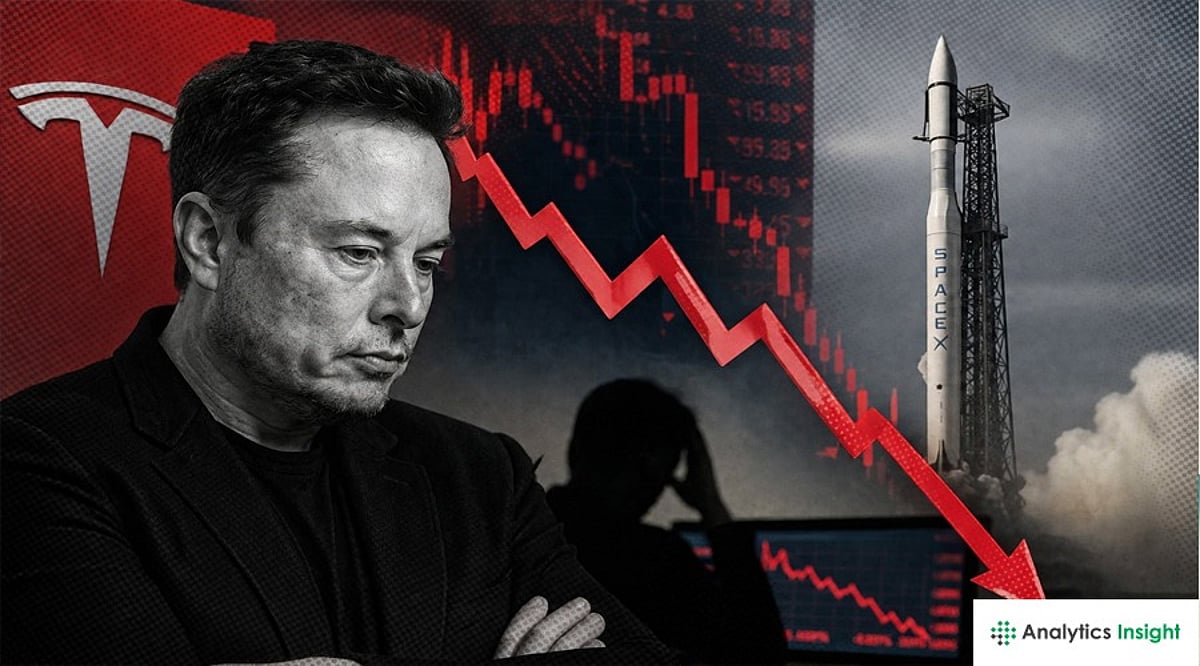
    Retail investors are facing significant losses after a sharp decline in Tesla and SpaceX shares, following a strong rally earlier this year. The downturn has affected global investors, including those in India who purchased U.S. stocks through international platforms.

    Tesla is currently trading near $393, roughly 21% below its 52-week high of $498.83. SpaceX has fallen about 30% from its post-listing intraday high of $225.64 to around $157–158. The company debuted on Nasdaq on June 12 after pricing its IPO at $135 and opening at $150.

    The correction has also eroded Elon Musk’s paper wealth. His net worth briefly surged after the SpaceX listing but later dropped below the trillion-dollar mark as both stocks weakened. For retail investors, the focus has shifted from Musk’s fortune to their own exposure in these two volatile stocks.

    Why Tesla and SpaceX Fell After Strong Performance

    Tesla’s decline came despite the company reporting strong second-quarter delivery numbers. This indicates that investors are looking beyond vehicle sales and weighing future plans in autonomy, robotaxis, and AI-linked businesses. SpaceX faces a different challenge: its Starlink, rocket launch, and space infrastructure businesses have drawn interest, but a limited public float has amplified price swings.

    The correction has already triggered selling by some investors. Tesla has appeared among the most sold stocks on Vested Finance, according to platform data. SpaceX also saw strong retail demand after its IPO, including from Indians investing under the Liberalised Remittance Scheme (LRS).

    Viram Shah, founder and CEO of Vested Finance, explained that the selloff reflects both business expectations and broader market repricing. “One is the actual businesses, and the other is the way the market’s re-pricing a whole basket of AI-linked names right now,” he said.

    AI-Linked Valuations Under Scrutiny

    Shah noted that Tesla’s recent stock move shows the market is not solely focused on cars. “Tesla just posted its strongest Q2 deliveries in a while, and the stock still fell. That tells you the move isn’t really about cars,” he said. He added that investors are questioning how much of Tesla’s valuation should depend on autonomy and robotaxi plans, which may take time to prove.

    SpaceX has faced pressure despite strong interest in its core business. “Starlink’s profitable and growing, the launch business is setting records; what’s moving the stock is a very thin float and a premium valuation, so any selling gets magnified,” Shah said.

    The broader market mood has turned cautious toward AI-linked stocks. Investor Michael Burry, known for his bet before the 2008 housing crash, has disclosed bearish positions against Tesla and other AI-related names, adding concern that some technology shares may have outpaced earnings support.

    Shah described the current fall as a mix of profit-booking and a market re-rating. “You had a near-vertical run in SpaceX right after listing and a strong 2025 in Tesla, so some of this is just gains being taken. But underneath it, the market’s asking a harder question about how it wants to price these AI and space bets, and that’s the re-rating part.”

    Advice for Indian Retail Investors

    For Indian investors, experts recommend reviewing portfolio allocation rather than reacting to price moves. Selling only during a fall can lock in losses, while buying more at a lower price can increase risk. High-growth stocks like Tesla and SpaceX can move sharply, with large portions of their valuations depending on future businesses.

    Investors should check whether one or two U.S. stocks have become too large in their portfolio. A long-term investor may view short-term volatility differently from someone with a shorter time horizon. However, a large position can heighten risk even if the company’s business remains strong.

    “A great company and a great entry price aren’t the same thing,” Shah said. “For Indian investors going global through the LRS route, the discipline’s the same as always: size it so a rough quarter is a nuance in the portfolio, not the whole story.”

    Newly listed stocks can remain unstable for several quarters. SpaceX still has a limited public float, and future lock-up expiries may add more shares to the market, potentially affecting prices.

  • Tesla Stock Closes Above $420 for First Time, Reigniting Meme Trading and Retail Interest

    Tesla Stock Closes Above $420 for First Time, Reigniting Meme Trading and Retail Interest

    Tesla shares closed above $420 for the first time since the company went public 16 years ago, rekindling meme-driven trading and drawing renewed attention from retail investors. The stock ended Tuesday’s session at $420.60, a milestone long associated with CEO Elon Musk and internet culture.

    According to Vanda Research, retail buying activity historically increases when Tesla trades above $420. Global macro strategist Viraj Patel noted that the average five-day retail net buying jumps from $87 million to $135 million after the stock crosses that level. Since mid-2024, retail investors have purchased more Tesla shares on nine of the 14 occasions the stock traded above $420.

    The number 420, originally tied to cannabis culture, became a widespread internet meme and later a recurring reference in Musk’s public comments. Roundhill Investments CEO Dave Mazza remarked, “I can’t believe I’m actually writing this, but it really comes down to the same two magic numbers, $420 and $69, that get the meme crowd going.”

    Tesla’s close above $420 quickly spread across social media platform X, where users shared memes and jokes. Interactive Brokers chief strategist Steve Sosnick said, “I’m surprised it took until now for Tesla to see a $420 close. It’s been a Musk-related meme for years.” The stock continued climbing Wednesday, trading near $426 ahead of the company’s second-quarter delivery report.

    The $420 level remains tied to Musk’s 2018 tweet about taking Tesla private at $420 per share with “funding secured.” That tweet led to an SEC securities fraud lawsuit, but the number has persisted as a cultural touchstone. Karobaar Capital’s Haris Khurshid noted, “Tesla has one of the most engaged retail investor bases in the market, so numbers like that tend to take on a life of their own.”