
Tag: retail sales

  • FTSE 100 Opens 45 Points Lower as Bank of England Holds Rates; Brent Crude Sinks to $102.5

    FTSE 100 Opens 45 Points Lower as Bank of England Holds Rates; Brent Crude Sinks to $102.5

    The FTSE 100 opened 45.03 points lower at 10,771.11 on Friday after the Bank of England kept interest rates unchanged while adopting a more hawkish stance. Investors also weighed the Bank of Japan’s latest rate hike. Meanwhile, Brent crude futures fell 2.05% to USD 102.5 per barrel, and US West Texas Intermediate declined 1.89% to USD 99.98.

    BoE Holds Rates at 3.75%

    The Bank of England’s Monetary Policy Committee voted 6-3 to leave Bank Rate at 3.75%, repeating the split seen in July. Huw Pill, Megan Greene and Catherine Mann again voted for a 25-basis-point increase.

    In a notable move, the BoE paused all gilt sales until April 2027 and removed bonds maturing after 2049 — around GBP 120 billion — from active sales. The Bank is also exploring a mechanism to transfer gilts directly to the UK government treasury, replacing long-dated supply with shorter issuance.

    Sterling and Commodities

    Sterling was quoted at USD 1.3363 early Friday, slightly higher than USD 1.3356 at Thursday’s London close. Against the euro, the pound rose to EUR 1.1638 from EUR 1.1627.

    Gainers and Losers

    Top gainers:

    • Fresnillo: +2.70% at 3,085p
    • IG Group Holdings: +2.21% at 1,344p
    • Endeavour Mining: +2.20% at 4,777p
    • Lion Finance Group: +2.17% at 14,120p
    • Antofagasta: +1.35% at 3,752p
    • Polar Capital Technology Trust: +1.14% at 664.50p

    Top decliners:

    • Coca-Cola HBC: -3.86% at 4,432p
    • Next: -2.51% at 14,545p
    • Coca-Cola Europacific Partners: -1.25% at 7,505p
    • Shell: -1.13% at 3,530.50p
    • London Stock Exchange Group: -0.56% at 8,216p
    • Games Workshop Group: -0.51% at 17,670p

    UK Retail Sales Rebound in August

    Retail sales rose 0.5% in August, reversing a 0.5% decline in July, according to the Office for National Statistics. The increase was driven by warmer weather, which boosted demand for fans and air conditioning units, while the World Cup lifted sales of sports merchandise and clothing. Economists polled by Reuters had forecast a 0.2% drop.

    Investec Raises Earnings Targets

    Investec doubled down on its earnings outlook after strong activity in its South Africa division offset a subdued UK performance. The lender projected earnings per share of 41.7p to 43.3p for the six months to 30 September, representing a 3% to 7% rise year on year. South African wealth funds under management grew 13.8% to GBP 30.7 billion, while the UK business expects operating profit to fall between 2% and 6% from the GBP 230 million recorded last year.

    Global Market Update

    Wall Street rebounded overnight as government bond yields retreated. The S&P 500 gained 1.2%, the Nasdaq Composite rose 1.7%, and the Dow Jones added 0.6%, or 316 points.

    In Asia on Friday, Tokyo’s Nikkei 225 climbed 1.38% to 65,018.95, while China’s Shanghai Composite fell 0.94%. Hong Kong’s Hang Seng advanced 0.56%, and South Korea’s Kospi rose 2.66%. In India, the Nifty 50 and Sensex gained 0.25% and 0.28%, respectively.
  • FTSE 100 Hits 10,670 as Retail Sales Surge and HSBC Sells Insurance Unit for $2.1B

    FTSE 100 Hits 10,670 as Retail Sales Surge and HSBC Sells Insurance Unit for $2.1B

    The FTSE 100 opened 31 points higher at 10,670 on Friday, buoyed by a strong retail sales report and a major corporate deal, even as Middle East tensions, rising oil prices, and new US tariff risks weighed on broader market sentiment.

    Oil prices continued to climb, with Brent crude futures falling 2.22% to $98.45 per barrel and US West Texas Intermediate (WTI) declining 2.21% to $90.15 per barrel. Sterling strengthened to $1.3315 early Friday from $1.3303 at Thursday’s London close, while against the euro, the pound edged down to €1.1693.

    Gainers & Losers

    On the upside, 3i Group rose 3.33% to 2,763p, RELX advanced 3.31% to 2,532p, and JD Sports Fashion gained 3.12% to 88.46p. Weir Group climbed 2.67% to 2,612p, Pershing Square Holdings added 2.58% to 3,736p, and Sage Group increased 2.56% to 842p.

    On the downside, Airtel Africa declined 5.32% to 327.20p. Shell fell 0.76% to 3,318.50p, while AstraZeneca slipped 0.69% to 12,600p. GSK dropped 0.50% to 1,896p, Endeavour Mining eased 0.45% to 3,548p, and Rio Tinto edged 0.37% lower to 6,831p.

    US Tariffs

    The US announced new tariffs on 60 trading partners over forced labor concerns, replacing an expiring global duty introduced earlier this year. The levies, effective Friday, range from 10% to 12.5%. Canada, the EU, and the UK are expected to face the lower 10% rate, while China and Japan are among those facing the higher 12.5% rate.

    Retail Sales Jump

    Retail sales jumped in June as heavy discounting drove online shopping. The volume of retail sales rose by 1% in June, following 1.2% growth in May, according to the Office for National Statistics (ONS). Online shopping grew to its largest proportion of total retail sales since spring 2021, when the COVID-19 pandemic kept consumers away from high streets.

    Hannah Finselbach, senior statistician at the ONS, said: “Internet retailers did especially well, with businesses telling us that this was because of promotions and the warm weather.”

    HSBC Sells Insurance Business

    HSBC has agreed to sell its life and health insurance business in Singapore to Allianz for $2.1 billion (£1.6 billion). Completion is anticipated in the first half of 2027. The deal is expected to generate HSBC a pre-tax gain of $1.8 billion. The transaction follows an internal review, with HSBC determining that a sale would be the “best outcome for both parties” as the bank focuses on areas where it has a “clear competitive advantage”.

    Global Market View

    In the US, stocks fell overnight: the Nasdaq declined 2.2%, the S&P 500 dropped 1.2% (its worst session of the month), and the Dow shed 1%. In Asia on Friday, Tokyo’s Nikkei 225 fell 2.73% to 64,611.15, while China’s Shanghai Composite dipped 1.61%. Hong Kong’s Hang Seng declined 1.04%, and South Korea’s Kospi fell 5.72%. In India, both the Nifty 50 and the Sensex fell by 0.31% and 0.44%, respectively.

    Disclaimer: Analytics Insight does not provide financial advice or guidance on cryptocurrencies and stocks. This article is for informational purposes only and does not constitute investment advice. Always conduct your own research before making any investments.

  • UnitedHealth Lifts Dow as Chip Selloff Pressures NASDAQ and S&P 500

    UnitedHealth Lifts Dow as Chip Selloff Pressures NASDAQ and S&P 500

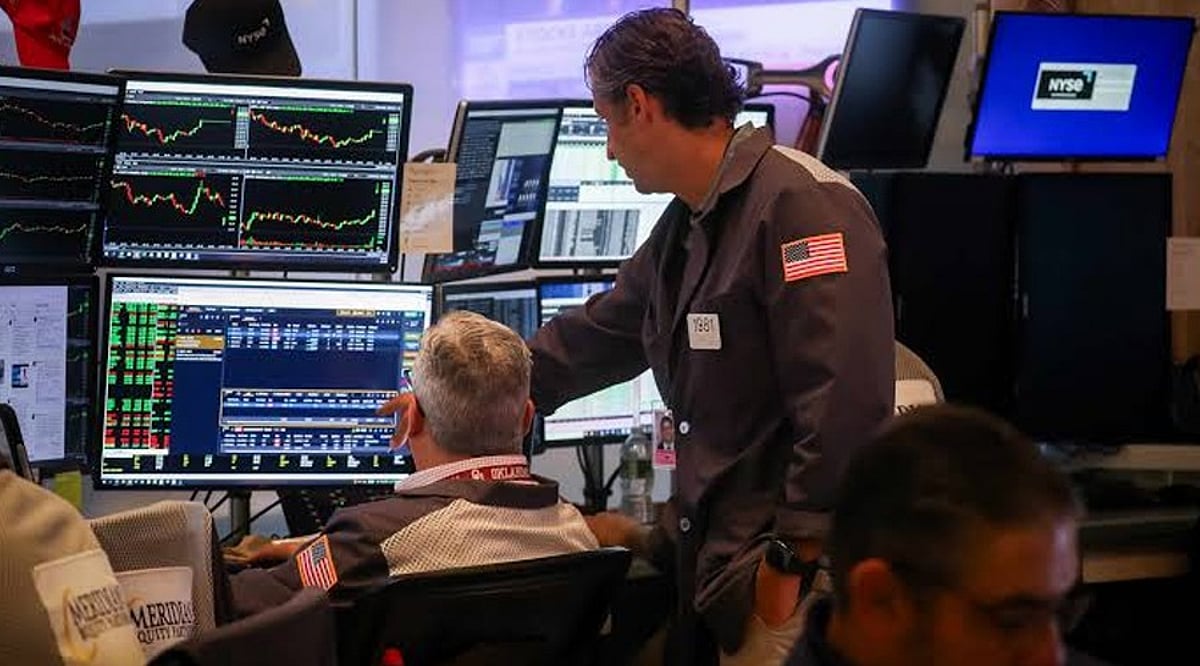
    The S&P 500 and NASDAQ Composite fell on Thursday as semiconductor shares extended their decline, offsetting gains across much of the market. Strong earnings from UnitedHealth and firm economic data supported the Dow Jones Industrial Average, but technology losses kept pressure on the other major indexes.

    At 10:00 a.m. ET, the Dow rose 82 points, or 0.16%, to 52,740.92. The S&P 500 fell 0.39% to 7,545, while the NASDAQ dropped 1% to 26,100. Eight of the 11 S&P 500 sectors traded higher, showing that weakness remained concentrated in large technology names.

    Chip Stocks Lead the NASDAQ Lower

    Semiconductor shares posted the largest losses after Taiwan Semiconductor Manufacturing released its second-quarter results. Its US-listed shares fell about 2.5%, even though the company reported earnings above forecasts. Traders focused on its higher spending plan for 2026.

    TSMC raised its expected capital spending range to between $60 billion and $64 billion from $52 billion to $56 billion. The increase renewed concern over the cost of expanding artificial intelligence capacity across the chip industry. The Philadelphia Semiconductor Index fell 3.8%. Western Digital and Seagate Technology each dropped 7.3%, while Micron Technology lost 4.8%. Arm Holdings fell more than 6%, and Advanced Micro Devices and Broadcom also moved lower.

    Shiraz Ahmed of Sartorial Wealth said the chip rally is cooling, but “not because AI is losing steam.” He said AI use is still expanding across data centers, energy systems and semiconductor production.

    UnitedHealth Supports the Dow Jones

    UnitedHealth shares rose 7.8% after the health insurer posted better-than-expected second-quarter results and raised its 2026 profit forecast. The move helped keep the Dow Jones positive while the S&P 500 and NASDAQ fell. The healthcare sector gained about 2%, while consumer staples rose 2.1%. Those gains limited the broader decline, even as the information technology sector fell 1.9%.

    Meanwhile, GE Aerospace dropped 4.4% despite reporting earnings and revenue above forecasts. The company posted adjusted earnings of $2.02 per share on revenue of $12.63 billion, compared with forecasts of $1.86 and $11.86 billion. GE Aerospace also lifted its full-year guidance. United Airlines fell 2.8% as rising oil prices added pressure to its third-quarter and full-year profit outlook.

    Retail Sales and Jobless Claims Shape Rate View

    Fresh economic data showed that US consumers kept spending during June. Retail sales rose 0.2%, matching expectations. Lower gasoline prices reduced service-station receipts, while other areas of consumer spending held up. Bill Adams, Chief US Economist at Fifth Third Commercial Bank, said slower headline retail sales growth was “actually positive” since lower fuel prices drove much of the weakness. He added that the report supports second-quarter real gross domestic product growth.

    Weekly jobless claims also came in below forecasts. Initial claims fell to 208,000 for the week ended July 11, compared with expectations of 218,000. The data pointed to resilience in the labor market. Inflation reports released earlier in the week eased concern over tighter Federal Reserve policy. Traders priced an 88% chance that the central bank will leave rates unchanged at its July meeting, according to CME FedWatch data.

    Wider Market Gains Fail to Lift Major Indexes

    The market showed a split between large technology stocks and the wider group of companies. Advancing stocks slightly outnumbered decliners on the New York Stock Exchange, while declining shares held a wider lead on the NASDAQ. The Invesco S&P 500 Equal Weight ETF rose 0.6%, showing that the average company performed better than the market-cap-weighted index. The standard S&P 500 still fell as major chip and technology shares carried greater influence.

    Geopolitical concerns also stayed in focus. Reports said Iran asked Yemen’s Houthi movement to prepare for a possible closure of the Red Sea oil route if the United States strikes Iranian power facilities. The threat kept energy prices and airline costs in view during Thursday’s early trading session.

    Investors will now watch upcoming corporate earnings and economic data for clearer signals on the strength of the US economy and the Federal Reserve’s next policy move. Whether chip stocks stabilize or extend their pullback is also likely to play a key role in determining the broader market’s direction.